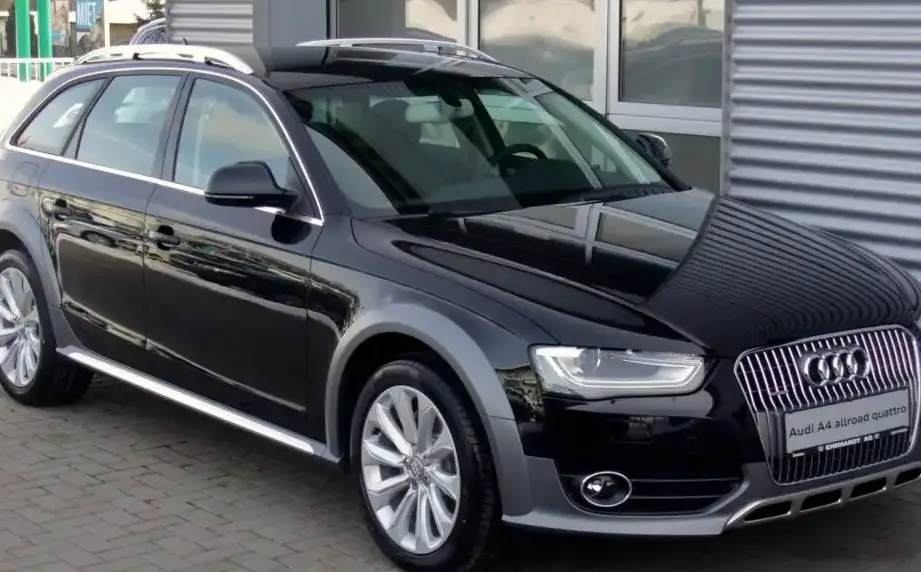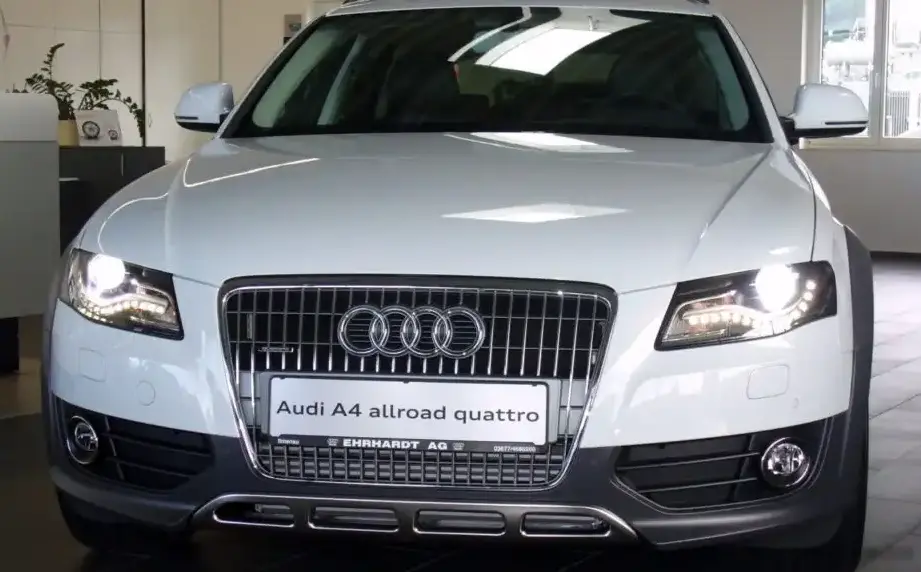
The Audi A4 allroad (B8 8K) 3.0 TDI V6 quattro DPF, produced between 2009 and 2011, represents Audi’s foray into the premium all-weather wagon segment. Based on the B8 A4 platform (shared with the A3 and Volkswagen Golf Mk6 – the 1HX0/A3 designation), the allroad variant aimed to bridge the gap between a traditional station wagon and a more rugged SUV, offering increased ground clearance and standard quattro all-wheel drive. This particular version, equipped with the 3.0-liter TDI V6 engine producing 240 horsepower, occupied the upper echelon of the allroad lineup, offering a blend of performance, refinement, and practicality. It was primarily marketed in Europe, where the demand for such vehicles was significantly higher than in North America.
Technical Specifications
| Brand | Audi |
| Model | A4 |
| Generation | A4 allroad (B8 8K) |
| Type (Engine) | 3.0 TDI V6 (240 Hp) quattro DPF |
| Start of production | 2009 |
| End of production | 2011 |
| Powertrain Architecture | Internal Combustion engine |
| Body type | Station wagon (estate), Crossover |
| Seats | 5 |
| Doors | 5 |
| Fuel consumption (urban) | 9.6 l/100 km (24.5 US mpg, 29.4 UK mpg, 10.4 km/l) |
| Fuel consumption (extra urban) | 5.8 l/100 km (40.6 US mpg, 48.7 UK mpg, 17.2 km/l) |
| Fuel consumption (combined) | 7.2 l/100 km (32.7 US mpg, 39.2 UK mpg, 13.9 km/l) |
| CO2 emissions | 189 g/km |
| Fuel Type | Diesel |
| Acceleration 0 – 100 km/h | 6.6 sec |
| Acceleration 0 – 62 mph | 6.6 sec |
| Acceleration 0 – 60 mph | 6.3 sec |
| Maximum speed | 237 km/h (147.26 mph) |
| Emission standard | Euro 5 |
| Weight-to-power ratio | 7.2 kg/Hp, 138.7 Hp/tonne |
| Weight-to-torque ratio | 3.5 kg/Nm, 289 Nm/tonne |
| Power | 240 Hp @ 4000-4400 rpm |
| Power per litre | 80.9 Hp/l |
| Torque | 500 Nm @ 1500-3000 rpm (368.78 lb.-ft. @ 1500-3000 rpm) |
| Engine layout | Front, Longitudinal |
| Engine Model/Code | EA896 / CCWA |
| Engine displacement | 2967 cm3 (181.06 cu. in.) |
| Number of cylinders | 6 |
| Engine configuration | V-engine |
| Cylinder Bore | 83 mm (3.27 in.) |
| Piston Stroke | 91.4 mm (3.6 in.) |
| Compression ratio | 16.8:1 |
| Number of valves per cylinder | 4 |
| Fuel injection system | Diesel Commonrail |
| Engine aspiration | Turbocharger, Intercooler |
| Valvetrain | DOHC |
| Engine oil capacity | 6.9 l (7.29 US qt | 6.07 UK qt) |
| Coolant | 9 l (9.51 US qt | 7.92 UK qt) |
| Kerb Weight | 1730 kg (3814 lbs.) |
| Max. weight | 2300 kg (5070.63 lbs.) |
| Max load | 570 kg (1256.63 lbs.) |
| Trunk (boot) space – minimum | 490 l (17.3 cu. ft.) |
| Trunk (boot) space – maximum | 1430 l (50.5 cu. ft.) |
| Fuel tank capacity | 64 l (16.91 US gal | 14.08 UK gal) |
| Max. roof load | 90 kg (198.42 lbs.) |
| Permitted trailer load with brakes (8%) | 2100 kg (4629.71 lbs.) |
| Permitted trailer load with brakes (12%) | 1900 kg (4188.78 lbs.) |
| Permitted trailer load without brakes | 750 kg (1653.47 lbs.) |
| Permitted towbar download | 80 kg (176.37 lbs.) |
| Length | 4721 mm (185.87 in.) |
| Width | 1841 mm (72.48 in.) |
| Height | 1495 mm (58.86 in.) |
| Wheelbase | 2805 mm (110.43 in.) |
| Front track | 1583 mm (62.32 in.) |
| Rear (Back) track | 1574 mm (61.97 in.) |
| Drag coefficient (Cd) | 0.34 |
| Minimum turning circle (turning diameter) | 11.5 m (37.73 ft.) |
| Drivetrain Architecture | The Internal combustion engine (ICE) drives permanently the four wheels of the vehicle. |
| Drive wheel | All wheel drive (4×4) |
| Number of gears and type of gearbox | 6 gears, manual transmission |
| Front suspension | Independent multi-link suspension |
| Rear suspension | Independent multi-link spring suspension with stabilizer |
| Front brakes | Ventilated discs |
| Rear brakes | Disc |
| Assisting systems | ABS (Anti-lock braking system) |
| Steering type | Steering rack and pinion |
| Power steering | Electric Steering |
| Tires size | 225/55 R17 |
| Wheel rims size | 8J x 17 |
Powertrain & Engine Architecture
The heart of the A4 allroad 3.0 TDI is the EA896 engine family, specifically the CCWA code. This 3.0-liter V6 diesel engine utilizes a common rail direct injection system, delivering fuel at extremely high pressures for optimized combustion. The engine features a single turbocharger with an intercooler, boosting power and torque. The valvetrain employs a double overhead camshaft (DOHC) design with four valves per cylinder, enhancing breathing and efficiency. The engine’s longitudinal mounting and the quattro all-wheel-drive system necessitate a more complex drivetrain layout compared to front-wheel-drive A4 variants. The 6-speed manual transmission was standard, providing precise control over the engine’s power delivery. A Tiptronic automatic transmission was also available as an option, offering convenience and smoother shifts, though at a slight performance penalty.
Driving Characteristics
The 240 hp and 368 lb-ft of torque produced by the 3.0 TDI engine provided brisk acceleration for a wagon. The 0-60 mph sprint was dispatched in around 6.3 seconds, making it noticeably quicker than the base 1.8 TFSI models. The manual transmission offered a direct connection to the engine, allowing drivers to fully exploit the available power. The automatic transmission, while smooth, felt slightly less responsive. The quattro all-wheel-drive system provided excellent traction in all weather conditions, making the allroad a confident performer on slippery surfaces. The increased ride height, compared to a standard A4 Avant, provided a more comfortable ride and allowed for tackling moderately rough terrain, though it wasn’t intended for serious off-roading. The gear ratios were tuned for a balance between acceleration and fuel economy, with a relatively tall sixth gear for efficient cruising.
Equipment & Trim Levels
The A4 allroad 3.0 TDI typically came well-equipped as standard. Features included automatic climate control, a multi-function steering wheel, power windows and mirrors, and a premium audio system. Upholstery was typically a combination of cloth and leather, with options for full leather interiors. Exterior features included unique allroad styling cues, such as flared wheel arches, silver-colored underbody protection, and roof rails. Optional extras included navigation system, parking sensors, sunroof, and upgraded alloy wheels. The allroad trim level generally sat above the SE and Sport trims in the A4 lineup, offering a more luxurious and capable package.
Chassis & Braking
The A4 allroad featured a reinforced chassis and suspension system to handle the increased weight and demands of all-terrain driving. The front suspension utilized independent multi-link technology, providing excellent ride quality and handling. The rear suspension also employed a multi-link setup with a stabilizer bar to reduce body roll. Braking duties were handled by ventilated discs at the front and solid discs at the rear. The anti-lock braking system (ABS) and electronic stability control (ESC) were standard features, enhancing safety and control. The allroad’s suspension was slightly raised compared to the standard A4, providing increased ground clearance.
Market Reception & Comparison
The A4 allroad 3.0 TDI was generally well-received by automotive critics. It was praised for its blend of performance, practicality, and all-weather capability. Compared to the lower-powered A4 variants, the 3.0 TDI offered significantly more performance and a more refined driving experience. However, it came at a higher price point. Compared to the 2.0 TDI models, the 3.0 TDI offered superior refinement and power, but also consumed more fuel. The allroad also faced competition from other premium wagons, such as the Volvo V60 and BMW 3 Series Touring.
Legacy
The EA896 3.0 TDI engine, in general, has proven to be a robust and reliable powerplant, though preventative maintenance is crucial. The timing belt requires replacement at specified intervals to avoid catastrophic engine failure. The diesel particulate filter (DPF) can also be a source of issues if the vehicle is primarily used for short trips. Today, the A4 allroad 3.0 TDI remains a desirable used car, particularly for those seeking a practical and capable all-weather wagon. Its combination of performance, refinement, and quattro all-wheel drive continues to appeal to discerning buyers. Well-maintained examples command a premium in the used car market.