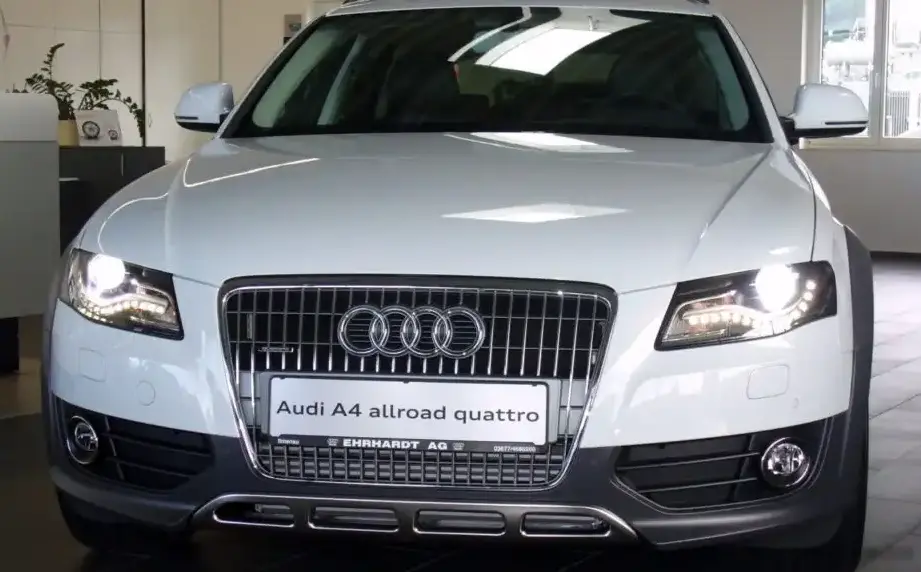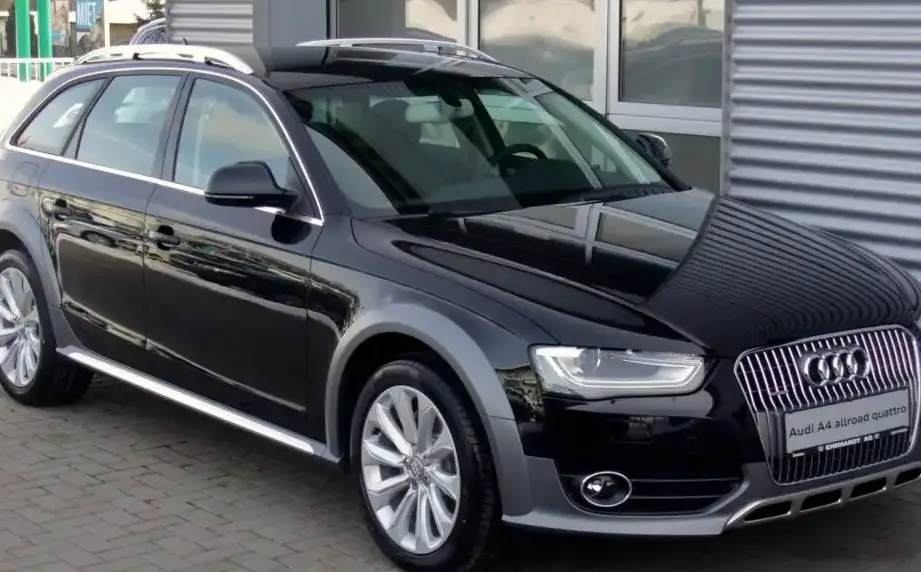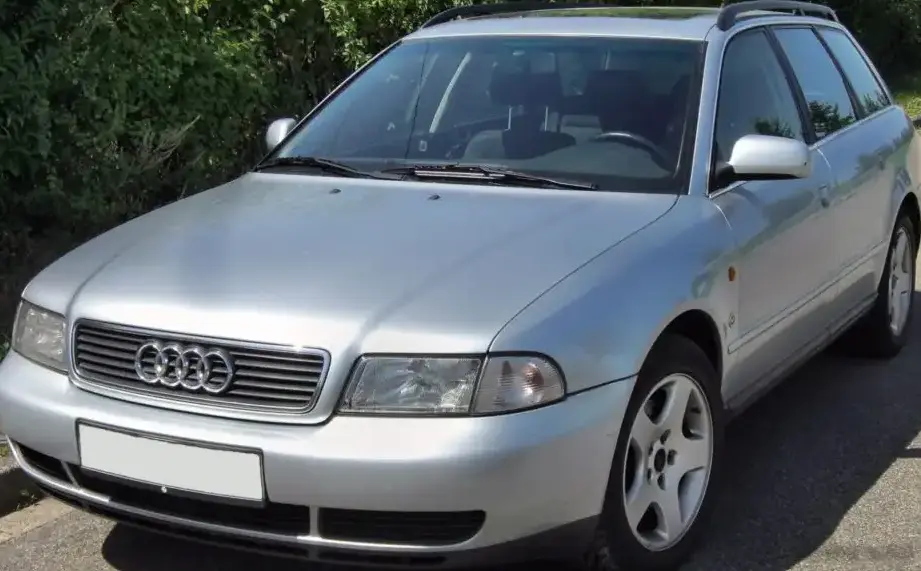
The Audi A4 Avant (B5, Typ 8D) 2.8 V6, produced from 1996 to 1997, represents a significant iteration of Audi’s popular compact executive car. Positioned as a premium offering within the B5 A4 range, the 2.8 V6 Avant combined the practicality of a station wagon (estate) body style with a relatively powerful six-cylinder engine. This model played a key role in establishing Audi’s reputation for sophisticated engineering and all-weather capability in the European market, and began to gain traction in North America as Audi expanded its presence. It was built on the Volkswagen Group’s B5 platform (also known as Typ 8D), shared with the Volkswagen Passat.
Technical Specifications
| Brand | Audi |
| Model | A4 |
| Generation | A4 Avant (B5, Typ 8D) |
| Type (Engine) | 2.8 V6 (174 Hp) |
| Start of production | 1996 |
| End of production | 1997 |
| Powertrain Architecture | Internal Combustion engine |
| Body type | Station wagon (estate) |
| Seats | 5 |
| Doors | 5 |
| Fuel Type | Petrol (Gasoline) |
| Maximum speed | 230 km/h (142.92 mph) |
| Power | 174 Hp @ 5500 rpm |
| Power per litre | 62.8 Hp/l |
| Torque | 250 Nm @ 3000 rpm (184.39 lb.-ft. @ 3000 rpm) |
| Engine layout | Front, Longitudinal |
| Engine Model/Code | AAH |
| Engine displacement | 2771 cm3 (169.1 cu. in.) |
| Number of cylinders | 6 |
| Engine configuration | V-engine |
| Cylinder Bore | 82.5 mm (3.25 in.) |
| Piston Stroke | 86.4 mm (3.4 in.) |
| Compression ratio | 10.3:1 |
| Number of valves per cylinder | 2 |
| Fuel injection system | Multi-port manifold injection |
| Engine aspiration | Naturally aspirated engine |
| Engine oil capacity | 5 l (5.28 US qt | 4.4 UK qt) |
| Coolant | 6.5 l (6.87 US qt | 5.72 UK qt) |
| Trunk (boot) space – minimum | 390 l (13.77 cu. ft.) |
| Trunk (boot) space – maximum | 1250 l (44.14 cu. ft.) |
| Fuel tank capacity | 62 l (16.38 US gal | 13.64 UK gal) |
| Length | 4478 mm (176.3 in.) |
| Width | 1733 mm (68.23 in.) |
| Height | 1415 mm (55.71 in.) |
| Wheelbase | 2622 mm (103.23 in.) |
| Front track | 1498 mm (58.98 in.) |
| Rear (Back) track | 1479 mm (58.23 in.) |
| Drag coefficient (Cd) | 0.31 |
| Minimum turning circle (turning diameter) | 11.1 m (36.42 ft.) |
| Drivetrain Architecture | The Internal combustion engine (ICE) drives the front wheels of the vehicle. |
| Drive wheel | Front wheel drive |
| Number of gears and type of gearbox | 5 gears, manual transmission |
| Front brakes | Ventilated discs |
| Rear brakes | Disc |
| Assisting systems | ABS (Anti-lock braking system) |
| Steering type | Steering rack and pinion |
| Power steering | Hydraulic Steering |
Powertrain & Engine Architecture
The heart of the A4 Avant 2.8 V6 was the AAH engine, a 2.8-liter naturally aspirated V6. This engine featured a 90-degree V-angle, contributing to a smoother power delivery and reduced vibrations. The AAH utilized a cast iron block and aluminum cylinder heads, a common construction for the era. Fuel delivery was managed by a Bosch Motronic multi-port fuel injection system, providing precise control over the air-fuel mixture. The engine employed a single overhead camshaft (SOHC) design with two valves per cylinder. The 5-speed manual transmission was the standard offering, providing direct engagement and a sporty driving experience. The transmission featured a robust design, capable of handling the engine’s torque output.
Driving Characteristics
The 2.8 V6 Avant offered a compelling blend of performance and practicality. With 174 horsepower and 184 lb-ft of torque, it provided brisk acceleration, noticeably quicker than the base 1.8L four-cylinder models. While not a sports car, the V6 delivered ample power for highway passing and confident merging. The front-wheel-drive configuration, combined with the manual transmission, offered good traction in most conditions. The gear ratios were well-chosen to balance acceleration and fuel economy. Compared to later, more powerful V6 variants (like the 193 hp version found in later B5 models), the AAH engine felt less aggressive but more linear in its power delivery. The manual transmission allowed for greater driver control, while the relatively light weight of the B5 A4 Avant contributed to a nimble feel.
Equipment & Trim Levels
The A4 Avant 2.8 V6 typically came well-equipped for its time. Standard features included power windows, power locks, and a basic audio system. Interior upholstery was typically cloth, although leather was available as an option. The dashboard layout was functional and ergonomically designed, with clear instrumentation. Optional extras included a sunroof, upgraded audio systems, automatic climate control, and alloy wheels. The 2.8 V6 Avant often served as a stepping stone to the higher-trim models, offering a good balance of features and performance without the premium price tag of the fully-loaded versions.
Chassis & Braking
The B5 A4 Avant featured an independent suspension system, with MacPherson struts at the front and a semi-independent torsion beam setup at the rear. This configuration provided a comfortable ride while maintaining reasonable handling characteristics. The 2.8 V6 models typically received slightly upgraded suspension components compared to the base models, including thicker stabilizer bars to reduce body roll. Braking duties were handled by ventilated discs at the front and solid discs at the rear, assisted by an Anti-lock Braking System (ABS). The braking system provided adequate stopping power for everyday driving, although it wasn’t as powerful as the systems found on higher-performance Audi models.
Market Reception & Comparison
The Audi A4 Avant 2.8 V6 was generally well-received by automotive critics. It was praised for its refined engine, comfortable ride, and practical station wagon body style. Compared to its competitors, such as the BMW 3 Series Touring and the Mercedes-Benz C-Class Estate, the A4 Avant offered a compelling combination of value and performance. The 2.8 V6 engine provided a noticeable performance advantage over the base four-cylinder models, while still offering reasonable fuel economy. However, some critics noted that the front-wheel-drive configuration limited its handling capabilities compared to rear-wheel-drive competitors. Reliability was generally good, although the AAH engine was known to be susceptible to oil leaks as it aged.
Legacy
The Audi A4 Avant (B5, Typ 8D) 2.8 V6 remains a popular choice among enthusiasts and used car buyers. The AAH engine, while not the most powerful V6 offered in the B5 A4, is known for its durability and relatively simple maintenance requirements. Parts availability is generally good, and the car’s robust construction ensures that many examples are still on the road today. The 2.8 V6 Avant represents a sweet spot in the B5 A4 lineup, offering a good balance of performance, practicality, and affordability. It’s a testament to Audi’s engineering prowess and a reminder of a time when station wagons were a popular choice for discerning drivers.