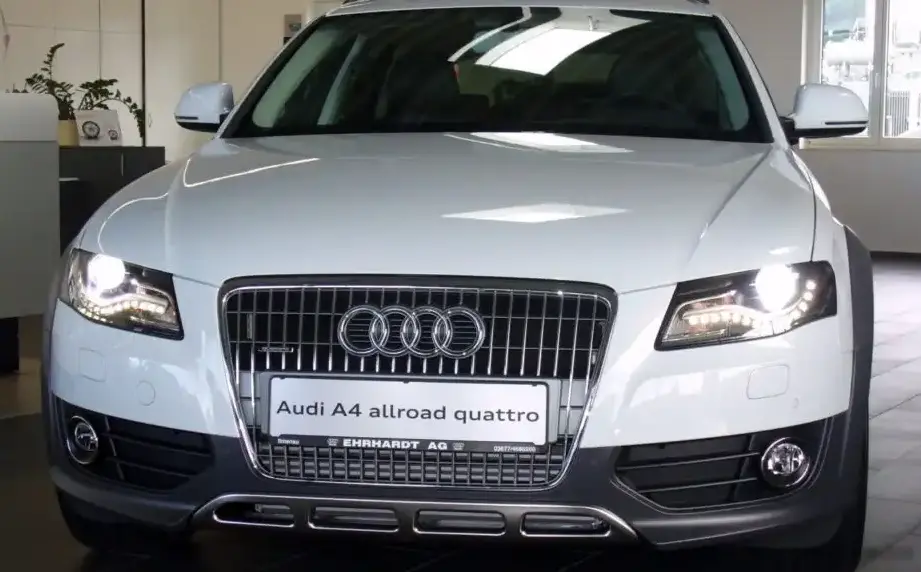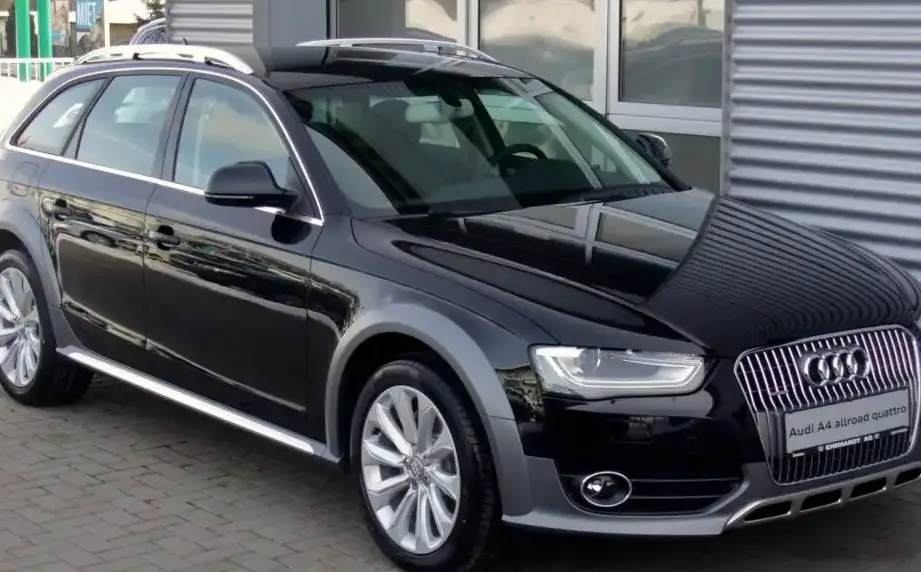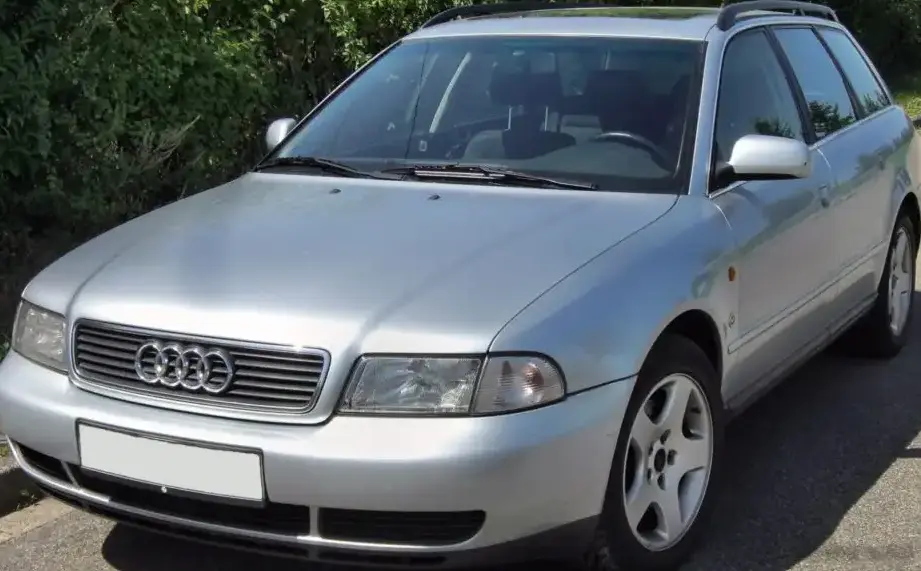
The Audi A4 Avant (B5, Typ 8D) 2.8 V6 quattro, produced from 1996 to 1997, represents a significant iteration of Audi’s popular compact executive car. This variant, a station wagon (estate) body style, was positioned as a premium offering within the B5 A4 range, appealing to buyers seeking a blend of practicality, performance, and all-weather capability. It was a key model in establishing Audi’s reputation for sophisticated engineering and design in the North American and European markets. The B5 generation A4, built on the Volkswagen Group’s 1HX0 platform (shared with the VW Passat), aimed to modernize Audi’s lineup and compete directly with established rivals like the BMW 3 Series and Mercedes-Benz C-Class.
Technical Specifications
| Brand | Audi |
| Model | A4 |
| Generation | A4 Avant (B5, Typ 8D) |
| Type (Engine) | 2.8 V6 (174 Hp) quattro |
| Start of production | 1996 |
| End of production | 1997 |
| Powertrain Architecture | Internal Combustion engine |
| Body type | Station wagon (estate) |
| Seats | 5 |
| Doors | 5 |
| Fuel Type | Petrol (Gasoline) |
| Maximum speed | 229 km/h (142.29 mph) |
| Power | 174 Hp @ 5500 rpm |
| Power per litre | 62.8 Hp/l |
| Torque | 250 Nm @ 3000 rpm (184.39 lb.-ft. @ 3000 rpm) |
| Engine layout | Front, Longitudinal |
| Engine Model/Code | AAH |
| Engine displacement | 2771 cm3 (169.1 cu. in.) |
| Number of cylinders | 6 |
| Engine configuration | V-engine |
| Cylinder Bore | 82.5 mm (3.25 in.) |
| Piston Stroke | 86.4 mm (3.4 in.) |
| Compression ratio | 10.3:1 |
| Number of valves per cylinder | 2 |
| Fuel injection system | Multi-port manifold injection |
| Engine aspiration | Naturally aspirated engine |
| Engine oil capacity | 5 l (5.28 US qt | 4.4 UK qt) |
| Coolant | 6.5 l (6.87 US qt | 5.72 UK qt) |
| Trunk (boot) space – minimum | 390 l (13.77 cu. ft.) |
| Trunk (boot) space – maximum | 1250 l (44.14 cu. ft.) |
| Fuel tank capacity | 60 l (15.85 US gal | 13.2 UK gal) |
| Length | 4478 mm (176.3 in.) |
| Width | 1733 mm (68.23 in.) |
| Height | 1415 mm (55.71 in.) |
| Wheelbase | 2607 mm (102.64 in.) |
| Front track | 1498 mm (58.98 in.) |
| Rear (Back) track | 1479 mm (58.23 in.) |
| Drag coefficient (Cd) | 0.32 |
| Minimum turning circle (turning diameter) | 11.1 m (36.42 ft.) |
| Drive wheel | All wheel drive (4×4) |
| Number of gears and type of gearbox | 5 gears, manual transmission |
| Front brakes | Ventilated discs |
| Rear brakes | Disc |
| Assisting systems | ABS (Anti-lock braking system) |
Powertrain & Engine Architecture
The heart of the A4 Avant 2.8 V6 quattro is the AAH engine, a 2.8-liter naturally aspirated V6. This engine is characterized by its smooth power delivery and relatively robust construction. The AAH utilizes a cast iron block and aluminum cylinder heads, a common configuration for engines of this era. Fuel delivery is managed by a Bosch Motronic multi-port fuel injection system, providing precise control over the air-fuel mixture. The engine features a single overhead camshaft (SOHC) design with two valves per cylinder. This valvetrain configuration, while not as sophisticated as dual overhead camshaft (DOHC) systems, contributed to the engine’s reliability and ease of maintenance. The 5-speed manual transmission was standard, offering a direct connection between the engine and the quattro all-wheel-drive system.
Driving Characteristics
The 2.8 V6 engine, producing 174 horsepower and 184 lb-ft of torque, provided brisk acceleration for the A4 Avant. While not a sports car, the combination of the V6 engine and the quattro all-wheel-drive system delivered confident handling and traction in various conditions. The manual transmission offered precise gear changes, allowing drivers to fully utilize the engine’s power band. Compared to the base 1.8L four-cylinder models, the 2.8 V6 offered a significant performance upgrade, particularly in terms of mid-range torque. However, it wasn’t as overtly sporty as the later S4 models with their more powerful engines. The quattro system, distributing power between the front and rear axles as needed, enhanced stability and grip, especially on slippery surfaces.
Equipment & Trim Levels
The A4 Avant 2.8 V6 quattro typically came well-equipped for its time. Standard features included power windows, power locks, air conditioning, and an AM/FM stereo. The interior featured comfortable cloth upholstery, although leather options were available. The dashboard layout was functional and ergonomically designed, with easy-to-read gauges and intuitive controls. Optional extras included a sunroof, heated front seats, and a premium sound system. The quattro badge was prominently displayed, signifying the vehicle’s all-wheel-drive capability. The Avant (wagon) body style itself was considered a premium offering, appealing to buyers who needed more cargo space than the sedan provided.
Chassis & Braking
The B5 A4 Avant featured an independent suspension system, with MacPherson struts at the front and a semi-independent torsion beam suspension at the rear. This setup provided a good balance between ride comfort and handling. The 2.8 V6 quattro models typically came with larger brakes than the base models, featuring ventilated discs at the front and solid discs at the rear. Anti-lock braking system (ABS) was standard, enhancing braking performance and safety. Stabilizer bars were fitted to both the front and rear axles, reducing body roll during cornering.
Market Reception & Comparison
The Audi A4 Avant 2.8 V6 quattro was generally well-received by automotive critics. It was praised for its refined engine, comfortable ride, and all-weather capability. The quattro all-wheel-drive system was a major selling point, particularly in regions with harsh winters. Compared to the 1.8L models, the 2.8 V6 offered a noticeable performance improvement, but at a higher price point. Fuel economy was reasonable for a V6 engine of this era, but not as efficient as the four-cylinder models. Reliability was generally good, although some owners reported issues with the cooling system and electrical components.
Legacy
The Audi A4 Avant (B5, Typ 8D) 2.8 V6 quattro remains a popular choice among enthusiasts and used car buyers. The AAH engine is known for its durability and relatively simple maintenance requirements. While finding well-maintained examples can be challenging, these cars offer a compelling combination of performance, practicality, and classic Audi styling. The quattro all-wheel-drive system continues to be highly valued, providing confident handling in all conditions. Today, these vehicles are often sought after for their unique character and as a gateway into the world of classic Audi ownership. Parts availability is generally good, although some specific components may be becoming increasingly difficult to find.