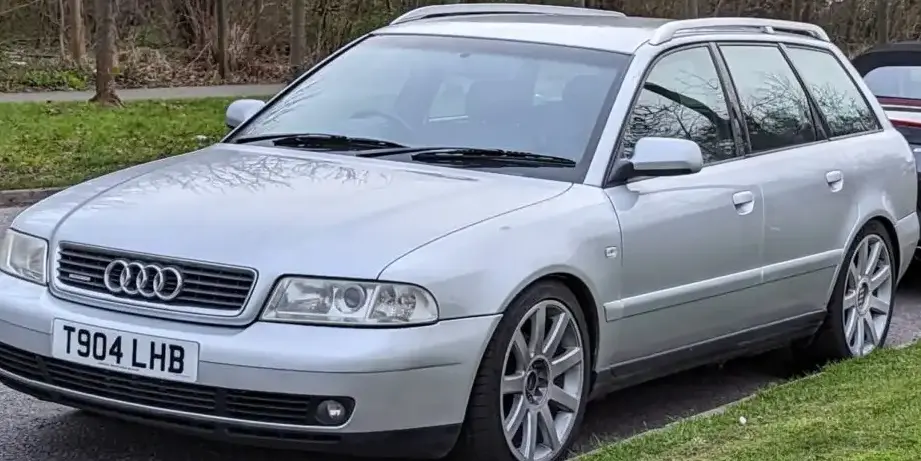
The Audi A4 Avant (B5, Typ 8D) 1.6i, produced from 2000 to 2001, represented the entry point into the A4 Avant (wagon) model range following the 1999 facelift. Positioned as an affordable and practical option, it catered to buyers prioritizing fuel efficiency and everyday usability over outright performance. This variant was part of the B5 generation A4, which utilized the Volkswagen Group’s 1HX0/A3 platform, shared with models like the Volkswagen Golf, Bora, and New Beetle. The 1.6i model offered a more accessible price point compared to the more powerful 1.8T and 2.8 V6 options, making it a popular choice in European markets where station wagons held significant appeal.
Technical Specifications
| Brand | Audi |
| Model | A4 |
| Generation | A4 Avant (B5, Typ 8D, facelift 1999) |
| Type (Engine) | 1.6i (101 Hp) |
| Start of production | 2000 year |
| End of production | 2001 year |
| Powertrain Architecture | Internal Combustion engine |
| Body type | Station wagon (estate) |
| Seats | 5 |
| Doors | 5 |
| Fuel consumption (urban) | 10.7 l/100 km (22 US mpg, 26.4 UK mpg, 9.3 km/l) |
| Fuel consumption (extra urban) | 6 l/100 km (39.2 US mpg, 47.1 UK mpg, 16.7 km/l) |
| Fuel consumption (combined) | 7.7 l/100 km (30.5 US mpg, 36.7 UK mpg, 13 km/l) |
| Fuel Type | Petrol (Gasoline) |
| Acceleration 0 – 100 km/h | 12.7 sec |
| Acceleration 0 – 62 mph | 12.7 sec |
| Acceleration 0 – 60 mph | 12.1 sec |
| Maximum speed | 183 km/h (113.71 mph) |
| Emission standard | Euro 3 |
| Weight-to-power ratio | 12.5 kg/Hp, 79.8 Hp/tonne |
| Weight-to-torque ratio | 8.5 kg/Nm, 117 Nm/tonne |
| Power | 101 Hp @ 5600 rpm |
| Power per litre | 63.3 Hp/l |
| Torque | 148 Nm @ 3800 rpm (109.16 lb.-ft. @ 3800 rpm) |
| Engine layout | Front, Longitudinal |
| Engine Model/Code | AHL, ANA, ARM |
| Engine displacement | 1595 cm3 (97.33 cu. in.) |
| Number of cylinders | 4 |
| Engine configuration | Inline |
| Cylinder Bore | 81 mm (3.19 in.) |
| Piston Stroke | 77.4 mm (3.05 in.) |
| Compression ratio | 10.3:1 |
| Number of valves per cylinder | 2 |
| Fuel injection system | Multi-port manifold injection |
| Engine aspiration | Naturally aspirated engine |
| Valvetrain | SOHC |
| Engine oil capacity | 3.7 l (3.91 US qt | 3.26 UK qt) |
| Coolant capacity | 7.5 l (7.93 US qt | 6.6 UK qt) |
| Kerb Weight | 1265 kg (2788.85 lbs.) |
| Max. weight | 1815 kg (4001.39 lbs.) |
| Max load | 550 kg (1212.54 lbs.) |
| Trunk (boot) space – minimum | 390 l (13.77 cu. ft.) |
| Trunk (boot) space – maximum | 1270 l (44.85 cu. ft.) |
| Fuel tank capacity | 62 l (16.38 US gal | 13.64 UK gal) |
| Length | 4479 mm (176.34 in.) |
| Width | 1733 mm (68.23 in.) |
| Height | 1417 mm (55.79 in.) |
| Wheelbase | 2622 mm (103.23 in.) |
| Front track | 1498 mm (58.98 in.) |
| Rear track | 1479 mm (58.23 in.) |
| Drag coefficient (Cd) | 0.31 |
| Minimum turning circle | 11.1 m (36.42 ft.) |
| Drivetrain Architecture | The Internal combustion engine (ICE) drives the front wheels of the vehicle. |
| Drive wheel | Front wheel drive |
| Number of gears and type of gearbox | 5 gears, manual transmission |
| Front suspension | Independent multi-link suspension |
| Rear suspension | Suspension with traction connecting levers |
| Front brakes | Ventilated discs |
| Rear brakes | Disc |
| Assisting systems | ABS (Anti-lock braking system) |
| Steering type | Steering rack and pinion |
| Power steering | Hydraulic Steering |
| Tires size | 195/65 R15 |
| Wheel rims size | 15 |
INTRODUCTION
The Audi A4 Avant (B5) 1.6i, produced between 2000 and 2001, was a key component of Audi’s strategy to offer a wider range of A4 models. Following the facelift in 1999, which brought revised styling and improved interior materials, the 1.6i Avant provided a more economical and accessible entry point into the premium compact wagon segment. It was primarily sold in Europe, where the demand for practical, yet stylish, station wagons was high. The 1.6-liter engine, while not offering blistering performance, provided a balance of fuel efficiency and adequate power for everyday driving. This model aimed at families and individuals who valued practicality and build quality over outright speed.
Powertrain & Engine Architecture
The heart of the A4 Avant 1.6i is the Audi AHL, ANA, or ARM engine code, a 1.6-liter inline-four cylinder gasoline engine. This engine is a naturally aspirated unit featuring a single overhead camshaft (SOHC) valvetrain with two valves per cylinder. It utilizes a multi-port fuel injection system, delivering fuel directly into the intake ports. The engine’s design prioritized fuel economy and smooth operation over high horsepower figures. The 1.6i engine produced 101 horsepower at 5600 rpm and 148 Nm (109.16 lb-ft) of torque at 3800 rpm. The engine’s longitudinal mounting allowed for front-wheel drive configuration. The standard transmission was a 5-speed manual gearbox, although an optional 4-speed automatic transmission was also available. The automatic transmission, while offering convenience, did impact fuel economy and acceleration.
Driving Characteristics
The A4 Avant 1.6i with the 5-speed manual transmission offered a reasonably engaging driving experience, although it wasn’t particularly quick. Acceleration from 0-60 mph took around 12.1 seconds, and the top speed was limited to 113.71 mph. The engine felt somewhat strained when pushed hard, requiring frequent downshifts to maintain momentum. The automatic transmission further dulled performance, adding to the 0-60 mph time. The gear ratios were optimized for fuel efficiency rather than outright acceleration. The steering was precise and well-weighted, typical of Audi’s engineering standards. The suspension provided a comfortable ride, absorbing bumps and imperfections in the road effectively. Compared to the 1.8T and 2.8 V6 models, the 1.6i felt noticeably slower, but it offered a more relaxed and economical driving experience.
Equipment & Trim Levels
The A4 Avant 1.6i typically came with a fairly basic level of equipment, reflecting its position as the entry-level model. Standard features included power windows, central locking, and an AM/FM radio. Interior upholstery was typically cloth, and the dashboard featured a simple, functional design. Optional extras included air conditioning, alloy wheels, a sunroof, and upgraded audio systems. Higher trim levels, such as the SE or Sport, added features like sport seats, leather steering wheels, and more sophisticated audio systems. The overall interior ambiance was typical of Audi at the time – well-built and functional, but not overly luxurious.
Chassis & Braking
The A4 Avant 1.6i utilized an independent multi-link front suspension, providing excellent handling and ride comfort. The rear suspension employed a semi-independent torsion beam setup with traction connecting levers. This configuration balanced cost-effectiveness with acceptable handling characteristics. Braking duties were handled by ventilated discs at the front and solid discs at the rear. Anti-lock Braking System (ABS) was standard, enhancing safety and control during emergency braking. The chassis was well-engineered, providing a stable and predictable driving experience. The relatively lightweight nature of the 1.6i engine contributed to balanced handling.
Market Reception & Comparison
The A4 Avant 1.6i was generally well-received by critics as a practical and affordable option. However, its performance was often criticized as being underwhelming, particularly when compared to the more powerful engine options. Fuel economy was a strong point, with combined fuel consumption figures of around 30.5 US mpg. Reliability was generally good, although the automatic transmission could be prone to issues if not properly maintained. Compared to the 1.8T models, the 1.6i offered significantly lower running costs but lacked the performance and refinement of its turbocharged sibling. The 2.8 V6 offered even more power but came with a higher price tag and increased fuel consumption.
Legacy
The A4 Avant 1.6i, while not the most sought-after variant, has developed a loyal following among those seeking a reliable and affordable Audi wagon. The 1.6-liter engine is known for its durability, and parts availability remains good. Today, these cars can be found on the used car market at relatively low prices. They represent a good value for buyers looking for a practical and well-built station wagon. The automatic transmission models, while less desirable to enthusiasts, offer a convenient and comfortable driving experience. The B5 A4 Avant 1.6i remains a testament to Audi’s commitment to quality and engineering, even in its entry-level offerings.