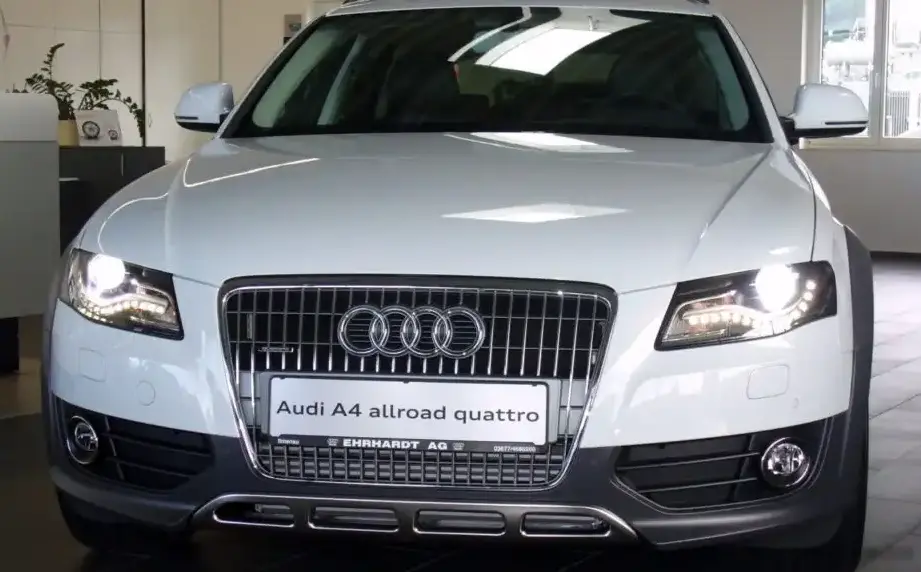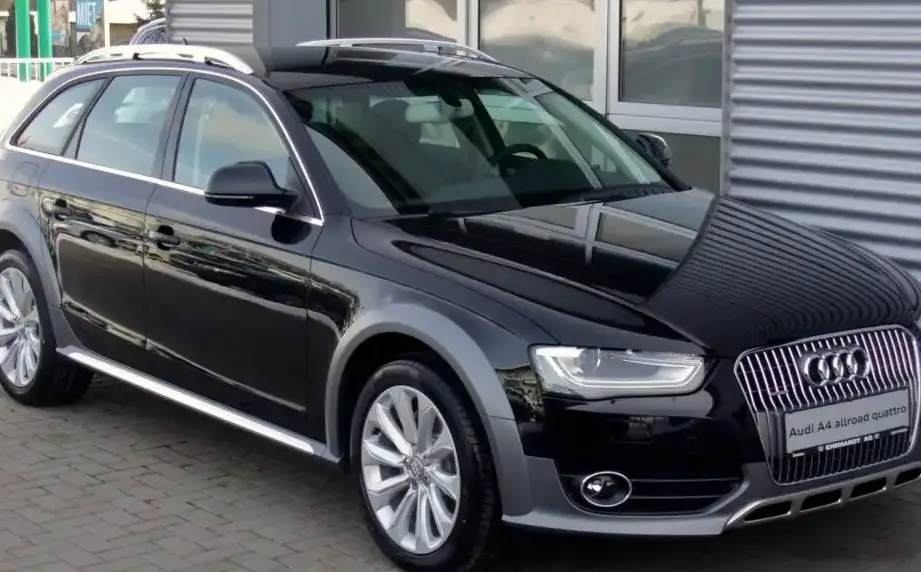
The Audi A4 Avant (B6 8E) 2.5 TDI V6 quattro, produced between 2001 and December 2004, represented a compelling blend of performance and practicality within the Audi A4 range. Positioned as a premium offering, this variant combined a potent turbocharged diesel engine with Audi’s renowned quattro all-wheel-drive system, packaged in the versatile Avant (station wagon) body style. It was a key model in the B6 generation, built on the Volkswagen Group’s 1HX0/A3 platform, and aimed at buyers seeking a refined and capable vehicle for both daily commuting and long-distance travel. This particular engine and drivetrain combination was a popular choice in European markets, offering a balance between fuel efficiency and strong torque delivery.
Technical Specifications
| Brand | Audi |
| Model | A4 |
| Generation | A4 Avant (B6 8E) |
| Type (Engine) | 2.5 TDI V6 (180 Hp) quattro |
| Start of production | 2001 |
| End of production | December, 2004 |
| Powertrain Architecture | Internal Combustion engine |
| Body type | Station wagon (estate) |
| Seats | 5 |
| Doors | 5 |
| Fuel consumption (urban) | 10.6 l/100 km (22.2 US mpg, 26.6 UK mpg, 9.4 km/l) |
| Fuel consumption (extra urban) | 5.9 l/100 km (39.9 US mpg, 47.9 UK mpg, 16.9 km/l) |
| Fuel consumption (combined) | 7.6 l/100 km (30.9 US mpg, 37.2 UK mpg, 13.2 km/l) |
| Fuel Type | Diesel |
| Acceleration 0 – 100 km/h | 8.7 sec |
| Acceleration 0 – 62 mph | 8.7 sec |
| Acceleration 0 – 60 mph | 8.3 sec |
| Maximum speed | 223 km/h (138.57 mph) |
| Weight-to-power ratio | 9.1 kg/Hp, 109.4 Hp/tonne |
| Weight-to-torque ratio | 4.4 kg/Nm, 224.9 Nm/tonne |
| Power | 180 Hp @ 4000 rpm |
| Power per litre | 72.1 Hp/l |
| Torque | 370 Nm @ 1500-2500 rpm (272.9 lb.-ft. @ 1500-2500 rpm) |
| Engine layout | Front, Longitudinal |
| Engine Model/Code | AKE, BAU, BDH |
| Engine displacement | 2496 cm3 (152.32 cu. in.) |
| Number of cylinders | 6 |
| Engine configuration | V-engine |
| Cylinder Bore | 78.3 mm (3.08 in.) |
| Piston Stroke | 86.4 mm (3.4 in.) |
| Compression ratio | 18.5:1 |
| Number of valves per cylinder | 4 |
| Fuel injection system | Direct injection |
| Engine aspiration | Turbocharger, Intercooler |
| Valvetrain | DOHC |
| Engine oil capacity | 5.5 l (5.81 US qt | 4.84 UK qt) |
| Coolant | 9 l (9.51 US qt | 7.92 UK qt) |
| Kerb Weight | 1645 kg (3626.6 lbs.) |
| Max. weight | 2195 kg (4839.15 lbs.) |
| Max load | 550 kg (1212.54 lbs.) |
| Trunk (boot) space – minimum | 442 l (15.61 cu. ft.) |
| Trunk (boot) space – maximum | 1184 l (41.81 cu. ft.) |
| Fuel tank capacity | 66 l (17.44 US gal | 14.52 UK gal) |
| Length | 4548 mm (179.06 in.) |
| Width | 1772 mm (69.76 in.) |
| Height | 1428 mm (56.22 in.) |
| Wheelbase | 2650 mm (104.33 in.) |
| Front track | 1528 mm (60.16 in.) |
| Rear (Back) track | 1526 mm (60.08 in.) |
| Drag coefficient (Cd) | 0.33 |
| Minimum turning circle | 11.1 m (36.42 ft.) |
| Drivetrain Architecture | The Internal combustion engine (ICE) drives permanently the four wheels of the vehicle. |
| Drive wheel | All wheel drive (4×4) |
| Number of gears | 6 gears, manual transmission |
| Front suspension | Independent multi-link suspension |
| Rear suspension | Independent multi-link suspension |
| Front brakes | Ventilated discs |
| Rear brakes | Disc |
| Assisting systems | ABS (Anti-lock braking system) |
| Steering type | Steering rack and pinion |
| Power steering | Hydraulic Steering |
| Tires size | 205/55 R16 |
| Wheel rims size | 7J x 16 |
Powertrain & Engine Architecture
At the heart of the A4 Avant 2.5 TDI quattro lies the AKE, BAU, or BDH engine code 2.5-liter V6 turbodiesel. This engine is a longitudinally mounted, 24-valve DOHC unit featuring direct fuel injection. The direct injection system, utilizing common rail technology, allowed for precise fuel delivery and optimized combustion, contributing to both power and efficiency. A variable geometry turbocharger (VGT) with an intercooler further enhanced performance by boosting intake air density. The engine’s robust construction and relatively simple design (for a V6) contributed to its longevity. The 6-speed manual transmission was the standard offering, providing well-spaced gear ratios to maximize the engine’s torque output. The quattro all-wheel-drive system employed a Torsen center differential, distributing power between the front and rear axles based on traction conditions, enhancing stability and grip.
Driving Characteristics
The 2.5 TDI V6 with the 6-speed manual transmission delivered a distinctly different driving experience compared to the lower-powered 1.8L gasoline or the later 1.9 TDI variants. The substantial 370 Nm (272.9 lb-ft) of torque, available from a low 1500 rpm, provided strong acceleration in everyday driving situations. While not a sports car, the A4 Avant 2.5 TDI quattro offered brisk performance, achieving 0-60 mph in approximately 8.3 seconds. The manual gearbox allowed for precise control, and the well-chosen gear ratios kept the engine within its optimal power band. Compared to the 1.8T, the TDI offered significantly more low-end grunt, making it more effortless for overtaking and hauling loads. The quattro system provided excellent traction, particularly in inclement weather, inspiring confidence on slippery roads. However, the diesel engine was noticeably louder and less refined than the gasoline alternatives.
Equipment & Trim Levels
The A4 Avant 2.5 TDI quattro typically came well-equipped, reflecting its position as a premium model. Standard features included automatic climate control, power windows and mirrors, a multi-function steering wheel, and a basic audio system. Upholstery was generally cloth, although leather options were available. Optional extras included sunroof, upgraded audio systems (often Bose), navigation, heated seats, and parking sensors. Trim levels varied slightly depending on the market, but generally followed a progression from base “SE” to more luxurious “Sport” or “S-Line” packages, adding cosmetic enhancements and additional features.
Chassis & Braking
The B6 A4 Avant featured fully independent multi-link suspension at both the front and rear, providing a comfortable ride and good handling characteristics. The suspension was tuned to balance comfort and control, offering a stable and predictable driving experience. Brakes consisted of ventilated discs at the front and solid discs at the rear, providing adequate stopping power for the vehicle’s weight and performance. Anti-lock braking system (ABS) was standard. Stabilizer bars were fitted front and rear to reduce body roll during cornering.
Market Reception & Comparison
The A4 Avant 2.5 TDI quattro was generally well-received by automotive critics. It was praised for its strong performance, comfortable ride, and practical estate car body style. The quattro system was a significant selling point, particularly in regions with harsh winters. Fuel economy was a strong point, offering a considerable advantage over the gasoline-powered A4 variants. However, some critics noted the engine’s relative lack of refinement compared to its competitors. Compared to the 1.8T A4 Avant, the TDI offered more torque and better fuel economy, but less overall horsepower and a less sporty driving experience. The later 1.9 TDI models offered similar fuel economy with slightly less power, making them a more popular choice in some markets.
Legacy
The 2.5 TDI V6 engine, particularly the AKE and BAU codes, has proven to be remarkably durable. Well-maintained examples can still be found on the road today, often with high mileage. However, like any diesel engine, it is susceptible to issues related to the fuel injection system and turbocharger. The quattro all-wheel-drive system remains highly regarded for its reliability and effectiveness. In the used car market, the A4 Avant 2.5 TDI quattro commands a premium over the lower-powered variants, reflecting its performance and desirability. It remains a popular choice for those seeking a practical, capable, and relatively affordable estate car with a strong diesel engine.