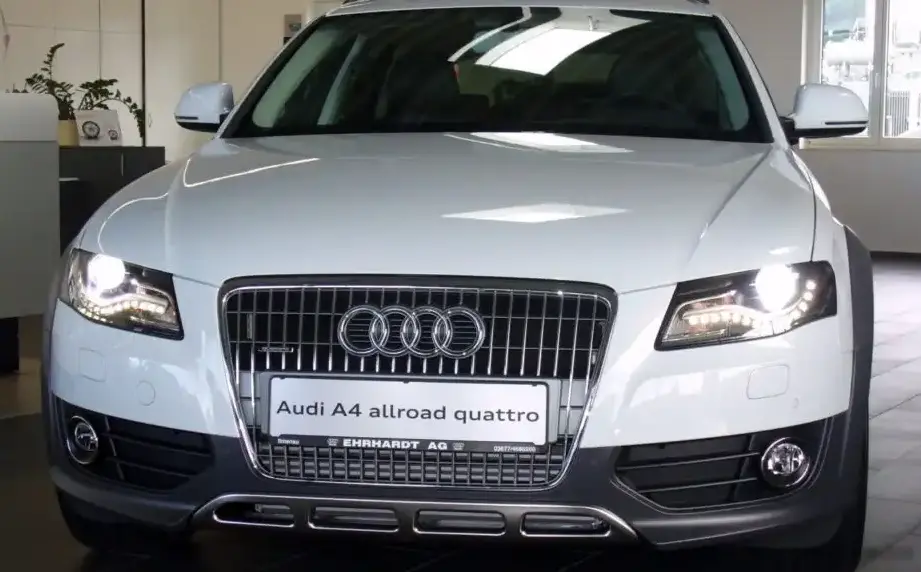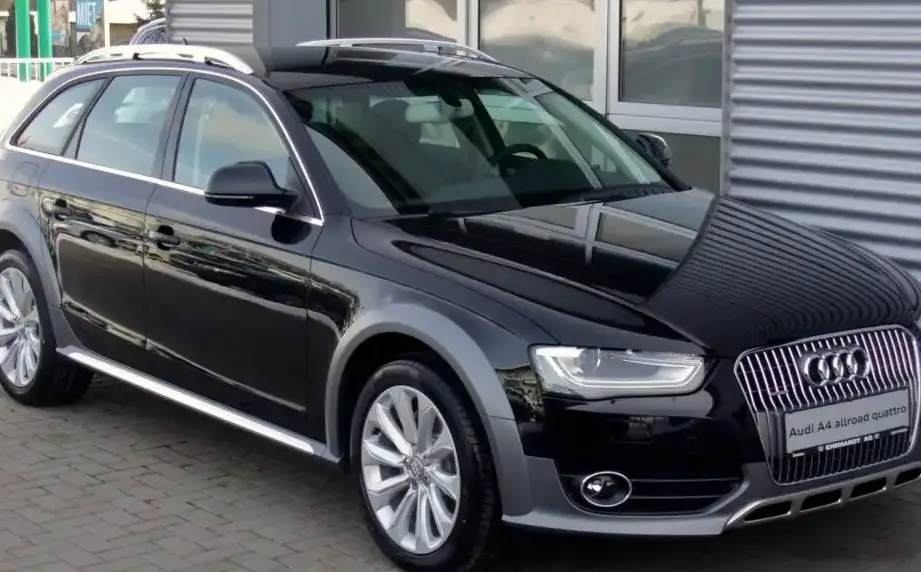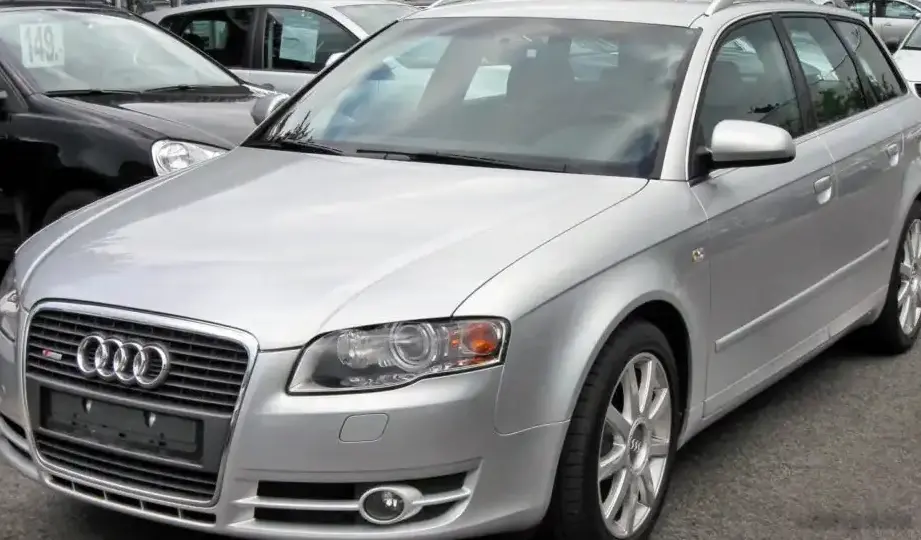
The Audi A4 Avant (B7 8E) 1.8T quattro, produced between 2004 and 2008, represents a compelling blend of practicality, performance, and Audi’s signature refinement within the compact executive estate (wagon) segment. Positioned as a mid-range offering in the B7 A4 lineup, it catered to buyers seeking all-wheel drive security and a responsive turbocharged engine without the higher price tag of the flagship models like the 3.2 FSI quattro or the performance-oriented S4. This variant was a popular choice in European markets, where wagons hold a significant share of the automotive landscape, and gained a following in North America as a more versatile alternative to the A4 sedan.
Technical Specifications
| Brand | Audi |
| Model | A4 |
| Generation | A4 Avant (B7 8E) |
| Type (Engine) | 1.8 T (163 Hp) quattro |
| Start of production | 2004 |
| End of production | 2008 |
| Powertrain Architecture | Internal Combustion engine |
| Body type | Station wagon (estate) |
| Seats | 5 |
| Doors | 5 |
| Fuel consumption (urban) | 12.8 l/100 km (18.4 US mpg, 22.1 UK mpg, 7.8 km/l) |
| Fuel consumption (extra urban) | 7.1 l/100 km (33.1 US mpg, 39.8 UK mpg, 14.1 km/l) |
| Fuel consumption (combined) | 9.2 l/100 km (25.6 US mpg, 30.7 UK mpg, 10.9 km/l) |
| CO2 emissions | 221 g/km |
| Fuel Type | Petrol (Gasoline) |
| Acceleration 0 – 100 km/h | 8.9 sec |
| Acceleration 0 – 62 mph | 8.9 sec |
| Acceleration 0 – 60 mph | 8.5 sec |
| Maximum speed | 223 km/h (138.57 mph) |
| Emission standard | Euro 4 |
| Weight-to-power ratio | 9.3 kg/Hp, 107.2 Hp/tonne |
| Weight-to-torque ratio | 6.8 kg/Nm, 148 Nm/tonne |
| Power | 163 Hp @ 5700 rpm |
| Power per litre | 91.5 Hp/l |
| Torque | 225 Nm @ 1950-4700 rpm (165.95 lb.-ft. @ 1950-4700 rpm) |
| Engine layout | Front, Longitudinal |
| Engine Model/Code | BFB |
| Engine displacement | 1781 cm3 (108.68 cu. in.) |
| Number of cylinders | 4 |
| Engine configuration | Inline |
| Cylinder Bore | 81 mm (3.19 in.) |
| Piston Stroke | 86.4 mm (3.4 in.) |
| Compression ratio | 9.3:1 |
| Number of valves per cylinder | 5 |
| Fuel injection system | Multi-port manifold injection |
| Engine aspiration | Turbocharger, Intercooler |
| Valvetrain | DOHC |
| Engine oil capacity | 4.1 l (4.33 US qt | 3.61 UK qt) |
| Coolant | 8 l (8.45 US qt | 7.04 UK qt) |
| Kerb Weight | 1520 kg (3351.03 lbs.) |
| Max. weight | 2070 kg (4563.57 lbs.) |
| Max load | 550 kg (1212.54 lbs.) |
| Trunk (boot) space – minimum | 442 l (15.61 cu. ft.) |
| Trunk (boot) space – maximum | 1184 l (41.81 cu. ft.) |
| Fuel tank capacity | 66 l (17.44 US gal | 14.52 UK gal) |
| Max. roof load | 75 kg (165.35 lbs.) |
| Permitted trailer load with brakes (8%) | 1800 kg (3968.32 lbs.) |
| Permitted trailer load with brakes (12%) | 1600 kg (3527.4 lbs.) |
| Permitted trailer load without brakes | 750 kg (1653.47 lbs.) |
| Permitted towbar download | 80 kg (176.37 lbs.) |
| Length | 4586 mm (180.55 in.) |
| Width | 1772 mm (69.76 in.) |
| Width including mirrors | 1937 mm (76.26 in.) |
| Height | 1427 mm (56.18 in.) |
| Wheelbase | 2648 mm (104.25 in.) |
| Front track | 1522 mm (59.92 in.) |
| Rear (Back) track | 1522 mm (59.92 in.) |
| Ride height (ground clearance) | 106 mm (4.17 in.) |
| Drag coefficient (Cd) | 0.32 |
| Minimum turning circle (turning diameter) | 11.1 m (36.42 ft.) |
| Drivetrain Architecture | The Internal combustion engine (ICE) drives permanently the four wheels of the vehicle. |
| Drive wheel | All wheel drive (4×4) |
| Number of gears and type of gearbox | 6 gears, manual transmission |
| Front suspension | Independent multi-link suspension |
| Rear suspension | Independent multi-link suspension |
| Front brakes | Ventilated discs |
| Rear brakes | Disc |
| Assisting systems | ABS (Anti-lock braking system) |
| Steering type | Steering rack and pinion |
| Power steering | Hydraulic Steering |
| Tires size | 205/55 R16 |
| Wheel rims size | 7J x 16 |
INTRODUCTION
The B7 generation Audi A4, launched in 2004, represented a significant evolution over its predecessor (the B6). The Avant (estate) version offered the same improvements in refinement, handling, and technology as the sedan and cabriolet models, but with the added benefit of increased cargo capacity. The 1.8T quattro variant, powered by the BFB engine code, was a popular choice, offering a balance between performance and fuel efficiency. It sat comfortably in the middle of the A4 Avant range, above the base 1.6-liter models and below the more powerful 2.0T and 3.2 FSI options. This model was primarily sold in Europe and other markets where wagons are favored, with limited availability in the United States.
Powertrain & Engine Architecture
The heart of the A4 Avant 1.8T quattro is the 1781cc (1.8-liter) inline-four cylinder engine, designated BFB. This engine is a turbocharged, multi-point fuel-injected unit featuring a double overhead camshaft (DOHC) valvetrain with five valves per cylinder (three intake, two exhaust). The turbocharger, coupled with an intercooler, provides a significant boost in power and torque compared to naturally aspirated engines of similar displacement. The BFB engine is known for its relatively robust design, although early versions of the 1.8T engines (like the earlier AEB code) were prone to issues with the diverter valve. The BFB addressed many of these concerns. The engine is longitudinally mounted, driving all four wheels through Audi’s renowned quattro all-wheel-drive system. The transmission is a six-speed manual, offering precise shifts and good control. While an automatic transmission was available, the manual was favored by enthusiasts for its more engaging driving experience.
Driving Characteristics
The 1.8T quattro Avant delivers a responsive and enjoyable driving experience. While not as overtly powerful as the larger-displacement engines, the 163 horsepower and 166 lb-ft of torque provide ample performance for everyday driving and even spirited excursions. The turbocharger provides a noticeable surge of power in the mid-range, making overtaking maneuvers relatively effortless. The six-speed manual transmission allows the driver to keep the engine in its optimal power band. Compared to the 2.0T, the 1.8T feels slightly less urgent off the line, but the difference is not dramatic. The quattro all-wheel-drive system provides excellent traction in all weather conditions, enhancing stability and confidence. The suspension, typically a multi-link setup front and rear, offers a good balance between comfort and handling, providing a composed ride even on uneven surfaces.
Equipment & Trim Levels
The A4 Avant 1.8T quattro typically came well-equipped, even as a mid-range model. Standard features often included alloy wheels, air conditioning, a CD stereo system, power windows and mirrors, and ABS brakes. Higher trim levels, such as the SE or Sport models (depending on the market), added features like leather upholstery, sunroof, upgraded audio systems, and automatic climate control. Optional extras included navigation systems, parking sensors, and xenon headlights. Interior upholstery was typically cloth, with leather available as an upgrade. The dashboard layout was typical of Audi at the time, characterized by a clean, functional design and high-quality materials.
Chassis & Braking
The B7 A4 Avant utilizes a sophisticated chassis design, featuring independent multi-link suspension at both the front and rear. This setup provides excellent wheel control and a comfortable ride. The quattro all-wheel-drive system distributes power between the front and rear axles as needed, optimizing traction. Braking duties are handled by ventilated discs at the front and solid discs at the rear, providing ample stopping power. ABS (Anti-lock Braking System) is standard, enhancing safety and stability during emergency braking. Stabilizer bars are fitted front and rear to reduce body roll during cornering.
Market Reception & Comparison
The A4 Avant 1.8T quattro was generally well-received by automotive critics. It was praised for its refined driving experience, spacious interior, and practical wagon body style. Compared to the 2.0T variant, the 1.8T offered a slightly more economical option, although the performance difference was noticeable. The 1.8T was also considered more reliable than some of the earlier 1.8T engines, thanks to improvements made by Audi. Fuel economy was respectable for its class, averaging around 25-30 mpg in combined driving. The main competitor was the BMW 3 Series Touring, which offered a similar blend of performance and practicality.
Legacy
The Audi A4 Avant (B7) 1.8T quattro remains a popular choice in the used car market. The BFB engine is generally considered reliable, although regular maintenance is essential. Common issues include oil leaks, turbocharger wear, and occasional problems with the electronic systems. The quattro all-wheel-drive system is highly regarded for its durability and effectiveness. Today, these cars offer a compelling combination of style, performance, and practicality at an affordable price point, making them a favorite among Audi enthusiasts and those seeking a versatile and well-built wagon.