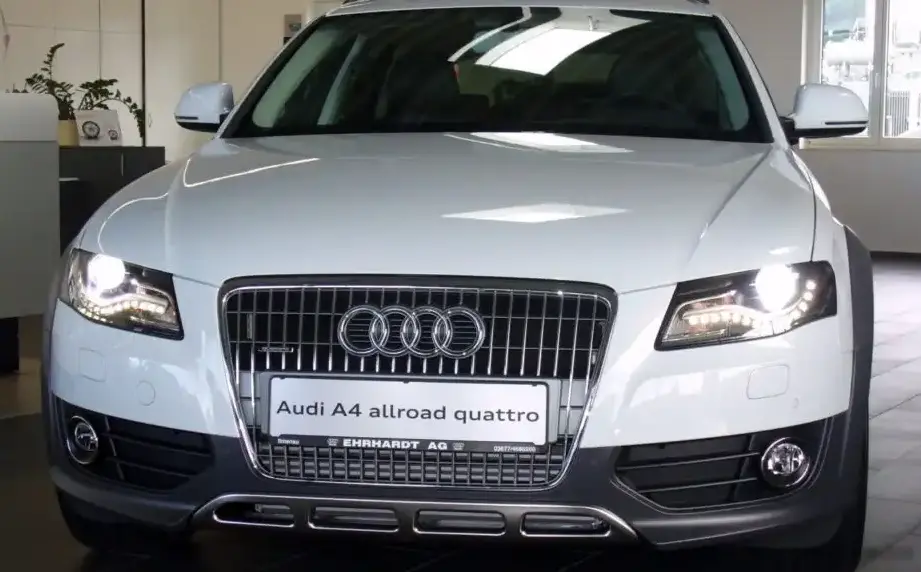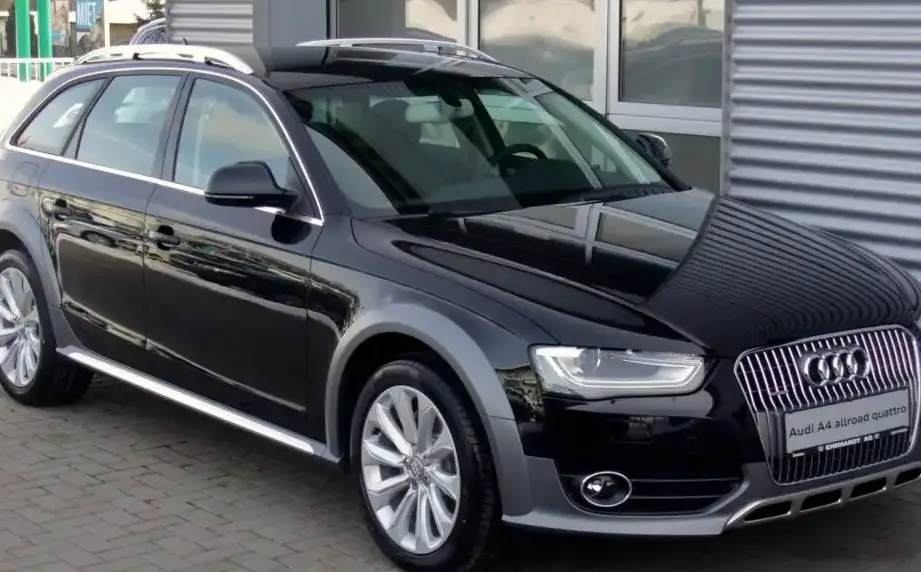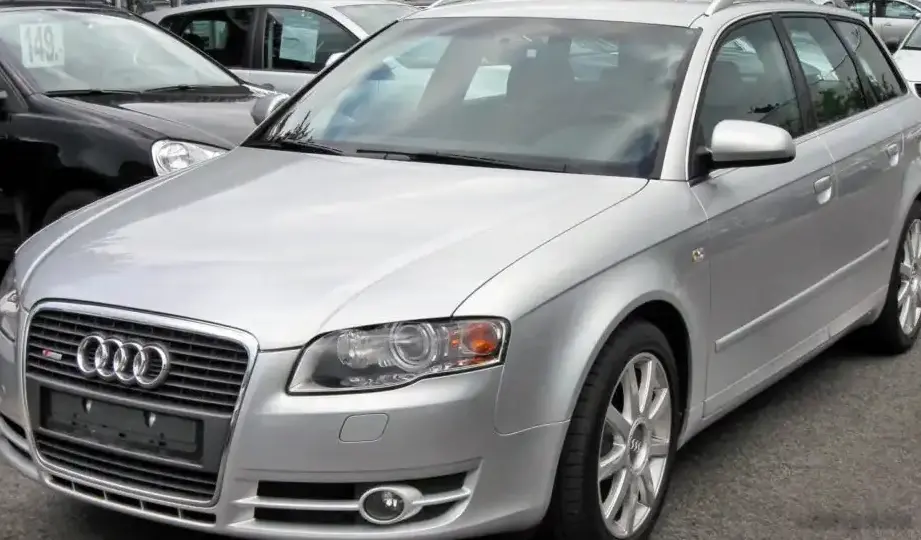
The Audi A4 Avant (B7 8E) 2.0 TDI quattro DPF, produced from 2007 to 2008, represents a compelling blend of practicality, performance, and efficiency within the broader B7 A4 Avant range. Positioned as a mid-range offering, this variant catered to buyers seeking the security of Audi’s quattro all-wheel drive system combined with the fuel economy benefits of a modern turbodiesel engine. It occupied a space between the lower-powered front-wheel-drive TDI models and the more potent, often more expensive, petrol-powered A4 Avants. This model is part of the B7 generation (2004-2008) of the A4, which itself was based on the Volkswagen Group’s PL46 platform, also known as the 1HX0/A3 platform.
Technical Specifications
| Brand | Audi |
| Model | A4 |
| Generation | A4 Avant (B7 8E) |
| Type (Engine) | 2.0 TDI (140 Hp) quattro DPF |
| Start of production | 2007 |
| End of production | 2008 |
| Powertrain Architecture | Internal Combustion engine |
| Body type | Station wagon (estate) |
| Seats | 5 |
| Doors | 5 |
| Fuel consumption (urban) | 8.7 l/100 km (27 US mpg, 32.5 UK mpg, 11.5 km/l) |
| Fuel consumption (extra urban) | 5.6 l/100 km (42 US mpg, 50.4 UK mpg, 17.9 km/l) |
| Fuel consumption (combined) | 6.7 l/100 km (35.1 US mpg, 42.2 UK mpg, 14.9 km/l) |
| CO2 emissions | 178 g/km |
| Fuel Type | Diesel |
| Acceleration 0 – 100 km/h | 10 sec |
| Acceleration 0 – 62 mph | 10 sec |
| Acceleration 0 – 60 mph | 9.5 sec |
| Maximum speed | 203 km/h (126.14 mph) |
| Emission standard | Euro 4 |
| Weight-to-power ratio | 11.1 kg/Hp, 89.7 Hp/tonne |
| Weight-to-torque ratio | 4.9 kg/Nm, 205.1 Nm/tonne |
| Power | 140 Hp @ 4000 rpm |
| Power per litre | 70.5 Hp/l |
| Torque | 320 Nm @ 1750-2500 rpm (236.02 lb.-ft. @ 1750-2500 rpm) |
| Engine layout | Front, Longitudinal |
| Engine Model/Code | EA188 / BPW |
| Engine displacement | 1986 cm3 (121.19 cu. in.) |
| Number of cylinders | 4 |
| Engine configuration | Inline |
| Compression ratio | 19:1 |
| Number of valves per cylinder | 2 |
| Fuel injection system | Pump-nozzle (Unit Injector) |
| Engine aspiration | Turbocharger, Intercooler |
| Valvetrain | OHC |
| Engine oil capacity | 3.8 l (4.02 US qt | 3.34 UK qt) |
| Coolant | 8 l (8.45 US qt | 7.04 UK qt) |
| Kerb Weight | 1560 kg (3439.21 lbs.) |
| Max. weight | 2110 kg (4651.75 lbs.) |
| Max load | 550 kg (1212.54 lbs.) |
| Trunk (boot) space – minimum | 442 l (15.61 cu. ft.) |
| Trunk (boot) space – maximum | 1354 l (47.82 cu. ft.) |
| Fuel tank capacity | 63 l (16.64 US gal | 13.86 UK gal) |
| Max. roof load | 75 kg (165.35 lbs.) |
| Permitted trailer load with brakes (8%) | 1800 kg (3968.32 lbs.) |
| Permitted trailer load with brakes (12%) | 1600 kg (3527.4 lbs.) |
| Permitted trailer load without brakes | 750 kg (1653.47 lbs.) |
| Permitted towbar download | 80 kg (176.37 lbs.) |
| Length | 4586 mm (180.55 in.) |
| Width | 1772 mm (69.76 in.) |
| Width including mirrors | 1937 mm (76.26 in.) |
| Height | 1427 mm (56.18 in.) |
| Wheelbase | 2642 mm (104.02 in.) |
| Front track | 1519 mm (59.8 in.) |
| Rear (Back) track | 1514 mm (59.61 in.) |
| Drag coefficient (Cd) | 0.29 |
| Minimum turning circle (turning diameter) | 11.1 m (36.42 ft.) |
| Drivetrain Architecture | The Internal combustion engine (ICE) drives permanently the four wheels of the vehicle. |
| Drive wheel | All wheel drive (4×4) |
| Number of gears and type of gearbox | 6 gears, manual transmission |
| Front suspension | Independent multi-link suspension |
| Rear suspension | Independent multi-link suspension |
| Front brakes | Ventilated discs |
| Rear brakes | Disc |
| Assisting systems | ABS (Anti-lock braking system) |
| Steering type | Steering rack and pinion |
| Power steering | Hydraulic Steering |
| Tires size | 205/55 R16 |
| Wheel rims size | 7J x 16 |
Powertrain & Engine Architecture
The heart of the A4 Avant 2.0 TDI quattro DPF is the EA188 series 2.0-liter inline-four diesel engine, specifically the BPW code. This engine utilizes a common-rail direct injection system with pump-nozzle technology, delivering fuel directly into the cylinders at extremely high pressure. This, combined with a variable geometry turbocharger and intercooler, allows for a good balance of power and efficiency. The engine features an overhead camshaft (OHC) valvetrain with two valves per cylinder. The engine’s longitudinal mounting and the quattro all-wheel-drive system necessitate a more complex drivetrain layout compared to front-wheel-drive A4 variants. The six-speed manual transmission was standard, providing precise gear changes and contributing to the car’s engaging driving experience.
Driving Characteristics
The 2.0 TDI quattro offered a composed and capable driving experience. While not overtly sporty, the 140 horsepower and 320 Nm (236 lb-ft) of torque provided adequate performance for everyday driving and even longer journeys. The quattro all-wheel-drive system instilled confidence in various weather conditions, providing enhanced traction and stability. Compared to the more powerful petrol variants, the 2.0 TDI prioritized fuel economy and torque delivery. The manual transmission, while offering more driver involvement than an automatic, had gear ratios tuned for efficiency rather than outright acceleration. The engine felt responsive from around 1750 rpm, making it well-suited for overtaking maneuvers.
Equipment & Trim Levels
The A4 Avant 2.0 TDI quattro DPF typically came equipped with a respectable level of standard features. These included air conditioning, power windows, central locking, and an integrated audio system. Interior upholstery was generally cloth, although leather options were available. The dashboard layout was typical of Audi at the time, characterized by a clean and functional design. Optional extras included a sunroof, upgraded audio systems, parking sensors, and heated seats. The DPF (Diesel Particulate Filter) was a standard feature, reflecting increasingly stringent emissions regulations.
Chassis & Braking
The B7 A4 Avant featured an independent multi-link suspension system at both the front and rear, providing a comfortable ride and good handling characteristics. The quattro all-wheel-drive system distributed power between the front and rear axles as needed, optimizing traction. Braking duties were handled by ventilated discs at the front and solid discs at the rear, assisted by ABS (Anti-lock Braking System). The suspension was tuned to balance comfort and handling, making the A4 Avant a pleasant car to drive on a variety of road surfaces.
Market Reception & Comparison
The Audi A4 Avant 2.0 TDI quattro DPF was generally well-received by automotive critics. It was praised for its blend of practicality, fuel efficiency, and all-weather capability. Compared to the more powerful A4 variants, it offered a more affordable entry point into the Audi estate car range. Fuel economy was a key selling point, and the 2.0 TDI consistently outperformed its petrol counterparts in this regard. Reliability was generally good, although the DPF system could be prone to issues if the car was primarily used for short journeys.
Legacy
The EA188 2.0 TDI engine, in its various iterations, proved to be a durable and reliable powerplant. While early versions of the engine were known for potential issues with oil consumption, the BPW code generally fared better. Today, the A4 Avant 2.0 TDI quattro DPF remains a popular choice in the used car market, particularly for buyers seeking a practical, fuel-efficient, and well-built estate car. Its quattro all-wheel-drive system continues to be a valuable asset in regions with inclement weather. Regular maintenance, including timely DPF regeneration and oil changes, is crucial for ensuring the long-term reliability of this powertrain.