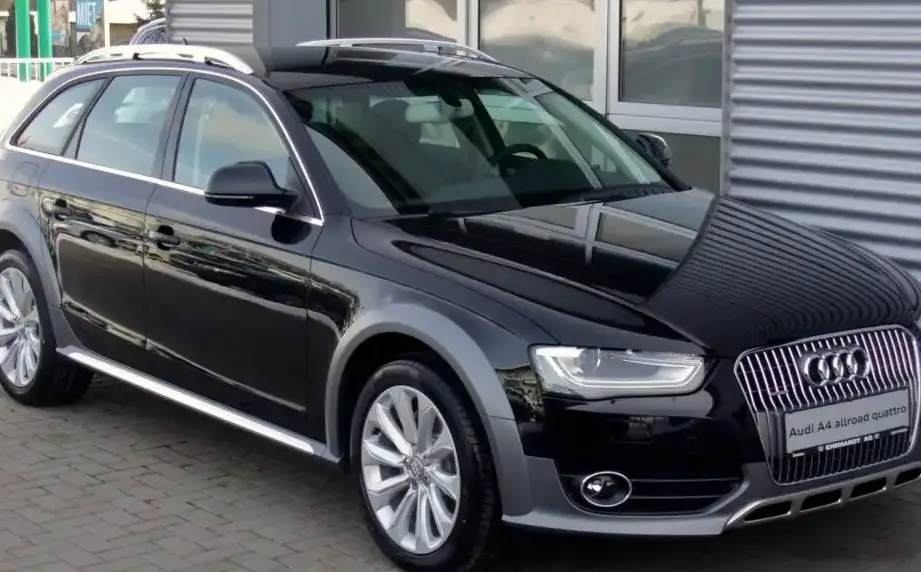
The Audi A4 Avant (B7 8E) 2.0 TFSI DTM, produced from June 2005 to June 2008, represents a performance-oriented variant within the B7 generation of Audi’s popular A4 Avant (station wagon) model line. Positioned as a sporty offering, the 2.0 TFSI DTM aimed to deliver enhanced driving dynamics and a more engaging experience compared to the standard A4 Avant trims. It was primarily marketed in Europe, where the demand for performance wagons was, and remains, significant. This model utilized the Volkswagen Group’s B7 platform (internally designated 8E), which underpinned a range of vehicles including the Audi A3, Volkswagen Golf, and Škoda Octavia.
| Brand | Audi |
| Model | A4 |
| Generation | A4 Avant (B7 8E) |
| Type (Engine) | 2.0 TFSI DTM (220 Hp) |
| Start of production | June, 2005 |
| End of production | June, 2008 |
| Powertrain Architecture | Internal Combustion engine |
| Body type | Station wagon (estate) |
| Seats | 5 |
| Doors | 5 |
| Fuel consumption (urban) | 11.3 l/100 km (20.8 US mpg, 25 UK mpg, 8.8 km/l) |
| Fuel consumption (extra urban) | 6.3 l/100 km (37.3 US mpg, 44.8 UK mpg, 15.9 km/l) |
| Fuel consumption (combined) | 8.1 l/100 km (29 US mpg, 34.9 UK mpg, 12.3 km/l) |
| CO2 emissions | 194 g/km |
| Fuel Type | Petrol (Gasoline) |
| Acceleration 0 – 100 km/h | 7.4 sec |
| Acceleration 0 – 62 mph | 7.4 sec |
| Acceleration 0 – 60 mph | 7 sec |
| Maximum speed | 241 km/h (149.75 mph) |
| Emission standard | Euro 4 |
| Weight-to-power ratio | 6.8 kg/Hp, 148.1 Hp/tonne |
| Weight-to-torque ratio | 5 kg/Nm, 202 Nm/tonne |
| Power | 220 Hp @ 5900-6100 rpm |
| Power per litre | 110.9 Hp/l |
| Torque | 300 Nm @ 2200-4000 rpm (221.27 lb.-ft. @ 2200-4000 rpm) |
| Engine layout | Front, Longitudinal |
| Engine Model/Code | BUL |
| Engine displacement | 1984 cm3 (121.07 cu. in.) |
| Number of cylinders | 4 |
| Engine configuration | Inline |
| Cylinder Bore | 82.5 mm (3.25 in.) |
| Piston Stroke | 92.8 mm (3.65 in.) |
| Compression ratio | 10.5:1 |
| Number of valves per cylinder | 4 |
| Fuel injection system | Direct injection |
| Engine aspiration | Turbocharger, Intercooler |
| Valvetrain | DOHC |
| Engine oil capacity | 4.5 l (4.76 US qt | 3.96 UK qt) |
| Coolant | 8 l (8.45 US qt | 7.04 UK qt) |
| Kerb Weight | 1485 kg (3273.86 lbs.) |
| Max. weight | 2035 kg (4486.41 lbs.) |
| Max load | 550 kg (1212.54 lbs.) |
| Trunk (boot) space – minimum | 442 l (15.61 cu. ft.) |
| Trunk (boot) space – maximum | 1354 l (47.82 cu. ft.) |
| Fuel tank capacity | 70 l (18.49 US gal | 15.4 UK gal) |
| Max. roof load | 75 kg (165.35 lbs.) |
| Permitted trailer load with brakes (8%) | 1600 kg (3527.4 lbs.) |
| Permitted trailer load with brakes (12%) | 1400 kg (3086.47 lbs.) |
| Permitted trailer load without brakes | 750 kg (1653.47 lbs.) |
| Length | 4586 mm (180.55 in.) |
| Width | 1772 mm (69.76 in.) |
| Width including mirrors | 1937 mm (76.26 in.) |
| Height | 1453 mm (57.2 in.) |
| Wheelbase | 2642 mm (104.02 in.) |
| Front track | 1519 mm (59.8 in.) |
| Rear (Back) track | 1514 mm (59.61 in.) |
| Drag coefficient (Cd) | 0.33 |
| Minimum turning circle | 11.1 m (36.42 ft.) |
| Drivetrain Architecture | The Internal combustion engine (ICE) drives the front wheels of the vehicle. |
| Drive wheel | Front wheel drive |
| Number of gears and type of gearbox | 6 gears, manual transmission |
| Front suspension | Independent multi-link suspension |
| Rear suspension | Independent multi-link suspension |
| Front brakes | Ventilated discs |
| Rear brakes | Disc |
| Assisting systems | ABS (Anti-lock braking system) |
| Steering type | Steering rack and pinion |
| Power steering | Hydraulic Steering |
| Tires size | 215/55 R16 |
| Wheel rims size | 7J x 16 |
Powertrain & Engine Architecture
The heart of the A4 Avant 2.0 TFSI DTM is the BUL engine code, a 1.984-liter (121.07 cubic inches) inline-four cylinder gasoline engine. This engine is a member of Audi’s TFSI (Turbocharged Fuel Stratified Injection) family, utilizing direct fuel injection and a turbocharger with an intercooler to boost power and efficiency. The direct injection system precisely meters fuel into the combustion chamber, improving combustion efficiency and reducing knock. The engine features a dual overhead camshaft (DOHC) valvetrain with four valves per cylinder, optimizing airflow for increased power output. The turbocharger provides significant boost, allowing the relatively small displacement engine to produce 220 horsepower at 5900-6100 rpm and 300 Nm (221.27 lb-ft) of torque between 2200 and 4000 rpm. The engine is longitudinally mounted in the front of the vehicle, driving the front wheels through a six-speed manual transmission. This configuration was chosen to optimize weight distribution and handling.
Driving Characteristics
The 2.0 TFSI DTM variant offered a noticeable step up in performance compared to the base A4 Avant models. The 220 hp output and 300 Nm of torque provided brisk acceleration, with a 0-62 mph (0-100 km/h) time of 7.4 seconds and a top speed of 149.75 mph (241 km/h). The six-speed manual transmission allowed for precise control over the engine’s powerband. While not as overtly aggressive as some dedicated performance cars, the 2.0 TFSI DTM delivered a responsive and engaging driving experience. Compared to lower-powered A4 Avants, the DTM variant felt significantly more capable in overtaking maneuvers and on winding roads. The manual transmission, while offering more driver involvement, did require more effort than the automatic options available on other A4 trims. The gear ratios were tuned to balance acceleration and fuel economy, providing a good compromise for everyday driving.
Equipment & Trim Levels
The A4 Avant 2.0 TFSI DTM typically came equipped with a range of features designed to enhance both comfort and performance. Standard equipment often included sport seats, alloy wheels (typically 16 or 17 inch), a multi-function steering wheel, and an upgraded audio system. Interior upholstery was usually a combination of cloth and leather. Optional extras included features such as a sunroof, navigation system, parking sensors, and xenon headlights. The “DTM” designation often signified a specific aesthetic package, including unique badging and exterior trim elements. The trim level generally sat in the mid-range of the A4 Avant lineup, offering a balance of performance and features without the full luxury appointments of the top-tier models.
Chassis & Braking
The A4 Avant 2.0 TFSI DTM utilized an independent multi-link suspension system at both the front and rear axles. This suspension design provided a good balance of ride comfort and handling precision. The front suspension featured ventilated disc brakes, while the rear brakes were solid discs. Anti-lock Braking System (ABS) was standard. The chassis was reinforced in certain areas to handle the increased power output of the 2.0 TFSI engine. Stabilizer bars were fitted to both the front and rear axles to reduce body roll during cornering. The steering system was a rack-and-pinion setup with hydraulic power assistance, providing precise and responsive steering feel.
Market Reception & Comparison
The Audi A4 Avant 2.0 TFSI DTM was generally well-received by automotive critics. It was praised for its strong performance, engaging driving dynamics, and practical station wagon body style. Compared to other A4 Avant trims, the 2.0 TFSI DTM offered a more sporty and rewarding driving experience. Fuel economy was reasonable for a performance-oriented vehicle, averaging around 29 US mpg (34.9 UK mpg) in combined driving. However, some critics noted that the ride could be slightly firm compared to the more comfort-focused A4 variants. Compared to the diesel-powered A4 Avants (such as the 2.0 TDI), the 2.0 TFSI DTM offered more outright power but typically had higher fuel consumption.
Legacy
The Audi A4 Avant (B7) 2.0 TFSI DTM has proven to be a relatively reliable vehicle in the used car market. The 2.0 TFSI engine, while capable of producing significant power, is generally considered robust when properly maintained. Common maintenance items include regular oil changes, timing belt replacement (typically every 90,000 miles), and inspection of the turbocharger. The manual transmission is also generally reliable, but clutch wear should be monitored. Today, the A4 Avant 2.0 TFSI DTM remains a popular choice for enthusiasts seeking a practical and engaging performance wagon. Its combination of performance, practicality, and Audi build quality has ensured its continued appeal in the used car market.