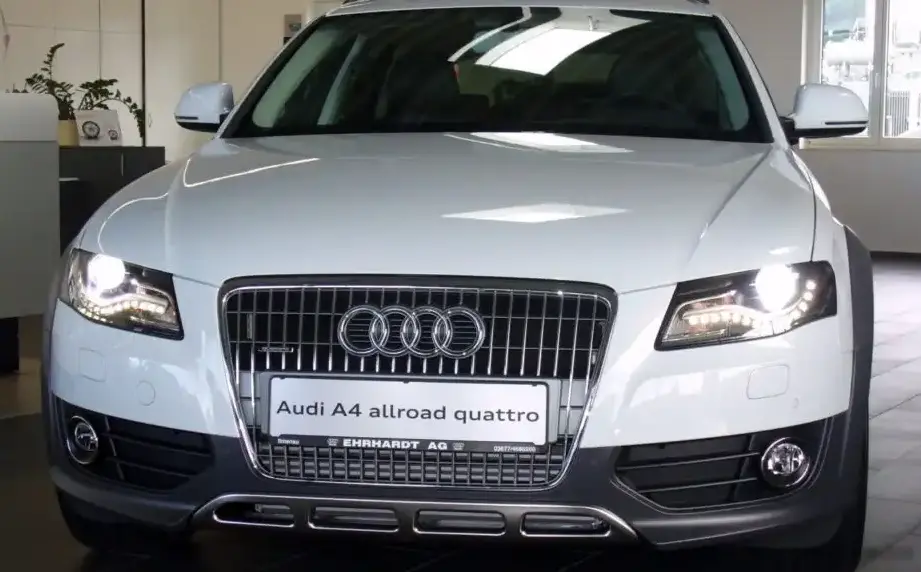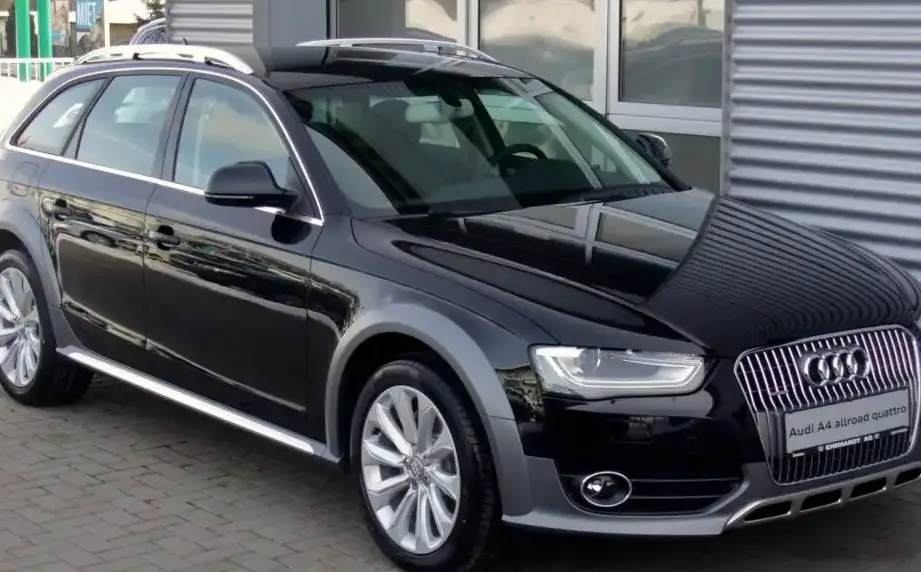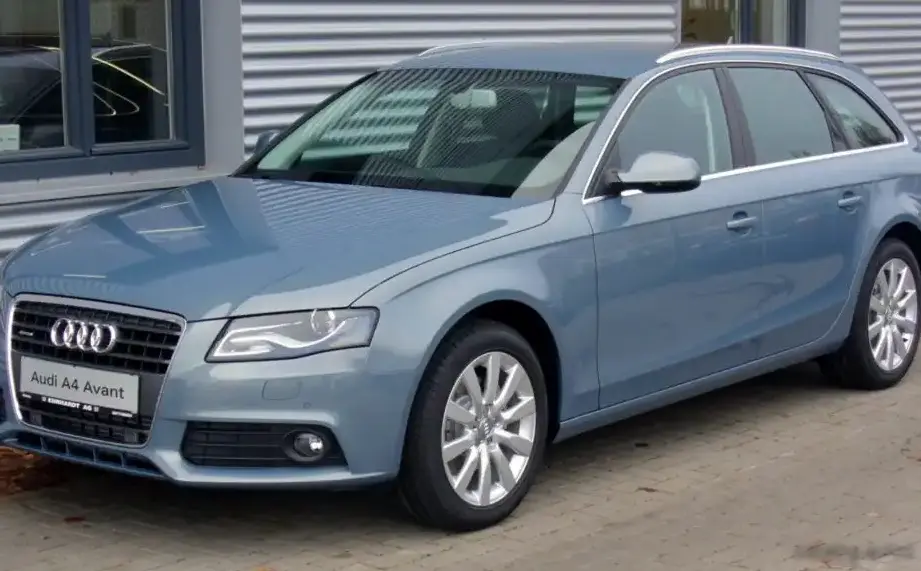
The Audi A4 Avant (B8 8K) 2.0 TDI quattro, produced between 2009 and 2011, represents a compelling blend of practicality, performance, and Audi’s signature refinement within the compact executive estate (wagon) segment. Positioned as a mid-range offering within the B8 A4 Avant lineup, this variant catered to buyers seeking the security of all-wheel drive and the fuel efficiency of a diesel engine, without opting for the higher performance or luxury trims. It was a popular choice in European markets, where station wagons maintain a strong presence, and offered a sophisticated alternative to more mainstream competitors.
Technical Specifications
| Brand | Audi |
| Model | A4 |
| Generation | A4 Avant (B8 8K) |
| Type (Engine) | 2.0 TDI (170 Hp) quattro |
| Start of production | 2009 |
| End of production | 2011 |
| Powertrain Architecture | Internal Combustion engine |
| Body type | Station wagon (estate) |
| Seats | 5 |
| Doors | 5 |
| Fuel consumption (urban) | 7.1 l/100 km (33.1 US mpg, 39.8 UK mpg, 14.1 km/l) |
| Fuel consumption (extra urban) | 5.1 l/100 km (46.1 US mpg, 55.4 UK mpg, 19.6 km/l) |
| Fuel consumption (combined) | 5.8 l/100 km (40.6 US mpg, 48.7 UK mpg, 17.2 km/l) |
| Fuel Type | Diesel |
| Acceleration 0 – 100 km/h | 8.6 sec |
| Acceleration 0 – 62 mph | 8.6 sec |
| Acceleration 0 – 60 mph | 8.2 sec |
| Maximum speed | 220 km/h (136.7 mph) |
| Emission standard | Euro 5 |
| Weight-to-power ratio | 9.4 kg/Hp, 106.3 Hp/tonne |
| Weight-to-torque ratio | 4.6 kg/Nm, 218.8 Nm/tonne |
| Power | 170 Hp @ 4200 rpm |
| Power per litre | 86.4 Hp/l |
| Torque | 350 Nm @ 1750-2500 rpm (258.15 lb.-ft. @ 1750-2500 rpm) |
| Engine layout | Front, Longitudinal |
| Engine Model/Code | EA189 / CAHA |
| Engine displacement | 1968 cm3 (120.09 cu. in.) |
| Number of cylinders | 4 |
| Engine configuration | Inline |
| Cylinder Bore | 81 mm (3.19 in.) |
| Piston Stroke | 95.5 mm (3.76 in.) |
| Compression ratio | 16.5:1 |
| Number of valves per cylinder | 4 |
| Fuel injection system | Diesel Commonrail |
| Engine aspiration | Turbocharger, Intercooler |
| Valvetrain | DOHC |
| Engine oil capacity | 5 l (5.28 US qt | 4.4 UK qt) |
| Kerb Weight | 1600 kg (3527.4 lbs.) |
| Max. weight | 2170 kg (4784.03 lbs.) |
| Max load | 570 kg (1256.63 lbs.) |
| Trunk (boot) space – minimum | 490 l (17.3 cu. ft.) |
| Trunk (boot) space – maximum | 1430 l (50.5 cu. ft.) |
| Fuel tank capacity | 65 l (17.17 US gal | 14.3 UK gal) |
| Length | 4703 mm (185.16 in.) |
| Width | 1826 mm (71.89 in.) |
| Height | 1436 mm (56.54 in.) |
| Wheelbase | 2808 mm (110.55 in.) |
| Front track | 1564 mm (61.57 in.) |
| Rear (Back) track | 1551 mm (61.06 in.) |
| Drag coefficient (Cd) | 0.32 |
| Minimum turning circle | 11.5 m (37.73 ft.) |
| Drivetrain Architecture | All wheel drive (4×4) |
| Number of gears | 6 gears, manual transmission |
| Front suspension | Independent multi-link suspension |
| Rear suspension | Independent multi-link spring suspension with stabilizer |
| Front brakes | Ventilated discs |
| Rear brakes | Disc |
| Assisting systems | ABS (Anti-lock braking system) |
| Steering type | Steering rack and pinion |
| Power steering | Electric Steering |
| Tires size | 225/65 R16 |
| Wheel rims size | 7.5J x 16 |
Powertrain & Engine Architecture
At the heart of the A4 Avant 2.0 TDI quattro lies the EA189 series 2.0-liter inline-four diesel engine, specifically the CAHA code variant. This engine utilizes a common rail direct injection system, delivering fuel at extremely high pressures for optimized combustion. The engine features a single turbocharger with an intercooler, boosting power and torque. The double overhead camshaft (DOHC) valvetrain, with four valves per cylinder, contributes to efficient gas exchange. The engine’s 16.5:1 compression ratio is typical for a diesel engine, aiding in efficient combustion. The six-speed manual transmission was standard, providing a balance between fuel economy and driver engagement. The quattro all-wheel-drive system employs a Torsen center differential, distributing torque between the front and rear axles based on traction conditions, enhancing stability and grip.
Driving Characteristics
The 170 horsepower and 350 Nm (258 lb-ft) of torque offered by the 2.0 TDI engine provided adequate performance for everyday driving. Acceleration from 0-60 mph took approximately 8.2 seconds, and top speed was rated at 136.7 mph. While not a sports car, the engine delivered a broad torque curve, making it responsive in most driving situations. Compared to the more powerful 2.0 TFSI gasoline variants, the TDI offered superior fuel economy and a more relaxed driving experience. The manual transmission’s gear ratios were tuned for a balance of acceleration and fuel efficiency. The quattro system provided confident handling in adverse weather conditions, a significant advantage over front-wheel-drive A4 Avants.
Equipment & Trim Levels
The 2.0 TDI quattro typically came equipped with a respectable level of standard features. These included air conditioning, power windows, power mirrors, a multi-function steering wheel, and an Audi Concert audio system. Upholstery was typically cloth, although leather options were available. Optional extras included a sunroof, navigation system, parking sensors, and upgraded alloy wheels. Trim levels varied slightly depending on the market, but generally, this variant occupied a middle ground, offering a good balance of features and price.
Chassis & Braking
The B8 A4 Avant featured a sophisticated chassis design. Front suspension utilized an independent multi-link setup, providing excellent ride comfort and handling precision. The rear suspension also employed an independent multi-link configuration, further enhancing ride quality. Brakes consisted of ventilated discs at the front and solid discs at the rear. Anti-lock braking system (ABS) was standard. The suspension tuning was geared towards comfort and stability, rather than outright sportiness, reflecting the car’s intended role as a practical and refined estate.
Market Reception & Comparison
The A4 Avant 2.0 TDI quattro was generally well-received by automotive critics. It was praised for its fuel efficiency, comfortable ride, and the added security of all-wheel drive. Compared to the higher-output 2.0 TFSI models, the TDI offered lower running costs but less exhilarating performance. The 2.0 TDI was also often compared to the 3.0 TDI V6, which offered significantly more power but at a higher price point and with increased fuel consumption. The 1.8 TFSI models were seen as a more affordable alternative, but lacked the torque and fuel economy of the diesel.
Legacy
The EA189 engine family, while generally reliable, has been subject to scrutiny regarding emissions compliance, leading to software updates and recalls. However, well-maintained examples of the A4 Avant 2.0 TDI quattro remain relatively dependable. The quattro all-wheel-drive system continues to be a desirable feature in the used car market, particularly in regions with inclement weather. Today, these A4 Avants represent a good value proposition for buyers seeking a practical, comfortable, and refined estate car with a proven track record.