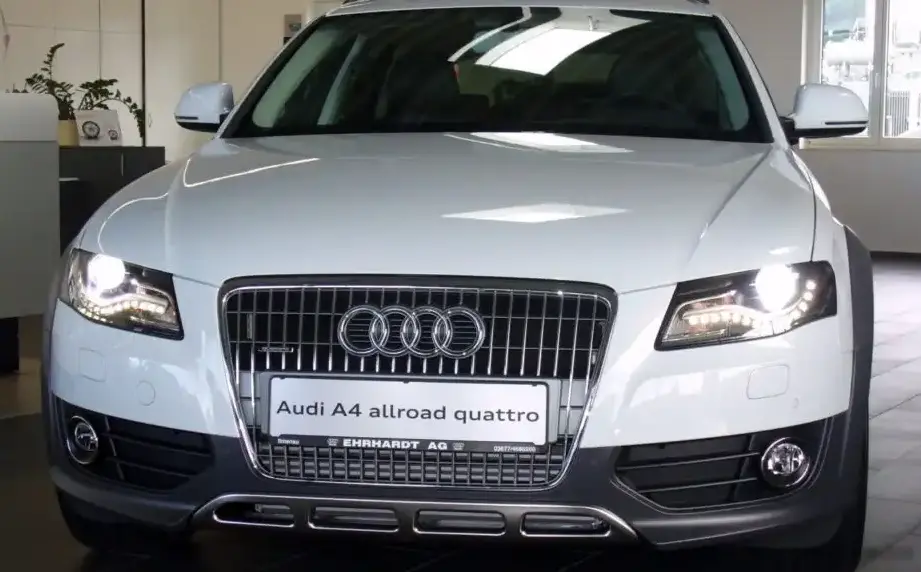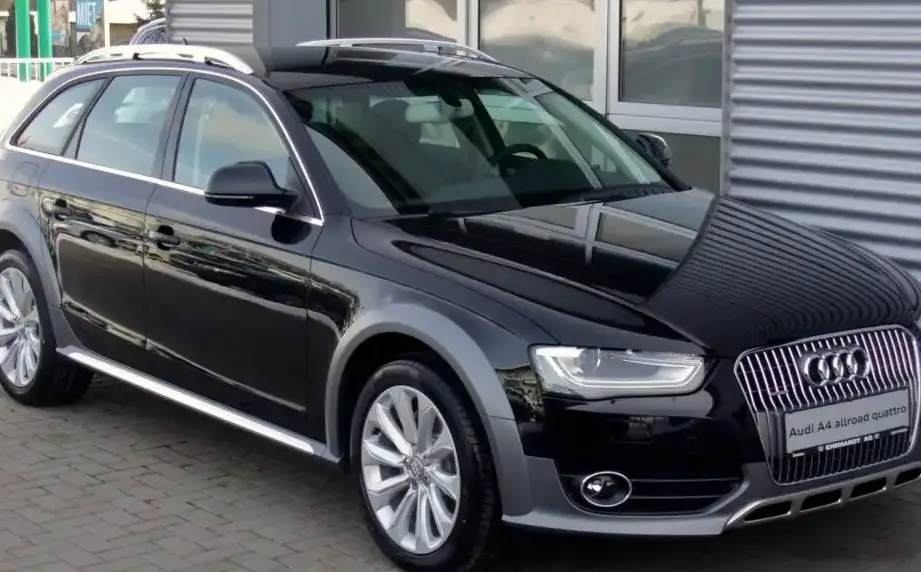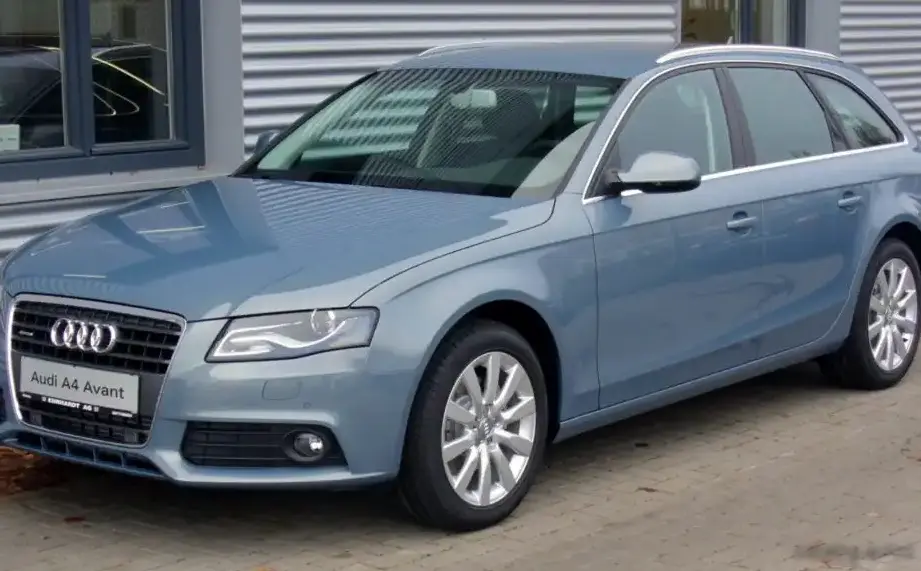
The Audi A4 Avant (B8 8K) 2.0 TFSI with the Multitronic transmission, produced between 2008 and 2011, represents a significant iteration of Audi’s popular compact executive wagon. Positioned as a mid-range offering within the B8 A4 Avant lineup, this variant balanced performance, fuel efficiency, and practicality for the European and increasingly, North American, markets. It built upon the foundation of the B8 platform (shared with the Volkswagen Passat and other VW Group vehicles) offering a refined driving experience and a spacious interior packaged in a stylish estate body. This specific configuration aimed to appeal to buyers seeking a more dynamic alternative to traditional, larger wagons, while still providing the versatility expected of the segment.
Technical Specifications
| Brand | Audi |
| Model | A4 |
| Generation | A4 Avant (B8 8K) |
| Type (Engine) | 2.0 TFSI (211 Hp) Multitronic |
| Start of production | 2008 |
| End of production | 2011 |
| Powertrain Architecture | Internal Combustion engine |
| Body type | Station wagon (estate) |
| Seats | 5 |
| Doors | 5 |
| Fuel consumption (economy) – urban | 9.8 l/100 km (24 US mpg, 28.8 UK mpg, 10.2 km/l) |
| Fuel consumption (economy) – extra urban | 5.9 l/100 km (39.9 US mpg, 47.9 UK mpg, 16.9 km/l) |
| Fuel consumption (economy) – combined | 7.3 l/100 km (32.2 US mpg, 38.7 UK mpg, 13.7 km/l) |
| CO2 emissions | 172 g/km |
| Fuel Type | Petrol (Gasoline) |
| Acceleration 0 – 100 km/h | 7.4 sec |
| Acceleration 0 – 62 mph | 7.4 sec |
| Acceleration 0 – 60 mph | 7 sec |
| Maximum speed | 232 km/h (144.16 mph) |
| Emission standard | Euro 5 |
| Weight-to-power ratio | 7.3 kg/Hp, 137.9 Hp/tonne |
| Weight-to-torque ratio | 4.4 kg/Nm, 228.8 Nm/tonne |
| Power | 211 Hp @ 4300-6000 rpm |
| Power per litre | 106.4 Hp/l |
| Torque | 350 Nm @ 1500-4200 rpm (258.15 lb.-ft. @ 1500-4200 rpm) |
| Engine layout | Front, Longitudinal |
| Engine Model/Code | EA888 / CAEB |
| Engine displacement | 1984 cm3 (121.07 cu. in.) |
| Number of cylinders | 4 |
| Engine configuration | Inline |
| Cylinder Bore | 82.5 mm (3.25 in.) |
| Piston Stroke | 92.8 mm (3.65 in.) |
| Compression ratio | 9.6:1 |
| Number of valves per cylinder | 4 |
| Fuel injection system | Direct injection |
| Engine aspiration | Turbocharger, Intercooler |
| Valvetrain | DOHC |
| Engine oil capacity | 4.6 l (4.86 US qt | 4.05 UK qt) |
| Coolant | 7 l (7.4 US qt | 6.16 UK qt) |
| Kerb Weight | 1530 kg (3373.07 lbs.) |
| Max. weight | 2100 kg (4629.71 lbs.) |
| Max load | 570 kg (1256.63 lbs.) |
| Trunk (boot) space – minimum | 490 l (17.3 cu. ft.) |
| Trunk (boot) space – maximum | 1430 l (50.5 cu. ft.) |
| Fuel tank capacity | 65 l (17.17 US gal | 14.3 UK gal) |
| Max. roof load | 90 kg (198.42 lbs.) |
| Permitted trailer load with brakes (8%) | 1700 kg (3747.86 lbs.) |
| Permitted trailer load with brakes (12%) | 1500 kg (3306.93 lbs.) |
| Permitted trailer load without brakes | 750 kg (1653.47 lbs.) |
| Permitted towbar download | 80 kg (176.37 lbs.) |
| Length | 4703 mm (185.16 in.) |
| Width | 1826 mm (71.89 in.) |
| Height | 1436 mm (56.54 in.) |
| Wheelbase | 2808 mm (110.55 in.) |
| Front track | 1564 mm (61.57 in.) |
| Rear (Back) track | 1551 mm (61.06 in.) |
| Drag coefficient (Cd) | 0.319 |
| Minimum turning circle (turning diameter) | 11.4 m (37.4 ft.) |
| Drivetrain Architecture | The Internal combustion engine (ICE) drives the front wheels of the vehicle. |
| Drive wheel | Front wheel drive |
| Number of gears and type of gearbox | automatic transmission Multitronic |
| Front suspension | Independent multi-link suspension |
| Rear suspension | Independent multi-link spring suspension with stabilizer |
| Front brakes | Ventilated discs |
| Rear brakes | Disc |
| Assisting systems | ABS (Anti-lock braking system) |
| Steering type | Steering rack and pinion |
| Power steering | Electric Steering |
| Tires size | 225/55 R16; 225/50 R17 |
| Wheel rims size | 7.5J x 16; 7.5J x 17 |
INTRODUCTION
The Audi A4 Avant (B8 8K) 2.0 TFSI Multitronic, launched in 2008, was a key model in Audi’s strategy to broaden the appeal of the A4 range. The B8 generation represented a significant step forward in design and technology for the A4, and the Avant (wagon) body style was particularly popular in Europe. This 2.0 TFSI variant, equipped with Audi’s continuously variable Multitronic transmission, offered a compelling blend of performance and efficiency. It sat comfortably in the middle of the A4 Avant lineup, offering more power than the base 1.8 TFSI models but remaining more accessible than the higher-performance 3.2 FSI or S4 variants.
Powertrain & Engine Architecture
At the heart of this A4 Avant is the EA888 2.0-liter turbocharged four-cylinder engine, specifically the CAEB engine code. This engine utilizes direct fuel injection (FSI) and a single turbocharger with an intercooler to deliver 211 horsepower and 350 Nm (258 lb-ft) of torque. The engine’s aluminum block and cylinder head contribute to its relatively lightweight construction. The Multitronic transmission is a continuously variable transmission (CVT) that uses a chain drive instead of a traditional belt, enhancing durability. It features eight pre-set gear ratios that can be manually selected via the gear selector or steering wheel-mounted paddles. The Multitronic’s smooth operation and ability to keep the engine in its optimal power band were key selling points.
Driving Characteristics
The 2.0 TFSI Multitronic A4 Avant offered a refined and comfortable driving experience. While not as overtly sporty as the manual transmission or higher-powered versions, the Multitronic provided seamless acceleration and responsive power delivery. The CVT effectively masked any turbo lag, providing a linear power curve. The transmission’s ability to hold lower gears during spirited driving or downshift quickly when needed contributed to a feeling of responsiveness. Compared to the six-speed manual, the Multitronic prioritized smoothness and ease of use over outright driver engagement. Fuel economy was a strong point, with the Multitronic helping to optimize engine efficiency.
Equipment & Trim Levels
The 2.0 TFSI Multitronic A4 Avant typically came well-equipped, reflecting Audi’s premium positioning. Standard features included automatic climate control, a multi-function steering wheel, power windows and mirrors, and an audio system with CD player. Higher trim levels, such as SE or S-line, added features like leather upholstery, sport seats, alloy wheels, and parking sensors. Optional extras included a navigation system, sunroof, and advanced driver-assistance systems like adaptive cruise control. Interior materials were generally of high quality, with a focus on creating a comfortable and sophisticated cabin environment.
Chassis & Braking
The B8 A4 Avant featured a fully independent suspension system, with multi-link setups at both the front and rear. This provided a good balance between ride comfort and handling precision. The 2.0 TFSI models typically used ventilated front disc brakes and solid rear discs. ABS (Anti-lock Braking System) was standard, along with electronic stability control (ESC). The suspension tuning was geared towards providing a comfortable ride for everyday driving, with a slight emphasis on handling stability. Stabilizer bars were fitted front and rear to reduce body roll during cornering.
Market Reception & Comparison
The Audi A4 Avant 2.0 TFSI Multitronic was generally well-received by automotive critics. It was praised for its refined driving experience, spacious interior, and fuel efficiency. Compared to the 1.8 TFSI models, the 2.0 TFSI offered a noticeable performance boost, making it a more enjoyable car to drive. However, some critics found the Multitronic transmission to be less engaging than a traditional manual gearbox. Against competitors like the BMW 3 Series Touring and Mercedes-Benz C-Class Estate, the A4 Avant was often seen as offering a more modern and technologically advanced package.
Legacy
The EA888 2.0 TFSI engine, in its various iterations, has proven to be a durable and reliable powerplant. The Multitronic transmission, while generally reliable, requires regular maintenance, including fluid changes, to ensure optimal performance and longevity. Today, the B8 A4 Avant 2.0 TFSI Multitronic represents a good value proposition in the used car market. Its combination of practicality, performance, and refinement continues to appeal to buyers seeking a premium compact executive wagon. However, prospective buyers should be aware of the importance of maintaining the Multitronic transmission and checking for any signs of oil consumption, a common issue with some EA888 engines.