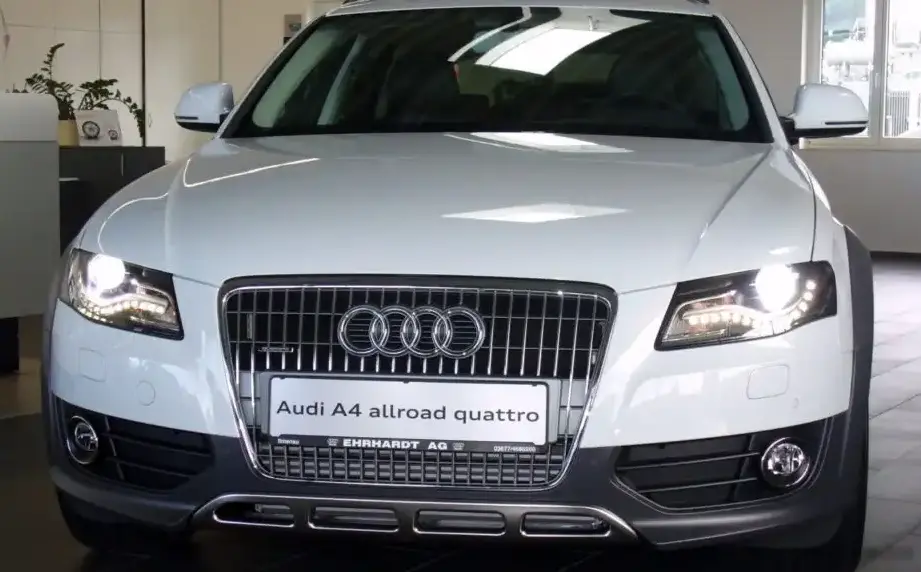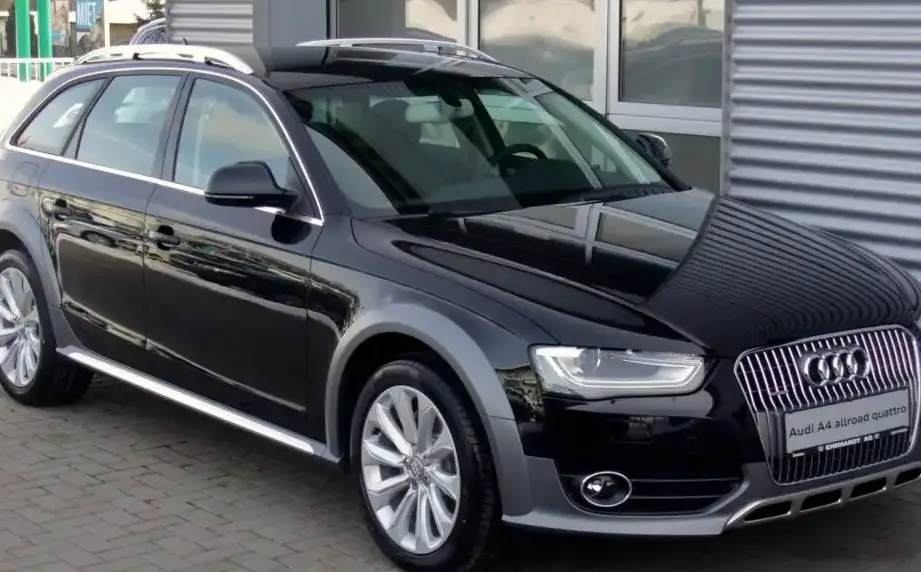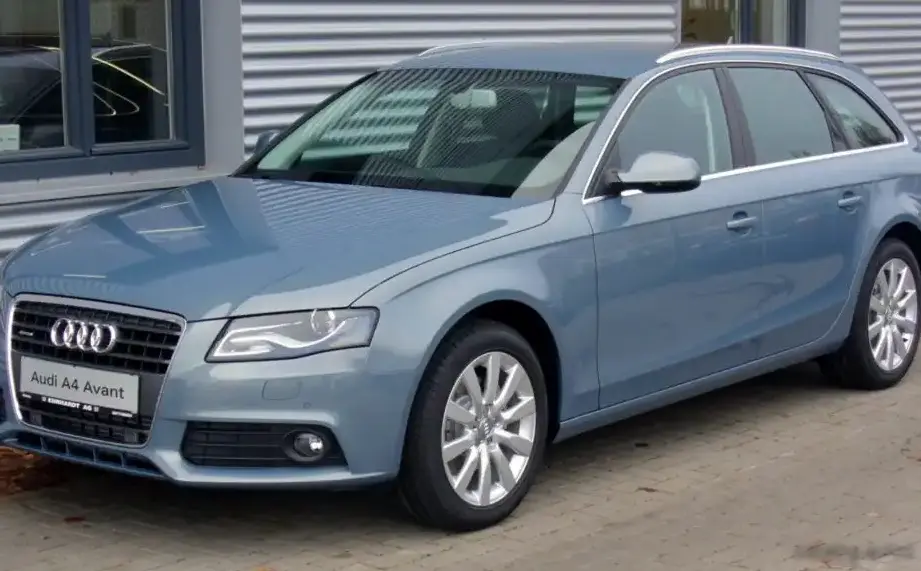
The Audi A4 Avant (B8 8K) 2.0 TFSI quattro, produced between 2008 and 2011, represents a compelling blend of performance, practicality, and Audi’s signature refinement within the compact executive estate (wagon) segment. Positioned as a mid-range offering within the B8 A4 Avant lineup, this variant catered to buyers seeking all-wheel drive security and a substantial power upgrade over the base 1.8 TFSI models, without reaching the higher price point of the performance-oriented S4. It was a key model for Audi in Europe and increasingly gained traction in North America as the demand for premium wagons grew. The B8 generation A4 Avant, built on the Volkswagen Group’s PL46 platform (internally designated A4/A5/Q5), aimed to improve upon its predecessor with enhanced interior quality, more sophisticated technology, and a more engaging driving experience.
Technical Specifications
| Brand | Audi |
| Model | A4 |
| Generation | A4 Avant (B8 8K) |
| Type (Engine) | 2.0 TFSI (211 Hp) quattro |
| Start of production | 2008 |
| End of production | 2011 |
| Powertrain Architecture | Internal Combustion engine |
| Body type | Station wagon (estate) |
| Seats | 5 |
| Doors | 5 |
| Fuel consumption (economy) – urban | 10.1 l/100 km (23.3 US mpg, 28 UK mpg, 9.9 km/l) |
| Fuel consumption (economy) – extra urban | 6.2 l/100 km (37.9 US mpg, 45.6 UK mpg, 16.1 km/l) |
| Fuel consumption (economy) – combined | 7.6 l/100 km (30.9 US mpg, 37.2 UK mpg, 13.2 km/l) |
| CO2 emissions | 176 g/km |
| Fuel Type | Petrol (Gasoline) |
| Acceleration 0 – 100 km/h | 6.7 sec |
| Acceleration 0 – 62 mph | 6.7 sec |
| Acceleration 0 – 60 mph | 6.4 sec |
| Maximum speed | 238 km/h (147.89 mph) |
| Emission standard | Euro 5 |
| Weight-to-power ratio | 7.4 kg/Hp, 134.8 Hp/tonne |
| Weight-to-torque ratio | 4.5 kg/Nm, 223.6 Nm/tonne |
| Power | 211 Hp @ 4300-6000 rpm |
| Power per litre | 106.4 Hp/l |
| Torque | 350 Nm @ 1500-4200 rpm (258.15 lb.-ft. @ 1500-4200 rpm) |
| Engine layout | Front, Longitudinal |
| Engine Model/Code | EA888 / CAEB |
| Engine displacement | 1984 cm3 (121.07 cu. in.) |
| Number of cylinders | 4 |
| Engine configuration | Inline |
| Cylinder Bore | 82.5 mm (3.25 in.) |
| Piston Stroke | 92.8 mm (3.65 in.) |
| Compression ratio | 9.6:1 |
| Number of valves per cylinder | 4 |
| Fuel injection system | Direct injection |
| Engine aspiration | Turbocharger, Intercooler |
| Valvetrain | DOHC |
| Engine oil capacity | 4.6 l (4.86 US qt | 4.05 UK qt) |
| Coolant | 7 l (7.4 US qt | 6.16 UK qt) |
| Kerb Weight | 1565 kg (3450.23 lbs.) |
| Max. weight | 2135 kg (4706.87 lbs.) |
| Max load | 570 kg (1256.63 lbs.) |
| Trunk (boot) space – minimum | 490 l (17.3 cu. ft.) |
| Trunk (boot) space – maximum | 1430 l (50.5 cu. ft.) |
| Fuel tank capacity | 64 l (16.91 US gal | 14.08 UK gal) |
| Max. roof load | 90 kg (198.42 lbs.) |
| Permitted trailer load with brakes (8%) | 1900 kg (4188.78 lbs.) |
| Permitted trailer load with brakes (12%) | 1700 kg (3747.86 lbs.) |
| Permitted trailer load without brakes | 750 kg (1653.47 lbs.) |
| Permitted towbar download | 80 kg (176.37 lbs.) |
| Length | 4703 mm (185.16 in.) |
| Width | 1826 mm (71.89 in.) |
| Height | 1436 mm (56.54 in.) |
| Wheelbase | 2808 mm (110.55 in.) |
| Front track | 1564 mm (61.57 in.) |
| Rear (Back) track | 1551 mm (61.06 in.) |
| Drag coefficient (Cd) | 0.325 |
| Minimum turning circle (turning diameter) | 11.5 m (37.73 ft.) |
| Drivetrain Architecture | The Internal combustion engine (ICE) drives permanently the four wheels of the vehicle. |
| Drive wheel | All wheel drive (4×4) |
| Number of gears and type of gearbox | 6 gears, manual transmission |
| Front suspension | Independent multi-link suspension |
| Rear suspension | Independent multi-link spring suspension with stabilizer |
| Front brakes | Ventilated discs |
| Rear brakes | Disc |
| Assisting systems | ABS (Anti-lock braking system) |
| Steering type | Steering rack and pinion |
| Power steering | Electric Steering |
| Tires size | 225/55 R16; 225/50 R17 |
| Wheel rims size | 7.5J x 16; 7.5J x 17 |
Powertrain & Engine Architecture
At the heart of the A4 Avant 2.0 TFSI quattro lies the EA888 engine, specifically the CAEB variant. This 1984cc, turbocharged, direct-injection four-cylinder engine was a cornerstone of the Volkswagen Group’s powertrain strategy. The CAEB version produced 211 horsepower at 4300-6000 rpm and 350 Nm (258 lb-ft) of torque between 1500-4200 rpm. Direct injection, coupled with a turbocharger and intercooler, allowed for a broad torque curve and responsive performance. The engine featured a dual overhead camshaft (DOHC) valvetrain with four valves per cylinder, optimizing gas flow for increased power and efficiency. The 6-speed manual transmission was standard, providing precise gear changes and a direct connection to the engine. The quattro all-wheel drive system, utilizing a Torsen center differential, distributed power between the front and rear axles, enhancing traction and stability in all weather conditions.
Driving Characteristics
The 2.0 TFSI quattro Avant offered a noticeably more spirited driving experience than the base 1.8 TFSI models. Acceleration to 60 mph took approximately 6.4 seconds, making it competitive within its class. The turbocharger provided a surge of power in the mid-range, making overtaking maneuvers effortless. The quattro system instilled confidence, particularly on slippery surfaces, and reduced understeer during cornering. While not as overtly sporty as the S4, the 2.0 TFSI quattro provided a well-balanced and engaging driving experience. The manual transmission’s gear ratios were well-matched to the engine’s power delivery, allowing for efficient cruising and responsive acceleration. Compared to the 1.8 TFSI, the 2.0 TFSI felt significantly more capable and refined.
Equipment & Trim Levels
The A4 Avant 2.0 TFSI quattro typically came well-equipped, reflecting its mid-range positioning. Standard features included automatic climate control, a multi-function steering wheel, power windows and mirrors, and an Audi Concert audio system. Upholstery was typically cloth, although leather options were available. Optional extras included a sunroof, navigation system, parking sensors, and upgraded audio systems. Trim levels varied slightly depending on the market, but generally offered packages that bundled popular options together. The interior design was characterized by Audi’s typically high build quality and attention to detail, creating a comfortable and refined cabin environment.
Chassis & Braking
The B8 A4 Avant featured an independent multi-link suspension at both the front and rear, providing a comfortable ride and precise handling. The front suspension utilized aluminum subframes to reduce weight and improve rigidity. Stabilizer bars were fitted to both axles to minimize body roll during cornering. Braking duties were handled by ventilated discs at the front and solid discs at the rear, providing ample stopping power. Anti-lock braking system (ABS) was standard, enhancing safety and control. The chassis was tuned to balance comfort and handling, offering a composed and predictable driving experience.
Market Reception & Comparison
The Audi A4 Avant 2.0 TFSI quattro was generally well-received by automotive critics. It was praised for its refined engine, capable handling, and practical estate body style. Fuel economy was considered reasonable for its performance, averaging around 30.9 US mpg in combined driving. Compared to rivals such as the BMW 3 Series Touring and Mercedes-Benz C-Class Estate, the A4 Avant was often lauded for its interior quality and user-friendly technology. The 2.0 TFSI quattro offered a compelling alternative to the more expensive S4, providing a significant performance upgrade over the base models without sacrificing practicality or refinement.
Legacy
The EA888 engine, in its various iterations, has proven to be a remarkably durable and reliable powertrain. The 2.0 TFSI quattro A4 Avant has maintained a solid reputation for long-term reliability, although regular maintenance, including oil changes and timing belt replacements, is crucial. On the used car market, these models remain desirable due to their blend of performance, practicality, and Audi’s brand cachet. While some early EA888 engines were prone to carbon buildup, this issue was largely addressed in later revisions. Overall, the A4 Avant 2.0 TFSI quattro represents a well-engineered and rewarding vehicle that continues to offer a compelling ownership experience.