Technical Specifications
| Brand | Audi |
| Model | A4 |
| Generation | A4 Avant (B8 8K) |
| Type (Engine) | 3.2 FSI V6 (265 Hp) Multitronic |
| Start of production | 2009 |
| End of production | 2011 |
| Powertrain Architecture | Internal Combustion engine |
| Body type | Station wagon (estate) |
| Seats | 5 |
| Doors | 5 |
| Fuel consumption (urban) | 11.4 l/100 km (20.6 US mpg, 24.8 UK mpg, 8.8 km/l) |
| Fuel consumption (extra urban) | 6.7 l/100 km (35.1 US mpg, 42.2 UK mpg, 14.9 km/l) |
| Fuel consumption (combined) | 8.4 l/100 km (28 US mpg, 33.6 UK mpg, 11.9 km/l) |
| CO2 emissions | 199 g/km |
| Fuel Type | Petrol (Gasoline) |
| Acceleration 0 – 100 km/h | 6.6 sec |
| Acceleration 0 – 62 mph | 6.6 sec |
| Acceleration 0 – 60 mph | 6.3 sec |
| Maximum speed | 250 km/h (155.34 mph) |
| Emission standard | Euro 4 |
| Weight-to-power ratio | 6 kg/Hp, 166.7 Hp/tonne |
| Weight-to-torque ratio | 4.8 kg/Nm, 207.5 Nm/tonne |
| Power | 265 Hp @ 6500 rpm |
| Power per litre | 82.9 Hp/l |
| Torque | 330 Nm @ 3000-5000 rpm (243.4 lb.-ft. @ 3000-5000 rpm) |
| Engine layout | Front, Longitudinal |
| Engine Model/Code | EA390 / CALA |
| Engine displacement | 3197 cm3 (195.09 cu. in.) |
| Number of cylinders | 6 |
| Engine configuration | V-engine |
| Cylinder Bore | 85.5 mm (3.37 in.) |
| Piston Stroke | 92.8 mm (3.65 in.) |
| Compression ratio | 12.5:1 |
| Number of valves per cylinder | 4 |
| Fuel injection system | Direct injection |
| Engine aspiration | Naturally aspirated engine |
| Valvetrain | DOHC |
| Engine oil capacity | 6.2 l (6.55 US qt | 5.46 UK qt) |
| Coolant | 9 l (9.51 US qt | 7.92 UK qt) |
| Kerb Weight | 1590 kg (3505.35 lbs.) |
| Max. weight | 2160 kg (4761.98 lbs.) |
| Max load | 570 kg (1256.63 lbs.) |
| Trunk (boot) space – minimum | 490 l (17.3 cu. ft.) |
| Trunk (boot) space – maximum | 1430 l (50.5 cu. ft.) |
| Fuel tank capacity | 64 l (16.91 US gal | 14.08 UK gal) |
| Max. roof load | 90 kg (198.42 lbs.) |
| Permitted trailer load with brakes (8%) | 1800 kg (3968.32 lbs.) |
| Permitted trailer load with brakes (12%) | 1700 kg (3747.86 lbs.) |
| Permitted trailer load without brakes | 750 kg (1653.47 lbs.) |
| Permitted towbar download | 80 kg (176.37 lbs.) |
| Length | 4703 mm (185.16 in.) |
| Width | 1826 mm (71.89 in.) |
| Height | 1436 mm (56.54 in.) |
| Wheelbase | 2808 mm (110.55 in.) |
| Front track | 1564 mm (61.57 in.) |
| Rear (Back) track | 1551 mm (61.06 in.) |
| Drag coefficient (Cd) | 0.325 |
| Minimum turning circle (turning diameter) | 11.5 m (37.73 ft.) |
| Drivetrain Architecture | The Internal combustion engine (ICE) drives the front wheels of the vehicle. |
| Drive wheel | Front wheel drive |
| Number of gears and type of gearbox | automatic transmission Multitronic |
| Front suspension | Independent multi-link suspension |
| Rear suspension | Independent multi-link spring suspension with stabilizer |
| Front brakes | Ventilated discs |
| Rear brakes | Disc |
| Assisting systems | ABS (Anti-lock braking system) |
| Steering type | Steering rack and pinion |
| Power steering | Electric Steering |
| Tires size | 225/55 R16 |
| Wheel rims size | 7.5J x 16 |
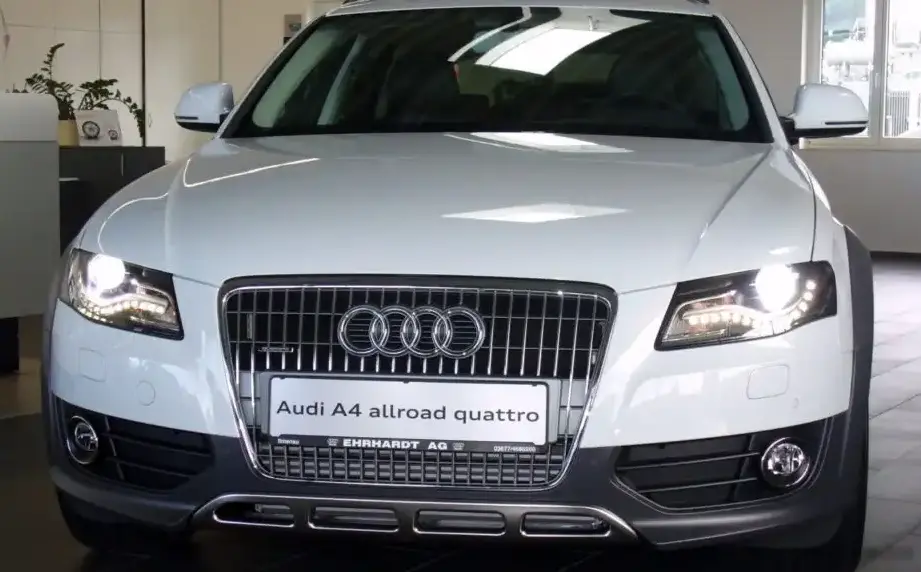
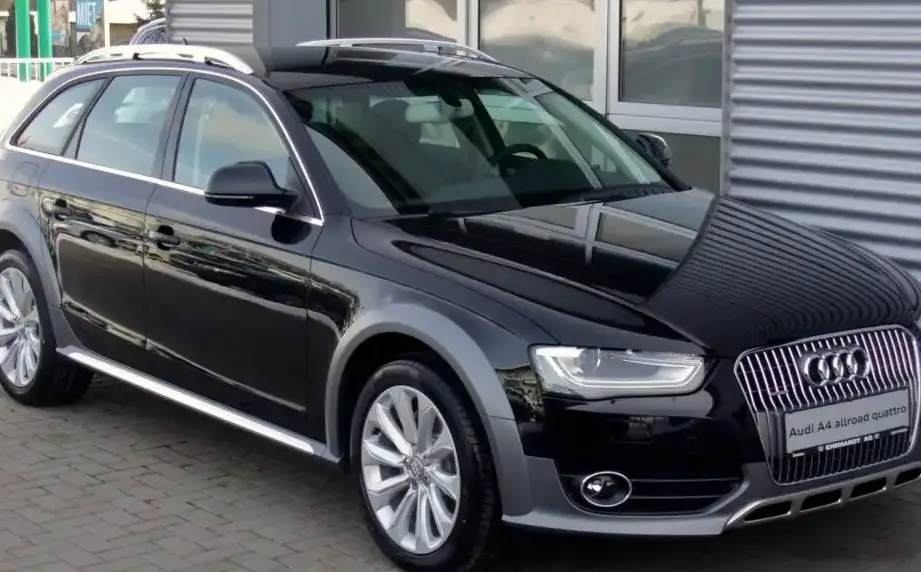
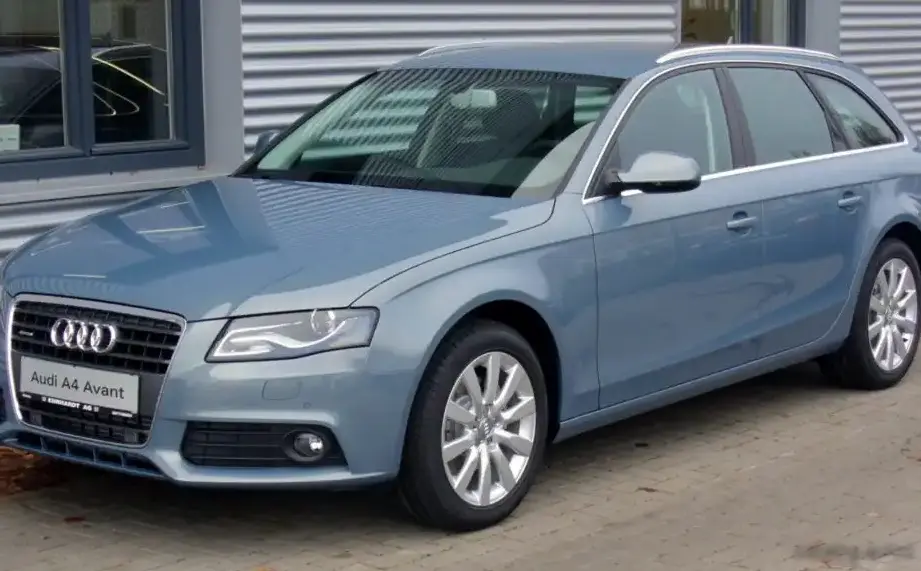
The Audi A4 Avant (B8 8K) 3.2 FSI V6 Multitronic, produced from 2009 to 2011, was a sophisticated and powerful iteration of Audi’s popular A4 wagon. Built on the Volkswagen Group’s B8 platform (shared with models like the Volkswagen Passat and Škoda Superb), the A4 Avant offered a compelling combination of practicality, luxury, and performance. The 3.2 FSI V6 Multitronic trim was positioned as a premium offering, appealing to buyers who desired a more engaging driving experience than the diesel or smaller displacement petrol options. It represented a significant step up in terms of power and refinement within the A4 Avant lineup.
Powertrain & Engine Architecture
At the heart of the A4 Avant 3.2 FSI was the EA390 engine code, a 3.2-liter naturally aspirated V6. This engine featured direct fuel injection (FSI – Fuel Stratified Injection), a technology that improved both power and fuel efficiency. The engine produced 265 horsepower at 6500 rpm and 330 Nm (243 lb-ft) of torque between 3000 and 5000 rpm. The valvetrain employed double overhead camshafts (DOHC) with four valves per cylinder. The engine’s longitudinal mounting allowed for optimal weight distribution. Paired with the engine was Audi’s Multitronic continuously variable transmission (CVT). This transmission, unlike traditional automatics with fixed gear ratios, offered a seamless and continuously adjustable gear ratio, optimizing engine efficiency and providing smooth acceleration. The Multitronic featured a chain-driven design, intended for greater durability compared to belt-driven CVTs.
Driving Characteristics
The 3.2 FSI V6 Multitronic offered a noticeably different driving experience compared to the lower-powered A4 Avant variants. Acceleration was brisk, with a 0-60 mph time of around 6.3 seconds. The Multitronic transmission contributed to smooth, linear acceleration, although some drivers found it lacked the direct feel of a traditional automatic or manual gearbox. The continuously variable nature of the transmission meant that the engine could always operate within its optimal power band. While the Multitronic prioritized efficiency, it also offered a manual shift mode for more driver control. Compared to the 2.0 TFSI models, the 3.2 FSI provided a more relaxed and refined driving experience, with ample torque available at lower engine speeds. The increased weight of the V6 engine did slightly impact handling agility compared to lighter A4 variants.
Equipment & Trim Levels
The 3.2 FSI V6 Multitronic typically came well-equipped as standard. Features included leather upholstery, three-zone automatic climate control, a premium audio system, and parking sensors. Optional extras included navigation system, sunroof, and advanced driver-assistance systems like adaptive cruise control. Interior trim levels varied, with options for wood or aluminum inlays. The dashboard layout was typical of the B8 A4, characterized by a clean and functional design. The A4 Avant 3.2 FSI was often specified with the S-line package, which added sportier exterior styling cues and interior enhancements.
Chassis & Braking
The A4 Avant 3.2 FSI utilized an independent multi-link suspension system at both the front and rear axles, providing a comfortable ride and good handling characteristics. A stabilizer bar was included at the rear to reduce body roll during cornering. The braking system consisted of ventilated discs at the front and solid discs at the rear, providing ample stopping power. Anti-lock braking system (ABS) was standard. The A4 Avant’s chassis was tuned to balance comfort and handling, offering a composed ride quality without sacrificing responsiveness.
Market Reception & Comparison
The A4 Avant 3.2 FSI V6 Multitronic was generally well-received by automotive critics. It was praised for its smooth and powerful engine, refined transmission, and luxurious interior. However, some reviewers noted that the Multitronic transmission lacked the engagement of a traditional automatic or manual gearbox. Fuel economy was also a point of concern, as the 3.2-liter V6 consumed significantly more fuel than the diesel or smaller petrol engines. Compared to the 2.0 TDI, the 3.2 FSI offered superior performance but at the cost of fuel efficiency. Against the 2.0 TFSI, the 3.2 FSI provided a more refined and powerful experience, but with a higher price tag.
Legacy
The Audi A4 Avant (B8 8K) 3.2 FSI V6 Multitronic remains a desirable used car today, particularly for those seeking a premium wagon with strong performance. The EA390 V6 engine is generally considered reliable, although regular maintenance is crucial. The Multitronic transmission, however, can be a potential weak point, requiring fluid changes at the recommended intervals to prevent premature failure. Finding well-maintained examples is key, as transmission repairs can be costly. Despite the potential transmission concerns, the A4 Avant 3.2 FSI V6 Multitronic offers a unique blend of performance, luxury, and practicality that continues to appeal to enthusiasts.