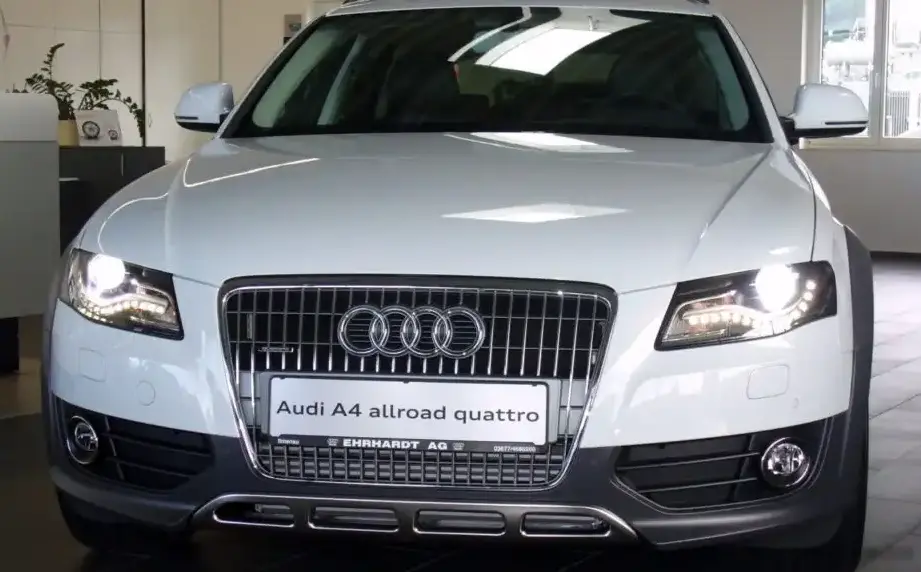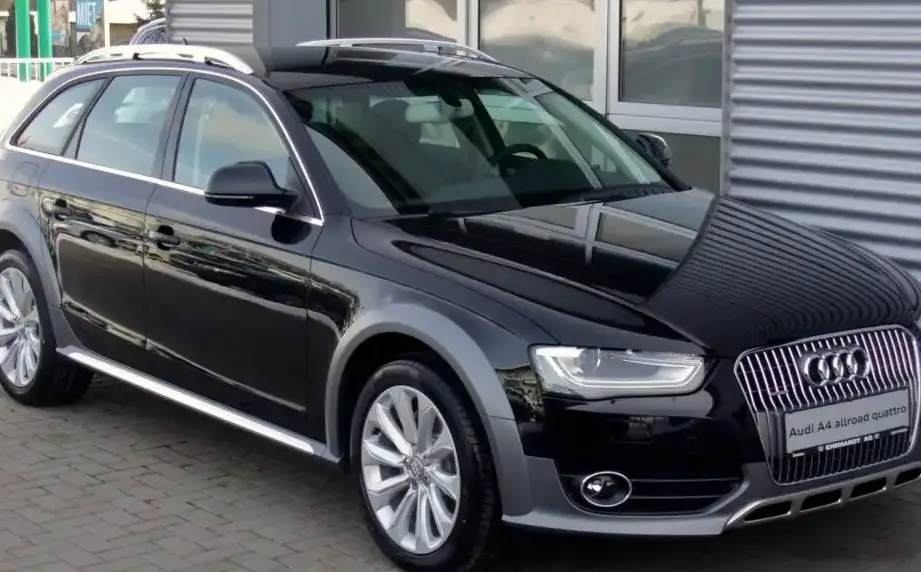
The Audi A4 Avant (B9 8W) 30 TDI, produced from October 2019 to June 2020, represents a key variant within the facelifted fourth generation (B9) of Audi’s popular compact executive estate car. Positioned as an entry-level diesel option, it aimed to deliver a balance of fuel efficiency, practicality, and the premium experience expected of the A4 lineage. This model specifically utilized a 2.0-liter turbocharged diesel engine producing 122 horsepower, paired with a six-speed manual transmission. It served as a compelling alternative to petrol-powered A4 Avants and higher-output diesel models, appealing to buyers prioritizing economy and everyday usability.
Technical Specifications
| Brand | Audi |
| Model | A4 |
| Generation | A4 Avant (B9 8W, facelift 2019) |
| Type (Engine) | 30 TDI (122 Hp) |
| Start of production | October, 2019 |
| End of production | June, 2020 |
| Powertrain Architecture | Internal Combustion engine |
| Body type | Station wagon (estate) |
| Seats | 5 |
| Doors | 5 |
| Fuel consumption (urban) | 4.8-5.1 l/100 km (49 – 46.1 US mpg, 58.9 – 55.4 UK mpg, 20.8 – 19.6 km/l) |
| Fuel consumption (extra urban) | 3.7-4.0 l/100 km (63.6 – 58.8 US mpg, 76.3 – 70.6 UK mpg, 27 – 25 km/l) |
| Fuel consumption (combined) | 4.1-4.4 l/100 km (57.4 – 53.5 US mpg, 68.9 – 64.2 UK mpg, 24.4 – 22.7 km/l) |
| CO2 emissions | 108-115 g/km |
| Fuel Type | Diesel |
| Acceleration 0 – 100 km/h | 11.3 sec |
| Acceleration 0 – 62 mph | 11.3 sec |
| Acceleration 0 – 60 mph | 10.7 sec |
| Maximum speed | 200 km/h (124.27 mph) |
| Emission standard | Euro 6d – TEMP – EVAP – ISC |
| Weight-to-power ratio | 12.1 kg/Hp, 82.7 Hp/tonne |
| Weight-to-torque ratio | 5.5 kg/Nm, 183.1 Nm/tonne |
| Power | 122 Hp @ 3500-4000 rpm |
| Power per litre | 62 Hp/l |
| Torque | 270 Nm @ 1500-3000 rpm (199.14 lb.-ft. @ 1500-3000 rpm) |
| Engine layout | Front, Longitudinal |
| Engine Model/Code | DEUC |
| Engine displacement | 1968 cm3 (120.09 cu. in.) |
| Number of cylinders | 4 |
| Engine configuration | Inline |
| Fuel injection system | Diesel Commonrail |
| Engine aspiration | Turbocharger, Intercooler |
| Engine oil capacity | 4.7 l (4.97 US qt | 4.14 UK qt) |
| Kerb Weight | 1475 kg (3251.82 lbs.) |
| Max. weight | 2125 kg (4684.82 lbs.) |
| Max load | 650 kg (1433 lbs.) |
| Trunk (boot) space – minimum | 495 l (17.48 cu. ft.) |
| Fuel tank capacity | 40 l (10.57 US gal | 8.8 UK gal) |
| Max. roof load | 90 kg (198.42 lbs.) |
| Permitted trailer load with brakes (8%) | 1500 kg (3306.93 lbs.) |
| Permitted trailer load with brakes (12%) | 1300 kg (2866.01 lbs.) |
| Permitted trailer load without brakes | 750 kg (1653.47 lbs.) |
| Permitted towbar download | 80 kg (176.37 lbs.) |
| Length | 4762 mm (187.48 in.) |
| Width | 1847 mm (72.72 in.) |
| Width including mirrors | 2022 mm (79.61 in.) |
| Height | 1435 mm (56.5 in.) |
| Wheelbase | 2820 mm (111.02 in.) |
| Front track | 1572 mm (61.89 in.) |
| Rear (Back) track | 1555 mm (61.22 in.) |
| Front overhang | 899 mm (35.39 in.) |
| Rear overhang | 1043 mm (41.06 in.) |
| Minimum turning circle | 11.6 m (38.06 ft.) |
| Drivetrain Architecture | Front wheel drive |
| Number of gears and type of gearbox | 6 gears, manual transmission |
| Front suspension | Independent multi-link suspension |
| Rear suspension | Independent multi-link suspension |
| Front brakes | Ventilated discs |
| Rear brakes | Disc |
| Assisting systems | ABS (Anti-lock braking system) |
| Steering type | Steering rack and pinion |
| Power steering | Electric Steering |
| Tires size | 205/60 R16 |
| Wheel rims size | 7 J x 16 |
Powertrain & Engine Architecture
The heart of the A4 Avant 30 TDI is the Volkswagen Group’s DEUC engine, a 2.0-liter inline-four cylinder diesel. This engine is part of the modular engine family, known for its robust construction and widespread use across various VW Group vehicles. It features a turbocharger with an intercooler to enhance power and efficiency. The DEUC utilizes a common rail direct injection system, delivering fuel directly into the combustion chamber at extremely high pressure for optimized combustion. The engine employs a variable geometry turbocharger (VGT) to improve responsiveness across the rev range. The six-speed manual transmission, a standard feature on this variant, provides precise gear changes and contributes to the car’s overall fuel efficiency. The engine is longitudinally mounted, driving the front wheels.
Driving Characteristics
The 122 horsepower and 270 Nm (199 lb-ft) of torque offered by the 30 TDI powertrain provide adequate, though not exhilarating, performance. Acceleration from 0-60 mph takes around 10.7 seconds, making it suitable for everyday commuting and long-distance journeys. The engine’s peak torque is available from 1500-3000 rpm, providing good low-end grunt for effortless overtaking. Compared to the more powerful 40 TDI variants, the 30 TDI feels noticeably less responsive, particularly at higher speeds. However, the manual transmission allows for greater driver engagement and control. The gear ratios are well-chosen to maximize fuel economy and provide a comfortable driving experience. The front-wheel-drive configuration offers predictable handling, although it can exhibit some torque steer under hard acceleration.
Equipment & Trim Levels
The A4 Avant 30 TDI typically came equipped with a respectable level of standard features. These included Audi’s MMI radio plus infotainment system with a 7-inch color display, Bluetooth connectivity, and a leather-wrapped multi-function steering wheel. Safety features such as ABS, electronic stability control, and multiple airbags were standard. Interior upholstery was typically cloth, with options for leather upgrades. Common optional extras included Audi’s Virtual Cockpit digital instrument cluster, navigation system, parking sensors, and a panoramic sunroof. Trim levels varied slightly depending on the market, but generally offered packages that added features like upgraded interior trim, alloy wheels, and advanced driver-assistance systems.
Chassis & Braking
The A4 Avant 30 TDI utilizes a sophisticated chassis design featuring independent multi-link suspension at both the front and rear. This setup provides a comfortable ride quality and good handling characteristics. The front suspension incorporates anti-roll bars to reduce body roll during cornering. Braking duties are handled by ventilated discs at the front and solid discs at the rear, providing adequate stopping power. ABS (Anti-lock Braking System) is standard, enhancing safety in emergency braking situations. The steering is a rack-and-pinion system with electric power assistance, offering precise and responsive steering feel.
Market Reception & Comparison
The A4 Avant 30 TDI was generally well-received by automotive critics as a practical and economical option within the premium estate car segment. It was praised for its fuel efficiency, comfortable ride, and well-appointed interior. However, some reviewers noted that the engine lacked the outright performance of its more powerful siblings. Compared to the 40 TDI, the 30 TDI offered significantly better fuel economy but at the expense of acceleration and overall driving excitement. Against competitors like the BMW 3 Series Touring and Mercedes-Benz C-Class Estate, the A4 Avant 30 TDI held its own in terms of refinement and practicality, offering a compelling value proposition for buyers prioritizing economy.
Legacy
The DEUC engine, found in the A4 Avant 30 TDI, has proven to be a relatively reliable powertrain when properly maintained. Common issues include diesel particulate filter (DPF) clogging, particularly on vehicles used primarily for short journeys. Regular servicing and the use of high-quality diesel fuel are crucial for ensuring long-term reliability. On the used car market, the A4 Avant 30 TDI represents a sensible choice for buyers seeking a practical, fuel-efficient, and well-built estate car. Its lower purchase price compared to higher-output variants makes it an attractive option, although potential buyers should be aware of the potential DPF issues and ensure a thorough inspection before purchase.