Technical Specifications
| Brand | Audi |
| Model | A4 |
| Generation | A4 (B8 8K, facelift 2011) |
| Type (Engine) | 1.8 TFSI (170 Hp) quattro |
| Start of production | 2012 |
| End of production | 2015 |
| Powertrain Architecture | Internal Combustion engine |
| Body type | Sedan |
| Seats | 5 |
| Doors | 4 |
| Fuel consumption (urban) | 8.1 l/100 km (29 US mpg, 34.9 UK mpg, 12.3 km/l) |
| Fuel consumption (extra urban) | 5.2 l/100 km (45.2 US mpg, 54.3 UK mpg, 19.2 km/l) |
| Fuel consumption (combined) | 6.2 l/100 km (37.9 US mpg, 45.6 UK mpg, 16.1 km/l) |
| CO2 emissions | 144 g/km |
| Fuel Type | Petrol (Gasoline) |
| Acceleration 0 – 100 km/h | 7.9 sec |
| Acceleration 0 – 62 mph | 7.9 sec |
| Acceleration 0 – 60 mph | 7.5 sec |
| Maximum speed | 229 km/h (142.29 mph) |
| Emission standard | Euro 6 |
| Weight-to-power ratio | 8.9 kg/Hp, 113 Hp/tonne |
| Weight-to-torque ratio | 4.7 kg/Nm, 212.6 Nm/tonne |
| Power | 170 Hp @ 3800-6200 rpm |
| Power per litre | 94.5 Hp/l |
| Torque | 320 Nm @ 1400-3700 rpm (236.02 lb.-ft. @ 1400-3700 rpm) |
| Engine layout | Front, Longitudinal |
| Engine Model/Code | EA888 / CJEB |
| Engine displacement | 1798 cm3 (109.72 cu. in.) |
| Number of cylinders | 4 |
| Engine configuration | Inline |
| Cylinder Bore | 82.5 mm (3.25 in.) |
| Piston Stroke | 84.1 mm (3.31 in.) |
| Compression ratio | 9.6:1 |
| Number of valves per cylinder | 4 |
| Fuel injection system | Direct injection and Multi-port manifold injection |
| Engine aspiration | Turbocharger, Intercooler |
| Valvetrain | DOHC |
| Engine oil capacity | 4.6 l (4.86 US qt | 4.05 UK qt) |
| Kerb Weight | 1505 kg (3317.96 lbs.) |
| Max. weight | 2055 kg (4530.5 lbs.) |
| Max load | 550 kg (1212.54 lbs.) |
| Trunk (boot) space – minimum | 480 l (16.95 cu. ft.) |
| Trunk (boot) space – maximum | 962 l (33.97 cu. ft.) |
| Fuel tank capacity | 61 l (16.11 US gal | 13.42 UK gal) |
| Max. roof load | 90 kg (198.42 lbs.) |
| Permitted trailer load with brakes (8%) | 1700 kg (3747.86 lbs.) |
| Permitted trailer load with brakes (12%) | 1500 kg (3306.93 lbs.) |
| Permitted trailer load without brakes | 750 kg (1653.47 lbs.) |
| Permitted towbar download | 80 kg (176.37 lbs.) |
| Length | 4701 mm (185.08 in.) |
| Width | 1826 mm (71.89 in.) |
| Width including mirrors | 2040 mm (80.31 in.) |
| Height | 1427 mm (56.18 in.) |
| Wheelbase | 2808 mm (110.55 in.) |
| Front track | 1564 mm (61.57 in.) |
| Rear (Back) track | 1551 mm (61.06 in.) |
| Front overhang | 862 mm (33.94 in.) |
| Rear overhang | 1031 mm (40.59 in.) |
| Drag coefficient (Cd) | 0.28 |
| Minimum turning circle (turning diameter) | 11.5 m (37.73 ft.) |
| Drivetrain Architecture | The Internal combustion engine (ICE) drives permanently the four wheels of the vehicle. |
| Drive wheel | All wheel drive (4×4) |
| Number of gears and type of gearbox | 6 gears, manual transmission |
| Front suspension | Independent multi-link suspension, Transverse stabilizer |
| Rear suspension | Independent on trapezoidal lever, Transverse stabilizer |
| Front brakes | Ventilated discs |
| Rear brakes | Disc |
| Assisting systems | ABS (Anti-lock braking system) |
| Steering type | Steering rack and pinion |
| Power steering | Electric Steering |
| Tires size | 225/55 R16 |
| Wheel rims size | 7.5J x 16 |
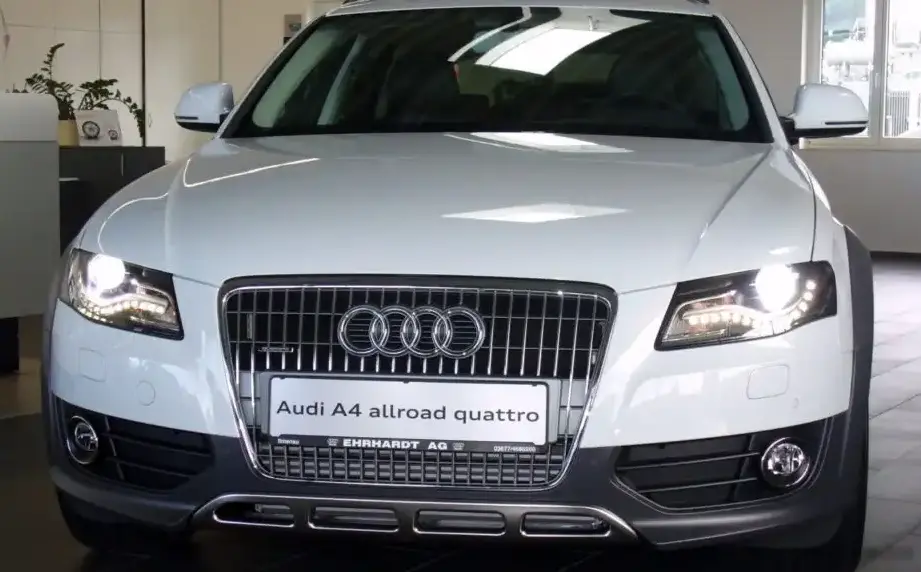
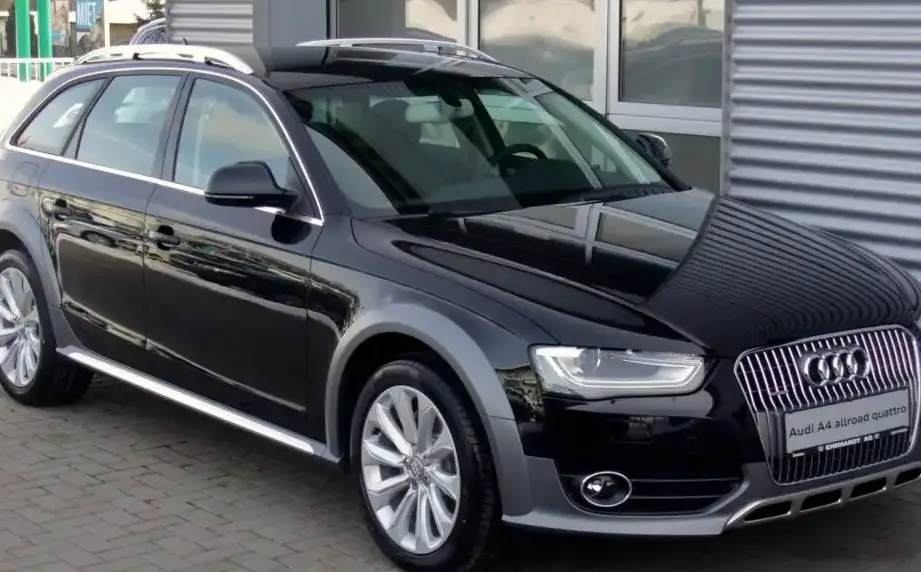
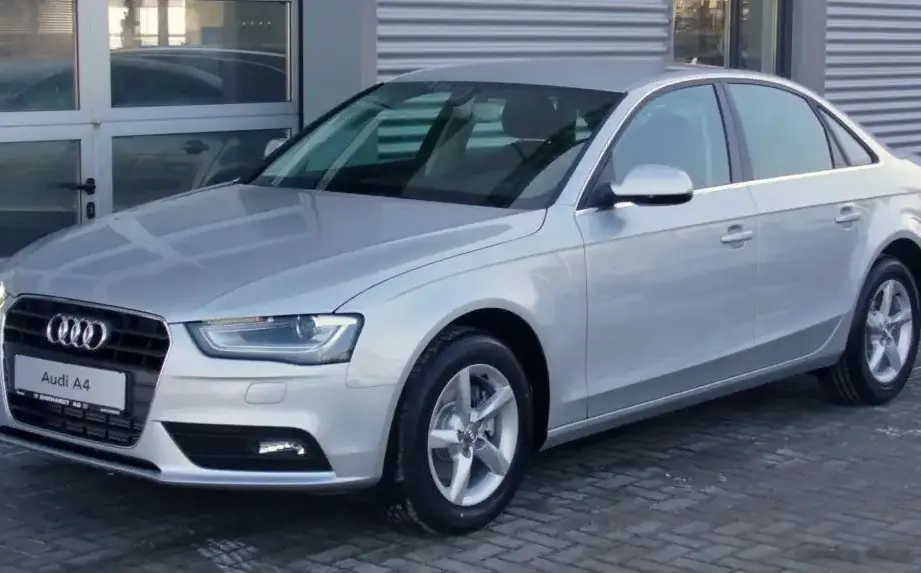
The Audi A4 B8.5 1.8 TFSI quattro, produced between 2012 and 2015, was a key component of Audi’s successful A4 lineup. The “B8.5” designation refers to the facelifted version of the B8 generation, which brought revised styling, updated technology, and refined engine options. This particular variant combined Audi’s well-regarded 1.8-liter turbocharged four-cylinder engine with the security and enhanced traction of the quattro all-wheel-drive system. It was positioned as a mid-range offering, providing a step up in performance and capability from the base front-wheel-drive models while remaining more affordable than the higher-output 2.0 TFSI and diesel options.
Powertrain & Engine Architecture
At the heart of the A4 1.8 TFSI quattro lies the EA888 engine, specifically the CJEB code. This 1.8-liter inline-four cylinder engine utilizes direct fuel injection (FSI) combined with multi-point manifold injection, a system designed to optimize both power and fuel efficiency. The engine produces 170 horsepower at 3800-6200 rpm and 320 Nm (236 lb-ft) of torque between 1400-3700 rpm. A single turbocharger with an intercooler provides forced induction, enhancing low-end torque and overall responsiveness. The engine features a double overhead camshaft (DOHC) valvetrain with four valves per cylinder. The 6-speed manual transmission was standard, delivering power to all four wheels via Audi’s renowned quattro system. This system employs a Torsen center differential, automatically distributing torque between the front and rear axles based on traction conditions.
Driving Characteristics
The 1.8 TFSI quattro offered a balanced driving experience. While not as overtly sporty as the 2.0 TFSI, it provided ample power for everyday driving and confident acceleration. The 0-60 mph sprint took approximately 7.5 seconds. The quattro system significantly enhanced grip, particularly in inclement weather, providing a surefooted feel and increased stability. The manual transmission offered precise shifts and allowed drivers to fully engage with the engine’s power delivery. Compared to the front-wheel-drive 1.8 TFSI, the quattro version exhibited reduced understeer and improved cornering ability. However, the added weight of the all-wheel-drive system and the manual transmission did slightly impact fuel economy compared to the lighter, front-wheel-drive models.
Equipment & Trim Levels
The A4 1.8 TFSI quattro typically came well-equipped, even in base trim. Standard features included automatic climate control, a multi-function steering wheel, power windows and locks, and an Audi Concert audio system. Upholstery was typically cloth, although leather options were available. Common optional extras included a sunroof, navigation system, parking sensors, and upgraded alloy wheels. The “SE” trim level, popular in the UK market, added features like larger wheels, upgraded interior trim, and additional driver assistance systems. The overall interior design was typical of Audi at the time – clean, modern, and focused on quality materials and ergonomics.
Chassis & Braking
The A4 B8.5 featured a sophisticated chassis design. The front suspension utilized an independent multi-link setup with a transverse stabilizer bar, while the rear employed an independent trapezoidal link suspension, also with a stabilizer bar. This configuration provided a comfortable ride while maintaining good handling characteristics. Brakes consisted of ventilated discs at the front and solid discs at the rear. Anti-lock braking system (ABS) was standard, along with electronic brake-force distribution (EBD). The quattro system contributed to enhanced braking stability, particularly on slippery surfaces.
Market Reception & Comparison
The Audi A4 1.8 TFSI quattro was generally well-received by automotive critics. It was praised for its refined engine, comfortable ride, and the added security of all-wheel drive. Compared to the 2.0 TFSI, the 1.8 TFSI offered a more affordable entry point into the A4 range, albeit with slightly less performance. Fuel economy was competitive for its class, averaging around 38 mpg on the combined cycle. Reliability was generally good, although some owners reported issues with the turbocharger and fuel injectors over the long term. Compared to rivals like the BMW 3 Series and Mercedes-Benz C-Class, the A4 1.8 TFSI quattro offered a compelling combination of value, performance, and practicality.
Legacy
The Audi A4 B8.5 1.8 TFSI quattro remains a popular choice in the used car market. The EA888 engine, while not without its potential issues, is generally considered robust and relatively easy to maintain. The quattro all-wheel-drive system continues to be a significant selling point, particularly in regions with harsh winters. These models offer a good balance of luxury, performance, and affordability, making them an attractive option for buyers seeking a premium compact executive car. However, prospective buyers should be aware of potential issues with the turbocharger and fuel injectors, and a thorough inspection by a qualified mechanic is recommended before purchase.