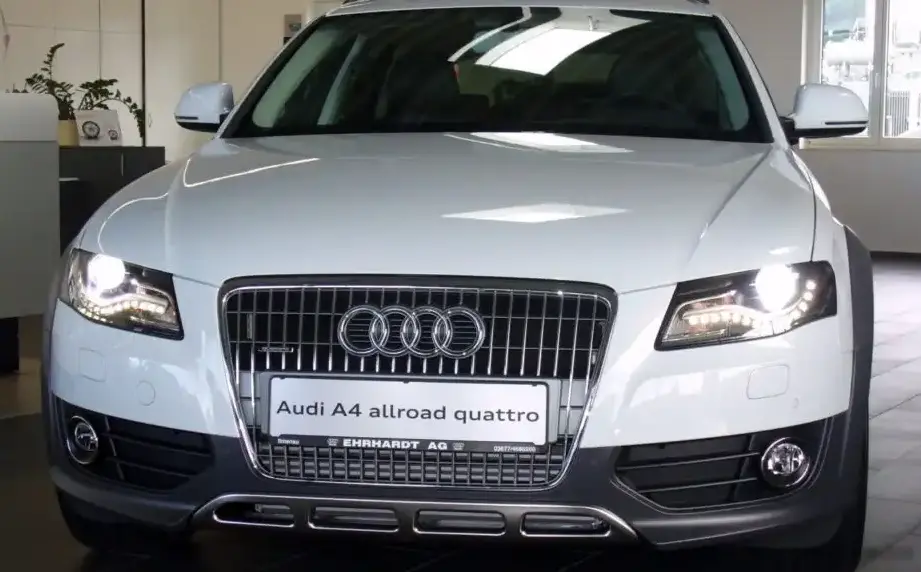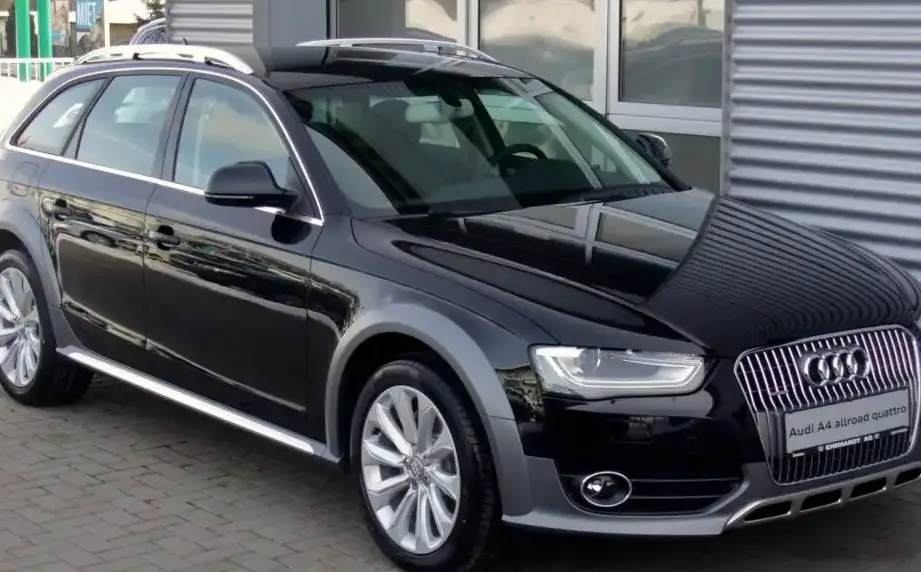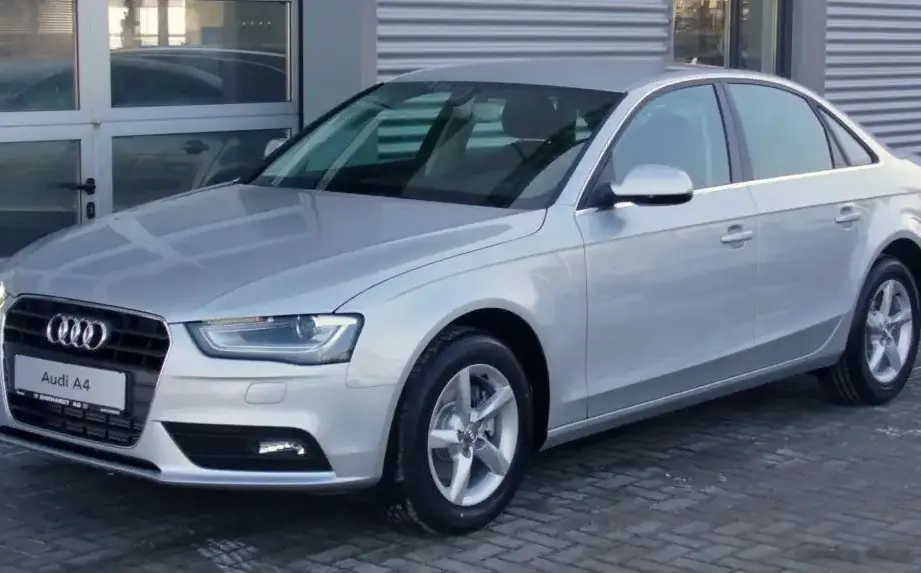
The Audi A4 (B8 8K) facelift, produced from 2012 to 2015, represented a significant mid-cycle refresh of Audi’s popular compact executive car. Among the various engine and drivetrain configurations offered, the 2.0 TFSI with 211 horsepower paired with the quattro all-wheel drive system and a seven-speed S tronic dual-clutch transmission was a prominent offering, particularly in European and North American markets. This variant aimed to balance performance, efficiency, and all-weather capability, positioning itself as a premium choice within the A4 lineup.
Technical Specifications
| Brand | Audi |
| Model | A4 |
| Generation | A4 (B8 8K, facelift 2011) |
| Type (Engine) | 2.0 TFSI (211 Hp) quattro S tronic |
| Start of production | January, 2012 |
| End of production | 2015 |
| Powertrain Architecture | Internal Combustion engine |
| Body type | Sedan |
| Seats | 5 |
| Doors | 4 |
| Fuel consumption (urban) | 8.8 l/100 km (26.7 US mpg, 32.1 UK mpg, 11.4 km/l) |
| Fuel consumption (extra urban) | 5.8 l/100 km (40.6 US mpg, 48.7 UK mpg, 17.2 km/l) |
| Fuel consumption (combined) | 6.9 l/100 km (34.1 US mpg, 40.9 UK mpg, 14.5 km/l) |
| CO2 emissions | 159 g/km |
| Fuel Type | Petrol (Gasoline) |
| Acceleration 0 – 100 km/h | 6.5 sec |
| Acceleration 0 – 62 mph | 6.5 sec |
| Acceleration 0 – 60 mph | 6.2 sec |
| Maximum speed | 245 km/h (152.24 mph) |
| Emission standard | Euro 5 |
| Weight-to-power ratio | 7.4 kg/Hp, 134.4 Hp/tonne |
| Weight-to-torque ratio | 4.5 kg/Nm, 222.9 Nm/tonne |
| Power | 211 Hp @ 4300-6000 rpm |
| Power per litre | 106.4 Hp/l |
| Torque | 350 Nm @ 1500-4500 rpm (258.15 lb.-ft. @ 1500-4500 rpm) |
| Engine layout | Front, Longitudinal |
| Engine Model/Code | CAEB, CDNC, CPMA |
| Engine displacement | 1984 cm3 (121.07 cu. in.) |
| Number of cylinders | 4 |
| Engine configuration | Inline |
| Cylinder Bore | 82.5 mm (3.25 in.) |
| Piston Stroke | 92.8 mm (3.65 in.) |
| Compression ratio | 9.6:1 |
| Number of valves per cylinder | 4 |
| Fuel injection system | Direct injection |
| Engine aspiration | Turbocharger, Intercooler |
| Valvetrain | DOHC |
| Engine oil capacity | 4.6 l (4.86 US qt | 4.05 UK qt) |
| Kerb Weight | 1570 kg (3461.26 lbs.) |
| Max. weight | 2120 kg (4673.8 lbs.) |
| Max load | 550 kg (1212.54 lbs.) |
| Trunk (boot) space – minimum | 480 l (16.95 cu. ft.) |
| Trunk (boot) space – maximum | 962 l (33.97 cu. ft.) |
| Fuel tank capacity | 61 l (16.11 US gal | 13.42 UK gal) |
| Max. roof load | 90 kg (198.42 lbs.) |
| Permitted trailer load with brakes (8%) | 1900 kg (4188.78 lbs.) |
| Permitted trailer load without brakes | 750 kg (1653.47 lbs.) |
| Permitted towbar download | 80 kg (176.37 lbs.) |
| Length | 4701 mm (185.08 in.) |
| Width | 1826 mm (71.89 in.) |
| Width including mirrors | 2040 mm (80.31 in.) |
| Height | 1427 mm (56.18 in.) |
| Wheelbase | 2808 mm (110.55 in.) |
| Front track | 1564 mm (61.57 in.) |
| Rear (Back) track | 1551 mm (61.06 in.) |
| Front overhang | 862 mm (33.94 in.) |
| Rear overhang | 1031 mm (40.59 in.) |
| Drag coefficient (Cd) | 0.28 |
| Minimum turning circle (turning diameter) | 11.5 m (37.73 ft.) |
| Drive wheel | All wheel drive (4×4) |
| Number of gears and type of gearbox | 7 gears, automatic transmission S tronic |
| Front suspension | Independent multi-link suspension |
| Rear suspension | Independent on trapezoidal lever |
| Front brakes | Ventilated discs |
| Rear brakes | Disc |
| Assisting systems | ABS (Anti-lock braking system) |
| Steering type | Steering rack and pinion |
| Power steering | Electric Steering |
| Tires size | 225/55 R16 |
| Wheel rims size | 7.5J x 16 |
INTRODUCTION
The Audi A4 B8.5, as the facelifted model is often referred to, continued the A4’s reputation as a benchmark in the compact executive segment. Introduced in 2012, it featured revised styling, enhanced technology, and updated engine options. The 2.0 TFSI quattro S tronic variant was a key player in Audi’s sales strategy, offering a compelling blend of performance and practicality. It sat in the mid-range of the A4 lineup, above the lower-powered 1.8 TFSI models and below the more potent 3.0 TFSI V6 versions. The B8.5 generation benefitted from improvements to the 1HX0/A3 platform, focusing on refinement and efficiency.
Powertrain & Engine Architecture
At the heart of this A4 variant lies the 2.0-liter turbocharged four-cylinder engine, specifically utilizing the CAEB, CDNC, or CPMA engine codes depending on the specific market and production year. This engine is a direct-injection gasoline engine, employing FSI (Fuel Stratified Injection) technology for precise fuel delivery and improved combustion efficiency. The engine features a double overhead camshaft (DOHC) valvetrain with four valves per cylinder, optimizing airflow for increased power output. A single turbocharger, coupled with an intercooler, provides forced induction, boosting horsepower and torque. The S tronic seven-speed dual-clutch transmission is a crucial component, offering rapid and smooth gear changes. Unlike a traditional automatic, the S tronic utilizes two separate clutches – one for odd gears and one for even gears – allowing for pre-selection of the next gear, minimizing interruption in power delivery. This transmission is known for its responsiveness and efficiency.
Driving Characteristics
The 211 hp and 350 Nm (258 lb-ft) of torque delivered by the 2.0 TFSI engine, combined with the quattro all-wheel-drive system and the S tronic transmission, resulted in a spirited driving experience. Acceleration from 0 to 60 mph was achieved in approximately 6.2-6.5 seconds. While not as brutally fast as the higher-output V6 models, this variant offered ample power for everyday driving and confident overtaking maneuvers. The S tronic transmission contributed to a seamless power delivery, with minimal turbo lag. The quattro system provided excellent traction, particularly in adverse weather conditions, enhancing stability and control. Compared to the manual transmission versions, the S tronic offered convenience and quicker acceleration, though some enthusiasts preferred the more engaging feel of a manual gearbox. The gear ratios were tuned for a balance between acceleration and fuel economy, with taller gears for efficient cruising.
Equipment & Trim Levels
The 2.0 TFSI quattro S tronic typically came well-equipped, reflecting Audi’s premium positioning. Standard features often included leather upholstery, tri-zone automatic climate control, a multi-function steering wheel, and an Audi Concert audio system. Optional extras were plentiful, including navigation systems, a premium Bang & Olufsen sound system, parking sensors, and advanced driver-assistance systems like adaptive cruise control. Interior trim levels varied, with options for wood, aluminum, or carbon fiber accents. The dashboard layout was clean and modern, with a focus on ergonomics and user-friendliness.
Chassis & Braking
The A4 B8.5 featured a sophisticated chassis design, with independent multi-link suspension at the front and an independent trapezoidal link suspension at the rear. This setup provided a comfortable ride while maintaining precise handling characteristics. The quattro all-wheel-drive system distributed power between the front and rear axles as needed, optimizing traction and stability. Braking duties were handled by ventilated discs at the front and solid discs at the rear, providing ample stopping power. Anti-lock braking system (ABS) was standard, enhancing safety and control during emergency braking situations. Stabilizer bars were fitted to both the front and rear axles to reduce body roll during cornering.
Market Reception & Comparison
The 2.0 TFSI quattro S tronic variant of the A4 B8.5 received generally positive reviews from automotive critics. It was praised for its refined driving experience, comfortable interior, and advanced technology. Fuel economy was considered respectable for its class, averaging around 34.1 US mpg in combined driving. Compared to the 1.8 TFSI models, the 2.0 TFSI offered a noticeable performance upgrade, while the 3.0 TFSI V6 provided even more power but at a higher price point and with increased fuel consumption. The S tronic transmission was generally well-received, although some reviewers noted that it could occasionally feel slightly jerky at low speeds. Reliability was generally good, although some owners reported occasional issues with the turbocharger or the S tronic transmission.
Legacy
The 2.0 TFSI quattro S tronic A4 B8.5 remains a popular choice in the used car market. Its combination of performance, practicality, and all-weather capability continues to appeal to buyers. The 2.0 TFSI engine, while not without its potential issues (such as carbon buildup on the intake valves), is generally considered reliable if properly maintained. The S tronic transmission requires regular servicing, including fluid changes, to ensure optimal performance and longevity. Overall, this A4 variant represents a well-rounded and capable compact executive car that offers a premium driving experience at a relatively affordable price point.