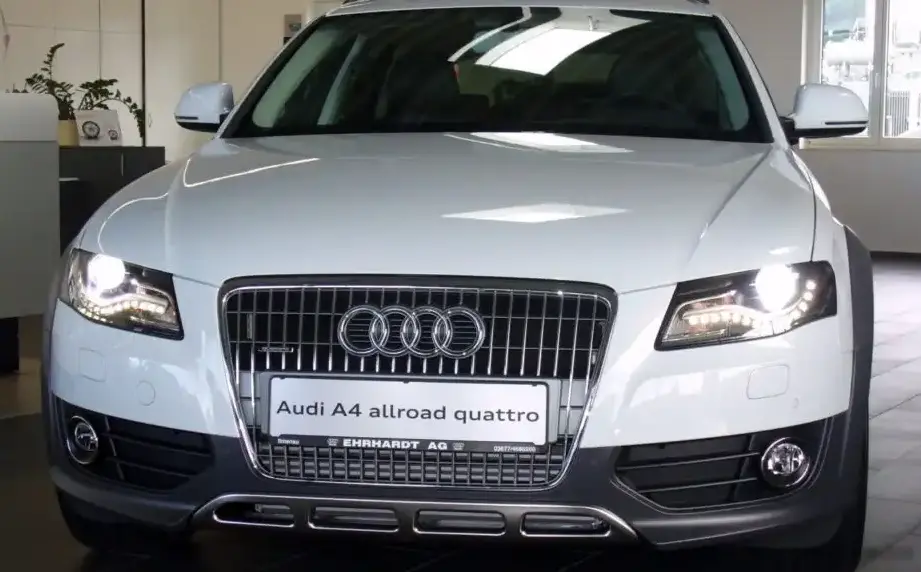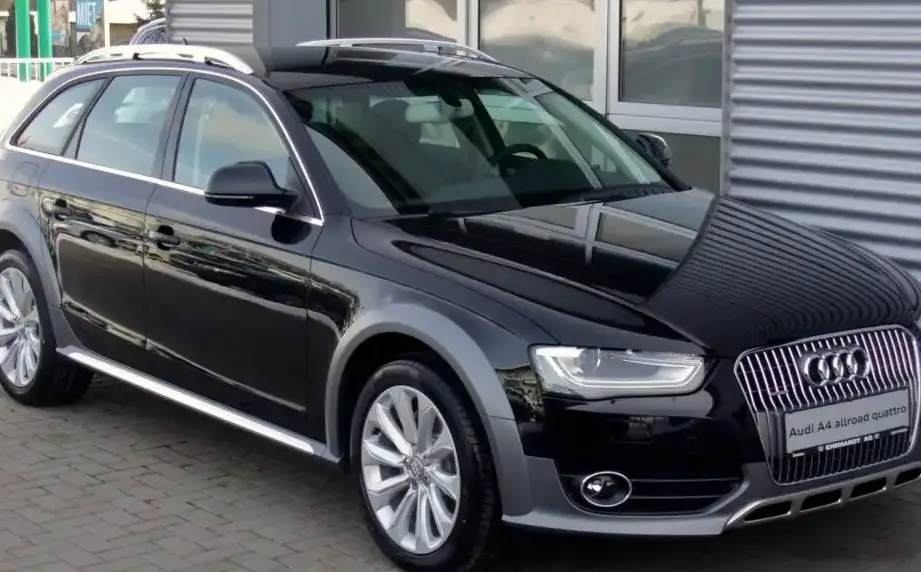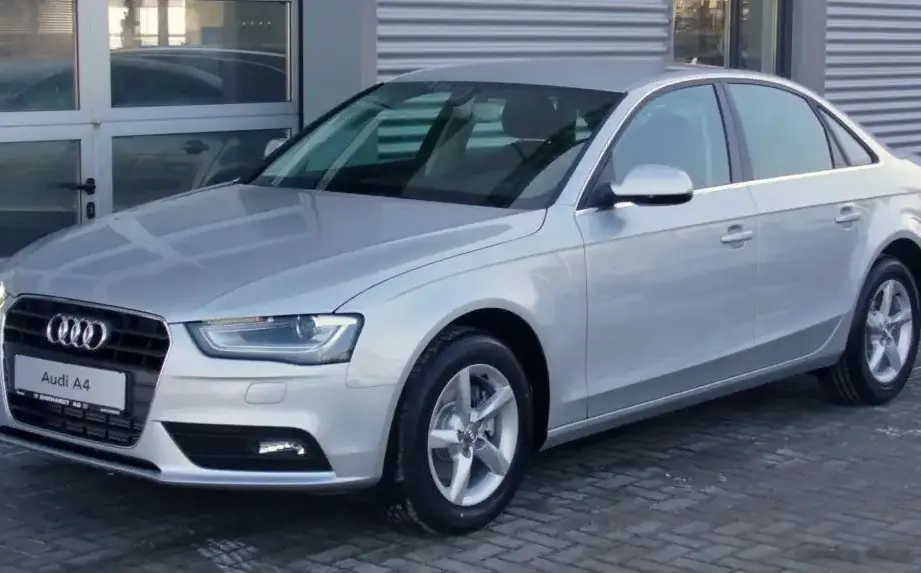
The Audi A4 (B8 8K) facelift, produced from 2011 to 2015, represented a significant mid-cycle refresh of Audi’s popular compact executive car. The 2.0 TFSI variant, specifically the 225 horsepower version paired with the Multitronic continuously variable transmission (CVT), occupied a sweet spot in the A4 lineup, offering a blend of performance, efficiency, and technology. Introduced in April 2013, this configuration aimed to appeal to buyers seeking a more engaging driving experience than the base engine, without the added cost and complexity of the higher-performance S4 model. It was positioned as a mid-range offering, bridging the gap between the entry-level 1.8 TFSI and the sportier, more expensive options.
Technical Specifications
| Brand | Audi |
| Model | A4 |
| Generation | A4 (B8 8K, facelift 2011) |
| Type (Engine) | 2.0 TFSI (225 Hp) Multitronic |
| Start of production | April, 2013 |
| End of production | 2015 |
| Powertrain Architecture | Internal Combustion engine |
| Body type | Sedan |
| Seats | 5 |
| Doors | 4 |
| Fuel consumption (urban) | 7.4 l/100 km (31.8 US mpg, 38.2 UK mpg, 13.5 km/l) |
| Fuel consumption (extra urban) | 5 l/100 km (47 US mpg, 56.5 UK mpg, 20 km/l) |
| Fuel consumption (combined) | 5.8 l/100 km (40.6 US mpg, 48.7 UK mpg, 17.2 km/l) |
| CO2 emissions | 136 g/km |
| Fuel Type | Petrol (Gasoline) |
| Acceleration 0 – 100 km/h | 6.9 sec |
| Acceleration 0 – 62 mph | 6.9 sec |
| Acceleration 0 – 60 mph | 6.6 sec |
| Maximum speed | 242 km/h (150.37 mph) |
| Emission standard | Euro 6 |
| Weight-to-power ratio | 6.6 kg/Hp, 151.5 Hp/tonne |
| Weight-to-torque ratio | 4.2 kg/Nm, 235.7 Nm/tonne |
| Power | 225 Hp @ 4500-6250 rpm |
| Power per litre | 113.4 Hp/l |
| Torque | 350 Nm @ 1500-4500 rpm (258.15 lb.-ft. @ 1500-4500 rpm) |
| Engine layout | Front, Longitudinal |
| Engine Model/Code | EA888 / CNCD |
| Engine displacement | 1984 cm3 (121.07 cu. in.) |
| Number of cylinders | 4 |
| Engine configuration | Inline |
| Cylinder Bore | 82.5 mm (3.25 in.) |
| Piston Stroke | 92.8 mm (3.65 in.) |
| Compression ratio | 9.6:1 |
| Number of valves per cylinder | 4 |
| Fuel injection system | Direct injection and Multi-port manifold injection |
| Engine aspiration | Turbocharger, Intercooler |
| Valvetrain | DOHC |
| Engine oil capacity | 4.6 l (4.86 US qt | 4.05 UK qt) |
| Kerb Weight | 1485 kg (3273.86 lbs.) |
| Max. weight | 2035 kg (4486.41 lbs.) |
| Max load | 550 kg (1212.54 lbs.) |
| Trunk (boot) space – minimum | 480 l (16.95 cu. ft.) |
| Trunk (boot) space – maximum | 962 l (33.97 cu. ft.) |
| Fuel tank capacity | 63 l (16.64 US gal | 13.86 UK gal) |
| Max. roof load | 90 kg (198.42 lbs.) |
| Permitted trailer load with brakes (8%) | 1700 kg (3747.86 lbs.) |
| Permitted trailer load with brakes (12%) | 1500 kg (3306.93 lbs.) |
| Permitted trailer load without brakes | 750 kg (1653.47 lbs.) |
| Permitted towbar download | 80 kg (176.37 lbs.) |
| Length | 4701 mm (185.08 in.) |
| Width | 1826 mm (71.89 in.) |
| Width including mirrors | 2040 mm (80.31 in.) |
| Height | 1427 mm (56.18 in.) |
| Wheelbase | 2808 mm (110.55 in.) |
| Front track | 1564 mm (61.57 in.) |
| Rear (Back) track | 1551 mm (61.06 in.) |
| Front overhang | 862 mm (33.94 in.) |
| Rear overhang | 1031 mm (40.59 in.) |
| Drag coefficient (Cd) | 0.28 |
| Minimum turning circle (turning diameter) | 11.5 m (37.73 ft.) |
| Drivetrain Architecture | The Internal combustion engine (ICE) drives the front wheels of the vehicle. |
| Drive wheel | Front wheel drive |
| Number of gears and type of gearbox | automatic transmission Multitronic |
| Front suspension | Independent multi-link suspension, Transverse stabilizer |
| Rear suspension | Independent on trapezoidal lever, Transverse stabilizer |
| Front brakes | Ventilated discs |
| Rear brakes | Disc |
| Assisting systems | ABS (Anti-lock braking system) |
| Steering type | Steering rack and pinion |
| Power steering | Electric Steering |
| Tires size | 225/55 R16 |
| Wheel rims size | 7.5J x 16 |
INTRODUCTION
The Audi A4 B8.5, as the facelifted model is commonly known, built upon the success of the B8 generation, refining its styling, technology, and efficiency. The 2.0 TFSI with 225 horsepower and the Multitronic transmission was a popular choice for buyers in Europe and other markets where CVTs were well-received. This variant offered a compelling balance between performance and fuel economy, making it suitable for both daily commuting and longer journeys. The B8.5 received updates to its front and rear fascias, interior trim, and infotainment systems, further enhancing its appeal.
Powertrain & Engine Architecture
At the heart of this A4 variant lies the EA888 2.0-liter turbocharged four-cylinder engine, specifically the CNCD code. This engine utilizes direct fuel injection (FSI) combined with multi-point injection, optimizing combustion efficiency and reducing emissions. The engine features a double overhead camshaft (DOHC) valvetrain and a single turbocharger with an intercooler to boost power output. The Multitronic transmission is a continuously variable transmission (CVT) offering seamless gear changes and improved fuel efficiency compared to traditional automatic transmissions. It uses a chain-driven system with a steel pushbelt, allowing for a wide range of gear ratios. The engine management system is sophisticated, incorporating features like start-stop technology to further reduce fuel consumption.
Driving Characteristics
The 225 hp 2.0 TFSI with Multitronic delivers a smooth and refined driving experience. While not as overtly sporty as the manual transmission or higher-output versions, it provides ample power for everyday driving and confident overtaking. The Multitronic transmission effectively manages the engine’s torque, providing a linear power delivery. Acceleration from 0-60 mph takes approximately 6.6 seconds, making it a reasonably quick vehicle. The CVT, while efficient, can sometimes feel less engaging than a traditional automatic or manual gearbox, lacking the distinct shift points. However, it excels in providing a comfortable and effortless driving experience, particularly in urban environments.
Equipment & Trim Levels
The 2.0 TFSI Multitronic A4 typically came well-equipped, even in base trim. Standard features included automatic climate control, a multi-function steering wheel, power windows and mirrors, and an audio system with auxiliary input. Higher trim levels added features like leather upholstery, heated front seats, a sunroof, and a more advanced infotainment system with navigation. Optional extras included Audi’s Drive Select system, which allowed drivers to adjust the steering, throttle response, and transmission settings. The interior design was typically understated and elegant, with high-quality materials and a focus on ergonomics.
Chassis & Braking
The A4 B8.5 features a well-tuned suspension system designed to provide a comfortable ride without sacrificing handling. The front suspension utilizes a multi-link setup, while the rear employs a trapezoidal link design. Both ends are equipped with transverse stabilizer bars to reduce body roll. Braking duties are handled by ventilated discs at the front and solid discs at the rear, providing adequate stopping power. Anti-lock braking system (ABS) and electronic stability control (ESC) are standard safety features.
Market Reception & Comparison
The 2.0 TFSI Multitronic A4 was generally well-received by automotive critics. It was praised for its refined engine, comfortable ride, and fuel efficiency. However, some reviewers noted that the Multitronic transmission could feel somewhat detached and lacked the sporty feel of a traditional automatic or manual gearbox. Compared to the 1.8 TFSI, the 2.0 TFSI offered a noticeable performance upgrade. Compared to the higher-output 2.0 TFSI variants, it provided a more affordable option with slightly less power but similar fuel economy. The 2.0 TDI diesel variants were also popular, offering even better fuel economy but with a different driving character.
Legacy
The EA888 2.0 TFSI engine has proven to be a reliable and durable powerplant, although early versions were prone to carbon buildup on the intake valves. Regular oil changes and the use of quality fuel are essential for maintaining its longevity. The Multitronic transmission, while generally reliable, requires regular servicing, including fluid changes, to prevent issues. Today, the B8.5 A4 2.0 TFSI Multitronic remains a popular choice in the used car market, offering a good balance of performance, comfort, and value. Its relatively modern features and refined driving experience continue to appeal to buyers seeking a well-rounded compact executive car.