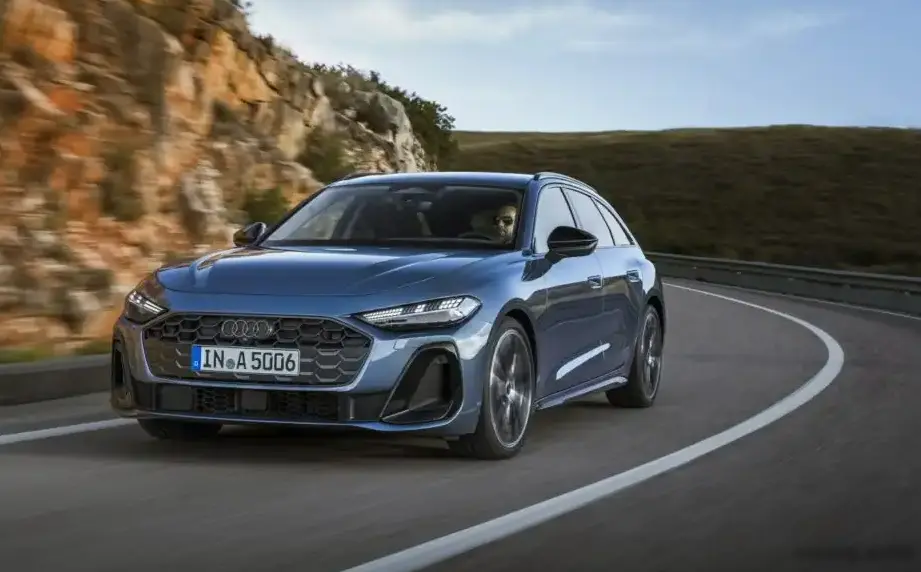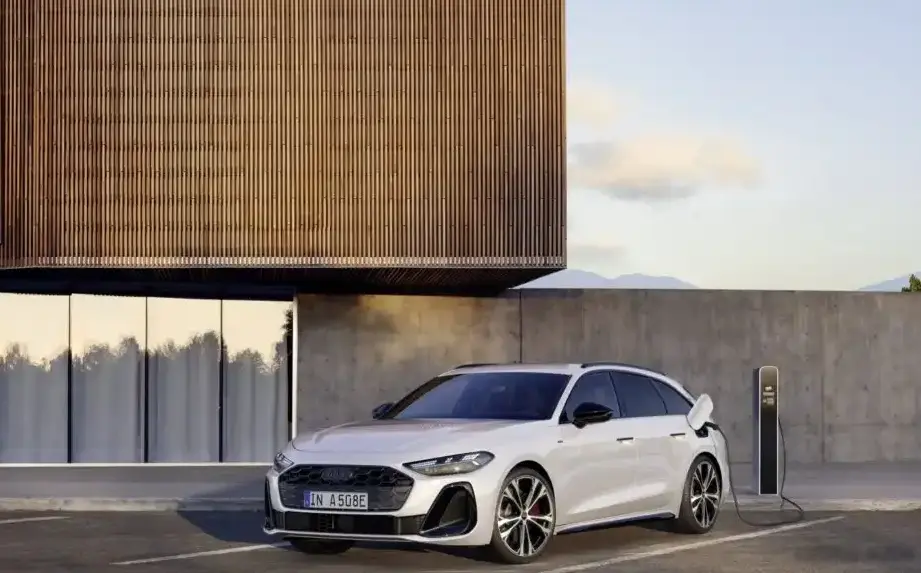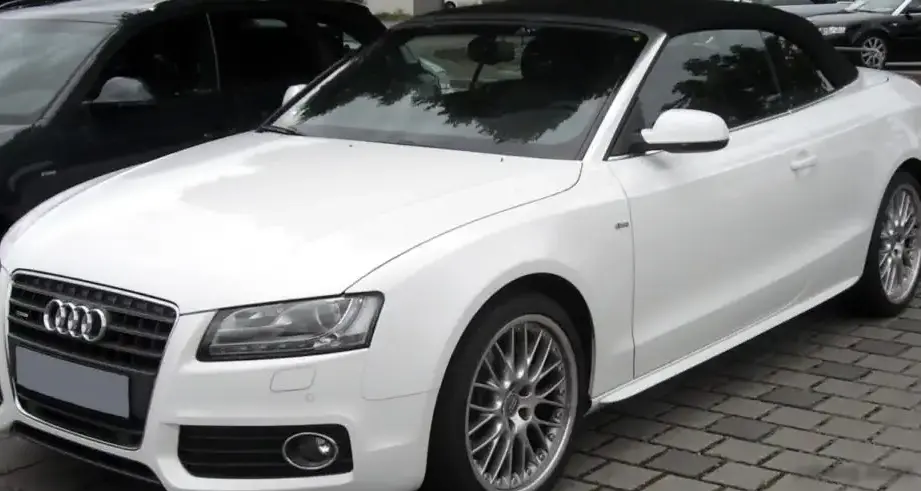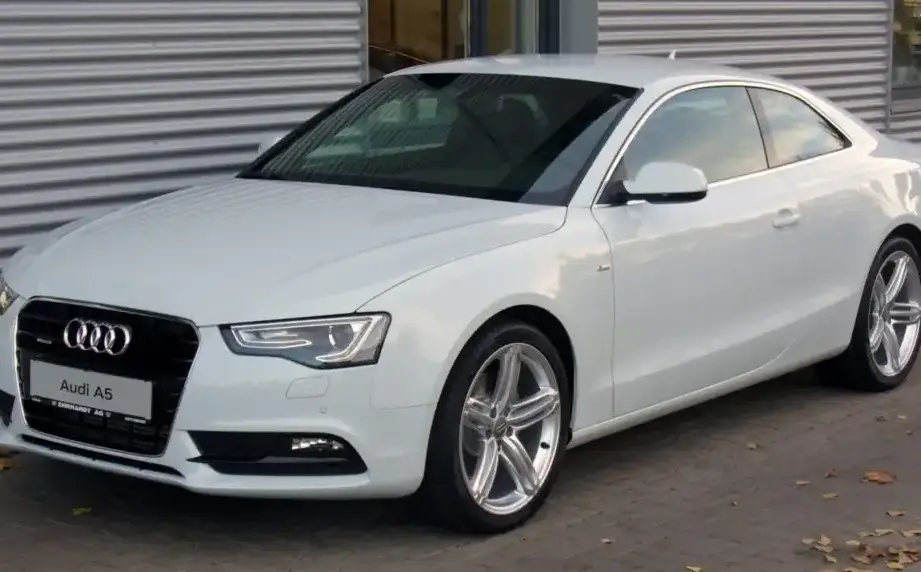
The Audi A5 Coupe (8T3), particularly the facelifted version introduced in 2011, represented a significant evolution in Audi’s design language and engineering prowess. Production of the 2.0 TFSI quattro Tiptronic variant spanned from June 2013 to 2017, positioning it as a mid-range offering within the A5 lineup. This model combined a potent turbocharged four-cylinder engine with Audi’s renowned quattro all-wheel-drive system and a convenient eight-speed Tiptronic automatic transmission, appealing to buyers seeking a blend of performance, luxury, and all-weather capability. It was built on the Audi A4 (B8) platform, known internally as the 8K series, and shared many components with its sedan and convertible siblings.
Technical Specifications
| Brand | Audi |
| Model | A5 |
| Generation | A5 Coupe (8T3, facelift 2011) |
| Type (Engine) | 2.0 TFSI (220 Hp) quattro Tiptronic |
| Start of production | June, 2013 |
| End of production | 2017 |
| Powertrain Architecture | Internal Combustion engine |
| Body type | Coupe |
| Seats | 4 |
| Doors | 2 |
| Fuel consumption (economy) – urban (EPA) | 11.2-11.8 l/100 km (21 – 19.9 US mpg, 25.2 – 23.9 UK mpg, 8.9 – 8.5 km/l) |
| Fuel consumption (economy) – extra urban (EPA) | 7.8-8.4 l/100 km (30.2 – 28 US mpg, 36.2 – 33.6 UK mpg, 12.8 – 11.9 km/l) |
| Fuel consumption (economy) – combined (EPA) | 9.8-10.2 l/100 km (24 – 23.1 US mpg, 28.8 – 27.7 UK mpg, 10.2 – 9.8 km/l) |
| Fuel Type | Petrol (Gasoline) |
| Acceleration 0 – 60 mph | 6.1 sec |
| Maximum speed | 210 km/h (130.49 mph), Electronically limited |
| Emission standard | ULEV II |
| Weight-to-power ratio | 7.6 kg/Hp, 131.7 Hp/tonne |
| Weight-to-torque ratio | 4.8 kg/Nm, 209.6 Nm/tonne |
| Power | 220 Hp @ 4450-6000 rpm |
| Power per litre | 110.9 Hp/l |
| Torque | 350 Nm @ 1500-4300 rpm (258.15 lb.-ft. @ 1500-4300 rpm) |
| Engine layout | Front, Longitudinal |
| Engine Model/Code | EA888 / CAED, CPMB |
| Engine displacement | 1984 cm3 (121.07 cu. in.) |
| Number of cylinders | 4 |
| Engine configuration | Inline |
| Cylinder Bore | 82.5 mm (3.25 in.) |
| Piston Stroke | 92.8 mm (3.65 in.) |
| Compression ratio | 9.6:1 |
| Number of valves per cylinder | 4 |
| Fuel injection system | Direct injection |
| Engine aspiration | Turbocharger, Intercooler |
| Valvetrain | DOHC |
| Engine oil capacity | 4.6 l (4.86 US qt | 4.05 UK qt) |
| Coolant | 10 l (10.57 US qt | 8.8 UK qt) |
| Kerb Weight | 1670 kg (3681.72 lbs.) |
| Trunk (boot) space – minimum | 455 l (16.07 cu. ft.) |
| Trunk (boot) space – maximum | 829 l (29.28 cu. ft.) |
| Fuel tank capacity | 61 l (16.11 US gal | 13.42 UK gal) |
| Length | 4626 mm (182.13 in.) |
| Width | 1854 mm (72.99 in.) |
| Width including mirrors | 2020 mm (79.53 in.) |
| Height | 1372 mm (54.02 in.) |
| Wheelbase | 2751 mm (108.31 in.) |
| Front track | 1590 mm (62.6 in.) |
| Rear (Back) track | 1577 mm (62.09 in.) |
| Front overhang | 861 mm (33.9 in.) |
| Rear overhang | 1014 mm (39.92 in.) |
| Drag coefficient (Cd) | 0.32 |
| Minimum turning circle (turning diameter) | 11.4 m (37.4 ft.) |
| Drivetrain Architecture | The Internal combustion engine (ICE) drives permanently the four wheels of the vehicle. |
| Drive wheel | All wheel drive (4×4) |
| Number of gears and type of gearbox | 8 gears, automatic transmission Tiptronic |
| Front suspension | Coil spring, Independent multi-link suspension, Transverse stabilizer |
| Rear suspension | Independent on trapezoidal lever, Transverse stabilizer |
| Front brakes | Ventilated discs, 320 mm |
| Rear brakes | Disc, 300 mm |
| Assisting systems | ABS (Anti-lock braking system) |
| Steering type | Steering rack and pinion |
| Power steering | Electric Steering |
| Tires size | 245/40 R18; 255/35 R19 |
| Wheel rims size | 8.5J x 18; 8.5J x 19; 9J x 19 |
INTRODUCTION
The Audi A5 Coupe (8T3) facelift, launched in 2011, brought with it revised styling, updated technology, and refined engine options. The 2.0 TFSI quattro Tiptronic variant, produced from 2013-2017, occupied a sweet spot in the A5 range. It offered a compelling balance between performance and practicality, making it a popular choice for buyers who desired a sporty coupe with the added security of all-wheel drive and the convenience of an automatic transmission. This model was a key part of Audi’s strategy to appeal to a broader audience within the premium coupe segment, competing directly with rivals like the BMW 3 Series Coupe and Mercedes-Benz C-Class Coupe.
Powertrain & Engine Architecture
At the heart of the A5 2.0 TFSI quattro Tiptronic lies the EA888 engine, specifically the CAED or CPMB code depending on the exact production year and market. This 1984cc (121.07 cu. in.) inline-four cylinder engine utilizes direct fuel injection and a single turbocharger with an intercooler to deliver 220 horsepower at 4450-6000 rpm and 350 Nm (258.15 lb.-ft.) of torque between 1500-4300 rpm. The engine features a dual overhead camshaft (DOHC) valvetrain with four valves per cylinder, optimizing airflow for improved performance. The eight-speed Tiptronic automatic transmission, a ZF-sourced unit, provides smooth and responsive gear changes. It allows for both fully automatic operation and manual gear selection via steering wheel-mounted paddles or the gear selector. The quattro all-wheel-drive system employs a Torsen center differential, distributing torque between the front and rear axles as needed, enhancing traction and stability in various driving conditions.
Driving Characteristics
The 2.0 TFSI quattro Tiptronic A5 Coupe delivers a refined and capable driving experience. While not as overtly sporty as the higher-output variants, the 220 hp engine provides ample power for everyday driving and spirited acceleration. The 0-60 mph sprint takes approximately 6.1 seconds, and the electronically limited top speed is 130.49 mph. The Tiptronic transmission is well-matched to the engine’s characteristics, offering quick and seamless shifts. The quattro all-wheel-drive system inspires confidence, particularly on slippery surfaces, providing excellent grip and stability. Compared to the manual transmission versions, the Tiptronic offers greater convenience, especially in urban traffic. However, some enthusiasts may find the manual transmission more engaging. The gear ratios are tuned for a balance of acceleration and fuel efficiency, with a relatively tall final drive contributing to improved highway cruising.
Equipment & Trim Levels
The A5 2.0 TFSI quattro Tiptronic typically came well-equipped as standard. Features included leather upholstery, three-zone automatic climate control, a multi-function steering wheel, and Audi’s MMI infotainment system with a central display screen. Optional extras were plentiful, including navigation, a premium sound system (Bang & Olufsen), sport seats, and various driver-assistance systems such as adaptive cruise control and blind-spot monitoring. Exterior options included different wheel designs, metallic paint finishes, and S line styling packages, which added more aggressive bodywork and interior trim.
Chassis & Braking
The A5 Coupe’s chassis features a sophisticated suspension setup designed to balance comfort and handling. The front suspension utilizes a coil spring and independent multi-link design with a transverse stabilizer, while the rear suspension employs an independent trapezoidal lever setup, also with a transverse stabilizer. This configuration provides a comfortable ride while minimizing body roll during cornering. The braking system consists of ventilated discs at the front (320mm) and solid discs at the rear (300mm), providing ample stopping power. ABS (Anti-lock braking system) is standard, enhancing safety and control during emergency braking situations.
Market Reception & Comparison
The Audi A5 2.0 TFSI quattro Tiptronic was generally well-received by automotive critics. It was praised for its stylish design, refined interior, and capable performance. The combination of the turbocharged engine, all-wheel drive, and automatic transmission was seen as a practical and appealing choice for a wide range of buyers. Compared to the higher-output 3.0-liter V6 models, the 2.0 TFSI offered better fuel economy and lower running costs. However, it lacked the outright performance and aural excitement of the V6. Fuel economy figures averaged around 24-23.1 US mpg combined, making it reasonably efficient for a performance coupe.
Legacy
The EA888 engine, in its various iterations, has proven to be a robust and reliable powerplant. The 2.0 TFSI quattro Tiptronic A5 Coupe has maintained a solid reputation for reliability, although regular maintenance is crucial. Common issues, if any, typically relate to the turbocharger, fuel injectors, or the carbon buildup on the intake valves (a common issue with direct-injection engines). On the used car market, these A5 Coupes remain desirable, commanding reasonable prices depending on mileage, condition, and equipment levels. Their blend of style, performance, and practicality ensures continued appeal for years to come.