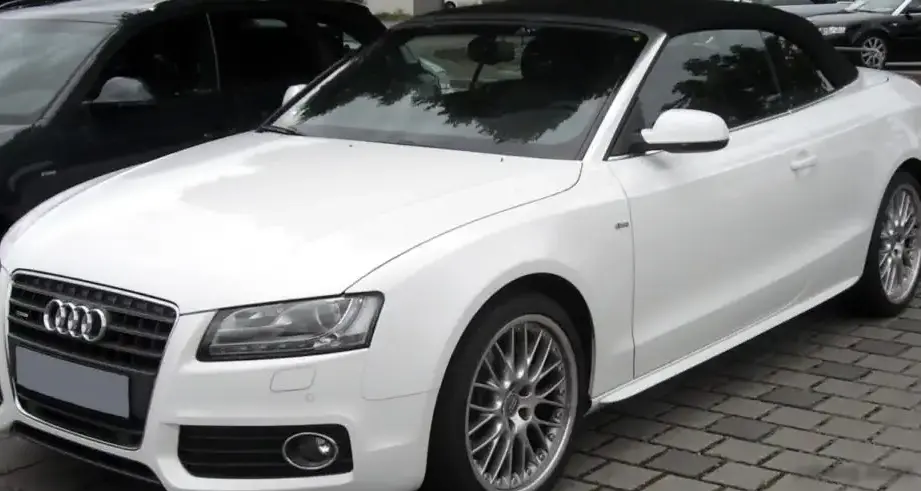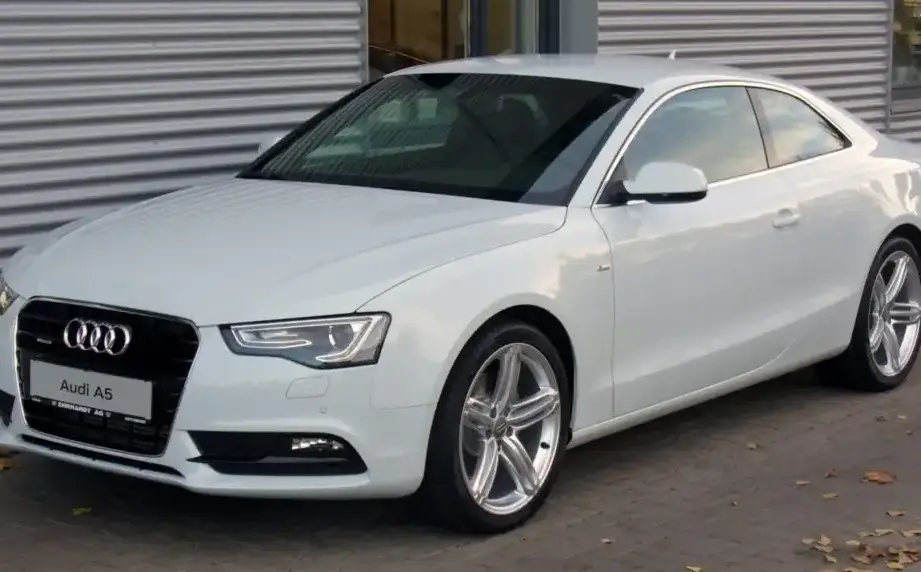
The Audi A5 Coupe (8T3), particularly the facelifted version produced from 2011 to 2015, represented a significant refinement of Audi’s mid-size luxury coupe. Among the various engine and drivetrain configurations offered, the 3.0 TDI V6 with 245 horsepower paired with the quattro all-wheel drive system and S tronic dual-clutch transmission stands out as a compelling blend of performance, efficiency, and sophisticated technology. This variant occupied a premium position within the A5 lineup, appealing to buyers seeking a spirited driving experience without sacrificing comfort or practicality. It was a key offering in European markets, where diesel engines remained highly popular, and found a smaller but dedicated following in other regions.
Technical Specifications
| Brand | Audi |
| Model | A5 |
| Generation | A5 Coupe (8T3, facelift 2011) |
| Type (Engine) | 3.0 TDI V6 (245 Hp) quattro S tronic |
| Start of production | 2011 |
| End of production | 2015 |
| Powertrain Architecture | Internal Combustion engine |
| Body type | Coupe |
| Seats | 4 |
| Doors | 2 |
| Fuel consumption (urban) | 6.8 l/100 km (34.6 US mpg, 41.5 UK mpg, 14.7 km/l) |
| Fuel consumption (extra urban) | 5.1 l/100 km (46.1 US mpg, 55.4 UK mpg, 19.6 km/l) |
| Fuel consumption (combined) | 5.7 l/100 km (41.3 US mpg, 49.6 UK mpg, 17.5 km/l) |
| CO2 emissions | 149 g/km |
| Fuel Type | Diesel |
| Acceleration 0 – 100 km/h | 5.8 sec |
| Acceleration 0 – 62 mph | 5.8 sec |
| Acceleration 0 – 60 mph | 5.5 sec |
| Maximum speed | 250 km/h (155.34 mph) |
| Emission standard | Euro 5 |
| Weight-to-power ratio | 6.7 kg/Hp, 149.4 Hp/tonne |
| Weight-to-torque ratio | 3.3 kg/Nm, 304.9 Nm/tonne |
| Power | 245 Hp @ 4000-4500 rpm |
| Power per litre | 82.6 Hp/l |
| Torque | 500 Nm @ 1400-3250 rpm (368.78 lb.-ft. @ 1400-3250 rpm) |
| Engine layout | Front, Longitudinal |
| Engine Model/Code | CDUC, CKVB, CKVC |
| Engine displacement | 2967 cm3 (181.06 cu. in.) |
| Number of cylinders | 6 |
| Engine configuration | V-engine |
| Cylinder Bore | 83 mm (3.27 in.) |
| Piston Stroke | 91.4 mm (3.6 in.) |
| Compression ratio | 16.8:1 |
| Number of valves per cylinder | 4 |
| Fuel injection system | Diesel Commonrail |
| Engine aspiration | Turbocharger, Intercooler |
| Valvetrain | DOHC |
| Engine oil capacity | 6.4 l (6.76 US qt | 5.63 UK qt) |
| Kerb Weight | 1640 kg (3615.58 lbs.) |
| Max. weight | 2140 kg (4717.89 lbs.) |
| Max load | 500 kg (1102.31 lbs.) |
| Trunk (boot) space – minimum | 455 l (16.07 cu. ft.) |
| Trunk (boot) space – maximum | 829 l (29.28 cu. ft.) |
| Fuel tank capacity | 61 l (16.11 US gal | 13.42 UK gal) |
| Max. roof load | 75 kg (165.35 lbs.) |
| Permitted trailer load with brakes (8%) | 2100 kg (4629.71 lbs.) |
| Permitted trailer load with brakes (12%) | 1900 kg (4188.78 lbs.) |
| Permitted trailer load without brakes | 750 kg (1653.47 lbs.) |
| Permitted towbar download | 80 kg (176.37 lbs.) |
| Length | 4626 mm (182.13 in.) |
| Width | 1854 mm (72.99 in.) |
| Width including mirrors | 2020 mm (79.53 in.) |
| Height | 1372 mm (54.02 in.) |
| Wheelbase | 2751 mm (108.31 in.) |
| Front track | 1590 mm (62.6 in.) |
| Rear (Back) track | 1577 mm (62.09 in.) |
| Front overhang | 861 mm (33.9 in.) |
| Rear overhang | 1014 mm (39.92 in.) |
| Minimum turning circle (turning diameter) | 11.4 m (37.4 ft.) |
| Drivetrain Architecture | The Internal combustion engine (ICE) drives permanently the four wheels of the vehicle. |
| Drive wheel | All wheel drive (4×4) |
| Number of gears and type of gearbox | 7 gears, automatic transmission S tronic |
| Front suspension | Independent multi-link suspension |
| Rear suspension | Independent on trapezoidal lever |
| Front brakes | Ventilated discs |
| Rear brakes | Disc |
| Assisting systems | ABS (Anti-lock braking system) |
| Steering type | Steering rack and pinion |
| Power steering | Electric Steering |
| Tires size | 225/50 R17 |
| Wheel rims size | 7.5J x 17 |
INTRODUCTION
The Audi A5 Coupe (8T3) facelift, launched in 2011, brought subtle but significant updates to Audi’s popular coupe. These revisions included revised front and rear styling, updated interior trim, and importantly, advancements in engine technology. The 3.0 TDI V6, producing 245 horsepower, was a cornerstone of the A5’s engine range, offering a compelling alternative to the petrol-powered options. This configuration, coupled with Audi’s quattro all-wheel drive and the seven-speed S tronic dual-clutch transmission, provided a refined and capable grand touring experience. It was positioned as a premium offering, sitting above the 2.0 TDI and 1.8 TFSI models in terms of price and performance.
Powertrain & Engine Architecture
The heart of this A5 variant is the 3.0-liter V6 diesel engine, identified by engine codes CDUC, CKVB, or CKVC. This engine is a longitudinally mounted, turbocharged common-rail diesel. The engine utilizes a sophisticated common rail direct injection system, delivering fuel at extremely high pressures for optimized combustion. The turbocharger, often paired with an intercooler, provides increased air intake, boosting power and torque. The engine features a Dual Overhead Camshaft (DOHC) valvetrain with four valves per cylinder, contributing to its efficient operation. The S tronic transmission is a seven-speed dual-clutch unit, offering incredibly fast and smooth gear changes. Unlike a traditional automatic, the S tronic utilizes two separate clutches – one for odd gears and one for even gears – allowing for pre-selection of the next gear, resulting in near-instantaneous shifts. This transmission is known for its responsiveness and efficiency, enhancing both performance and fuel economy.
Driving Characteristics
The 3.0 TDI A5 Coupe delivers a remarkably refined driving experience. The 500 Nm (368.78 lb-ft) of torque, available from a low 1400 rpm, provides strong acceleration in virtually any gear. The S tronic transmission complements this torque delivery perfectly, offering seamless upshifts and downshifts. Acceleration from 0-60 mph is achieved in around 5.5 seconds, making it a genuinely quick coupe. Compared to the 1.8 TFSI, the TDI offers significantly more torque and a broader powerband, resulting in effortless cruising and strong overtaking capability. While the 2.0 TDI provides good fuel economy, it lacks the outright performance of the 3.0-liter variant. The quattro all-wheel drive system provides excellent traction and stability, particularly in adverse weather conditions, inspiring confidence on both dry and wet roads. The steering is precise and well-weighted, contributing to a connected feel.
Equipment & Trim Levels
The 3.0 TDI quattro S tronic typically came well-equipped, reflecting its premium positioning. Standard features often included leather upholstery, three-zone automatic climate control, a multi-function steering wheel, and Audi’s MMI infotainment system with a color display. Optional extras were plentiful, including navigation, a premium sound system (often Bang & Olufsen), advanced driver assistance systems like adaptive cruise control and lane departure warning, and various interior trim options. Exterior options included different wheel designs, metallic paint finishes, and a panoramic sunroof. The interior design was typically characterized by Audi’s understated elegance, with high-quality materials and a focus on ergonomics.
Chassis & Braking
The A5 Coupe’s chassis is based on the Audi’s longitudinal platform. The front suspension utilizes an independent multi-link setup, providing excellent ride comfort and handling precision. The rear suspension employs an independent trapezoidal link design. Braking duties are handled by ventilated discs at the front and solid discs at the rear. Anti-lock Braking System (ABS) is standard, along with Electronic Stability Control (ESC). The suspension tuning is geared towards providing a balance between comfort and sporty handling, making it suitable for both long-distance cruising and spirited driving. Stabilizer bars are fitted front and rear to reduce body roll during cornering.
Market Reception & Comparison
The 3.0 TDI A5 Coupe was generally well-received by automotive critics. It was praised for its refined engine, smooth transmission, and comfortable ride. The combination of performance and fuel economy was a significant selling point, particularly in Europe. Compared to its competitors, such as the BMW 3 Series Coupe and Mercedes-Benz C-Class Coupe, the A5 offered a compelling blend of style, technology, and driving dynamics. While the petrol-powered A5 variants were popular in some markets, the TDI version appealed to buyers prioritizing fuel efficiency and low-end torque. Reliability was generally good, although, like any complex vehicle, it was susceptible to age-related issues.
Legacy
The 3.0 TDI engine, in various iterations, proved to be a robust and reliable powerplant. The S tronic transmission, while requiring more diligent maintenance than a traditional automatic, also demonstrated good long-term durability when properly serviced. Today, used examples of the 3.0 TDI A5 Coupe represent a good value proposition for buyers seeking a stylish and capable grand tourer. Regular maintenance, including timely servicing of the turbocharger, fuel injectors, and S tronic transmission, is crucial to ensure continued reliability. The A5 Coupe, particularly this 3.0 TDI variant, has established itself as a desirable and well-regarded vehicle in the used car market, appreciated for its blend of performance, refinement, and practicality.