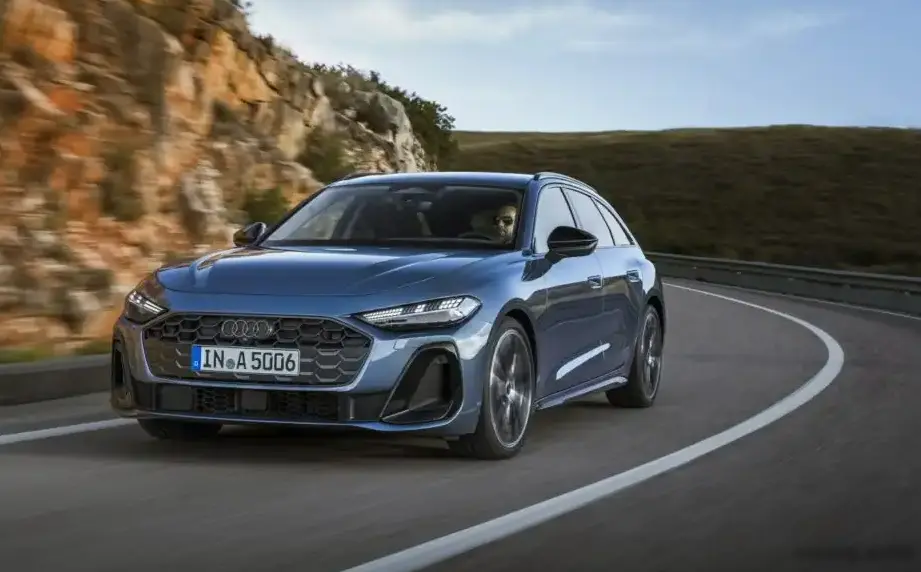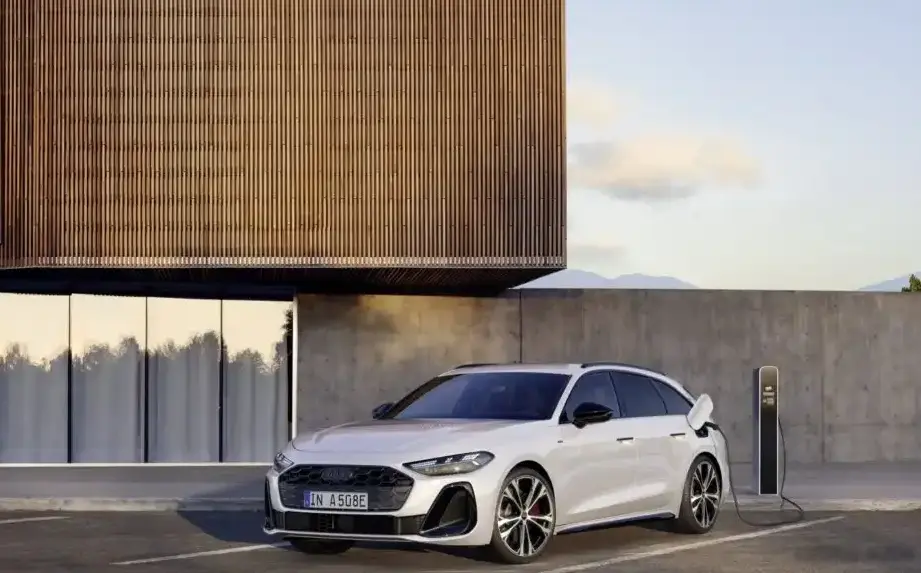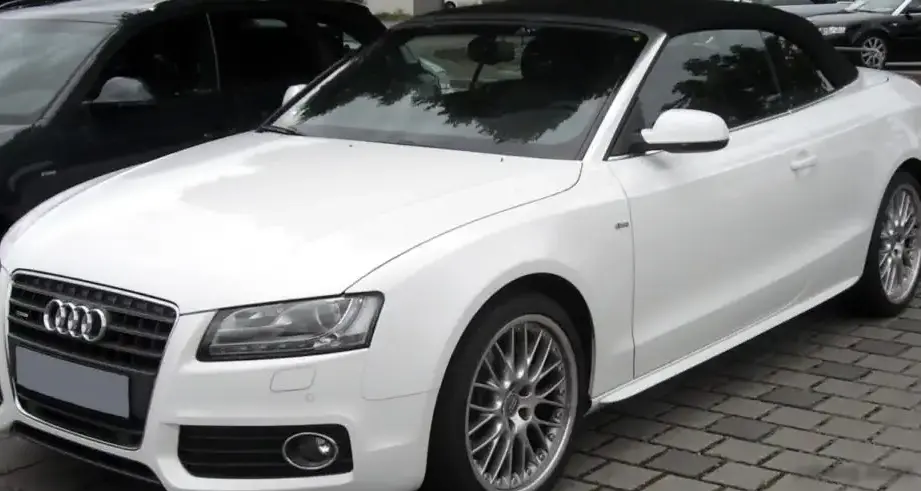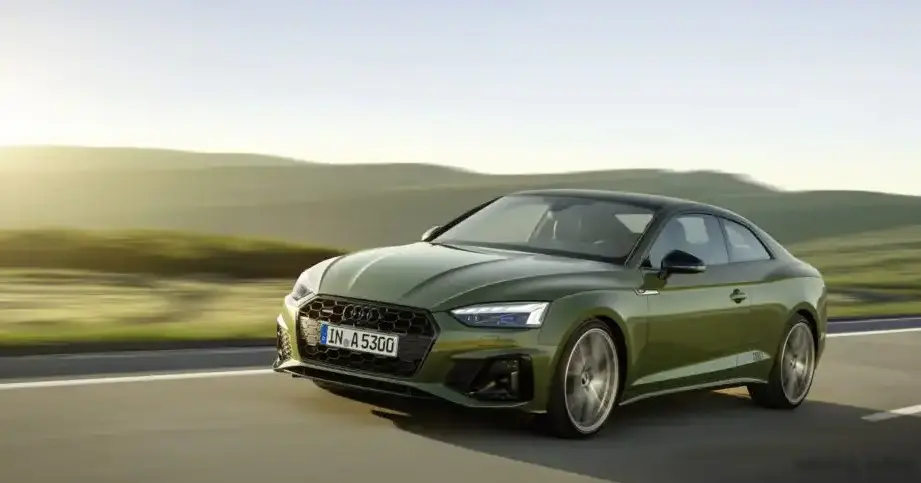
The Audi A5 Coupe (F5, facelift 2019) 35 TFSI, equipped with a 150 horsepower (hp) mild hybrid powertrain and a 7-speed S tronic dual-clutch transmission, represents a key entry point into the A5 Coupe range. Introduced in August 2020 and continuing through 2024 model years, this variant aimed to balance fuel efficiency, reasonable performance, and Audi’s signature refinement. It slots into the A5 lineup below the more powerful 40 TFSI and 45 TFSI models, targeting buyers prioritizing economy and comfort over outright speed. The “35 TFSI” designation reflects Audi’s internal power classification, not necessarily the exact horsepower figure. This model is built on the Volkswagen Group’s MLB Evo platform, shared with other Audi, Volkswagen, and Skoda vehicles.
Technical Specifications
| Brand | Audi |
| Model | A5 |
| Generation | A5 Coupe (F5, facelift 2019) |
| Type (Engine) | 35 TFSI (150 Hp) Mild Hybrid S tronic |
| Start of production | August, 2020 |
| End of production | 2024 |
| Powertrain Architecture | MHEV (Mild Hybrid Electric Vehicle) |
| Body type | Coupe |
| Seats | 4 |
| Doors | 2 |
| Combined fuel consumption (WLTP) | 6.1-7.0 l/100 km (38.6 – 33.6 US mpg) |
| CO2 emissions (WLTP) | 138-159 g/km |
| Fuel consumption (urban) | 7.2-7.5 l/100 km (32.7 – 31.4 US mpg) |
| Fuel consumption (extra urban) | 4.6-5.0 l/100 km (51.1 – 47 US mpg) |
| Fuel consumption (combined) | 5.6-5.9 l/100 km (42 – 39.9 US mpg) |
| CO2 emissions (NEDC) | 127-135 g/km |
| Fuel Type | Petrol (Gasoline) |
| Acceleration 0 – 100 km/h | 8.9 sec |
| Acceleration 0 – 62 mph | 8.9 sec |
| Acceleration 0 – 60 mph | 8.5 sec |
| Maximum speed | 210 km/h (130.49 mph) |
| Emission standard | Euro 6d-ISC-FCM |
| Weight-to-power ratio | 9.8 kg/Hp |
| Weight-to-torque ratio | 5.5 kg/Nm |
| Power | 150 Hp @ 4000-6000 rpm |
| Torque | 270 Nm @ 1300-3850 rpm (199.14 lb.-ft.) |
| Engine layout | Front, Longitudinal |
| Engine Model/Code | DLVB |
| Engine displacement | 1984 cm3 (121.07 cu. in.) |
| Number of cylinders | 4 |
| Engine configuration | Inline |
| Cylinder Bore | 82.5 mm (3.25 in.) |
| Piston Stroke | 92.8 mm (3.65 in.) |
| Compression ratio | 12.2:1 |
| Number of valves per cylinder | 4 |
| Fuel injection system | Direct injection |
| Engine aspiration | Turbocharger, Intercooler |
| Engine oil capacity | 5.2 l (5.49 US qt | 4.58 UK qt) |
| Coolant capacity | 8 l (8.45 US qt | 7.04 UK qt) |
| Kerb Weight | 1475 kg (3251.82 lbs.) |
| Max. weight | 1970 kg (4343.11 lbs.) |
| Max load | 495 kg (1091.29 lbs.) |
| Trunk (boot) space (minimum) | 450 l (15.89 cu. ft.) |
| Fuel tank capacity | 54 l (14.27 US gal | 11.88 UK gal) |
| Max. roof load | 75 kg (165.35 lbs.) |
| Permitted trailer load (brakes 8%) | 1700 kg (3747.86 lbs.) |
| Permitted trailer load (brakes 12%) | 1500 kg (3306.93 lbs.) |
| Permitted trailer load (no brakes) | 750 kg (1653.47 lbs.) |
| Permitted towbar download | 80 kg (176.37 lbs.) |
| Length | 4697 mm (184.92 in.) |
| Width | 1846 mm (72.68 in.) |
| Width including mirrors | 2029 mm (79.88 in.) |
| Height | 1371 mm (53.98 in.) |
| Wheelbase | 2764 mm (108.82 in.) |
| Front track | 1587 mm (62.48 in.) |
| Rear track | 1568 mm (61.73 in.) |
| Front overhang | 898 mm (35.35 in.) |
| Rear overhang | 1035 mm (40.75 in.) |
| Drag coefficient (Cd) | 0.26 |
| Minimum turning circle | 11.5 m (37.73 ft.) |
| Drivetrain Architecture | ICE and electric motor drive front wheels |
| Drive wheel | Front wheel drive |
| Number of gears | 7 |
| Gearbox type | Automatic transmission S tronic |
| Front suspension | Independent multi-link |
| Rear suspension | Independent multi-link with stabilizer |
| Front brakes | Ventilated discs |
| Rear brakes | Disc |
| Assisting systems | ABS |
| Steering type | Steering rack and pinion |
| Power steering | Electric |
| Tires size | 225/50 R17 |
| Wheel rims size | 7.5J x 17 |
INTRODUCTION
The Audi A5 Coupe (F5) received a significant facelift in 2019, bringing updated styling, enhanced technology, and revised engine options. The 35 TFSI variant, launched in 2020, served as an accessible entry point to the A5 Coupe range, offering a blend of efficiency and Audi’s characteristic driving experience. This model is part of the fifth generation (F5) A5 series, which debuted in 2016. The 35 TFSI aimed to appeal to buyers seeking a stylish coupe without the higher running costs associated with the more powerful engine options.
Powertrain & Engine Architecture
At the heart of the A5 35 TFSI lies the DLVB engine, a 1.984-liter (121.07 cubic inches) inline-four cylinder gasoline engine. This engine utilizes direct fuel injection and is turbocharged, allowing it to produce 150 hp and 270 Nm (199.14 lb-ft) of torque. The turbocharger provides a broad torque curve, peaking from 1300 to 3850 rpm. The engine incorporates Audi’s mild hybrid electric vehicle (MHEV) technology, featuring a 12V belt starter generator (BSG). This system allows for extended start-stop operation, regenerative braking, and a slight power boost during acceleration. The 7-speed S tronic dual-clutch transmission delivers quick and smooth gear changes. This transmission is known for its efficiency and responsiveness, contributing to the car’s overall fuel economy. The engine’s longitudinal mounting allows for front-wheel drive configuration in this variant.
Driving Characteristics
The A5 35 TFSI offers a comfortable and refined driving experience. While not as overtly sporty as the higher-powered models, the 150 hp engine provides adequate performance for everyday driving. Acceleration from 0 to 60 mph takes approximately 8.5 seconds, and the top speed is electronically limited to 130.49 mph. The S tronic transmission contributes to a seamless power delivery, and the MHEV system provides a subtle boost during acceleration. The gear ratios are tuned for fuel efficiency, with taller gearing in higher gears. Compared to the 40 TFSI or 45 TFSI variants, the 35 TFSI feels less urgent in its acceleration, but it offers a more relaxed and economical driving experience. The front-wheel-drive configuration provides good traction in most conditions.
Equipment & Trim Levels
The A5 35 TFSI typically came equipped with a generous amount of standard features, including Audi’s MMI infotainment system with a 7-inch touchscreen display, automatic climate control, and a leather-wrapped steering wheel. Standard upholstery was cloth, though leather options were available. Optional extras included a larger touchscreen display, a digital instrument cluster (Audi Virtual Cockpit), a premium sound system, and various driver-assistance features such as adaptive cruise control and lane-keeping assist. Trim levels varied by market, but generally offered packages that added features like upgraded interior trim, sport seats, and exterior styling enhancements.
Chassis & Braking
The A5 35 TFSI utilizes an independent multi-link suspension system at both the front and rear axles, providing a comfortable ride and good handling characteristics. The front suspension features coil springs and stabilizer bar, while the rear suspension also incorporates a stabilizer bar to reduce body roll. The braking system consists of ventilated discs at the front and solid discs at the rear. Anti-lock braking system (ABS) is standard. The suspension tuning is geared towards comfort, making it well-suited for long-distance driving. The chassis is designed to provide a stable and predictable driving experience.
Market Reception & Comparison
The A5 35 TFSI was generally well-received by automotive critics as a sensible and efficient option within the A5 lineup. It was praised for its comfortable ride, refined interior, and good fuel economy. However, some reviewers noted that the engine lacked the punch of the more powerful variants. Compared to the 40 TFSI, the 35 TFSI offered lower running costs but sacrificed some performance. The 35 TFSI’s fuel economy figures of 6.1-7.0 l/100 km (38.6 – 33.6 US mpg) were competitive within its segment. Reliability reports suggest that the DLVB engine and S tronic transmission are generally reliable, although regular maintenance is essential.
Legacy
The Audi A5 Coupe (F5) 35 TFSI represents a significant step towards greater efficiency in the premium coupe segment. The combination of a turbocharged engine, mild hybrid technology, and a dual-clutch transmission delivers a compelling blend of performance and economy. On the used car market, these models are becoming increasingly popular due to their affordability and relatively low running costs. The DLVB engine has proven to be a durable and reliable unit when properly maintained. As with any used vehicle, a thorough inspection and service history check are recommended before purchase.