Technical Specifications
| Brand | Audi |
| Model | A5 |
| Generation | A5 Sportback (8TA) |
| Type (Engine) | 2.0 TDI (170 Hp) |
| Start of production | 2009 |
| End of production | 2011 |
| Powertrain Architecture | Internal Combustion engine |
| Body type | Fastback |
| Seats | 4 |
| Doors | 5 |
| Fuel consumption (urban) | 6.5 l/100 km (36.2 US mpg, 43.5 UK mpg, 15.4 km/l) |
| Fuel consumption (extra urban) | 4.5 l/100 km (52.3 US mpg, 62.8 UK mpg, 22.2 km/l) |
| Fuel consumption (combined) | 5.2 l/100 km (45.2 US mpg, 54.3 UK mpg, 19.2 km/l) |
| CO2 emissions | 137 g/km |
| Fuel Type | Diesel |
| Acceleration 0 – 100 km/h | 8.7 sec |
| Acceleration 0 – 62 mph | 8.7 sec |
| Acceleration 0 – 60 mph | 8.3 sec |
| Maximum speed | 228 km/h (141.67 mph) |
| Emission standard | Euro 5 |
| Weight-to-power ratio | 9 kg/Hp, 111.1 Hp/tonne |
| Weight-to-torque ratio | 4.4 kg/Nm, 228.8 Nm/tonne |
| Power | 170 Hp @ 4200 rpm |
| Power per litre | 86.4 Hp/l |
| Torque | 350 Nm @ 1750-2500 rpm (258.15 lb.-ft. @ 1750-2500 rpm) |
| Engine layout | Front, Longitudinal |
| Engine Model/Code | CAHA |
| Engine displacement | 1968 cm3 (120.09 cu. in.) |
| Number of cylinders | 4 |
| Engine configuration | Inline |
| Cylinder Bore | 81 mm (3.19 in.) |
| Piston Stroke | 95.5 mm (3.76 in.) |
| Compression ratio | 16.5:1 |
| Number of valves per cylinder | 4 |
| Fuel injection system | Diesel Commonrail |
| Engine aspiration | Turbocharger, Intercooler |
| Valvetrain | DOHC |
| Engine oil capacity | 5 l (5.28 US qt | 4.4 UK qt) |
| Kerb Weight | 1530 kg (3373.07 lbs.) |
| Max. weight | 2060 kg (4541.52 lbs.) |
| Max load | 530 kg (1168.45 lbs.) |
| Trunk (boot) space – minimum | 480 l (16.95 cu. ft.) |
| Trunk (boot) space – maximum | 980 l (34.61 cu. ft.) |
| Fuel tank capacity | 65 l (17.17 US gal | 14.3 UK gal) |
| Max. roof load | 90 kg (198.42 lbs.) |
| Permitted trailer load with brakes (8%) | 1800 kg (3968.32 lbs.) |
| Permitted trailer load with brakes (12%) | 1600 kg (3527.4 lbs.) |
| Permitted trailer load without brakes | 750 kg (1653.47 lbs.) |
| Permitted towbar download | 80 kg (176.37 lbs.) |
| Length | 4711 mm (185.47 in.) |
| Width | 1854 mm (72.99 in.) |
| Height | 1391 mm (54.76 in.) |
| Wheelbase | 2810 mm (110.63 in.) |
| Front track | 1590 mm (62.6 in.) |
| Rear (Back) track | 1575 mm (62.01 in.) |
| Drag coefficient (Cd) | 0.29 |
| Minimum turning circle (turning diameter) | 11.5 m (37.73 ft.) |
| Drivetrain Architecture | The Internal combustion engine (ICE) drives the front wheels of the vehicle. |
| Drive wheel | Front wheel drive |
| Number of gears and type of gearbox | 6 gears, manual transmission |
| Front suspension | Independent multi-link suspension |
| Rear suspension | Independent multi-link spring suspension with stabilizer |
| Front brakes | Ventilated discs |
| Rear brakes | Disc |
| Assisting systems | ABS (Anti-lock braking system) |
| Steering type | Steering rack and pinion |
| Power steering | Electric Steering |
| Tires size | 225/50 R17 |
| Wheel rims size | 7.5J x 17 |
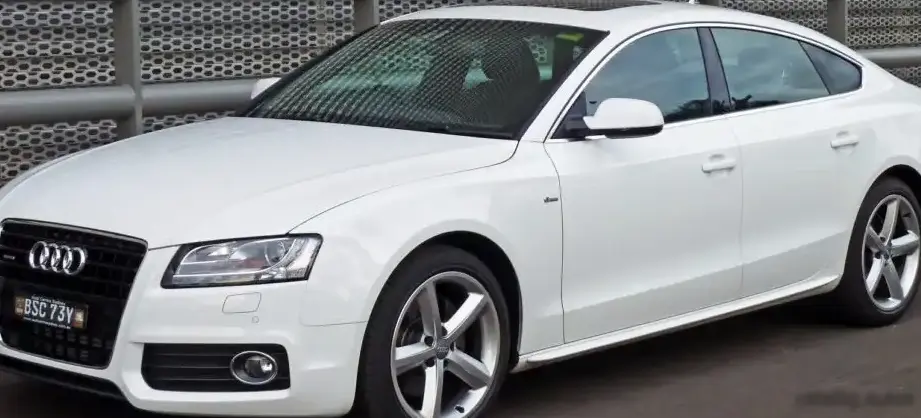
The Audi A5 Sportback (8TA) 2.0 TDI, producing 170 horsepower, was a significant variant in Audi’s A5 lineup, offered between 2009 and 2011. Positioned as a practical and efficient alternative to the coupe and convertible A5 models, the Sportback combined sleek styling with the versatility of a five-door fastback design. This particular engine and transmission combination aimed to balance performance with fuel economy, appealing to buyers seeking a refined and economical grand tourer. It was a particularly important offering in the European market, where diesel engines were – and continue to be – highly popular.
Powertrain & Engine Architecture
The heart of this A5 Sportback variant is the 2.0-liter four-cylinder diesel engine, specifically the CAHA engine code. This engine is a member of the Volkswagen Group’s modular engine family, known for its robust design and efficiency. It features a common rail direct injection system, delivering fuel directly into the combustion chamber at extremely high pressure for optimized combustion. The engine utilizes a single turbocharger with an intercooler to boost power and torque. The double overhead camshaft (DOHC) valvetrain, with four valves per cylinder, further enhances breathing and performance. The engine’s 16.5:1 compression ratio is typical for a diesel engine, contributing to its thermal efficiency. A 6-speed manual transmission was standard, providing a balance between fuel economy and driver engagement.
Driving Characteristics
The 170 horsepower and 350 Nm (258 lb-ft) of torque provided by the 2.0 TDI engine delivered respectable performance for everyday driving. Acceleration from 0 to 100 km/h (0-62 mph) took approximately 8.7 seconds. While not a sports car, the engine offered sufficient power for overtaking maneuvers and comfortable cruising on the highway. Compared to the more powerful 2.0 TFSI petrol variants or the 3.0 TDI, this version prioritized fuel efficiency over outright speed. The manual transmission offered precise shifts, but the gear ratios were tuned for economy rather than aggressive acceleration. The front-wheel-drive configuration provided predictable handling, although it could exhibit some torque steer under hard acceleration.
Equipment & Trim Levels
The 2.0 TDI 170 hp Sportback typically came with a solid base level of equipment. Standard features included air conditioning, a multi-function steering wheel, electric windows, and an Audi Concert radio system. Higher trim levels, such as SE or S-line, added features like leather upholstery, parking sensors, a panoramic sunroof, and upgraded alloy wheels. Optional extras included navigation systems, Bose sound systems, and advanced driver-assistance features. Interior upholstery was typically cloth, with leather available as an upgrade. The dashboard layout was typical of Audi at the time, characterized by a clean, minimalist design and high-quality materials.
Chassis & Braking
The A5 Sportback 2.0 TDI utilized an independent multi-link suspension system at both the front and rear axles. This setup provided a comfortable ride quality while maintaining good handling characteristics. The front suspension featured stabilizer bars to reduce body roll during cornering. Braking duties were handled by ventilated discs at the front and solid discs at the rear, equipped with ABS (Anti-lock Braking System) as standard. The chassis was designed to balance comfort and handling, offering a composed driving experience.
Market Reception & Comparison
The Audi A5 Sportback 2.0 TDI was generally well-received by automotive critics. It was praised for its stylish design, practical five-door layout, and fuel-efficient engine. Compared to the coupe and convertible A5 models, the Sportback offered greater practicality without sacrificing much in terms of style. Against competitors like the BMW 3 Series Gran Turismo and the Mercedes-Benz CLS, the A5 Sportback stood out for its refined interior and balanced driving dynamics. Fuel economy was a key selling point, with the 2.0 TDI achieving combined fuel consumption figures of around 5.2 l/100 km (45.2 US mpg). Reliability was generally good, although some owners reported issues with the diesel particulate filter (DPF) system.
Legacy
The 2.0 TDI engine in the A5 Sportback proved to be a durable and reliable powertrain. Many examples are still on the road today, testament to its robust construction. In the used car market, this variant represents a good value proposition, offering a blend of style, practicality, and fuel efficiency. However, potential buyers should be aware of the potential for DPF issues and the importance of regular maintenance. The A5 Sportback 2.0 TDI remains a popular choice for those seeking a refined and economical grand tourer.