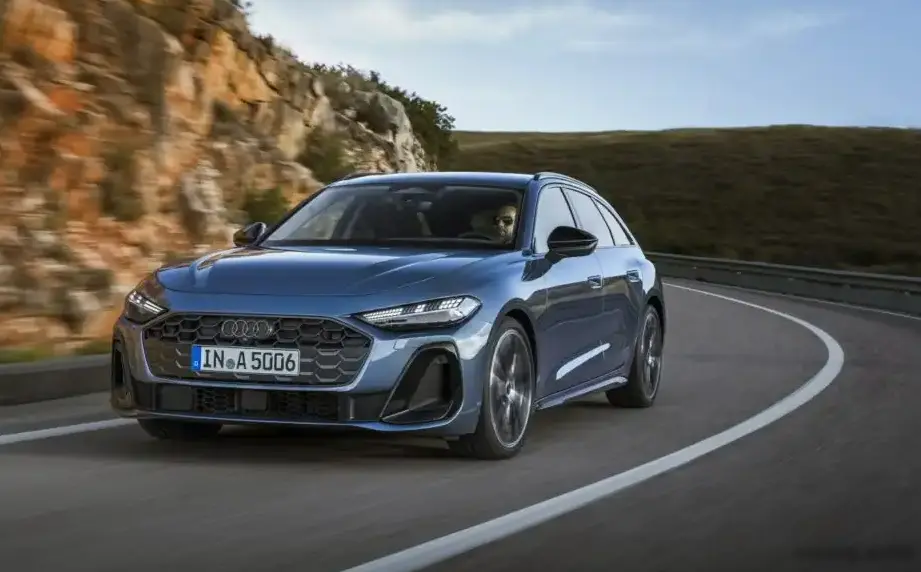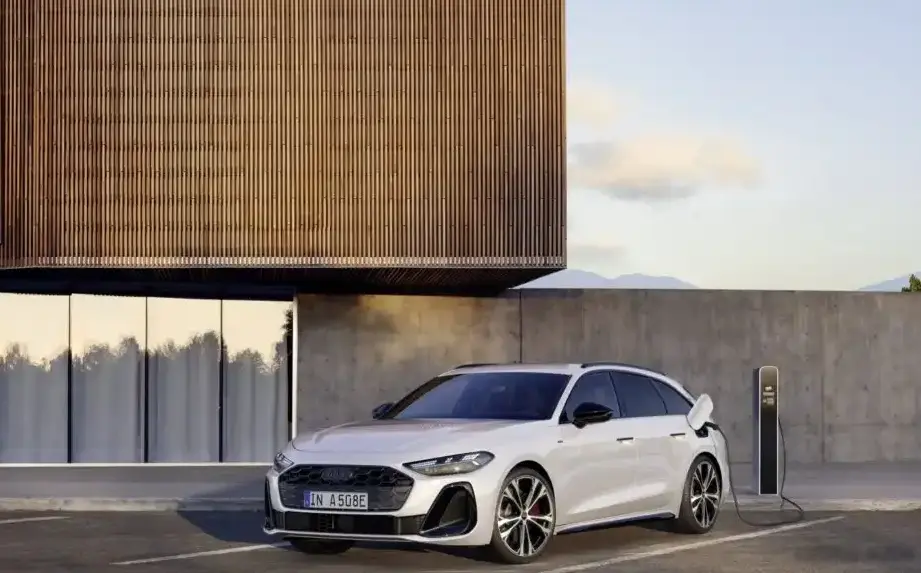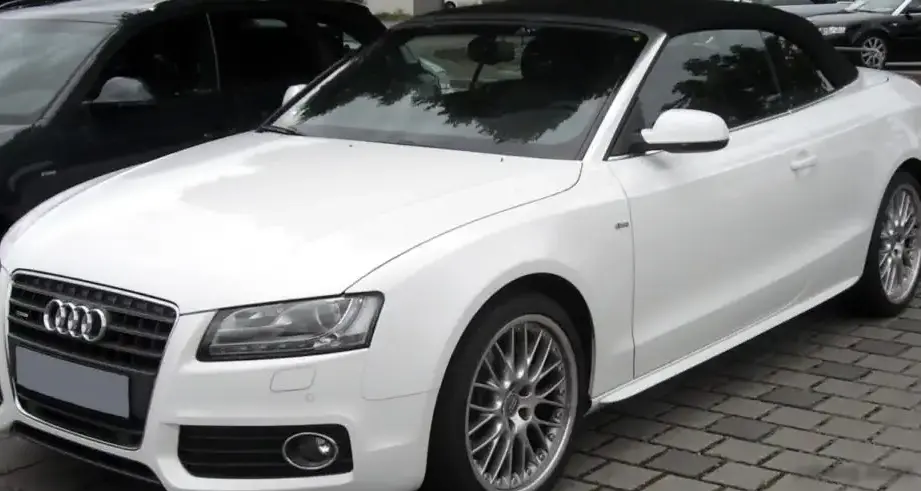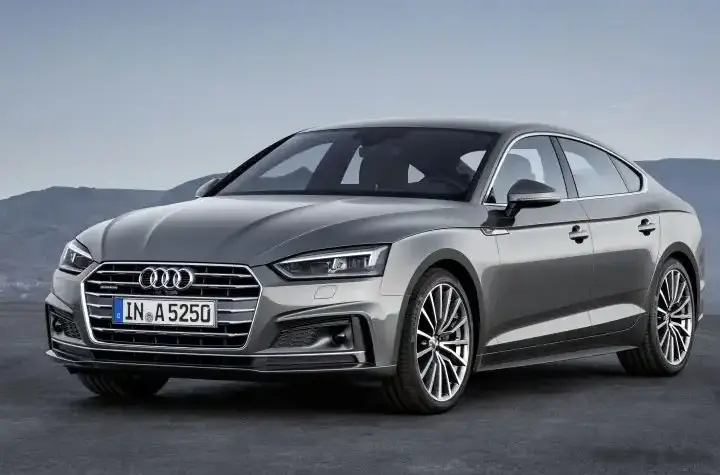
The Audi A5 Sportback (F5) 2.0 TDI ultra, producing 190 horsepower, was a key variant within the second-generation A5 (F5) model range, produced from 2016 to 2018. Positioned as a fuel-efficient and balanced option, it aimed to bridge the gap between lower-powered entry-level models and the more performance-focused variants like the S5. This Sportback, Audi’s five-door coupe, offered a blend of style, practicality, and diesel economy, primarily targeted at European markets where diesel engines remained highly popular. It represented Audi’s commitment to offering a diverse lineup catering to varying customer needs within the premium compact executive car segment.
Technical Specifications
| Brand | Audi |
| Model | A5 |
| Generation | A5 Sportback (F5) |
| Type (Engine) | 2.0 TDI ultra (190 Hp) |
| Start of production | 2016 |
| End of production | 2018 |
| Powertrain Architecture | Internal Combustion engine |
| Body type | Fastback |
| Seats | 5 |
| Doors | 5 |
| Fuel consumption (urban) | 5.0-5.1 l/100 km (47 – 46.1 US mpg, 56.5 – 55.4 UK mpg, 20 – 19.6 km/l) |
| Fuel consumption (extra urban) | 3.7-3.9 l/100 km (63.6 – 60.3 US mpg, 76.3 – 72.4 UK mpg, 27 – 25.6 km/l) |
| Fuel consumption (combined) | 4.1-4.3 l/100 km (57.4 – 54.7 US mpg, 68.9 – 65.7 UK mpg, 24.4 – 23.3 km/l) |
| CO2 emissions | 108-113 g/km |
| Fuel Type | Diesel |
| Acceleration 0 – 100 km/h | 7.9 sec |
| Acceleration 0 – 62 mph | 7.9 sec |
| Acceleration 0 – 60 mph | 7.5 sec |
| Maximum speed | 210 km/h (130.49 mph) |
| Emission standard | Euro 6 |
| Weight-to-power ratio | 7.9 kg/Hp, 126.7 Hp/tonne |
| Weight-to-torque ratio | 3.8 kg/Nm, 266.7 Nm/tonne |
| Power | 190 Hp @ 3800-4200 rpm |
| Torque | 400 Nm @ 1750-3000 rpm (295.02 lb.-ft. @ 1750-3000 rpm) |
| Engine layout | Front, Longitudinal |
| Engine Model/Code | DESA, DETA, DFVA |
| Engine displacement | 1968 cm3 (120.09 cu. in.) |
| Number of cylinders | 4 |
| Engine configuration | Inline |
| Number of valves per cylinder | 4 |
| Fuel injection system | Diesel Commonrail |
| Engine aspiration | Turbocharger, Intercooler |
| Engine oil capacity | 4.7 l (4.97 US qt | 4.14 UK qt) |
| Kerb Weight | 1500 kg (3306.93 lbs.) |
| Max. weight | 2095 kg (4618.68 lbs.) |
| Max load | 595 kg (1311.75 lbs.) |
| Trunk (boot) space – minimum | 480 l (16.95 cu. ft.) |
| Fuel tank capacity | 40 l (10.57 US gal | 8.8 UK gal) |
| Max. roof load | 90 kg (198.42 lbs.) |
| Permitted trailer load with brakes (8%) | 1600 kg (3527.4 lbs.) |
| Permitted trailer load with brakes (12%) | 1400 kg (3086.47 lbs.) |
| Permitted trailer load without brakes | 750 kg (1653.47 lbs.) |
| Permitted towbar download | 80 kg (176.37 lbs.) |
| Length | 4733 mm (186.34 in.) |
| Width | 1843 mm (72.56 in.) |
| Width including mirrors | 2029 mm (79.88 in.) |
| Height | 1386 mm (54.57 in.) |
| Wheelbase | 2824 mm (111.18 in.) |
| Front track | 1587 mm (62.48 in.) |
| Rear (Back) track | 1568 mm (61.73 in.) |
| Front overhang | 878 mm (34.57 in.) |
| Rear overhang | 1031 mm (40.59 in.) |
| Minimum turning circle (turning diameter) | 11.7 m (38.39 ft.) |
| Drivetrain Architecture | The Internal combustion engine (ICE) drives the front wheels of the vehicle. |
| Drive wheel | Front wheel drive |
| Number of gears and type of gearbox | 6 gears, manual transmission |
| Front suspension | Independent multi-link suspension |
| Rear suspension | Independent multi-link suspension |
| Front brakes | Ventilated discs |
| Rear brakes | Disc |
| Assisting systems | ABS (Anti-lock braking system) |
| Steering type | Steering rack and pinion |
| Power steering | Electric Steering |
INTRODUCTION
The Audi A5 Sportback (F5) 2.0 TDI ultra, launched in 2016, represented a significant step forward in the A5 lineage. Built on the MLB Evo platform (shared with other Volkswagen Group vehicles like the VW Passat and Skoda Superb), the F5 generation A5 Sportback aimed to deliver a more refined and technologically advanced experience than its predecessor. The 2.0 TDI ultra variant, with its 190 horsepower output, was positioned as a sweet spot in the range, offering a compelling balance of performance, fuel efficiency, and practicality. It was a popular choice in Europe, where diesel engines were favored for their economy and torque, and where the Sportback’s five-door coupe styling resonated with buyers seeking a more dynamic alternative to traditional sedans.
Powertrain & Engine Architecture
At the heart of the A5 Sportback 2.0 TDI ultra lies the Volkswagen Group’s EA288 series of diesel engines. Specifically, this variant utilized engine codes DESA, DETA, or DFVA, depending on the specific market and production year. This 2.0-liter inline-four cylinder engine featured a common rail direct injection system, delivering fuel at pressures up to 2,500 bar for optimized combustion. The engine also incorporated a variable geometry turbocharger (VGT) and intercooler to enhance power and efficiency. The valvetrain employed four valves per cylinder, contributing to improved breathing and performance. The 190 horsepower and 400 Nm (295 lb-ft) of torque were achieved through careful calibration of the engine management system. The engine was paired with a six-speed manual transmission as standard, although a seven-speed S tronic dual-clutch transmission was also available as an option. The S tronic offered quicker shifts and improved fuel economy, but at an additional cost.
Driving Characteristics
The 2.0 TDI ultra-equipped A5 Sportback offered a composed and refined driving experience. While not overtly sporty, the 190 horsepower and 400 Nm of torque provided ample power for everyday driving and overtaking maneuvers. Acceleration from 0-60 mph took around 7.5-7.9 seconds, depending on the transmission and specific vehicle configuration. The engine’s peak torque was available from a low 1750 rpm, providing strong pulling power in most situations. Compared to the more powerful A5 variants, such as those with the 3.0 TDI V6 engine, the 2.0 TDI ultra felt less urgent, but it offered significantly better fuel economy. The manual transmission provided a satisfyingly direct connection to the engine, while the optional S tronic offered seamless and rapid gear changes. The Sportback’s well-tuned suspension provided a comfortable ride, while still offering decent handling and stability.
Equipment & Trim Levels
The A5 Sportback 2.0 TDI ultra typically came well-equipped as standard. Features included Audi’s MMI infotainment system with a 7-inch display (larger screens were available as options), automatic climate control, Bluetooth connectivity, and a leather-wrapped steering wheel. Upholstery was typically cloth, but leather options were available. Higher trim levels, such as Sport and S line, added features like sport seats, brushed aluminum interior trim, and LED headlights. Optional extras included a navigation system, a Bang & Olufsen sound system, a panoramic sunroof, and advanced driver-assistance systems like adaptive cruise control and lane departure warning.
Chassis & Braking
The A5 Sportback 2.0 TDI ultra featured a sophisticated chassis design. The front suspension utilized a five-link independent setup, while the rear employed a multi-link configuration. This provided a good balance of ride comfort and handling precision. Brakes consisted of ventilated discs at the front and solid discs at the rear. ABS (Anti-lock Braking System) was standard, along with electronic stability control (ESC). The steering was an electromechanical power steering system, offering precise and responsive control. The weight distribution was well-balanced, contributing to the car’s stable and predictable handling characteristics.
Market Reception & Comparison
The Audi A5 Sportback 2.0 TDI ultra was generally well-received by automotive critics. It was praised for its stylish design, refined interior, and fuel-efficient engine. Critics noted that the 190 horsepower engine provided adequate performance for most drivers, but some felt that it lacked the excitement of the more powerful variants. Compared to rivals like the BMW 4 Series Gran Coupe and the Mercedes-Benz C-Class Coupe, the A5 Sportback was often seen as offering a more practical and user-friendly package. Its fuel economy was competitive, and its reliability was generally considered to be good. However, some critics pointed to the relatively high price tag as a potential drawback.
Legacy
The 2.0 TDI ultra engine proved to be a reliable and durable powertrain. While diesel engines have faced increased scrutiny in recent years due to emissions concerns, the EA288 series, when properly maintained, has demonstrated a good track record for longevity. On the used car market, the A5 Sportback 2.0 TDI ultra remains a popular choice, offering a compelling combination of style, practicality, and fuel efficiency. Regular maintenance, including oil changes and filter replacements, is crucial to ensure the continued reliability of this powertrain. The A5 Sportback, in general, has established itself as a desirable and well-regarded vehicle, and the 2.0 TDI ultra variant continues to hold its value in the used car market.