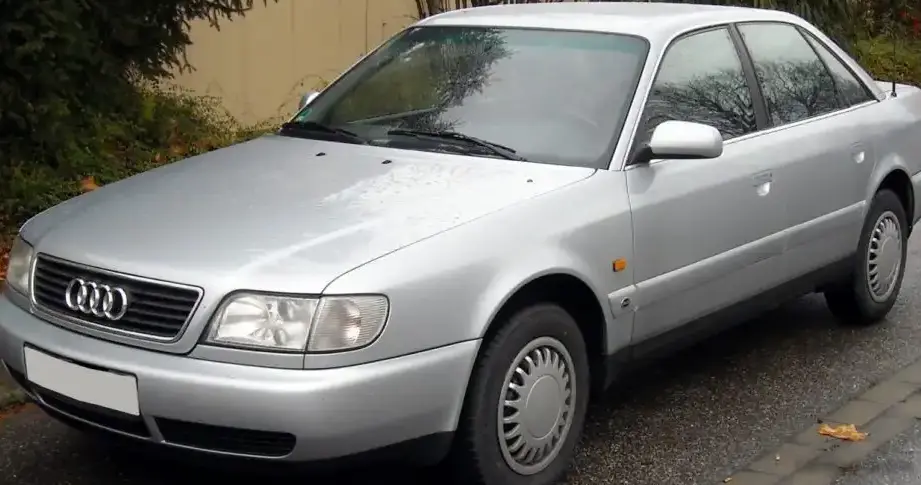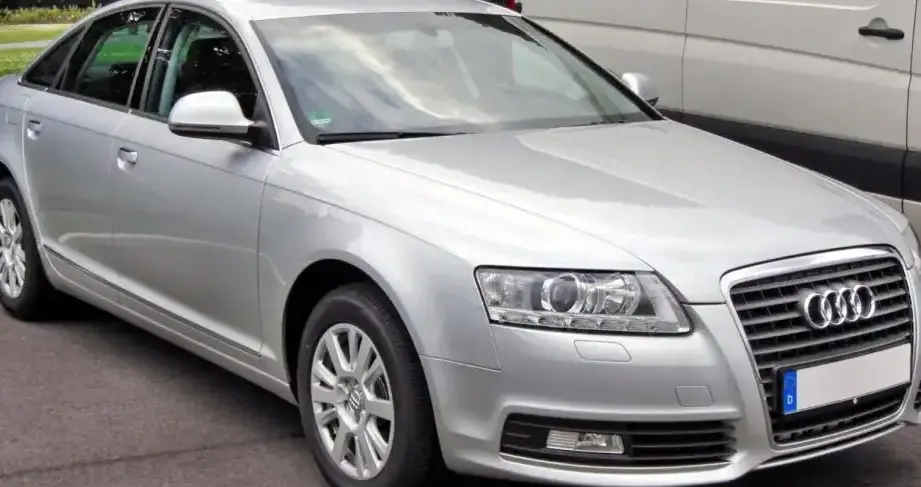
The Audi A6 (4F, C6 facelift) 2.7 TDI V6 quattro Tiptronic DPF, produced from September 2008 to August 2011, represents a significant iteration of Audi’s mid-size executive car. This variant occupied a strong position within the C6 facelift range, offering a blend of performance, refinement, and all-weather capability. It was primarily marketed in Europe and other regions where diesel engines and all-wheel drive were highly valued. The facelift brought updated styling, improved technology, and more efficient engine options to the A6 lineup, solidifying its reputation as a competitor to the BMW 5 Series and Mercedes-Benz E-Class.
Technical Specifications
| Brand | Audi |
| Model | A6 |
| Generation | A6 (4F,C6 facelift 2008) |
| Type (Engine) | 2.7 TDI V6 (190 Hp) quattro Tiptronic DPF |
| Start of production | September, 2008 |
| End of production | August, 2011 |
| Powertrain Architecture | Internal Combustion engine |
| Body type | Sedan |
| Seats | 5 |
| Doors | 4 |
| Fuel consumption (economy) – urban | 9.4 l/100 km (25 US mpg, 30.1 UK mpg, 10.6 km/l) |
| Fuel consumption (economy) – extra urban | 5.8 l/100 km (40.6 US mpg, 48.7 UK mpg, 17.2 km/l) |
| Fuel consumption (economy) – combined | 7.1 l/100 km (33.1 US mpg, 39.8 UK mpg, 14.1 km/l) |
| CO2 emissions | 189 g/km |
| Fuel Type | Diesel |
| Acceleration 0 – 100 km/h | 8.2 sec |
| Acceleration 0 – 62 mph | 8.2 sec |
| Acceleration 0 – 60 mph | 7.8 sec |
| Maximum speed | 230 km/h (142.92 mph) |
| Emission standard | Euro 5 |
| Weight-to-power ratio | 9.3 kg/Hp, 107.6 Hp/tonne |
| Weight-to-torque ratio | 4.4 kg/Nm, 226.6 Nm/tonne |
| Power | 190 Hp @ 3500 rpm |
| Power per litre | 70.4 Hp/l |
| Torque | 400 Nm @ 1750 rpm (295.02 lb.-ft. @ 1750 rpm) |
| Engine layout | Front, Longitudinal |
| Engine Model/Code | CANA, CANC |
| Engine displacement | 2698 cm3 (164.64 cu. in.) |
| Number of cylinders | 6 |
| Engine configuration | V-engine |
| Cylinder Bore | 83 mm (3.27 in.) |
| Piston Stroke | 83.1 mm (3.27 in.) |
| Compression ratio | 16.8:1 |
| Number of valves per cylinder | 4 |
| Fuel injection system | Diesel Commonrail |
| Engine aspiration | Turbocharger, Intercooler |
| Valvetrain | DOHC |
| Engine oil capacity | 8.2 l (8.66 US qt | 7.21 UK qt) |
| Kerb Weight | 1765 kg (3891.16 lbs.) |
| Max. weight | 2345 kg (5169.84 lbs.) |
| Max load | 580 kg (1278.68 lbs.) |
| Trunk (boot) space – maximum | 546 l (19.28 cu. ft.) |
| Fuel tank capacity | 80 l (21.13 US gal | 17.6 UK gal) |
| Max. roof load | 100 kg (220.46 lbs.) |
| Permitted trailer load with brakes (8%) | 2100 kg (4629.71 lbs.) |
| Permitted trailer load with brakes (12%) | 1900 kg (4188.78 lbs.) |
| Permitted trailer load without brakes | 750 kg (1653.47 lbs.) |
| Permitted towbar download | 85 kg (187.39 lbs.) |
| Length | 4927 mm (193.98 in.) |
| Width | 1855 mm (73.03 in.) |
| Width including mirrors | 2030 mm (79.92 in.) |
| Height | 1459 mm (57.44 in.) |
| Wheelbase | 2843 mm (111.93 in.) |
| Front track | 1612 mm (63.46 in.) |
| Rear (Back) track | 1618 mm (63.7 in.) |
| Front overhang | 994 mm (39.13 in.) |
| Rear overhang | 1090 mm (42.91 in.) |
| Drag coefficient (Cd) | 0.29 |
| Minimum turning circle (turning diameter) | 11.9 m (39.04 ft.) |
| Drive wheel | All wheel drive (4×4) |
| Number of gears and type of gearbox | 6 gears, automatic transmission Tiptronic |
| Front suspension | Independent multi-link suspension |
| Rear suspension | Independent on trapezoidal lever |
| Front brakes | Ventilated discs |
| Rear brakes | Ventilated discs |
| Assisting systems | ABS (Anti-lock braking system) |
| Steering type | Steering rack and pinion |
| Tires size | 205/60 R16 |
| Wheel rims size | 7J x 16 |
INTRODUCTION
The Audi A6 (4F, C6 facelift) 2.7 TDI V6 quattro Tiptronic DPF, launched in 2008, was a key variant within the updated C6 A6 range. Positioned as a mid-range offering, it aimed to provide a balance between performance, fuel efficiency, and all-weather traction thanks to Audi’s renowned quattro all-wheel-drive system. The facelift brought subtle but important changes to the A6’s exterior styling, interior refinement, and technological features. This particular model was a popular choice in European markets, where diesel engines were favored for their fuel economy and torque, and all-wheel drive was highly valued for navigating challenging road conditions.
Powertrain & Engine Architecture
At the heart of this A6 variant lies the 2.7-liter V6 TDI diesel engine, specifically the CANA or CANC engine code depending on the exact production date and market. This engine is a longitudinally mounted, turbocharged common rail diesel. The 2698cc engine features a DOHC (Double Overhead Camshaft) valvetrain with four valves per cylinder. The common rail direct injection system, operating at very high pressures, ensures precise fuel delivery for optimal combustion and reduced emissions. The turbocharger, coupled with an intercooler, boosts power and torque output. The Tiptronic 6-speed automatic transmission, a torque converter-based unit, was standard. This transmission offered both fully automatic operation and the ability for the driver to manually select gears, providing a degree of control. The transmission was designed to handle the substantial 400 Nm (295 lb-ft) of torque produced by the engine.
Driving Characteristics
The 2.7 TDI with the Tiptronic transmission delivered a smooth and refined driving experience. While not as overtly sporty as the higher-output versions or those equipped with a manual gearbox, it provided ample power for comfortable cruising and confident overtaking. The 0-60 mph time of around 7.8 seconds was respectable for a large executive sedan. The Tiptronic transmission, while smooth, wasn’t known for its lightning-fast shifts. Compared to the 6-speed manual, the automatic offered less driver engagement but greater convenience, particularly in urban traffic. The quattro all-wheel-drive system provided excellent traction in all conditions, enhancing stability and confidence, especially on slippery surfaces. The engine’s torque curve was relatively flat, providing strong pulling power across a wide rev range.
Equipment & Trim Levels
The 2.7 TDI quattro Tiptronic DPF typically came well-equipped, reflecting its position as a mid-range offering. Standard features often included leather upholstery, automatic climate control, a multi-function steering wheel, and an Audi Concert audio system. Optional extras were plentiful, including navigation systems, advanced parking sensors, sunroofs, and upgraded interior trim packages. The interior design was typically understated and elegant, with a focus on quality materials and build quality. The dashboard layout was functional and easy to use, with clear instrumentation.
Chassis & Braking
The A6 C6 utilized an independent multi-link suspension setup at the front and an independent trapezoidal lever suspension at the rear. This configuration provided a comfortable ride while maintaining good handling characteristics. The 2.7 TDI models typically featured ventilated disc brakes on all four wheels, providing ample stopping power. ABS (Anti-lock Braking System) was standard, enhancing safety and stability during emergency braking. Stabilizer bars were fitted front and rear to reduce body roll during cornering.
Market Reception & Comparison
The Audi A6 2.7 TDI quattro Tiptronic DPF was generally well-received by automotive critics. It was praised for its refined engine, comfortable ride, and all-weather capability. Compared to the more powerful 3.0 TDI variant, the 2.7 TDI offered a more affordable entry point into the A6 range, while still providing a satisfying driving experience. Fuel economy was a strong point, with combined figures around 33.1 US mpg. Reliability was generally good, although the diesel particulate filter (DPF) could be prone to issues if the vehicle was primarily used for short trips. Compared to the petrol-powered A6 variants, the 2.7 TDI offered significantly better fuel economy and torque.
Legacy
The 2.7 TDI engine, in various iterations, proved to be a durable and reliable powerplant. However, like many modern diesel engines, the DPF and potentially the turbocharger are components that may require attention as the vehicle ages. In the used car market, the A6 2.7 TDI quattro Tiptronic DPF remains a popular choice for those seeking a comfortable, refined, and capable executive sedan. Its blend of performance, fuel efficiency, and all-wheel-drive capability continues to appeal to buyers looking for a well-rounded vehicle. Proper maintenance, including regular oil changes and DPF regeneration, is crucial to ensuring the long-term reliability of this powertrain.