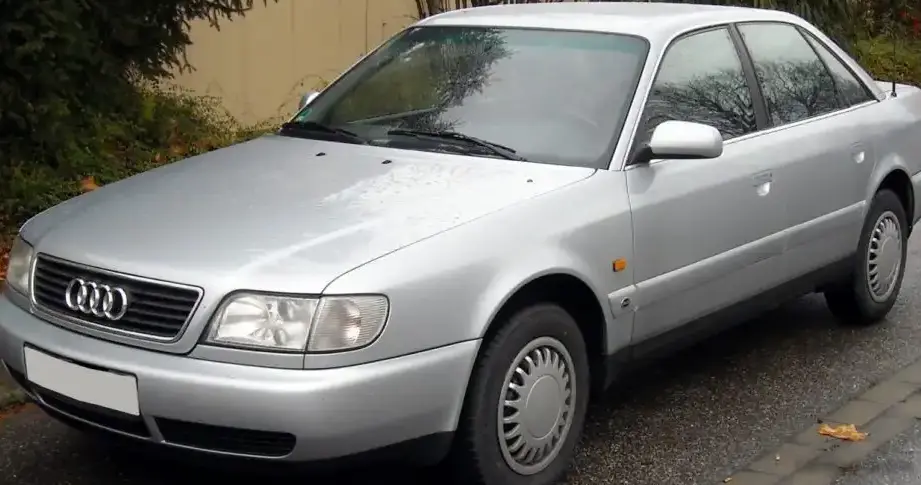
The Audi A6 Avant (4A, C4) 2.5 TDI Automatic, produced between July 1996 and October 1997, represents a compelling blend of practicality and performance within the C4 A6 generation. This variant, a diesel-powered station wagon (estate), occupied a middle ground in the A6 lineup, offering a more economical and torque-rich alternative to the gasoline-powered models. It was primarily marketed in Europe, where demand for diesel wagons was strong, and positioned itself as a comfortable and capable family vehicle suitable for long-distance travel and hauling. The 4A/C4 platform was a significant step forward for Audi, introducing a more refined and aerodynamic design compared to its predecessor.
Technical Specifications
| Brand | Audi |
| Model | A6 |
| Generation | A6 Avant (4A,C4) |
| Type (Engine) | 2.5 TDI (140 Hp) Automatic |
| Start of production | July, 1996 |
| End of production | October, 1997 |
| Powertrain Architecture | Internal Combustion engine |
| Body type | Station wagon (estate) |
| Seats | 5 |
| Doors | 5 |
| Fuel consumption (urban) | 10.3 l/100 km (22.8 US mpg, 27.4 UK mpg, 9.7 km/l) |
| Fuel consumption (extra urban) | 5.9 l/100 km (39.9 US mpg, 47.9 UK mpg, 16.9 km/l) |
| Fuel consumption (combined) | 7.6 l/100 km (30.9 US mpg, 37.2 UK mpg, 13.2 km/l) |
| Fuel Type | Diesel |
| Acceleration 0 – 100 km/h | 11.4 sec |
| Acceleration 0 – 62 mph | 11.4 sec |
| Acceleration 0 – 60 mph | 10.8 sec |
| Maximum speed | 200 km/h (124.27 mph) |
| Weight-to-power ratio | 11 kg/Hp, 90.9 Hp/tonne |
| Weight-to-torque ratio | 5.3 kg/Nm, 188.3 Nm/tonne |
| Power | 140 Hp @ 4000 rpm |
| Power per litre | 56.9 Hp/l |
| Torque | 290 Nm @ 1900 rpm (213.89 lb.-ft. @ 1900 rpm) |
| Engine layout | Front, Longitudinal |
| Engine Model/Code | AEL |
| Engine displacement | 2461 cm3 (150.18 cu. in.) |
| Number of cylinders | 5 |
| Engine configuration | Inline |
| Cylinder Bore | 81 mm (3.19 in.) |
| Piston Stroke | 95.5 mm (3.76 in.) |
| Compression ratio | 20:1 |
| Number of valves per cylinder | 2 |
| Fuel injection system | Direct injection |
| Engine aspiration | Turbocharger, Intercooler |
| Valvetrain | OHC |
| Engine oil capacity | 5 l (5.28 US qt | 4.4 UK qt) |
| Coolant | 6.5 l (6.87 US qt | 5.72 UK qt) |
| Kerb Weight | 1540 kg (3395.12 lbs.) |
| Max. weight | 2090 kg (4607.66 lbs.) |
| Max load | 550 kg (1212.54 lbs.) |
| Trunk (boot) space – minimum | 390 l (13.77 cu. ft.) |
| Trunk (boot) space – maximum | 1310 l (46.26 cu. ft.) |
| Fuel tank capacity | 80 l (21.13 US gal | 17.6 UK gal) |
| Max. roof load | 100 kg (220.46 lbs.) |
| Permitted trailer load with brakes (8%) | 1650 kg (3637.63 lbs.) |
| Permitted trailer load with brakes (12%) | 1450 kg (3196.7 lbs.) |
| Permitted trailer load without brakes | 750 kg (1653.47 lbs.) |
| Permitted towbar download | 50 kg (110.23 lbs.) |
| Length | 4797 mm (188.86 in.) |
| Width | 1783 mm (70.2 in.) |
| Height | 1440 mm (56.69 in.) |
| Wheelbase | 2687 mm (105.79 in.) |
| Front track | 1520 mm (59.84 in.) |
| Rear (Back) track | 1524 mm (60 in.) |
| Drag coefficient (Cd) | 0.34 |
| Minimum turning circle (turning diameter) | 11.4 m (37.4 ft.) |
| Drivetrain Architecture | The Internal combustion engine (ICE) drives the front wheels of the vehicle. |
| Drive wheel | Front wheel drive |
| Number of gears and type of gearbox | 4 gears, automatic transmission |
| Front suspension | Independent, type McPherson with coil spring and anti-roll bar |
| Rear suspension | Semi-independent, coil spring |
| Front brakes | Ventilated discs |
| Rear brakes | Disc |
| Assisting systems | ABS (Anti-lock braking system) |
| Steering type | Steering rack and pinion |
| Power steering | Hydraulic Steering |
| Tires size | 195/65 R15 |
| Wheel rims size | 6J x 15 |
INTRODUCTION
The Audi A6 Avant (4A, C4) 2.5 TDI Automatic, launched in 1996, was a key variant within the second-generation A6 range. Building upon the success of the C4 platform, Audi aimed to provide a practical and efficient wagon option for European buyers. This model combined the spaciousness of the Avant body style with the fuel economy and torque characteristics of a 2.5-liter turbocharged diesel engine, paired with a convenient four-speed automatic transmission. It served as a versatile vehicle for families and individuals needing both cargo capacity and comfortable long-distance cruising.
Powertrain & Engine Architecture
At the heart of the A6 Avant 2.5 TDI Automatic lies the AEL engine code, a 2.5-liter inline-five cylinder diesel engine. This engine featured direct injection, a technology that improved combustion efficiency and reduced emissions. The AEL engine produced 140 horsepower at 4000 rpm and a substantial 290 Nm (213.89 lb.-ft.) of torque at just 1900 rpm. This torque output was a significant advantage for a wagon, providing strong pulling power and effortless acceleration, even when fully loaded. The engine also incorporated a turbocharger and intercooler to boost performance. The four-speed automatic transmission, while not as sophisticated as later offerings, provided smooth gear changes and ease of use. It was designed to handle the engine’s torque output effectively, although it did contribute to slightly slower acceleration times compared to the manual transmission versions.
Driving Characteristics
The 2.5 TDI Automatic A6 Avant offered a comfortable and relaxed driving experience. The abundance of low-end torque meant that the car felt responsive in everyday driving situations, with minimal need to downshift. While not a sports car, the A6 Avant could achieve a 0-60 mph time of around 10.8 seconds, which was respectable for a diesel wagon of that era. The automatic transmission, while smooth, did have a tendency to hunt for gears on inclines, and the overall driving experience was more focused on comfort and efficiency than outright performance. Compared to the more powerful gasoline variants, the 2.5 TDI Automatic prioritized fuel economy and usability over outright speed.
Equipment & Trim Levels
The A6 Avant 2.5 TDI Automatic typically came equipped with a reasonable level of standard features. These included power windows, central locking, power steering, and an anti-lock braking system (ABS). Interior upholstery was usually cloth, although leather options were available. The dashboard layout was typical of Audi at the time, with a clean and functional design. Optional extras included a sunroof, upgraded audio system, and climate control. The trim level could vary depending on the market, but generally, this variant was positioned as a mid-range offering, providing a good balance of features and affordability.
Chassis & Braking
The A6 Avant 2.5 TDI Automatic utilized an independent McPherson strut suspension at the front and a semi-independent coil spring suspension at the rear. This setup provided a comfortable ride quality, absorbing bumps and imperfections in the road effectively. The front brakes were ventilated discs, offering good stopping power, while the rear brakes were solid discs. The steering was rack and pinion with hydraulic power assistance, providing precise and responsive handling. The suspension was tuned to prioritize comfort and stability, rather than sporty handling.
Market Reception & Comparison
The A6 Avant 2.5 TDI Automatic was generally well-received by critics and buyers alike. It was praised for its spacious interior, comfortable ride, and excellent fuel economy. Compared to the gasoline-powered A6 variants, the TDI offered significantly better fuel efficiency, making it a popular choice for long-distance drivers. However, some critics noted that the automatic transmission could feel sluggish at times, and the engine was not as refined as some of its competitors. Compared to other diesel wagons on the market, the A6 Avant offered a premium feel and a higher level of standard equipment.
Legacy
The Audi A6 Avant 2.5 TDI Automatic has proven to be a relatively reliable vehicle over the long term, particularly the engine itself. The AEL engine is known for its durability and longevity, provided it has been properly maintained. However, like any older vehicle, it is prone to age-related issues such as corrosion and wear and tear on suspension components. Today, these cars are becoming increasingly sought after by enthusiasts and collectors, particularly those who appreciate their practicality, fuel efficiency, and classic Audi styling. Finding well-maintained examples can be challenging, but they offer a unique and rewarding ownership experience.