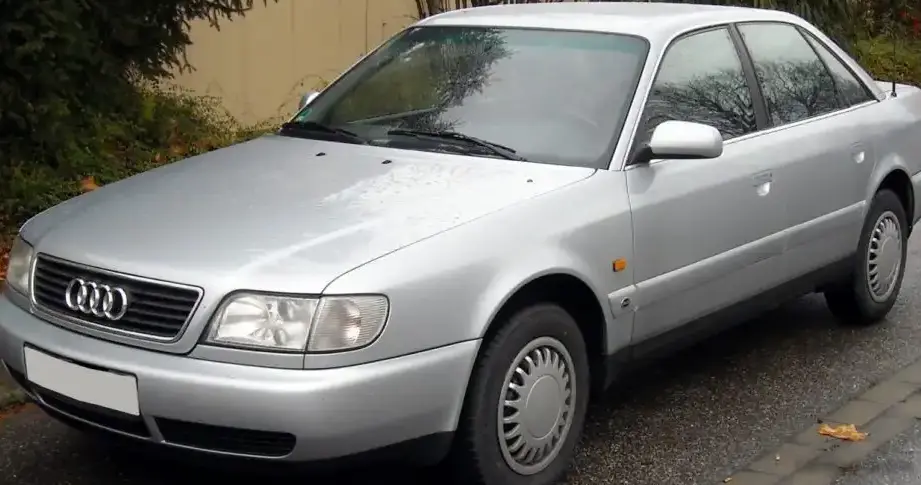
The Audi A6 Avant (4A, C4) 2.8 V6 30V, produced between October 1995 and 1997, represents a refined iteration of Audi’s mid-size executive wagon. Positioned as a premium offering within the C4 A6 range, it combined the practicality of a station wagon with the performance of a V6 engine. This variant was part of the broader A6 lineup which utilized the Volkswagen Group’s 4A chassis, also underpinning models like the Volkswagen Passat. The 2.8 V6 30V was a significant step up from the base four-cylinder models, offering a more sophisticated driving experience and appealing to buyers prioritizing performance and refinement.
Technical Specifications
| Brand | Audi |
| Model | A6 |
| Generation | A6 Avant (4A,C4) |
| Type (Engine) | 2.8 V6 30V (193 Hp) |
| Start of production | October, 1995 |
| End of production | 1997 |
| Powertrain Architecture | Internal Combustion engine |
| Body type | Station wagon (estate) |
| Seats | 5 |
| Doors | 5 |
| Fuel consumption (economy) – urban | 12.1 l/100 km (19.4 US mpg, 23.3 UK mpg, 8.3 km/l) |
| Fuel consumption (economy) – extra urban | 7.1 l/100 km (33.1 US mpg, 39.8 UK mpg, 14.1 km/l) |
| Fuel consumption (economy) – combined | 9 l/100 km (26.1 US mpg, 31.4 UK mpg, 11.1 km/l) |
| Fuel Type | Petrol (Gasoline) |
| Acceleration 0 – 100 km/h | 8.3 sec |
| Acceleration 0 – 62 mph | 8.3 sec |
| Acceleration 0 – 60 mph | 7.9 sec |
| Maximum speed | 227 km/h (141.05 mph) |
| Weight-to-power ratio | 7.8 kg/Hp, 128.7 Hp/tonne |
| Weight-to-torque ratio | 5.4 kg/Nm, 186.7 Nm/tonne |
| Power | 193 Hp @ 6000 rpm |
| Power per litre | 69.6 Hp/l |
| Torque | 280 Nm @ 3200 rpm (206.52 lb.-ft. @ 3200 rpm) |
| Engine layout | Front, Longitudinal |
| Engine Model/Code | ACK |
| Engine displacement | 2771 cm3 (169.1 cu. in.) |
| Number of cylinders | 6 |
| Engine configuration | V-engine |
| Cylinder Bore | 82.5 mm (3.25 in.) |
| Piston Stroke | 86.4 mm (3.4 in.) |
| Compression ratio | 10.6:1 |
| Number of valves per cylinder | 5 |
| Fuel injection system | Multi-port manifold injection |
| Engine aspiration | Naturally aspirated engine |
| Valvetrain | OHC |
| Engine oil capacity | 5.5 l (5.81 US qt | 4.84 UK qt) |
| Coolant | 8.5 l (8.98 US qt | 7.48 UK qt) |
| Kerb Weight | 1500 kg (3306.93 lbs.) |
| Max. weight | 2050 kg (4519.48 lbs.) |
| Max load | 550 kg (1212.54 lbs.) |
| Trunk (boot) space – minimum | 390 l (13.77 cu. ft.) |
| Trunk (boot) space – maximum | 1310 l (46.26 cu. ft.) |
| Fuel tank capacity | 80 l (21.13 US gal | 17.6 UK gal) |
| Max. roof load | 100 kg (220.46 lbs.) |
| Permitted trailer load with brakes (8%) | 1900 kg (4188.78 lbs.) |
| Permitted trailer load with brakes (12%) | 1500 kg (3306.93 lbs.) |
| Permitted trailer load without brakes | 750 kg (1653.47 lbs.) |
| Permitted towbar download | 50 kg (110.23 lbs.) |
| Length | 4797 mm (188.86 in.) |
| Width | 1783 mm (70.2 in.) |
| Height | 1440 mm (56.69 in.) |
| Wheelbase | 2687 mm (105.79 in.) |
| Front track | 1524 mm (60 in.) |
| Rear (Back) track | 1524 mm (60 in.) |
| Drag coefficient (Cd) | 0.34 |
| Minimum turning circle (turning diameter) | 11.4 m (37.4 ft.) |
| Drivetrain Architecture | The Internal combustion engine (ICE) drives the front wheels of the vehicle. |
| Drive wheel | Front wheel drive |
| Number of gears and type of gearbox | 5 gears, manual transmission |
| Front suspension | Independent, type McPherson with coil spring and anti-roll bar |
| Rear suspension | Semi-independent, coil spring |
| Front brakes | Ventilated discs |
| Rear brakes | Disc |
| Assisting systems | ABS (Anti-lock braking system) |
| Steering type | Steering rack and pinion |
| Power steering | Hydraulic Steering |
| Tires size | 205/60 R15 |
| Wheel rims size | 6J x 15 |
Powertrain & Engine Architecture
The heart of the A6 Avant 2.8 V6 30V is the ACK engine code, a 2.8-liter naturally aspirated V6. This engine featured a 90-degree V-angle, contributing to its smooth operation. The “30V” designation indicates the engine’s five valves per cylinder (three intake, two exhaust), a feature designed to enhance volumetric efficiency and improve power output. Fuel delivery was managed by a Bosch Motronic multi-port fuel injection system, optimizing the air-fuel mixture for both performance and emissions. The engine’s valvetrain employed a single overhead camshaft (OHC) design. The engine produced 193 horsepower at 6000 rpm and 280 Nm (206.52 lb-ft) of torque at 3200 rpm. The engine was mounted longitudinally in the front of the vehicle, driving the front wheels through a five-speed manual transmission.
Driving Characteristics
The 2.8 V6 offered a noticeable performance upgrade over the base A6 models. Acceleration from 0 to 60 mph took approximately 7.9 seconds, and it could reach a top speed of 141 mph. While not a sports car, the V6 provided ample power for comfortable highway cruising and confident overtaking. The five-speed manual transmission allowed for precise control, although the gear ratios were tuned more for fuel efficiency and relaxed driving than outright performance. Compared to the later 2.8 quattro models with all-wheel drive, the front-wheel-drive version exhibited a tendency towards understeer when pushed hard, but it was generally well-balanced and predictable in everyday driving conditions.
Equipment & Trim Levels
The A6 Avant 2.8 V6 30V typically came well-equipped, reflecting its position as a premium model. Standard features included power windows, power locks, central locking, and air conditioning. Interior upholstery was typically cloth, although leather was available as an option. Dashboard configuration featured a classic Audi design with clear instrumentation. Optional extras included a sunroof, upgraded audio system, and heated front seats. The Avant (wagon) body style itself was considered a premium offering, providing significantly more cargo space than the sedan version.
Chassis & Braking
The A6 Avant utilized an independent McPherson strut suspension at the front and a semi-independent coil spring suspension at the rear. This setup provided a comfortable ride while maintaining reasonable handling characteristics. Front brakes were ventilated discs, offering good stopping power, while rear brakes were solid discs. Anti-lock Braking System (ABS) was standard, enhancing safety. The front track width was 1524 mm, contributing to stability. The steering system was a rack and pinion type with hydraulic power assistance, providing precise and responsive steering feel.
Market Reception & Comparison
The A6 Avant 2.8 V6 30V was generally well-received by automotive critics. It was praised for its refined engine, comfortable ride, and spacious interior. Compared to the four-cylinder A6 models, the V6 offered a significant improvement in performance and refinement. However, it was more expensive to purchase and operate. Fuel economy, at around 26 mpg combined, was reasonable for its class but lower than that of the more economical four-cylinder versions. Reliability was generally good, although preventative maintenance was crucial to avoid issues with the engine’s timing belt and cooling system.
Legacy
The Audi A6 Avant 2.8 V6 30V remains a desirable used car today, particularly among enthusiasts who appreciate its classic Audi styling and smooth V6 engine. The ACK engine, while requiring regular maintenance (especially timing belt replacement), is known for its durability. Parts availability is generally good, although some components may be becoming increasingly difficult to find. These A6 Avants represent a sweet spot in terms of combining practicality, performance, and a touch of luxury, making them a popular choice for those seeking a well-rounded and reliable European wagon.