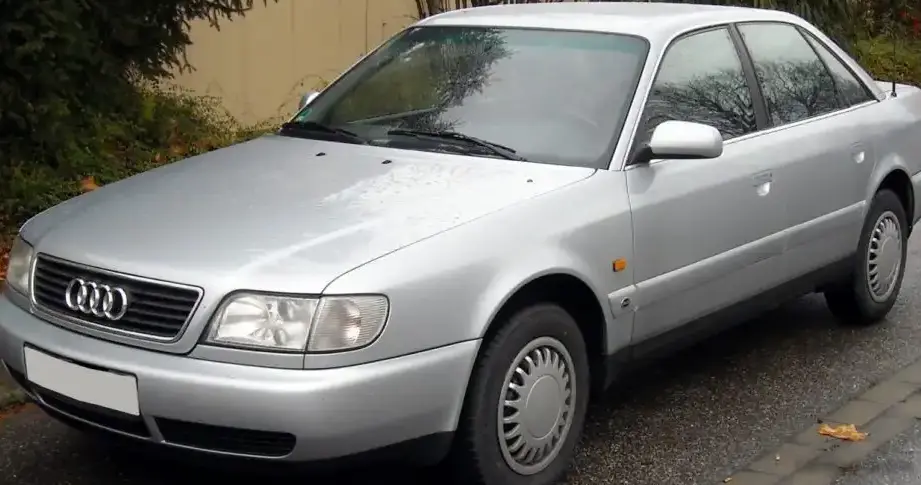
The Audi A6 Avant (4B, C5) 1.9 TDI with an automatic transmission, produced between 1999 and 2000, represents a specific configuration within the broader C5 A6 range. This variant aimed to provide a balance of fuel efficiency and practicality for European buyers, capitalizing on the popularity of diesel estate cars. Positioned as a mid-range offering, it sat below the more powerful petrol engines and the higher-output TDI models, targeting customers prioritizing economy and comfortable cruising over outright performance. The C5 generation A6, launched in 1997, was a significant step forward for Audi, introducing a new level of refinement and technology to the executive car segment.
Technical Specifications
| Brand | Audi |
| Model | A6 |
| Generation | A6 Avant (4B,C5) |
| Type (Engine) | 1.9 TDI (110 Hp) Automatic |
| Start of production | 1999 |
| End of production | 2000 |
| Powertrain Architecture | Internal Combustion engine |
| Body type | Station wagon (estate) |
| Seats | 5 |
| Doors | 5 |
| Fuel consumption (urban) | 9.6 l/100 km (24.5 US mpg, 29.4 UK mpg, 10.4 km/l) |
| Fuel consumption (extra urban) | 5.3 l/100 km (44.4 US mpg, 53.3 UK mpg, 18.9 km/l) |
| Fuel consumption (combined) | 6.8 l/100 km (34.6 US mpg, 41.5 UK mpg, 14.7 km/l) |
| CO2 emissions | 184 g/km |
| Fuel Type | Diesel |
| Acceleration 0 – 100 km/h | 14.8 sec |
| Acceleration 0 – 62 mph | 14.8 sec |
| Acceleration 0 – 60 mph | 14.1 sec |
| Maximum speed | 189 km/h (117.44 mph) |
| Weight-to-power ratio | 13.5 kg/Hp, 74.3 Hp/tonne |
| Weight-to-torque ratio | 6.3 kg/Nm, 158.8 Nm/tonne |
| Power | 110 Hp @ 4150 rpm |
| Power per litre | 58 Hp/l |
| Torque | 235 Nm @ 1900 rpm (173.33 lb.-ft. @ 1900 rpm) |
| Engine layout | Front, Longitudinal |
| Engine Model/Code | AFN, AVG |
| Engine displacement | 1896 cm3 (115.7 cu. in.) |
| Number of cylinders | 4 |
| Engine configuration | Inline |
| Cylinder Bore | 79.5 mm (3.13 in.) |
| Piston Stroke | 95.5 mm (3.76 in.) |
| Compression ratio | 19.5:1 |
| Number of valves per cylinder | 2 |
| Fuel injection system | Direct injection |
| Engine aspiration | Turbocharger, Intercooler |
| Valvetrain | OHC |
| Engine oil capacity | 3.8 l (4.02 US qt | 3.34 UK qt) |
| Coolant | 6 l (6.34 US qt | 5.28 UK qt) |
| Kerb Weight | 1480 kg (3262.84 lbs.) |
| Max. weight | 2060 kg (4541.52 lbs.) |
| Max load | 580 kg (1278.68 lbs.) |
| Trunk (boot) space – minimum | 455 l (16.07 cu. ft.) |
| Trunk (boot) space – maximum | 1590 l (56.15 cu. ft.) |
| Fuel tank capacity | 70 l (18.49 US gal | 15.4 UK gal) |
| Max. roof load | 100 kg (220.46 lbs.) |
| Permitted trailer load with brakes (8%) | 1800 kg (3968.32 lbs.) |
| Permitted trailer load with brakes (12%) | 1600 kg (3527.4 lbs.) |
| Permitted trailer load without brakes | 750 kg (1653.47 lbs.) |
| Permitted towbar download | 85 kg (187.39 lbs.) |
| Length | 4796 mm (188.82 in.) |
| Width | 1810 mm (71.26 in.) |
| Height | 1479 mm (58.23 in.) |
| Wheelbase | 2760 mm (108.66 in.) |
| Front track | 1540 mm (60.63 in.) |
| Rear (Back) track | 1569 mm (61.77 in.) |
| Drag coefficient (Cd) | 0.29 |
| Minimum turning circle | 11.68 m (38.32 ft.) |
| Drivetrain Architecture | The Internal combustion engine (ICE) drives the front wheels of the vehicle. |
| Drive wheel | Front wheel drive |
| Number of gears and type of gearbox | 4 gears, automatic transmission |
| Front suspension | Independent multi-link suspension |
| Rear suspension | Semi-independent, coil spring |
| Front brakes | Ventilated discs |
| Rear brakes | Disc |
| Assisting systems | ABS (Anti-lock braking system) |
| Steering type | Steering rack and pinion |
| Power steering | Hydraulic Steering |
| Tires size | 205/55 R16 |
| Wheel rims size | 7J x 16 |
Powertrain & Engine Architecture
The heart of this A6 Avant is the 1.9-liter inline-four cylinder diesel engine, typically identified by engine codes AFN or AVG. This engine is a direct-injection turbocharged diesel, a configuration that was becoming increasingly common in Europe during the late 1990s. Direct injection, coupled with a turbocharger and intercooler, allowed for a good balance of power and fuel efficiency. The engine utilizes an overhead camshaft (OHC) valvetrain with two valves per cylinder. The automatic transmission is a conventional four-speed unit, designed to provide smooth shifts and ease of driving. While not particularly advanced by modern standards, it was a reliable and well-suited partner for the engine’s torque characteristics.
Driving Characteristics
The 110 horsepower and 235 Nm (173 lb-ft) of torque delivered by the 1.9 TDI automatic offered adequate, but not exhilarating, performance. Acceleration from 0-60 mph took around 14.1 seconds, and top speed was approximately 117 mph. The automatic transmission, while convenient, did slightly diminish performance compared to the manual versions. Gear ratios were optimized for fuel economy and relaxed cruising, rather than rapid acceleration. In real-world driving, the car felt most comfortable at highway speeds, where the engine could operate efficiently and quietly. The torque delivery was relatively flat, providing good usability for everyday driving situations, but lacked the punch of the larger displacement engines.
Equipment & Trim Levels
The 1.9 TDI automatic A6 Avant typically came with a reasonable level of standard equipment. This included central locking, electric windows, power steering, and an ABS anti-lock braking system. Interior upholstery was usually cloth, with options for leather upgrades. Depending on the specific market and optional packages selected, features like climate control, a sunroof, and upgraded audio systems were available. The dashboard layout was typical of the C5 A6, characterized by a functional and understated design. This trim level was generally considered well-equipped for its price point, offering a good balance of comfort and convenience.
Chassis & Braking
The A6 Avant featured an independent multi-link front suspension and a semi-independent coil spring rear suspension. This setup provided a comfortable ride quality, although it wasn’t particularly sporty. The front brakes were ventilated discs, offering good stopping power, while the rear brakes were solid discs. The steering was a rack and pinion system with hydraulic power assistance, providing a reasonably direct and responsive feel. The car’s weight of around 1480 kg (3263 lbs) contributed to its stable handling characteristics.
Market Reception & Comparison
The Audi A6 Avant 1.9 TDI automatic was generally well-received by automotive critics as a practical and economical estate car. It was praised for its comfortable ride, spacious interior, and fuel efficiency. However, it was often criticized for its relatively modest performance compared to the more powerful A6 variants, such as the 2.8-liter petrol or the 2.5 TDI. Compared to the manual 1.9 TDI, the automatic version offered less driver engagement and slightly lower fuel economy. Nevertheless, it remained a popular choice for buyers prioritizing comfort and ease of use.
Legacy
The 1.9 TDI engine, in various iterations, proved to be remarkably durable and reliable. The automatic transmission, while not as sophisticated as later designs, also demonstrated good longevity when properly maintained. Today, these A6 Avants can still be found on the used car market, often with high mileage but still running reliably. They represent a good value proposition for buyers seeking a practical and affordable estate car, although potential buyers should be aware of the age-related maintenance issues common to vehicles of this era. The engine’s reputation for fuel efficiency and durability continues to make it a desirable option for those seeking a classic diesel touring car.