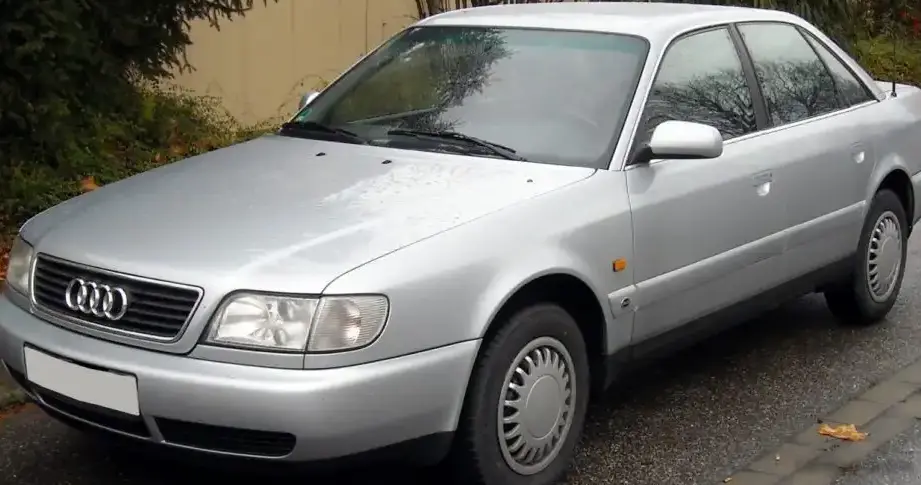
The Audi A6 Avant (4B, C5) 2.5 TDI V6 with 150 horsepower and a Tiptronic automatic transmission represents a compelling blend of practicality, performance, and luxury within the mid-size executive wagon segment. Produced between 1998 and 2000, this variant occupied a significant position in Audi’s lineup, offering a diesel-powered alternative to the gasoline engines available in the C5 A6 range. It was designed to appeal to buyers seeking a comfortable, capable, and fuel-efficient vehicle for long-distance travel and everyday use, particularly in European markets where diesel engines were – and continue to be – highly favored.
Technical Specifications
| Brand | Audi |
| Model | A6 |
| Generation | A6 Avant (4B,C5) |
| Type (Engine) | 2.5 TDI V6 (150 Hp) quattro Tiptronic |
| Start of production | 1998 |
| End of production | 2000 |
| Powertrain Architecture | Internal Combustion engine |
| Body type | Station wagon (estate) |
| Seats | 5 |
| Doors | 5 |
| Fuel consumption (urban) | 13 l/100 km (18.1 US mpg, 21.7 UK mpg, 7.7 km/l) |
| Fuel consumption (extra urban) | 6.5 l/100 km (36.2 US mpg, 43.5 UK mpg, 15.4 km/l) |
| Fuel consumption (combined) | 8.9 l/100 km (26.4 US mpg, 31.7 UK mpg, 11.2 km/l) |
| CO2 emissions | 240 g/km |
| Fuel Type | Diesel |
| Acceleration 0 – 100 km/h | 11.3 sec |
| Acceleration 0 – 62 mph | 11.3 sec |
| Acceleration 0 – 60 mph | 10.7 sec |
| Maximum speed | 208 km/h (129.25 mph) |
| Weight-to-power ratio | 11.4 kg/Hp, 87.5 Hp/tonne |
| Weight-to-torque ratio | 5.5 kg/Nm, 180.8 Nm/tonne |
| Power | 150 Hp @ 4000 rpm |
| Power per litre | 60.1 Hp/l |
| Torque | 310 Nm @ 1500-3200 rpm (228.64 lb.-ft. @ 1500-3200 rpm) |
| Engine layout | Front, Longitudinal |
| Engine Model/Code | AFB, AKN |
| Engine displacement | 2496 cm3 (152.32 cu. in.) |
| Number of cylinders | 6 |
| Engine configuration | V-engine |
| Cylinder Bore | 78.3 mm (3.08 in.) |
| Piston Stroke | 86.4 mm (3.4 in.) |
| Compression ratio | 19.5:1 |
| Number of valves per cylinder | 4 |
| Fuel injection system | Pump-nozzle (Unit Injector) |
| Engine aspiration | Turbocharger |
| Valvetrain | DOHC |
| Engine oil capacity | 5.5 l (5.81 US qt | 4.84 UK qt) |
| Coolant | 6 l (6.34 US qt | 5.28 UK qt) |
| Kerb Weight | 1715 kg (3780.93 lbs.) |
| Max. weight | 2295 kg (5059.61 lbs.) |
| Max load | 580 kg (1278.68 lbs.) |
| Trunk (boot) space – minimum | 455 l (16.07 cu. ft.) |
| Trunk (boot) space – maximum | 1590 l (56.15 cu. ft.) |
| Fuel tank capacity | 70 l (18.49 US gal | 15.4 UK gal) |
| Max. roof load | 100 kg (220.46 lbs.) |
| Permitted trailer load with brakes (8%) | 2100 kg (4629.71 lbs.) |
| Permitted trailer load with brakes (12%) | 1900 kg (4188.78 lbs.) |
| Permitted trailer load without brakes | 750 kg (1653.47 lbs.) |
| Permitted towbar download | 85 kg (187.39 lbs.) |
| Length | 4796 mm (188.82 in.) |
| Width | 1810 mm (71.26 in.) |
| Height | 1479 mm (58.23 in.) |
| Wheelbase | 2759 mm (108.62 in.) |
| Front track | 1540 mm (60.63 in.) |
| Rear (Back) track | 1569 mm (61.77 in.) |
| Drag coefficient (Cd) | 0.29 |
| Minimum turning circle (turning diameter) | 11.68 m (38.32 ft.) |
| Drive wheel | All wheel drive (4×4) |
| Number of gears and type of gearbox | 5 gears, automatic transmission Tiptronic |
| Front suspension | Independent multi-link suspension |
| Rear suspension | Semi-independent, coil spring |
| Front brakes | Ventilated discs |
| Rear brakes | Disc |
| Assisting systems | ABS (Anti-lock braking system) |
| Steering type | Steering rack and pinion |
| Power steering | Hydraulic Steering |
| Tires size | 205/60 R15 |
| Wheel rims size | 6J x 15 |
INTRODUCTION
The Audi A6 Avant (4B, C5) 2.5 TDI V6 Tiptronic, produced from 1998 to 2000, was a key variant within the C5 A6 range. The C5 generation, launched in 1997, represented a significant step forward for Audi, incorporating a new platform (the 4B platform, shared with the VW Passat B5) and a more modern design language. The Avant, Audi’s designation for its station wagon models, offered increased practicality without sacrificing the brand’s reputation for refinement and build quality. This particular 2.5 TDI variant aimed to provide a balance between performance, fuel economy, and affordability, making it a popular choice for families and business users alike.
Powertrain & Engine Architecture
At the heart of this A6 Avant lies the 2.5-liter V6 TDI engine, specifically the AFB or AKN engine code depending on the exact production date and market. This engine is a 24-valve, turbocharged diesel featuring pump-nozzle (unit injector) technology. This system, developed by Bosch, allowed for precise fuel delivery and contributed to the engine’s relatively high power output and good fuel efficiency. The engine’s architecture is a 90-degree V6, providing inherent smoothness and balance. The turbocharger, typically a variable geometry turbo (VGT), spooled up quickly to deliver strong torque across a wide rev range. The Tiptronic transmission is a 5-speed automatic with a manual shift mode, allowing drivers to exert more control over gear selection. It utilizes torque converter technology for smooth launches and cruising, but can be shifted manually for more spirited driving.
Driving Characteristics
The 150 horsepower and 310 Nm (228.64 lb-ft) of torque delivered by the 2.5 TDI engine, coupled with the Tiptronic transmission, resulted in a driving experience that prioritized usability over outright performance. Acceleration from 0-60 mph took around 10.7 seconds, and top speed was limited to 208 km/h (129.25 mph). While not particularly quick by modern standards, the engine provided ample torque for comfortable highway cruising and overtaking. The Tiptronic transmission, while convenient, wasn’t as responsive as a manual gearbox, and could sometimes exhibit a slight delay in shifting. Compared to the more powerful 2.8L gasoline V6 or the later 2.7L twin-turbo variants, the 2.5 TDI felt less eager to rev, but offered significantly better fuel economy. The quattro all-wheel-drive system provided excellent traction in all weather conditions, enhancing stability and confidence.
Equipment & Trim Levels
The 2.5 TDI V6 Tiptronic Avant typically came equipped with a respectable level of standard features. These included power windows, central locking, air conditioning, an upgraded stereo system, and alloy wheels. Interior upholstery was usually cloth, although leather was available as an option. Common optional extras included a sunroof, heated seats, a navigation system, and upgraded audio systems. Trim levels varied slightly depending on the market, but generally, this variant sat in the mid-range of the A6 Avant lineup, offering a good balance of features and price. The dashboard layout was typical of the C5 A6, with a clean and functional design.
Chassis & Braking
The C5 A6 Avant featured an independent multi-link front suspension and a semi-independent coil spring rear suspension. This setup provided a comfortable ride quality while maintaining good handling characteristics. The quattro all-wheel-drive system distributed power between the front and rear axles as needed, optimizing traction. Braking duties were handled by ventilated discs at the front and solid discs at the rear. Anti-lock braking system (ABS) was standard, enhancing braking performance and safety. Stabilizer bars were fitted front and rear to reduce body roll during cornering.
Market Reception & Comparison
The Audi A6 Avant 2.5 TDI V6 Tiptronic was generally well-received by automotive critics. It was praised for its comfortable ride, spacious interior, and fuel efficiency. The diesel engine was considered a strong performer, offering ample torque for everyday driving. However, some critics noted the Tiptronic transmission could be slow to respond at times. Compared to other trims in the A6 lineup, the 2.5 TDI offered a more affordable entry point into the A6 Avant range, while still providing a premium driving experience. Its fuel economy was significantly better than the gasoline-powered variants, making it a popular choice for high-mileage drivers.
Legacy
The 2.5 TDI V6 engine, particularly the AFB and AKN codes, proved to be a robust and reliable powerplant when properly maintained. While early pump-nozzle diesel engines could be susceptible to issues with the fuel injectors, these problems were often addressed with preventative maintenance. Today, the A6 Avant 2.5 TDI V6 Tiptronic remains a sought-after vehicle among enthusiasts and those looking for a practical and comfortable classic. Its combination of space, refinement, and fuel efficiency continues to appeal to buyers in the used car market. Parts availability is generally good, and the car’s relatively simple mechanical design makes it a viable option for DIY mechanics.