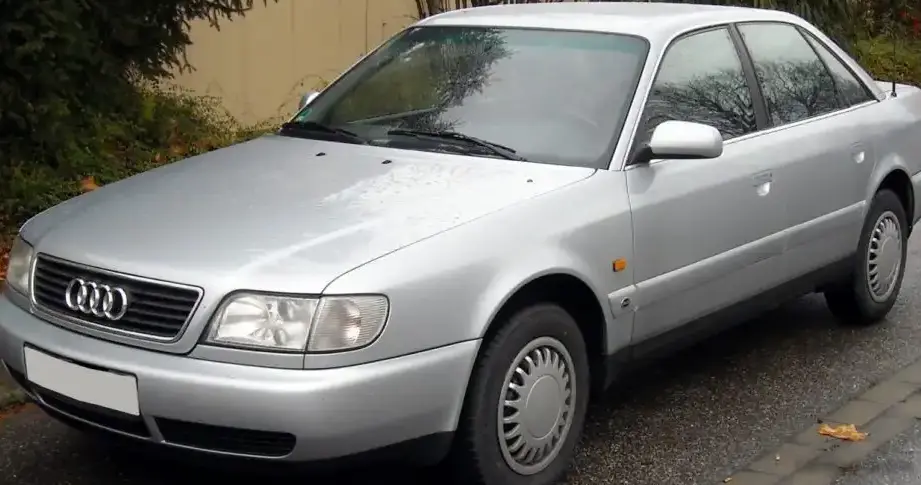
The Audi A6 Avant (4B, C5) 2.7 T V6 quattro, produced between 1998 and 2000, represents a compelling blend of performance and practicality within the C5 generation A6 lineup. This variant, a station wagon (estate) body style, was positioned as a premium offering, bridging the gap between the more economical four-cylinder models and the flagship V8. It utilized Audi’s renowned quattro all-wheel-drive system and a turbocharged V6 engine, making it a popular choice for drivers seeking a refined and capable vehicle. The C5 A6, launched in 1997, was a significant step forward for Audi, introducing a new level of sophistication and technology to the executive car segment.
Technical Specifications
| Brand | Audi |
| Model | A6 |
| Generation | A6 Avant (4B,C5) |
| Type (Engine) | 2.7 T V6 (230 Hp) quattro |
| Start of production | 1998 |
| End of production | 2000 |
| Powertrain Architecture | Internal Combustion engine |
| Body type | Station wagon (estate) |
| Seats | 5 |
| Doors | 5 |
| Fuel consumption (economy) – urban | 16.5 l/100 km (14.3 US mpg, 17.1 UK mpg, 6.1 km/l) |
| Fuel consumption (economy) – extra urban | 8.9 l/100 km (26.4 US mpg, 31.7 UK mpg, 11.2 km/l) |
| Fuel consumption (economy) – combined | 11.7 l/100 km (20.1 US mpg, 24.1 UK mpg, 8.5 km/l) |
| CO2 emissions | 281 g/km |
| Fuel Type | Petrol (Gasoline) |
| Acceleration 0 – 100 km/h | 7.3 sec |
| Acceleration 0 – 62 mph | 7.3 sec |
| Acceleration 0 – 60 mph | 6.9 sec |
| Maximum speed | 243 km/h (150.99 mph) |
| Weight-to-power ratio | 7.3 kg/Hp, 136.1 Hp/tonne |
| Weight-to-torque ratio | 5.5 kg/Nm, 183.4 Nm/tonne |
| Power | 230 Hp @ 5800 rpm |
| Power per litre | 86.1 Hp/l |
| Torque | 310 Nm @ 1700-4600 rpm (228.64 lb.-ft. @ 1700-4600 rpm) |
| Engine layout | Front, Longitudinal |
| Engine Model/Code | AJK, AZA |
| Engine displacement | 2671 cm3 (162.99 cu. in.) |
| Number of cylinders | 6 |
| Engine configuration | V-engine |
| Cylinder Bore | 81 mm (3.19 in.) |
| Piston Stroke | 86.4 mm (3.4 in.) |
| Compression ratio | 9.3:1 |
| Number of valves per cylinder | 5 |
| Fuel injection system | Multi-port manifold injection |
| Engine aspiration | Turbocharger |
| Valvetrain | DOHC |
| Engine oil capacity | 6 l (6.34 US qt, 5.28 UK qt) |
| Coolant | 6 l (6.34 US qt, 5.28 UK qt) |
| Kerb Weight | 1690 kg (3725.81 lbs.) |
| Max. weight | 2270 kg (5004.49 lbs.) |
| Max load | 580 kg (1278.68 lbs.) |
| Trunk (boot) space – minimum | 455 l (16.07 cu. ft.) |
| Trunk (boot) space – maximum | 1590 l (56.15 cu. ft.) |
| Fuel tank capacity | 70 l (18.49 US gal, 15.4 UK gal) |
| Max. roof load | 100 kg (220.46 lbs.) |
| Permitted trailer load with brakes (8%) | 2100 kg (4629.71 lbs.) |
| Permitted trailer load with brakes (12%) | 1900 kg (4188.78 lbs.) |
| Permitted trailer load without brakes | 750 kg (1653.47 lbs.) |
| Permitted towbar download | 85 kg (187.39 lbs.) |
| Length | 4796 mm (188.82 in.) |
| Width | 1810 mm (71.26 in.) |
| Height | 1479 mm (58.23 in.) |
| Wheelbase | 2759 mm (108.62 in.) |
| Front track | 1540 mm (60.63 in.) |
| Rear (Back) track | 1569 mm (61.77 in.) |
| Drag coefficient (Cd) | 0.29 |
| Minimum turning circle (turning diameter) | 11.68 m (38.32 ft.) |
| Drive wheel | All wheel drive (4×4) |
| Number of gears and type of gearbox | 6 gears, manual transmission |
| Front suspension | Independent multi-link suspension |
| Rear suspension | Semi-independent, coil spring |
| Front brakes | Ventilated discs |
| Rear brakes | Disc |
| Assisting systems | ABS (Anti-lock braking system) |
| Steering type | Steering rack and pinion |
| Power steering | Hydraulic Steering |
| Tires size | 205/60 R15 |
| Wheel rims size | 7J x 15 |
Powertrain & Engine Architecture
The heart of the A6 Avant 2.7 T quattro is the 2.7-liter V6 engine, specifically the AJK or AZA engine codes. This engine is a 24-valve, dual overhead camshaft (DOHC) design featuring a single turbocharger. The turbocharger, coupled with multi-port fuel injection, allowed for a significant power output of 230 horsepower and 310 Nm (228.64 lb-ft) of torque. The engine’s torque curve is relatively flat, providing strong acceleration across a wide RPM range, peaking between 1700 and 4600 rpm. The engine utilizes a 9.3:1 compression ratio. The six-speed manual transmission was standard, providing precise gear changes and contributing to the car’s sporty driving experience.
Driving Characteristics
The 2.7 T V6 quattro offered a compelling driving experience. The turbocharger provides a noticeable surge of power, resulting in brisk acceleration. The quattro all-wheel-drive system delivers excellent traction, particularly in adverse weather conditions. Compared to the base 1.8L four-cylinder models, the 2.7 T offered a substantial performance upgrade. While not as raw or focused as the later S4 models with the same engine, it provided a comfortable and capable driving experience suitable for both daily commutes and long-distance journeys. The six-speed manual transmission allowed drivers to fully exploit the engine’s powerband, while the quattro system inspired confidence in all conditions.
Equipment & Trim Levels
The A6 Avant 2.7 T quattro typically came well-equipped, reflecting its position as a premium model. Standard features included automatic climate control, power windows and locks, a high-quality audio system, and leather upholstery. Optional extras included sunroof, navigation system, heated seats, and upgraded alloy wheels. The interior design was characterized by its clean lines and high-quality materials, creating a comfortable and refined cabin environment. The Avant (wagon) body style offered a generous amount of cargo space, making it a practical choice for families and those with active lifestyles.
Chassis & Braking
The C5 A6 Avant featured an independent multi-link front suspension and a semi-independent coil spring rear suspension. This setup provided a good balance between ride comfort and handling precision. The car was equipped with ventilated disc brakes at the front and solid discs at the rear, providing adequate stopping power for its weight and performance. Anti-lock braking system (ABS) was standard, enhancing safety and control during emergency braking situations. The steering was a rack-and-pinion system with hydraulic power assistance, offering precise and responsive steering feel.
Market Reception & Comparison
The Audi A6 Avant 2.7 T quattro was generally well-received by automotive critics. It was praised for its refined engine, comfortable ride, and spacious interior. The combination of performance and practicality made it a popular choice among buyers seeking a premium station wagon. Compared to other trims in the A6 lineup, the 2.7 T offered a significant performance advantage over the four-cylinder models, while being more affordable than the V8-powered variants. Fuel economy, however, was a notable drawback, with combined fuel consumption around 11.7 l/100 km (20.1 US mpg).
Legacy
The 2.7 T V6 engine, in both the A6 and other Audi models, has developed a reputation for being relatively reliable, although preventative maintenance is crucial. The turbocharger and associated components require regular inspection and servicing. The quattro all-wheel-drive system has also proven to be durable and dependable. In the used car market today, the A6 Avant 2.7 T quattro remains a desirable option for those seeking a classic Audi wagon with a blend of performance, comfort, and practicality. However, potential buyers should be aware of the need for regular maintenance and the potential for age-related issues.