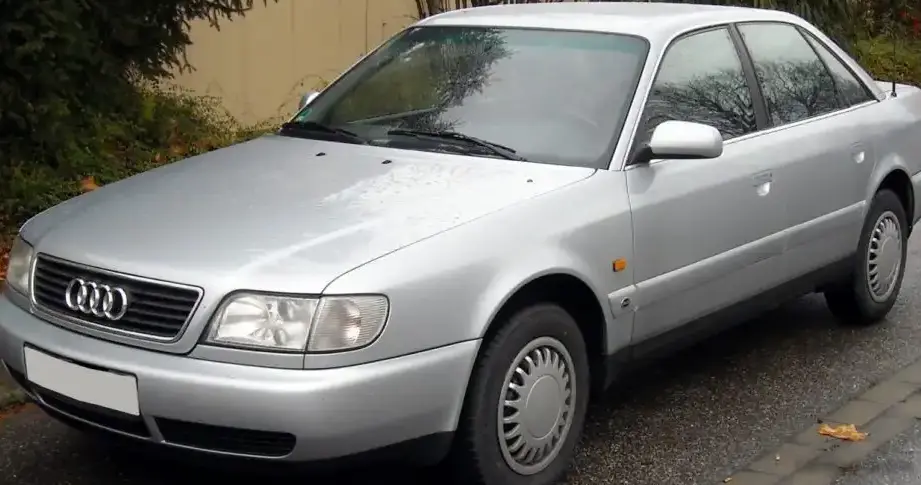
The Audi A6 Avant (4B, C5) 2.7 T V6 quattro Tiptronic, produced between 1998 and 2000, represents a compelling blend of performance, practicality, and luxury within the C5 A6 generation. This variant occupied a mid-to-upper position in the A6 Avant lineup, offering a significant step up in power and refinement compared to the base 1.8L and 2.4L models, while remaining more accessible than the flagship 4.2L V8. It was primarily marketed in Europe and other international markets, leveraging Audi’s reputation for sophisticated engineering and all-wheel-drive capability. The ‘Avant’ designation signifies Audi’s term for a station wagon or estate body style.
Technical Specifications
| Brand | Audi |
| Model | A6 |
| Generation | A6 Avant (4B,C5) |
| Type (Engine) | 2.7 T V6 (230 Hp) quattro Tiptronic |
| Start of production | 1998 |
| End of production | 2000 |
| Powertrain Architecture | Internal Combustion engine |
| Body type | Station wagon (estate) |
| Seats | 5 |
| Doors | 5 |
| Fuel consumption (economy) – urban | 18.1 l/100 km (13 US mpg, 15.6 UK mpg, 5.5 km/l) |
| Fuel consumption (economy) – extra urban | 8.8 l/100 km (26.7 US mpg, 32.1 UK mpg, 11.4 km/l) |
| Fuel consumption (economy) – combined | 12.2 l/100 km (19.3 US mpg, 23.2 UK mpg, 8.2 km/l) |
| CO2 emissions | 293 g/km |
| Fuel Type | Petrol (Gasoline) |
| Acceleration 0 – 100 km/h | 8.4 sec |
| Acceleration 0 – 62 mph | 8.4 sec |
| Acceleration 0 – 60 mph | 8 sec |
| Maximum speed | 240 km/h (149.13 mph) |
| Weight-to-power ratio | 7.5 kg/Hp, 132.9 Hp/tonne |
| Weight-to-torque ratio | 5.6 kg/Nm, 179.2 Nm/tonne |
| Power | 230 Hp @ 5800 rpm |
| Power per litre | 86.1 Hp/l |
| Torque | 310 Nm @ 1700-4600 rpm (228.64 lb.-ft. @ 1700-4600 rpm) |
| Engine layout | Front, Longitudinal |
| Engine Model/Code | AJK, AZA |
| Engine displacement | 2671 cm3 (162.99 cu. in.) |
| Number of cylinders | 6 |
| Engine configuration | V-engine |
| Cylinder Bore | 81 mm (3.19 in.) |
| Piston Stroke | 86.4 mm (3.4 in.) |
| Compression ratio | 9.3:1 |
| Number of valves per cylinder | 5 |
| Fuel injection system | Multi-port manifold injection |
| Engine aspiration | Turbocharger |
| Valvetrain | DOHC |
| Engine oil capacity | 6 l (6.34 US qt | 5.28 UK qt) |
| Coolant | 6 l (6.34 US qt | 5.28 UK qt) |
| Kerb Weight | 1730 kg (3814 lbs.) |
| Max. weight | 2310 kg (5092.68 lbs.) |
| Max load | 580 kg (1278.68 lbs.) |
| Trunk (boot) space – minimum | 455 l (16.07 cu. ft.) |
| Trunk (boot) space – maximum | 1590 l (56.15 cu. ft.) |
| Fuel tank capacity | 70 l (18.49 US gal | 15.4 UK gal) |
| Max. roof load | 100 kg (220.46 lbs.) |
| Permitted trailer load with brakes (8%) | 2100 kg (4629.71 lbs.) |
| Permitted trailer load with brakes (12%) | 1900 kg (4188.78 lbs.) |
| Permitted trailer load without brakes | 750 kg (1653.47 lbs.) |
| Permitted towbar download | 85 kg (187.39 lbs.) |
| Length | 4796 mm (188.82 in.) |
| Width | 1810 mm (71.26 in.) |
| Height | 1479 mm (58.23 in.) |
| Wheelbase | 2759 mm (108.62 in.) |
| Front track | 1540 mm (60.63 in.) |
| Rear (Back) track | 1569 mm (61.77 in.) |
| Drag coefficient (Cd) | 0.29 |
| Minimum turning circle (turning diameter) | 11.68 m (38.32 ft.) |
| Drive wheel | All wheel drive (4×4) |
| Number of gears and type of gearbox | 5 gears, automatic transmission Tiptronic |
| Front suspension | Independent multi-link suspension |
| Rear suspension | Semi-independent, coil spring |
| Front brakes | Ventilated discs |
| Rear brakes | Disc |
| Assisting systems | ABS (Anti-lock braking system) |
| Steering type | Steering rack and pinion |
| Power steering | Hydraulic Steering |
| Tires size | 205/60 R15 |
| Wheel rims size | 7J x 15 |
Powertrain & Engine Architecture
The heart of the A6 Avant 2.7 T is the 2.7-liter V6 engine, specifically the AJK or AZA engine code depending on the exact production date and market. This engine is a 24-valve, dual overhead camshaft (DOHC) design featuring a single turbocharger and multi-port fuel injection. The turbocharger provides a significant boost in power output compared to naturally aspirated engines of similar displacement. The engine’s architecture is longitudinal, meaning the engine is mounted lengthwise in the chassis, a common configuration for front-engine, all-wheel-drive vehicles. The 2.7T engine is known for its relatively flat torque curve, delivering strong pulling power across a wide RPM range. The Tiptronic transmission is a 5-speed automatic with a manual shift mode, allowing drivers to exert more control over gear selection. It utilizes torque converter technology for smooth operation and launch characteristics.
Driving Characteristics
The 230 hp and 310 Nm (228.64 lb-ft) of torque, combined with Audi’s quattro all-wheel-drive system, provide the A6 Avant 2.7 T with confident handling and brisk acceleration. The 0-60 mph time of around 8 seconds, while not blistering by modern standards, was respectable for a wagon of this size and weight in the late 1990s. The Tiptronic transmission, while offering convenience, doesn’t provide the same level of responsiveness as a manual gearbox. Gear changes can sometimes feel slightly hesitant, particularly during aggressive driving. Compared to the 1.8L models, the 2.7 T offers a substantially more powerful and refined driving experience. Against the 4.2L V8, it provides a good balance between performance and fuel economy.
Equipment & Trim Levels
The A6 Avant 2.7 T typically came well-equipped, reflecting Audi’s premium positioning. Standard features often included leather upholstery, automatic climate control, power windows and mirrors, and an upgraded audio system. Optional extras could include sunroof, navigation system, heated seats, and upgraded alloy wheels. The interior trim generally featured wood or aluminum accents, contributing to a luxurious feel. Trim levels varied by market, but generally, the 2.7 T sat in the mid-to-upper range, offering a step up in features and materials compared to the base models.
Chassis & Braking
The C5 A6 Avant utilizes an independent multi-link suspension at the front, providing a comfortable ride and precise handling. The rear suspension is a semi-independent coil spring setup. Braking duties are handled by ventilated discs at the front and solid discs at the rear, equipped with ABS (Anti-lock Braking System) as standard. The quattro all-wheel-drive system distributes power between the front and rear axles as needed, enhancing traction and stability, particularly in adverse weather conditions.
Market Reception & Comparison
The A6 Avant 2.7 T was generally well-received by automotive critics. It was praised for its powerful engine, comfortable ride, and spacious interior. However, some reviewers noted the Tiptronic transmission could be less engaging than a manual gearbox. Fuel economy, at around 19.3 US mpg combined, was considered average for a vehicle in this class. Compared to the 1.8L and 2.4L A6 Avants, the 2.7 T offered a significant performance advantage, but at a higher price point. The 4.2L V8 provided even more power, but at a substantial cost increase and with reduced fuel efficiency.
Legacy
The 2.7T V6 engine, in both the A6 and other Audi/Volkswagen models, has developed a reputation for being relatively reliable, although preventative maintenance is crucial. The turbocharger and associated components require regular inspection and potential replacement over time. The Tiptronic transmission, while generally durable, can be prone to issues with age and high mileage. Today, the A6 Avant 2.7 T represents a desirable classic, offering a unique combination of performance, practicality, and Audi refinement. Well-maintained examples command a premium in the used car market, appealing to enthusiasts seeking a sophisticated and capable European wagon.