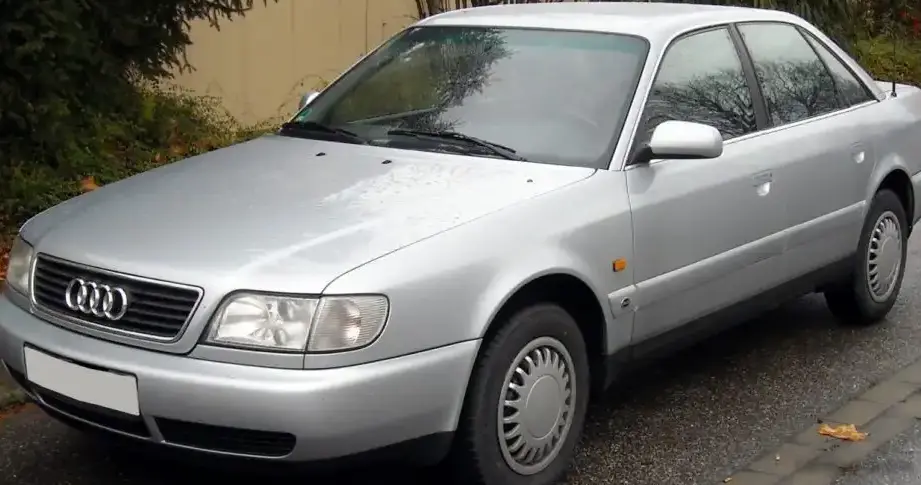
The Audi A6 Avant (4B, C5) 2.8 V6 30V quattro, produced between 1998 and 2000, represents a significant iteration of Audi’s mid-size executive wagon. Positioned as a premium offering within the C5 A6 range, this variant combined a potent V6 engine with Audi’s renowned quattro all-wheel-drive system, offering a blend of performance, practicality, and all-weather capability. It was a key model in establishing Audi’s presence in the North American market, where wagons were gaining popularity among buyers seeking a more versatile alternative to traditional sedans. The C5 generation A6, built on the Volkswagen Group’s 1HX0 platform (shared with the VW Passat), aimed to elevate Audi’s image through improved build quality, sophisticated technology, and a more refined driving experience.
Technical Specifications
| Brand | Audi |
| Model | A6 |
| Generation | A6 Avant (4B,C5) |
| Type (Engine) | 2.8 V6 30V (193 Hp) quattro |
| Start of production | 1998 |
| End of production | 2000 |
| Powertrain Architecture | Internal Combustion engine |
| Body type | Station wagon (estate) |
| Seats | 5 |
| Doors | 5 |
| Fuel consumption (economy) – urban | 15.4 l/100 km (15.3 US mpg, 18.3 UK mpg, 6.5 km/l) |
| Fuel consumption (economy) – extra urban | 8.2 l/100 km (28.7 US mpg, 34.4 UK mpg, 12.2 km/l) |
| Fuel consumption (economy) – combined | 10.8 l/100 km (21.8 US mpg, 26.2 UK mpg, 9.3 km/l) |
| CO2 emissions | 259 g/km |
| Fuel Type | Petrol (Gasoline) |
| Acceleration 0 – 100 km/h | 8.3 sec |
| Acceleration 0 – 62 mph | 8.3 sec |
| Acceleration 0 – 60 mph | 7.9 sec |
| Maximum speed | 232 km/h (144.16 mph) |
| Weight-to-power ratio | 8.4 kg/Hp, 119.5 Hp/tonne |
| Weight-to-torque ratio | 7 kg/Nm, 142.4 Nm/tonne |
| Power | 193 Hp @ 6000 rpm |
| Power per litre | 69.6 Hp/l |
| Torque | 230 Nm @ 3200 rpm (169.64 lb.-ft. @ 3200 rpm) |
| Engine layout | Front, Longitudinal |
| Engine Model/Code | ACK, AHA, ALG, AMX, APR, AQD |
| Engine displacement | 2771 cm3 (169.1 cu. in.) |
| Number of cylinders | 6 |
| Engine configuration | V-engine |
| Cylinder Bore | 82.5 mm (3.25 in.) |
| Piston Stroke | 86.4 mm (3.4 in.) |
| Compression ratio | 10.6:1 |
| Number of valves per cylinder | 5 |
| Fuel injection system | Multi-port manifold injection |
| Engine aspiration | Naturally aspirated engine |
| Valvetrain | DOHC |
| Engine oil capacity | 5.5 l (5.81 US qt, 4.84 UK qt) |
| Coolant | 6 l (6.34 US qt, 5.28 UK qt) |
| Kerb Weight | 1615 kg (3560.47 lbs.) |
| Max. weight | 2195 kg (4839.15 lbs.) |
| Max load | 580 kg (1278.68 lbs.) |
| Trunk (boot) space – minimum | 455 l (16.07 cu. ft.) |
| Trunk (boot) space – maximum | 1590 l (56.15 cu. ft.) |
| Fuel tank capacity | 70 l (18.49 US gal, 15.4 UK gal) |
| Max. roof load | 100 kg (220.46 lbs.) |
| Permitted trailer load with brakes (8%) | 2100 kg (4629.71 lbs.) |
| Permitted trailer load with brakes (12%) | 1900 kg (4188.78 lbs.) |
| Permitted trailer load without brakes | 750 kg (1653.47 lbs.) |
| Permitted towbar download | 85 kg (187.39 lbs.) |
| Length | 4796 mm (188.82 in.) |
| Width | 1810 mm (71.26 in.) |
| Height | 1479 mm (58.23 in.) |
| Wheelbase | 2759 mm (108.62 in.) |
| Front track | 1540 mm (60.63 in.) |
| Rear (Back) track | 1569 mm (61.77 in.) |
| Drag coefficient (Cd) | 0.31 |
| Minimum turning circle (turning diameter) | 11.68 m (38.32 ft.) |
| Drive wheel | All wheel drive (4×4) |
| Number of gears and type of gearbox | 5 gears, manual transmission |
| Front suspension | Independent multi-link suspension |
| Rear suspension | Semi-independent, coil spring |
| Front brakes | Ventilated discs |
| Rear brakes | Disc |
| Assisting systems | ABS (Anti-lock braking system) |
| Steering type | Steering rack and pinion |
| Power steering | Hydraulic Steering |
| Tires size | 205/60 R15 |
| Wheel rims size | 7J x 16 |
Powertrain & Engine Architecture
The heart of the A6 Avant 2.8 V6 quattro is the ACK engine, a 2.8-liter naturally aspirated V6. This engine, part of Audi’s long-running V6 family, utilizes a 90-degree V-angle for inherent smoothness. Engine codes AHA, ALG, AMX, APR, and AQD were also used depending on the specific market and year. The engine features five valves per cylinder (three intake, two exhaust) operated by a double overhead camshaft (DOHC) valvetrain. Fuel delivery is managed by a Bosch Motronic multi-port fuel injection system, providing precise control over the air-fuel mixture. The 2.8L V6 produced 193 horsepower at 6000 rpm and 230 Nm (169.64 lb-ft) of torque at 3200 rpm. The engine’s longitudinal mounting and the quattro all-wheel-drive system necessitated a more complex drivetrain layout compared to front-wheel-drive counterparts. The 5-speed manual transmission was standard, offering a direct connection to the engine’s power.
Driving Characteristics
The 2.8 V6 quattro Avant offered a compelling driving experience, balancing performance with everyday usability. While not as overtly sporty as the S4 or RS4 models, the 2.8L engine provided ample power for confident overtaking and highway cruising. The quattro system delivered excellent traction in all weather conditions, enhancing stability and control. The 5-speed manual transmission allowed for precise gear selection, although the gear ratios were tuned more for fuel efficiency and comfort than outright acceleration. Compared to the 1.8L turbocharged four-cylinder variants, the 2.8 V6 offered significantly more torque and a smoother power delivery. It also felt more refined and less prone to turbo lag. However, the 2.8L was noticeably heavier than the four-cylinder models, impacting handling agility to some degree.
Equipment & Trim Levels
The A6 Avant 2.8 V6 quattro typically came well-equipped, reflecting its position as a premium model. Standard features included automatic climate control, power windows and locks, a driver and passenger airbag, and an upgraded audio system. Interior upholstery was typically cloth, with leather options available as an upgrade. Optional extras included sunroof, heated front seats, premium audio systems (often Bose), and parking sensors. The dashboard layout was typical of the C5 A6, characterized by a clean, functional design with a focus on ergonomics. Wood trim was often used to enhance the interior’s perceived luxury.
Chassis & Braking
The C5 A6 Avant featured an independent multi-link front suspension, providing a comfortable ride and good handling characteristics. The rear suspension utilized a semi-independent coil spring setup. The quattro all-wheel-drive system distributed power between the front and rear axles as needed, optimizing traction. Braking duties were handled by ventilated discs at the front and solid discs at the rear, with ABS (Anti-lock Braking System) standard. The suspension was tuned to prioritize ride comfort, making it a capable long-distance cruiser. Stabilizer bars were fitted front and rear to reduce body roll during cornering.
Market Reception & Comparison
The A6 Avant 2.8 V6 quattro was generally well-received by automotive critics. It was praised for its refined engine, comfortable ride, and all-weather capability. However, some reviewers noted that the car felt somewhat heavy and lacked the sporting sharpness of its rivals, such as the BMW 5 Series Touring. Fuel economy was considered average for its class. Compared to the 1.8T models, the 2.8 V6 offered superior performance but at the cost of increased fuel consumption and a higher purchase price. The 2.8L also tended to be more expensive to maintain due to the increased complexity of the V6 engine.
Legacy
The Audi A6 Avant (4B, C5) 2.8 V6 quattro remains a popular choice among enthusiasts and used car buyers. The ACK engine is generally considered reliable, although regular maintenance is essential. Common issues include oil leaks and occasional sensor failures. The quattro all-wheel-drive system is robust and durable. Today, these wagons are appreciated for their practicality, comfort, and classic Audi styling. They represent a sweet spot in the C5 A6 lineup, offering a good balance of performance, features, and affordability. Finding well-maintained examples is becoming increasingly difficult, but the A6 Avant 2.8 V6 quattro continues to hold its appeal as a versatile and rewarding driving experience.