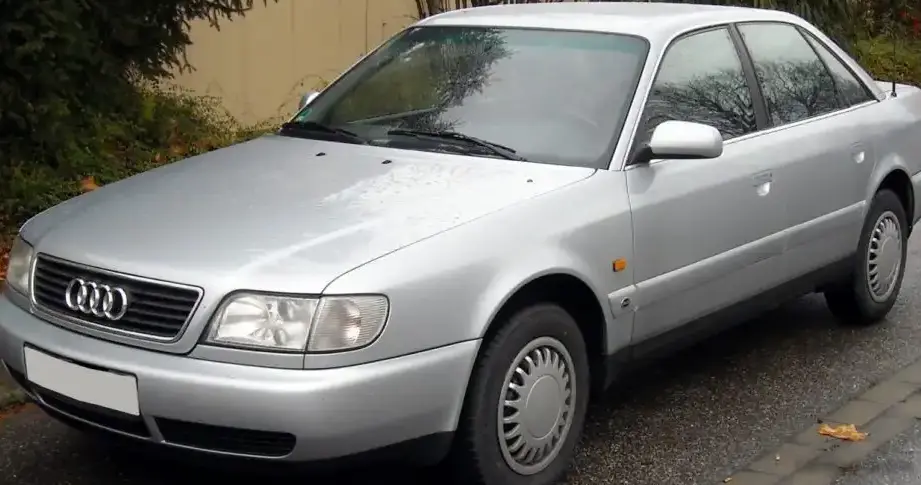
The Audi A6 Avant (4B, C5 facelift) 2.0, produced from 2001 to 2004, represents a key iteration of Audi’s mid-size executive wagon. Positioned as an entry-level offering within the C5 A6 Avant range, it provided a more accessible price point compared to the higher-performance and more luxurious variants like the 2.8 and 4.2 models. This version aimed to balance practicality, fuel efficiency, and the renowned Audi driving experience, primarily targeting European buyers seeking a versatile family vehicle. The facelift brought updated styling cues, improved interior materials, and refinements to the engine lineup, solidifying the A6 Avant’s position in a competitive segment.
Technical Specifications
| Brand | Audi |
| Model | A6 |
| Generation | A6 Avant (4B,C5, facelift 2001) |
| Type (Engine) | 2.0 (130 Hp) |
| Start of production | 2001 |
| End of production | 2004 |
| Powertrain Architecture | Internal Combustion engine |
| Body type | Station wagon (estate) |
| Seats | 5 |
| Doors | 5 |
| Fuel consumption (urban) | 11.9 l/100 km (19.8 US mpg, 23.7 UK mpg, 8.4 km/l) |
| Fuel consumption (extra urban) | 6.5 l/100 km (36.2 US mpg, 43.5 UK mpg, 15.4 km/l) |
| Fuel consumption (combined) | 8.4 l/100 km (28 US mpg, 33.6 UK mpg, 11.9 km/l) |
| CO2 emissions | 202 g/km |
| Fuel Type | Petrol (Gasoline) |
| Acceleration 0 – 100 km/h | 10.7 sec |
| Acceleration 0 – 62 mph | 10.7 sec |
| Acceleration 0 – 60 mph | 10.2 sec |
| Maximum speed | 203 km/h (126.14 mph) |
| Emission standard | Euro 4 |
| Weight-to-power ratio | 11.2 kg/Hp, 89.7 Hp/tonne |
| Weight-to-torque ratio | 7.4 kg/Nm, 134.5 Nm/tonne |
| Power | 130 Hp @ 5700 rpm |
| Power per litre | 65.5 Hp/l |
| Torque | 195 Nm @ 3300 rpm (143.82 lb.-ft. @ 3300 rpm) |
| Engine layout | Front, Longitudinal |
| Engine Model/Code | ALT |
| Engine displacement | 1984 cm3 (121.07 cu. in.) |
| Number of cylinders | 4 |
| Engine configuration | Inline |
| Cylinder Bore | 82.5 mm (3.25 in.) |
| Piston Stroke | 92.8 mm (3.65 in.) |
| Compression ratio | 10.3:1 |
| Number of valves per cylinder | 5 |
| Fuel injection system | Multi-port manifold injection |
| Engine aspiration | Naturally aspirated engine |
| Valvetrain | DOHC |
| Engine oil capacity | 4.2 l (4.44 US qt | 3.7 UK qt) |
| Coolant | 7 l (7.4 US qt | 6.16 UK qt) |
| Kerb Weight | 1450 kg (3196.7 lbs.) |
| Max. weight | 2000 kg (4409.25 lbs.) |
| Max load | 550 kg (1212.54 lbs.) |
| Trunk (boot) space – minimum | 455 l (16.07 cu. ft.) |
| Trunk (boot) space – maximum | 1590 l (56.15 cu. ft.) |
| Fuel tank capacity | 70 l (18.49 US gal | 15.4 UK gal) |
| Max. roof load | 100 kg (220.46 lbs.) |
| Permitted trailer load with brakes (8%) | 1500 kg (3306.93 lbs.) |
| Permitted trailer load with brakes (12%) | 1300 kg (2866.01 lbs.) |
| Permitted trailer load without brakes | 750 kg (1653.47 lbs.) |
| Permitted towbar download | 85 kg (187.39 lbs.) |
| Length | 4796 mm (188.82 in.) |
| Width | 1810 mm (71.26 in.) |
| Height | 1477 mm (58.15 in.) |
| Wheelbase | 2760 mm (108.66 in.) |
| Front track | 1540 mm (60.63 in.) |
| Rear (Back) track | 1569 mm (61.77 in.) |
| Drag coefficient (Cd) | 0.32 |
| Minimum turning circle (turning diameter) | 11.68 m (38.32 ft.) |
| Drivetrain Architecture | The Internal combustion engine (ICE) drives the front wheels of the vehicle. |
| Drive wheel | Front wheel drive |
| Number of gears and type of gearbox | 5 gears, manual transmission |
| Front suspension | Independent multi-link suspension |
| Rear suspension | Semi-independent, coil spring |
| Front brakes | Ventilated discs |
| Rear brakes | Disc |
| Assisting systems | ABS (Anti-lock braking system) |
| Steering type | Steering rack and pinion |
| Power steering | Hydraulic Steering |
| Tires size | 205/55 R16 |
| Wheel rims size | 7J x 16 |
INTRODUCTION
The Audi A6 Avant (4B, C5 facelift) 2.0, produced between 2001 and 2004, occupied an important position in Audi’s lineup as an accessible entry point into the A6 range. Built on the 4B/C5 platform, this facelifted version offered a blend of practicality, comfort, and Audi’s signature build quality. The 2.0-liter engine, while not the most powerful option, was chosen for its fuel efficiency and suitability for everyday driving. This variant was particularly popular in Europe, where station wagons (Avants in Audi terminology) held a significant market share, appealing to families and individuals needing a versatile vehicle.
Powertrain & Engine Architecture
The heart of the A6 Avant 2.0 is the ALT engine code, a 1.984-liter (121.07 cubic inches) inline-four cylinder gasoline engine. This engine utilizes a multi-port fuel injection system, delivering fuel directly into the intake ports. The engine features a double overhead camshaft (DOHC) valvetrain with five valves per cylinder (four intake, one exhaust), optimizing airflow for improved performance and efficiency. The engine produces 130 horsepower at 5700 rpm and 195 Nm (143.82 lb-ft) of torque at 3300 rpm. The engine is longitudinally mounted, driving the front wheels. Paired with this engine was a 5-speed manual transmission, although an automatic transmission was also available. The automatic transmission was a conventional torque converter type, offering smooth shifts but at the expense of some fuel economy compared to the manual.
Driving Characteristics
The 2.0-liter A6 Avant, particularly with the manual transmission, offered a reasonably engaging driving experience. While not a sports car, the engine provided adequate power for everyday driving and highway cruising. Acceleration from 0-60 mph took around 10.2 seconds, and the top speed was approximately 126 mph. The automatic transmission, while convenient, noticeably dulled acceleration and responsiveness. The gear ratios were tuned for fuel efficiency rather than outright performance. Compared to the more powerful 2.8-liter V6 or the 4.2-liter V8 models, the 2.0-liter felt less refined and had to be worked harder, especially when fully loaded or tackling steep inclines. However, the lighter weight of the 2.0-liter engine contributed to better handling balance compared to its larger-engined siblings.
Equipment & Trim Levels
The A6 Avant 2.0 typically came with a respectable level of standard equipment. This included power windows, central locking, air conditioning, and an AM/FM radio. Interior upholstery was typically cloth, although leather was available as an option. Dashboard trim was generally finished in wood or aluminum accents. Optional extras included a sunroof, upgraded audio system, navigation system, and heated front seats. Trim levels varied slightly depending on the market, but generally, the 2.0-liter model represented the base level of the A6 Avant range. Higher trim levels added more luxurious features and cosmetic enhancements.
Chassis & Braking
The A6 Avant 2.0 featured an independent multi-link suspension at the front, providing a comfortable ride and good handling characteristics. The rear suspension was a semi-independent coil spring setup. Braking duties were handled by ventilated discs at the front and solid discs at the rear. Anti-lock Braking System (ABS) was standard. The chassis was designed to provide a balance between comfort and handling, prioritizing ride quality over sporty dynamics. The relatively lightweight engine contributed to a more balanced weight distribution compared to the heavier V6 and V8 models.
Market Reception & Comparison
The A6 Avant 2.0 was generally well-received by automotive critics as a practical and well-built station wagon. It was praised for its spacious interior, comfortable ride, and fuel efficiency. However, some critics noted that the 2.0-liter engine lacked the refinement and power of the larger engines in the A6 range. Compared to the 2.8-liter V6, the 2.0-liter offered significantly lower running costs but at the expense of performance. The 1.9 TDI diesel variant was also a popular alternative, offering even better fuel economy and comparable torque. The 2.0-liter model appealed to buyers who prioritized value and practicality over outright performance.
Legacy
The Audi A6 Avant (4B, C5) 2.0 has proven to be a relatively reliable vehicle, with many examples still on the road today. The ALT engine is generally considered durable, although regular maintenance is crucial. Common issues include oil leaks, sensor failures, and wear and tear on the suspension components. The automatic transmission, while generally reliable, can be prone to issues if not serviced regularly. In the used car market, the 2.0-liter A6 Avant represents an affordable entry point into Audi ownership, offering a comfortable and practical vehicle for those seeking a versatile family wagon. Its relatively simple engine and mechanicals make it a popular choice for DIY mechanics and enthusiasts.