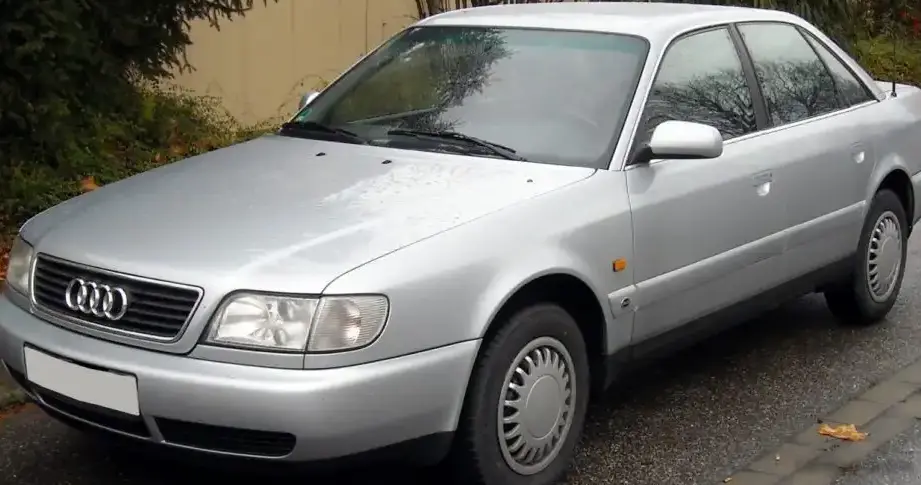
The Audi A6 Avant (4B, C5 facelift) 2.5 TDI V6 quattro, produced from 2001 to 2003, represents a compelling blend of practicality, performance, and luxury within the mid-size executive wagon segment. This variant occupied a significant position in Audi’s lineup, offering a diesel-powered alternative to the gasoline engines available, and providing all-wheel drive capability through Audi’s renowned quattro system. The facelifted C5 generation, introduced in 2001, brought revised styling, improved interior appointments, and updated engine technology compared to the earlier pre-facelift models. This particular 2.5 TDI V6 quattro model aimed to appeal to buyers seeking a refined and capable vehicle for long-distance travel and everyday use, with a focus on fuel efficiency and strong torque delivery.
Technical Specifications
| Brand | Audi |
| Model | A6 |
| Generation | A6 Avant (4B,C5, facelift 2001) |
| Type (Engine) | 2.5 TDI V6 (180 Hp) quattro |
| Start of production | 2001 |
| End of production | 2003 |
| Powertrain Architecture | Internal Combustion engine |
| Body type | Station wagon (estate) |
| Seats | 5 |
| Doors | 5 |
| Fuel consumption (urban) | 11.2 l/100 km (21 US mpg, 25.2 UK mpg, 8.9 km/l) |
| Fuel consumption (extra urban) | 6.3 l/100 km (37.3 US mpg, 44.8 UK mpg, 15.9 km/l) |
| Fuel consumption (combined) | 8 l/100 km (29.4 US mpg, 35.3 UK mpg, 12.5 km/l) |
| CO2 emissions | 216 g/km |
| Fuel Type | Diesel |
| Acceleration 0 – 100 km/h | 9.1 sec |
| Acceleration 0 – 62 mph | 9.1 sec |
| Acceleration 0 – 60 mph | 8.6 sec |
| Maximum speed | 221 km/h (137.32 mph) |
| Emission standard | Euro 3 |
| Weight-to-power ratio | 9.6 kg/Hp, 104 Hp/tonne |
| Weight-to-torque ratio | 4.7 kg/Nm, 213.9 Nm/tonne |
| Power | 180 Hp @ 4000 rpm |
| Power per litre | 72.1 Hp/l |
| Torque | 370 Nm @ 1500-2500 rpm (272.9 lb.-ft. @ 1500-2500 rpm) |
| Engine layout | Front, Longitudinal |
| Engine Model/Code | AKE, BAU, BDH |
| Engine displacement | 2496 cm3 (152.32 cu. in.) |
| Number of cylinders | 6 |
| Engine configuration | V-engine |
| Cylinder Bore | 78.3 mm (3.08 in.) |
| Piston Stroke | 86.4 mm (3.4 in.) |
| Compression ratio | 19.5:1 |
| Number of valves per cylinder | 4 |
| Fuel injection system | Direct injection |
| Engine aspiration | Turbocharger, Intercooler |
| Valvetrain | DOHC |
| Engine oil capacity | 5.5 l (5.81 US qt, 4.84 UK qt) |
| Coolant | 6 l (6.34 US qt, 5.28 UK qt) |
| Kerb Weight | 1730 kg (3814 lbs.) |
| Max. weight | 2280 kg (5026.54 lbs.) |
| Max load | 550 kg (1212.54 lbs.) |
| Trunk (boot) space – minimum | 455 l (16.07 cu. ft.) |
| Trunk (boot) space – maximum | 1590 l (56.15 cu. ft.) |
| Fuel tank capacity | 70 l (18.49 US gal, 15.4 UK gal) |
| Max. roof load | 100 kg (220.46 lbs.) |
| Permitted trailer load with brakes (8%) | 2100 kg (4629.71 lbs.) |
| Permitted trailer load with brakes (12%) | 1900 kg (4188.78 lbs.) |
| Permitted trailer load without brakes | 750 kg (1653.47 lbs.) |
| Permitted towbar download | 85 kg (187.39 lbs.) |
| Length | 4796 mm (188.82 in.) |
| Width | 1810 mm (71.26 in.) |
| Height | 1479 mm (58.23 in.) |
| Wheelbase | 2760 mm (108.66 in.) |
| Front track | 1540 mm (60.63 in.) |
| Rear (Back) track | 1569 mm (61.77 in.) |
| Drag coefficient (Cd) | 0.32 |
| Minimum turning circle | 11.68 m (38.32 ft.) |
| Drive wheel | All wheel drive (4×4) |
| Number of gears and type of gearbox | 6 gears, manual transmission |
| Front suspension | Independent multi-link suspension |
| Rear suspension | Semi-independent, coil spring |
| Front brakes | Ventilated discs |
| Rear brakes | Disc |
| Assisting systems | ABS (Anti-lock braking system) |
| Steering type | Steering rack and pinion |
| Power steering | Hydraulic Steering |
| Tires size | 205/55 R16 |
| Wheel rims size | 7J x 16 |
Powertrain & Engine Architecture
At the heart of the A6 Avant 2.5 TDI quattro lies the 2.5-liter V6 diesel engine, identifiable by engine codes AKE, BAU, and BDH. This engine is a member of the Volkswagen Group’s family of V6 TDI engines, known for their robust construction and relatively straightforward maintenance. The engine utilizes a direct injection system, injecting fuel directly into the combustion chamber under extremely high pressure. This improves combustion efficiency and reduces emissions. The engine also features a turbocharger with an intercooler, which forces more air into the cylinders, boosting power output. The valvetrain employs a double overhead camshaft (DOHC) design with four valves per cylinder, optimizing gas flow for improved performance. The 6-speed manual transmission was standard, providing a good balance between fuel economy and driver control. The transmission’s gear ratios were tuned to take advantage of the engine’s strong low-end torque.
Driving Characteristics
The 2.5 TDI V6 with the manual transmission offered a distinctly different driving experience compared to the gasoline-powered A6 variants or the higher-output TDI models. While not as overtly sporty as the 2.8-liter V6, the 2.5 TDI provided ample torque from low engine speeds, making it well-suited for everyday driving and effortless highway cruising. The quattro all-wheel-drive system provided excellent traction in all weather conditions, enhancing stability and confidence. The 6-speed manual transmission allowed for precise gear selection, and the relatively long gearing contributed to good fuel economy. Acceleration to 60 mph took approximately 8.6 seconds, which was respectable for a wagon of this size and weight. The focus was more on relaxed, efficient performance rather than outright speed.
Equipment & Trim Levels
The A6 Avant 2.5 TDI quattro typically came equipped with a generous level of standard features. These included automatic climate control, power windows and locks, a multi-function steering wheel, and a premium audio system. Interior upholstery was typically cloth, although leather options were available. The dashboard layout was typical of Audi’s design language at the time, characterized by a clean and functional aesthetic. Optional extras included sunroof, navigation system, heated seats, and upgraded audio systems. The trim level generally sat in the mid-range of the A6 Avant lineup, offering a good balance of features and value.
Chassis & Braking
The A6 Avant 2.5 TDI quattro featured an independent multi-link suspension at the front, providing a comfortable ride and precise handling. The rear suspension utilized a semi-independent coil spring setup. The braking system consisted of ventilated discs at the front and solid discs at the rear, providing adequate stopping power for the vehicle’s weight. Anti-lock braking system (ABS) was standard, enhancing safety and control during emergency braking situations. Stabilizer bars were fitted to both the front and rear axles to reduce body roll during cornering.
Market Reception & Comparison
The Audi A6 Avant 2.5 TDI quattro was generally well-received by automotive critics. It was praised for its comfortable ride, spacious interior, and strong performance from the diesel engine. The quattro all-wheel-drive system was also a major selling point, particularly in regions with inclement weather. Compared to the gasoline-powered A6 variants, the 2.5 TDI offered significantly better fuel economy. Compared to the higher-output TDI models (such as the 2.7-liter V6 TDI), it was more affordable and offered a more relaxed driving experience. However, some critics noted that the engine could be somewhat noisy compared to its gasoline counterparts.
Legacy
The 2.5 TDI V6 engine, in various iterations, proved to be a durable and reliable powerplant. While diesel engines, in general, require diligent maintenance (particularly regarding oil changes and fuel filter replacements), these engines are known to withstand high mileage with proper care. Today, the A6 Avant 2.5 TDI quattro represents a desirable classic for enthusiasts seeking a practical and refined wagon with a strong diesel engine. Parts availability is generally good, and the car’s relatively simple mechanical design makes it accessible for DIY maintenance. The combination of all-wheel drive, a spacious interior, and good fuel economy continues to make this variant a compelling choice in the used car market.