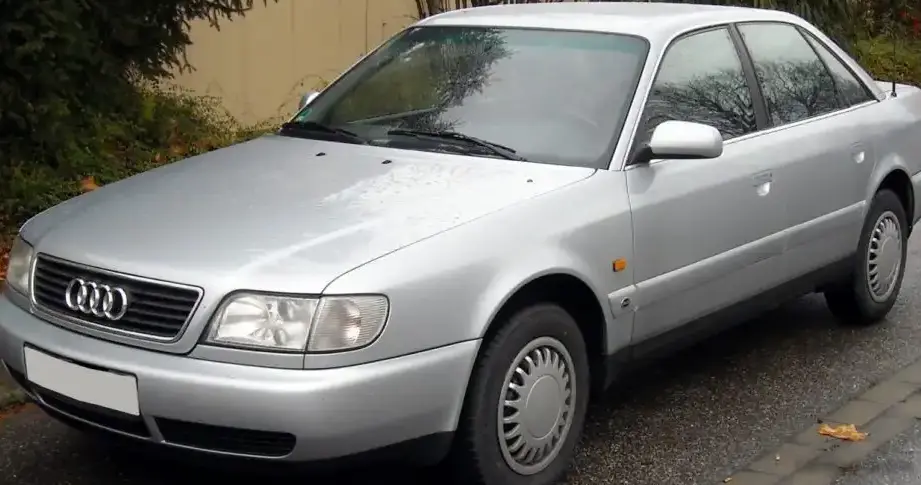
The Audi A6 Avant (4B, C5 facelift) 3.0 V6 quattro, produced from 2001 to 2004, represents a refined iteration of Audi’s mid-size executive wagon. Positioned as a premium offering within the C5 A6 range, this variant combined a potent V6 engine with Audi’s renowned quattro all-wheel-drive system, offering a blend of performance, practicality, and all-weather capability. The facelift brought styling updates and improvements to the interior, solidifying the A6 Avant’s position as a competitor to other luxury wagons like the BMW 5 Series Touring and Mercedes-Benz E-Class Estate. This specific model catered to buyers seeking a more engaging driving experience than the four-cylinder options, while remaining more accessible than the high-performance S6 Avant.
Technical Specifications
| Brand | Audi |
| Model | A6 |
| Generation | A6 Avant (4B,C5, facelift 2001) |
| Type (Engine) | 3.0 V6 (220 Hp) quattro |
| Start of production | 2001 |
| End of production | 2004 |
| Powertrain Architecture | Internal Combustion engine |
| Body type | Station wagon (estate) |
| Seats | 5 |
| Doors | 5 |
| Fuel consumption (urban) | 16 l/100 km (14.7 US mpg, 17.7 UK mpg, 6.3 km/l) |
| Fuel consumption (extra urban) | 8.6 l/100 km (27.4 US mpg, 32.8 UK mpg, 11.6 km/l) |
| Fuel consumption (combined) | 11.3 l/100 km (20.8 US mpg, 25 UK mpg, 8.8 km/l) |
| CO2 emissions | 271 g/km |
| Fuel Type | Petrol (Gasoline) |
| Acceleration 0 – 100 km/h | 7.8 sec |
| Acceleration 0 – 62 mph | 7.8 sec |
| Acceleration 0 – 60 mph | 7.4 sec |
| Maximum speed | 238 km/h (147.89 mph) |
| Emission standard | Euro 4 |
| Weight-to-power ratio | 7.5 kg/Hp, 133.7 Hp/tonne |
| Weight-to-torque ratio | 5.5 kg/Nm, 182.4 Nm/tonne |
| Power | 220 Hp @ 6300 rpm |
| Power per litre | 73.9 Hp/l |
| Torque | 300 Nm @ 3200 rpm (221.27 lb.-ft. @ 3200 rpm) |
| Engine layout | Front, Longitudinal |
| Engine Model/Code | ASN |
| Engine displacement | 2976 cm3 (181.61 cu. in.) |
| Number of cylinders | 6 |
| Engine configuration | V-engine |
| Cylinder Bore | 82.5 mm (3.25 in.) |
| Piston Stroke | 92.8 mm (3.65 in.) |
| Compression ratio | 10.5:1 |
| Number of valves per cylinder | 5 |
| Fuel injection system | Multi-port manifold injection |
| Engine aspiration | Naturally aspirated engine |
| Valvetrain | DOHC |
| Engine oil capacity | 6.5 l (6.87 US qt | 5.72 UK qt) |
| Coolant | 6 l (6.34 US qt | 5.28 UK qt) |
| Kerb Weight | 1645 kg (3626.6 lbs.) |
| Max. weight | 2195 kg (4839.15 lbs.) |
| Max load | 550 kg (1212.54 lbs.) |
| Trunk (boot) space – minimum | 455 l (16.07 cu. ft.) |
| Trunk (boot) space – maximum | 1590 l (56.15 cu. ft.) |
| Fuel tank capacity | 70 l (18.49 US gal | 15.4 UK gal) |
| Max. roof load | 100 kg (220.46 lbs.) |
| Permitted trailer load with brakes (8%) | 2100 kg (4629.71 lbs.) |
| Permitted trailer load with brakes (12%) | 1900 kg (4188.78 lbs.) |
| Permitted trailer load without brakes | 750 kg (1653.47 lbs.) |
| Permitted towbar download | 85 kg (187.39 lbs.) |
| Length | 4796 mm (188.82 in.) |
| Width | 1810 mm (71.26 in.) |
| Height | 1452 mm (57.17 in.) |
| Wheelbase | 2759 mm (108.62 in.) |
| Front track | 1540 mm (60.63 in.) |
| Rear (Back) track | 1569 mm (61.77 in.) |
| Drag coefficient (Cd) | 0.33 |
| Minimum turning circle (turning diameter) | 11.68 m (38.32 ft.) |
| Drive wheel | All wheel drive (4×4) |
| Number of gears and type of gearbox | 6 gears, manual transmission |
| Front suspension | Independent multi-link suspension |
| Rear suspension | Semi-independent, coil spring |
| Front brakes | Ventilated discs |
| Rear brakes | Disc |
| Assisting systems | ABS (Anti-lock braking system) |
| Steering type | Steering rack and pinion |
| Power steering | Hydraulic Steering |
| Tires size | 215/55 R16 |
| Wheel rims size | 7J x 16 |
Powertrain & Engine Architecture
The heart of the A6 Avant 3.0 V6 quattro is the ASN engine, a 2.976-liter naturally aspirated V6. This engine, part of Audi’s long-running V6 family, features a 60-degree V-angle and utilizes a cast iron block with aluminum cylinder heads. The ASN employs multi-port fuel injection and a double overhead camshaft (DOHC) valvetrain with five valves per cylinder (three intake, two exhaust). This configuration contributes to a broad torque curve and responsive power delivery. The engine produces 220 horsepower at 6300 rpm and 300 Nm (221 lb-ft) of torque at 3200 rpm. The engine’s longitudinal mounting and the quattro all-wheel-drive system necessitate a more complex drivetrain layout compared to front-wheel-drive A6 variants. The standard transmission for this model in Europe was a 6-speed manual, though a 5-speed Tiptronic automatic transmission was also available, impacting performance and fuel economy.
Driving Characteristics
The 3.0 V6 quattro A6 Avant offered a noticeably more refined and capable driving experience than the base four-cylinder models. The V6 engine provided ample power for comfortable highway cruising and confident overtaking. While not a sports car, the A6 Avant 3.0 V6 delivered brisk acceleration, achieving 0-60 mph in approximately 7.4 seconds. The quattro all-wheel-drive system provided excellent traction in all weather conditions, enhancing stability and control. The manual transmission offered precise shifts and a more engaging driving experience, while the optional Tiptronic automatic provided convenience, though with a slight performance penalty. The suspension, tuned for comfort, absorbed bumps effectively, providing a smooth ride. However, some body roll was present during aggressive cornering.
Equipment & Trim Levels
The A6 Avant 3.0 V6 quattro typically came well-equipped, reflecting its position as a premium model. Standard features included automatic climate control, power windows and locks, a premium audio system, and alloy wheels. Leather upholstery, sunroof, and heated front seats were common options. The facelifted models (2001 onwards) featured revised interior trim and updated infotainment systems. Audi offered a range of optional packages, allowing buyers to customize their A6 Avant with features such as navigation, parking sensors, and upgraded sound systems. The interior design was characterized by Audi’s typically understated elegance, with high-quality materials and a focus on ergonomics.
Chassis & Braking
The A6 Avant featured an independent multi-link front suspension and a semi-independent rear suspension with coil springs. This setup provided a good balance between ride comfort and handling. The quattro all-wheel-drive system distributed power between the front and rear axles as needed, optimizing traction. Braking duties were handled by ventilated discs at the front and solid discs at the rear, with ABS (Anti-lock Braking System) standard. The braking system provided adequate stopping power for everyday driving, though larger brake rotors were available as an option for improved performance.
Market Reception & Comparison
The Audi A6 Avant 3.0 V6 quattro was generally well-received by automotive critics. It was praised for its refined engine, comfortable ride, and all-weather capability. Compared to the four-cylinder A6 Avant models, the 3.0 V6 offered a significant performance upgrade. However, it was more expensive to purchase and operate, with higher fuel consumption and potentially higher maintenance costs. Compared to the S6 Avant, the 3.0 V6 offered a more balanced blend of performance and practicality, appealing to a wider range of buyers. Fuel economy was rated at around 20.8 US mpg combined, which was typical for a V6-powered wagon of that era.
Legacy
The ASN engine, while generally reliable, is known to be susceptible to oil consumption as it ages. Regular oil level checks and timely maintenance are crucial. The quattro all-wheel-drive system is robust but requires periodic servicing to ensure optimal performance. Today, the A6 Avant 3.0 V6 quattro represents a desirable classic, offering a unique combination of luxury, performance, and practicality. Well-maintained examples command a premium in the used car market, appealing to enthusiasts seeking a refined and capable European wagon.