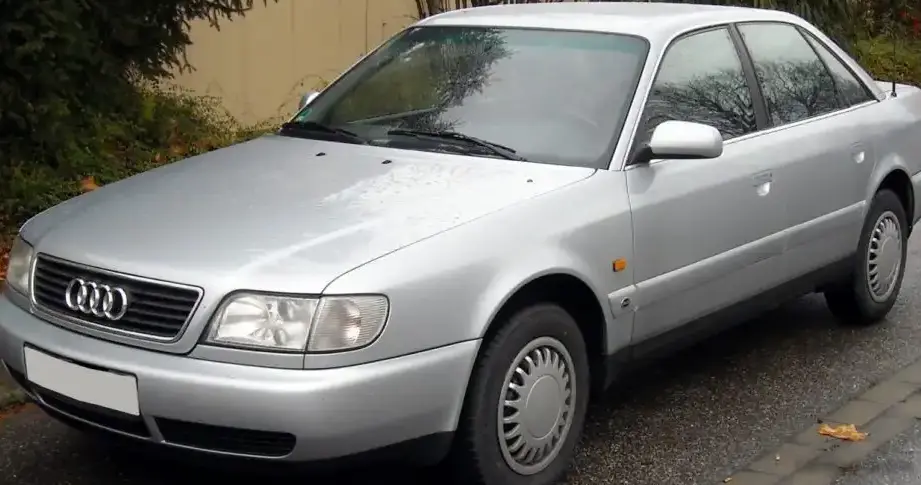
The Audi A6 Avant (4F, C6) 2.0 TFSI, produced between 2005 and 2008, represents a compelling blend of practicality and performance within the mid-size executive wagon segment. Positioned as a key variant within the C6 A6 range – which spanned from 2004 to 2011 – this model offered a more accessible entry point into the A6 Avant lineup compared to the more powerful 3.2 FSI and diesel options. Built on the Audi’s 4F platform (shared with the A4 and Passat), the 2.0 TFSI Avant aimed to deliver a balance of fuel efficiency, respectable power, and the spaciousness expected of a premium estate car. It was primarily marketed in Europe and other markets where wagons maintain significant popularity, offering a sophisticated alternative to traditional sedans and SUVs.
Technical Specifications
| Brand | Audi |
| Model | A6 |
| Generation | A6 Avant (4F,C6) |
| Type (Engine) | 2.0 TFSI (170 Hp) |
| Start of production | 2005 |
| End of production | 2008 |
| Powertrain Architecture | Internal Combustion engine |
| Body type | Station wagon (estate) |
| Seats | 5 |
| Doors | 5 |
| Fuel consumption (economy) – urban | 11 l/100 km (21.4 US mpg, 25.7 UK mpg, 9.1 km/l) |
| Fuel consumption (economy) – extra urban | 6.4 l/100 km (36.8 US mpg, 44.1 UK mpg, 15.6 km/l) |
| Fuel consumption (economy) – combined | 8.1 l/100 km (29 US mpg, 34.9 UK mpg, 12.3 km/l) |
| CO2 emissions | 194 g/km |
| Fuel Type | Petrol (Gasoline) |
| Acceleration 0 – 100 km/h | 8.7 sec |
| Acceleration 0 – 62 mph | 8.7 sec |
| Acceleration 0 – 60 mph | 8.3 sec |
| Maximum speed | 223 km/h (138.57 mph) |
| Emission standard | Euro 4 |
| Weight-to-power ratio | 9.4 kg/Hp, 106.9 Hp/tonne |
| Weight-to-torque ratio | 5.7 kg/Nm, 176.1 Nm/tonne |
| Power | 170 Hp @ 4300-6000 rpm |
| Power per litre | 85.7 Hp/l |
| Torque | 280 Nm @ 1800-4200 rpm (206.52 lb.-ft. @ 1800-4200 rpm) |
| Engine layout | Front, Longitudinal |
| Engine Model/Code | BPJ, BYK |
| Engine displacement | 1984 cm3 (121.07 cu. in.) |
| Number of cylinders | 4 |
| Engine configuration | Inline |
| Cylinder Bore | 82.5 mm (3.25 in.) |
| Piston Stroke | 92.8 mm (3.65 in.) |
| Compression ratio | 10.3:1 |
| Number of valves per cylinder | 4 |
| Fuel injection system | Direct injection |
| Engine aspiration | Turbocharger, Intercooler |
| Valvetrain | DOHC |
| Engine oil capacity | 4.5 l (4.76 US qt | 3.96 UK qt) |
| Coolant | 9.7 l (10.25 US qt | 8.53 UK qt) |
| Kerb Weight | 1590 kg (3505.35 lbs.) |
| Max. weight | 2220 kg (4894.26 lbs.) |
| Max load | 630 kg (1388.91 lbs.) |
| Trunk (boot) space – minimum | 565 l (19.95 cu. ft.) |
| Trunk (boot) space – maximum | 1660 l (58.62 cu. ft.) |
| Fuel tank capacity | 70 l (18.49 US gal | 15.4 UK gal) |
| Max. roof load | 100 kg (220.46 lbs.) |
| Permitted trailer load with brakes (8%) | 1600 kg (3527.4 lbs.) |
| Permitted trailer load with brakes (12%) | 1400 kg (3086.47 lbs.) |
| Permitted trailer load without brakes | 750 kg (1653.47 lbs.) |
| Permitted towbar download | 85 kg (187.39 lbs.) |
| Length | 4933 mm (194.21 in.) |
| Width | 1855 mm (73.03 in.) |
| Height | 1463 mm (57.6 in.) |
| Wheelbase | 2843 mm (111.93 in.) |
| Front track | 1612 mm (63.46 in.) |
| Rear (Back) track | 1618 mm (63.7 in.) |
| Drag coefficient (Cd) | 0.31 |
| Minimum turning circle (turning diameter) | 11.9 m (39.04 ft.) |
| Drivetrain Architecture | The Internal combustion engine (ICE) drives the front wheels of the vehicle. |
| Drive wheel | Front wheel drive |
| Number of gears and type of gearbox | 6 gears, manual transmission |
| Front suspension | Independent multi-link suspension |
| Rear suspension | Independent on trapezoidal lever |
| Front brakes | Ventilated discs |
| Rear brakes | Disc |
| Assisting systems | ABS (Anti-lock braking system) |
| Steering type | Steering rack and pinion |
| Tires size | 205/60 R16 |
| Wheel rims size | 7J x 16 |
Powertrain & Engine Architecture
The heart of the A6 Avant 2.0 TFSI is the 1.984-liter inline-four cylinder engine, designated as either BPJ or BYK depending on minor revisions and production date. This engine belongs to Audi’s EA888 family, known for its robust design and potential for tuning. The “TFSI” designation signifies Turbocharged Fuel Stratified Injection, a direct-injection system that precisely meters fuel into the cylinders for improved efficiency and power. The engine utilizes a single turbocharger with an intercooler to increase air density, boosting output. The valvetrain employs a Dual Overhead Camshaft (DOHC) configuration with four valves per cylinder, optimizing gas flow. The engine’s control unit manages fuel injection, ignition timing, and turbocharger boost pressure. The 2.0 TFSI was typically paired with a six-speed manual transmission, although a continuously variable transmission (CVT) – marketed as ‘Multitronic’ by Audi – was also available as an option. The Multitronic offered smoother shifts and improved fuel economy, but was sometimes criticized for a less engaging driving experience.
Driving Characteristics
The 170 hp and 280 Nm (206 lb-ft) of torque delivered by the 2.0 TFSI engine provided adequate performance for everyday driving. Acceleration from 0 to 62 mph (0-100 km/h) took approximately 8.7 seconds, making it competitive within its class. While not as exhilarating as the higher-powered V6 variants, the 2.0 TFSI offered a more responsive and fuel-efficient experience. The engine’s torque curve was relatively flat, providing good pulling power across a wide rev range. The manual transmission offered precise shifts, while the optional Multitronic CVT provided seamless acceleration. Compared to the 3.2 FSI, the 2.0 TFSI felt less powerful, particularly at higher speeds. However, it offered a more balanced driving experience, with less understeer and a more manageable power delivery. The front-wheel-drive configuration contributed to good traction in most conditions, but could exhibit torque steer under hard acceleration.
Equipment & Trim Levels
The A6 Avant 2.0 TFSI typically came equipped with a generous level of standard features, reflecting Audi’s premium positioning. These included automatic climate control, a CD stereo system, alloy wheels, and electric windows. Higher trim levels, such as SE or Sport, added features like leather upholstery, parking sensors, and upgraded audio systems. Optional extras included a sunroof, navigation system, and advanced driver-assistance systems. Interior upholstery was typically cloth on base models, with leather available as an upgrade. The dashboard layout was characterized by Audi’s clean and functional design, with intuitive controls and high-quality materials.
Chassis & Braking
The A6 Avant 2.0 TFSI featured an independent suspension system on all four wheels, providing a comfortable and controlled ride. The front suspension utilized a multi-link setup, while the rear employed a trapezoidal link design. Stabilizer bars were fitted to both axles to reduce body roll during cornering. Braking duties were handled by ventilated discs at the front and solid discs at the rear, with ABS (Anti-lock Braking System) as standard. The braking system provided ample stopping power for everyday driving, although the rear disc brakes were smaller than those found on the more powerful A6 variants.
Market Reception & Comparison
The Audi A6 Avant 2.0 TFSI was generally well-received by automotive critics. It was praised for its blend of practicality, performance, and fuel efficiency. Compared to its rivals, such as the BMW 3 Series Touring and Mercedes-Benz C-Class Estate, the A6 Avant offered a more spacious interior and a more refined driving experience. Fuel economy was competitive, with combined figures around 8.1 l/100 km (29 US mpg). Reliability was generally good, although some owners reported issues with the turbocharger and direct-injection system. The 2.0 TFSI offered a more affordable entry point into the A6 Avant range compared to the more powerful V6 models, making it an attractive option for buyers seeking a premium estate car without the higher price tag.
Legacy
The 2.0 TFSI engine proved to be a durable and reliable powerplant when properly maintained. Today, used examples of the A6 Avant 2.0 TFSI are readily available and represent a good value proposition for buyers seeking a spacious and well-equipped estate car. Regular maintenance, including oil changes and timing belt replacements, is crucial to ensure long-term reliability. The engine’s direct-injection system can be prone to carbon buildup over time, so periodic cleaning may be necessary. Overall, the A6 Avant 2.0 TFSI remains a popular choice among enthusiasts and practical drivers alike, offering a compelling combination of German engineering, practicality, and affordability.