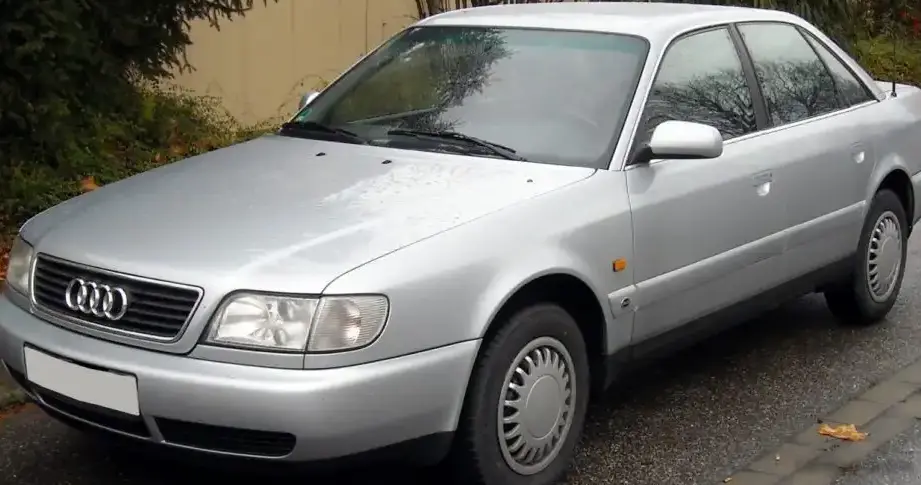
The Audi A6 Avant (4F, C6) 2.7 TDI V6, produced between 2004 and 2008, represents a compelling blend of practicality, performance, and luxury within the mid-size executive wagon segment. Positioned as a diesel-powered alternative within the C6 A6 range – which spanned from 2004 to 2011 – this variant offered a sophisticated and efficient option for buyers prioritizing space and long-distance comfort. It was a key offering in the European market, where wagons (Avants in Audi terminology) held significant popularity, and represented a step up in performance and refinement from the entry-level 1.9 TDI models, while remaining more accessible than the flagship 4.2-liter V8. This model utilized the Audi’s longitudinally-mounted engine layout and front-wheel drive configuration, a common setup for the A6 range.
Technical Specifications
| Brand | Audi |
| Model | A6 |
| Generation | A6 Avant (4F,C6) |
| Type (Engine) | 2.7 TDI V6 (180 Hp) |
| Start of production | 2004 |
| End of production | 2008 |
| Powertrain Architecture | Internal Combustion engine |
| Body type | Station wagon (estate) |
| Seats | 5 |
| Doors | 5 |
| Fuel consumption (urban) | 9.8 l/100 km (24 US mpg, 28.8 UK mpg, 10.2 km/l) |
| Fuel consumption (extra urban) | 5.4 l/100 km (43.6 US mpg, 52.3 UK mpg, 18.5 km/l) |
| Fuel consumption (combined) | 7 l/100 km (33.6 US mpg, 40.4 UK mpg, 14.3 km/l) |
| CO2 emissions | 187 g/km |
| Fuel Type | Diesel |
| Acceleration 0 – 100 km/h | 8.3 sec |
| Acceleration 0 – 62 mph | 8.3 sec |
| Acceleration 0 – 60 mph | 7.9 sec |
| Maximum speed | 225 km/h (139.81 mph) |
| Emission standard | Euro 4 |
| Weight-to-power ratio | 9.4 kg/Hp, 106.2 Hp/tonne |
| Weight-to-torque ratio | 4.5 kg/Nm, 224.2 Nm/tonne |
| Power | 180 Hp @ 3300-4250 rpm |
| Power per litre | 66.7 Hp/l |
| Torque | 380 Nm @ 1400-3300 rpm (280.27 lb.-ft. @ 1400-3300 rpm) |
| Engine layout | Front, Longitudinal |
| Engine Model/Code | BPP |
| Engine displacement | 2698 cm3 (164.64 cu. in.) |
| Number of cylinders | 6 |
| Engine configuration | V-engine |
| Cylinder Bore | 83 mm (3.27 in.) |
| Piston Stroke | 83.1 mm (3.27 in.) |
| Compression ratio | 17:1 |
| Number of valves per cylinder | 4 |
| Fuel injection system | Diesel Commonrail |
| Engine aspiration | Turbocharger, Intercooler |
| Valvetrain | DOHC |
| Engine oil capacity | 8.2 l (8.66 US qt | 7.21 UK qt) |
| Coolant | 12 l (12.68 US qt | 10.56 UK qt) |
| Kerb Weight | 1695 kg (3736.84 lbs.) |
| Max. weight | 2325 kg (5125.75 lbs.) |
| Max load | 630 kg (1388.91 lbs.) |
| Trunk (boot) space – minimum | 565 l (19.95 cu. ft.) |
| Trunk (boot) space – maximum | 1660 l (58.62 cu. ft.) |
| Fuel tank capacity | 70 l (18.49 US gal | 15.4 UK gal) |
| Max. roof load | 100 kg (220.46 lbs.) |
| Permitted trailer load with brakes (8%) | 1900 kg (4188.78 lbs.) |
| Permitted trailer load with brakes (12%) | 1700 kg (3747.86 lbs.) |
| Permitted trailer load without brakes | 750 kg (1653.47 lbs.) |
| Permitted towbar download | 85 kg (187.39 lbs.) |
| Length | 4933 mm (194.21 in.) |
| Width | 1855 mm (73.03 in.) |
| Height | 1463 mm (57.6 in.) |
| Wheelbase | 2843 mm (111.93 in.) |
| Front track | 1612 mm (63.46 in.) |
| Rear (Back) track | 1618 mm (63.7 in.) |
| Drag coefficient (Cd) | 0.32 |
| Minimum turning circle | 11.9 m (39.04 ft.) |
| Drivetrain Architecture | The Internal combustion engine (ICE) drives the front wheels of the vehicle. |
| Drive wheel | Front wheel drive |
| Number of gears and type of gearbox | 6 gears, manual transmission |
| Front suspension | Independent multi-link suspension |
| Rear suspension | Independent on trapezoidal lever |
| Front brakes | Ventilated discs |
| Rear brakes | Disc |
| Assisting systems | ABS (Anti-lock braking system) |
| Steering type | Steering rack and pinion |
| Tires size | 225/55 R16 |
| Wheel rims size | 7.5J x 16 |
Powertrain & Engine Architecture
The heart of the A6 Avant 2.7 TDI is the BPP engine code, a 2.7-liter V6 diesel engine. This engine is a member of the Volkswagen Group’s family of V6 TDI engines, known for their robust construction and relatively smooth operation. It features a cast iron block and aluminum cylinder heads, employing a double overhead camshaft (DOHC) valvetrain with four valves per cylinder. The engine utilizes a common rail direct injection system, delivering fuel at extremely high pressures for optimized combustion. A variable geometry turbocharger (VGT) and intercooler are employed to boost power and improve efficiency. The 2.7 TDI produced 180 horsepower at 3300-4250 rpm and a substantial 380 Nm (280 lb-ft) of torque between 1400 and 3300 rpm. The engine is longitudinally mounted, driving the front wheels through a six-speed manual transmission. While an automatic transmission was available, the manual was a common choice for those prioritizing fuel economy and a more engaging driving experience.
Driving Characteristics
The 2.7 TDI Avant offered a compelling balance of performance and economy. Acceleration from 0-60 mph took approximately 7.9 seconds, making it reasonably quick for a wagon of its size. The broad torque curve meant that strong acceleration was available from low engine speeds, making it particularly well-suited for overtaking and effortless cruising on highways. Compared to the more powerful 3.0 TDI and 4.2 V8 models, the 2.7 TDI felt less overtly sporty, but its lighter weight and efficient engine contributed to a more nimble and responsive feel. The six-speed manual transmission provided precise gear changes, allowing drivers to fully exploit the engine’s torque. The front-wheel-drive configuration, while contributing to fuel efficiency, could exhibit some torque steer under hard acceleration.
Equipment & Trim Levels
The A6 Avant 2.7 TDI typically came well-equipped, reflecting Audi’s reputation for interior quality and technology. Standard features often included automatic climate control, a multi-function steering wheel, power windows and mirrors, and a premium audio system. Upholstery was typically a high-quality cloth, with leather options available as an upgrade. Optional extras included a sunroof, navigation system, parking sensors, and upgraded alloy wheels. Trim levels varied by market, but generally, the 2.7 TDI sat in the mid-range of the A6 Avant lineup, offering a good balance of features and price.
Chassis & Braking
The C6 A6 Avant featured an independent suspension system all around, with a multi-link setup at the front and a trapezoidal link arrangement at the rear. This provided a comfortable ride quality and good handling characteristics. The 2.7 TDI models typically came equipped with ventilated front disc brakes and solid rear discs. Anti-lock Braking System (ABS) was standard. Stabilizer bars were fitted front and rear to reduce body roll during cornering. The suspension tuning was geared towards comfort, but the A6 Avant still offered a secure and predictable driving experience.
Market Reception & Comparison
The Audi A6 Avant 2.7 TDI was generally well-received by automotive critics. It was praised for its spacious interior, comfortable ride, and efficient engine. Compared to the 1.9 TDI, the 2.7 TDI offered a significant performance upgrade without a substantial increase in fuel consumption. Against the 3.0 TDI, it represented a more affordable option, albeit with slightly less power. Fuel economy was a strong point, with combined figures around 7.0 l/100 km (33.6 US mpg), making it an attractive option for high-mileage drivers. Reliability was generally good, although, like all modern diesels, it was susceptible to issues with the diesel particulate filter (DPF) and turbocharger if not properly maintained.
Legacy
The Audi A6 Avant 2.7 TDI (4F, C6) remains a popular choice in the used car market, particularly in Europe. Its combination of practicality, comfort, and efficiency continues to appeal to buyers. The BPP engine, while requiring regular maintenance, is generally considered durable. However, potential buyers should be aware of the potential for DPF and turbocharger issues, and ensure that the vehicle has been properly serviced. The C6 A6 Avant, and particularly the 2.7 TDI variant, represents a refined and capable executive wagon that has stood the test of time.