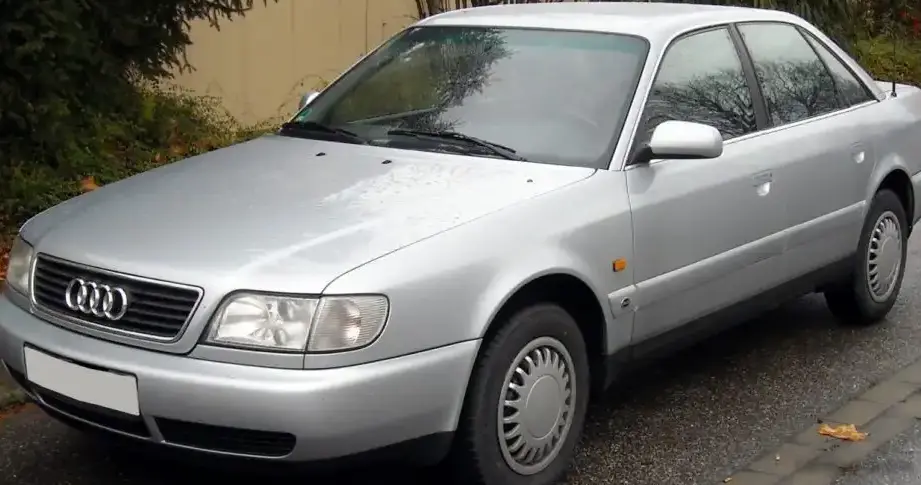
The Audi A6 Avant (4F, C6) 2.7 TDI V6 with the Multitronic transmission, produced from 2006 to 2008, represents a compelling blend of practicality, performance, and technology within the mid-size executive wagon segment. Positioned as a mid-range offering in the A6 Avant lineup, it slotted between the more economical 2.0 TDI models and the higher-performance 3.2 FSI and 4.2 TDI variants. This particular configuration aimed to provide a balance of fuel efficiency and usable power for long-distance touring and everyday family duties, appealing to buyers who prioritized refinement and versatility. The 4F chassis generation, introduced in 2004, brought significant advancements in interior quality, technology, and driving dynamics compared to its predecessor.
Technical Specifications
| Brand | Audi |
| Model | A6 |
| Generation | A6 Avant (4F,C6) |
| Type (Engine) | 2.7 TDI V6 (180 Hp) Multitronic |
| Start of production | 2006 |
| End of production | 2008 |
| Powertrain Architecture | Internal Combustion engine |
| Body type | Station wagon (estate) |
| Seats | 5 |
| Doors | 5 |
| Fuel consumption (urban) | 10.0-10.4 l/100 km (23.5 – 22.6 US mpg, 28.2 – 27.2 UK mpg, 10 – 9.6 km/l) |
| Fuel consumption (extra urban) | 5.7-5.9 l/100 km (41.3 – 39.9 US mpg, 49.6 – 47.9 UK mpg, 17.5 – 16.9 km/l) |
| Fuel consumption (combined) | 7.3-7.6 l/100 km (32.2 – 30.9 US mpg, 38.7 – 37.2 UK mpg, 13.7 – 13.2 km/l) |
| CO2 emissions | 195 – 203 g/km |
| Fuel Type | Diesel |
| Acceleration 0 – 100 km/h | 8.5 sec |
| Acceleration 0 – 62 mph | 8.5 sec |
| Acceleration 0 – 60 mph | 8.1 sec |
| Maximum speed | 220 km/h (136.7 mph) |
| Emission standard | Euro 4 |
| Weight-to-power ratio | 9.6 kg/Hp, 104.3 Hp/tonne |
| Weight-to-torque ratio | 4.5 kg/Nm, 220.3 Nm/tonne |
| Power | 180 Hp @ 3300-4250 rpm |
| Power per litre | 66.7 Hp/l |
| Torque | 380 Nm @ 1400-3300 rpm (280.27 lb.-ft. @ 1400-3300 rpm) |
| Engine layout | Front, Longitudinal |
| Engine Model/Code | BPP |
| Engine displacement | 2698 cm3 (164.64 cu. in.) |
| Number of cylinders | 6 |
| Engine configuration | V-engine |
| Cylinder Bore | 83 mm (3.27 in.) |
| Piston Stroke | 83.1 mm (3.27 in.) |
| Compression ratio | 17:1 |
| Number of valves per cylinder | 4 |
| Fuel injection system | Diesel Commonrail |
| Engine aspiration | Turbocharger, Intercooler |
| Valvetrain | DOHC |
| Engine oil capacity | 8.2 l (8.66 US qt | 7.21 UK qt) |
| Coolant | 12 l (12.68 US qt | 10.56 UK qt) |
| Kerb Weight | 1725 kg (3802.97 lbs.) |
| Max. weight | 2355 kg (5191.89 lbs.) |
| Max load | 630 kg (1388.91 lbs.) |
| Trunk (boot) space – minimum | 565 l (19.95 cu. ft.) |
| Trunk (boot) space – maximum | 1660 l (58.62 cu. ft.) |
| Fuel tank capacity | 70 l (18.49 US gal | 15.4 UK gal) |
| Max. roof load | 100 kg (220.46 lbs.) |
| Permitted trailer load with brakes (8%) | 1900 kg (4188.78 lbs.) |
| Permitted trailer load with brakes (12%) | 1800 kg (3968.32 lbs.) |
| Permitted trailer load without brakes | 750 kg (1653.47 lbs.) |
| Permitted towbar download | 85 kg (187.39 lbs.) |
| Length | 4933 mm (194.21 in.) |
| Width | 1855 mm (73.03 in.) |
| Height | 1463 mm (57.6 in.) |
| Wheelbase | 2843 mm (111.93 in.) |
| Front track | 1612 mm (63.46 in.) |
| Rear (Back) track | 1618 mm (63.7 in.) |
| Drag coefficient (Cd) | 0.32 |
| Minimum turning circle (turning diameter) | 11.9 m (39.04 ft.) |
| Drivetrain Architecture | The Internal combustion engine (ICE) drives the front wheels of the vehicle. |
| Drive wheel | Front wheel drive |
| Number of gears and type of gearbox | automatic transmission Multitronic |
| Front suspension | Independent multi-link suspension |
| Rear suspension | Independent on trapezoidal lever |
| Front brakes | Ventilated discs |
| Rear brakes | Disc |
| Assisting systems | ABS (Anti-lock braking system) |
| Steering type | Steering rack and pinion |
| Tires size | 225/55 R16 |
| Wheel rims size | 7.5J x 16 |
Powertrain & Engine Architecture
The heart of this A6 Avant is the 2.7-liter V6 diesel engine, designated the BPP code. This engine is a longitudinally mounted, 24-valve (four valves per cylinder) unit featuring a cast iron block and aluminum cylinder heads. It utilizes a second-generation common rail direct injection system, delivering fuel at extremely high pressures for optimized combustion. A variable geometry turbocharger (VGT) with an intercooler is employed to boost power and torque across a wide rev range. The engine’s output of 180 horsepower at 3300-4250 rpm and 380 Nm (280 lb-ft) of torque between 1400-3300 rpm provides strong, usable performance. The Multitronic transmission is a continuously variable transmission (CVT) offering smooth, stepless gear changes. It uses a chain-driven belt instead of traditional gears, providing a wide range of ratios for optimal efficiency and performance.
Driving Characteristics
The 2.7 TDI with the Multitronic transmission delivers a refined and comfortable driving experience. While not as overtly sporty as the higher-powered variants, the 180 hp engine provides ample power for everyday driving and overtaking maneuvers. The Multitronic transmission contributes to smooth acceleration and helps to keep the engine in its optimal power band. Compared to the six-speed manual transmission available on other A6 models, the Multitronic prioritizes comfort and ease of use over outright driver engagement. The gear ratios are tuned for fuel efficiency, and the transmission adapts to driving style, offering both automatic and manual shift modes. Acceleration from 0-60 mph takes approximately 8.1 seconds, making it a competitive performer in its class.
Equipment & Trim Levels
The 2.7 TDI Multitronic A6 Avant typically came well-equipped, reflecting Audi’s reputation for interior quality and technology. Standard features included automatic climate control, a multi-function steering wheel, power windows and mirrors, and a premium audio system. Upholstery was generally cloth or a combination of cloth and leather. Optional extras included leather seats, a sunroof, navigation system, parking sensors, and upgraded alloy wheels. Trim levels varied slightly depending on the market, but generally, this engine/transmission combination represented a mid-range offering, providing a good balance of features and price.
Chassis & Braking
The A6 Avant (4F) features a sophisticated chassis design with independent suspension all around. The front suspension utilizes a multi-link setup, while the rear employs a trapezoidal link arrangement. This configuration provides a comfortable ride and good handling characteristics. The 2.7 TDI models typically came equipped with ventilated front disc brakes and solid rear discs. Anti-lock Braking System (ABS) was standard, enhancing safety and stability. Stabilizer bars were fitted front and rear to reduce body roll during cornering.
Market Reception & Comparison
The Audi A6 Avant 2.7 TDI Multitronic was generally well-received by automotive critics. It was praised for its refined engine, comfortable ride, and spacious interior. The Multitronic transmission was appreciated for its smoothness, although some reviewers noted a lack of driver engagement compared to a traditional manual gearbox. Compared to the 2.0 TDI models, the 2.7 TDI offered significantly more power and torque, making it a better choice for long-distance driving and towing. However, it was less fuel-efficient and more expensive to purchase. Compared to the higher-powered 3.2 FSI and 4.2 TDI variants, the 2.7 TDI offered a more affordable entry point into the A6 Avant range, while still providing a premium driving experience.
Legacy
The BPP 2.7 TDI engine, when properly maintained, has proven to be a relatively reliable unit. However, like all diesel engines, it is susceptible to issues related to the fuel injection system and turbocharger. The Multitronic transmission requires regular fluid changes to ensure longevity. In the used car market, the A6 Avant 2.7 TDI Multitronic remains a popular choice for buyers seeking a practical, comfortable, and well-equipped wagon. Its combination of performance, fuel efficiency, and refinement continues to appeal to a wide range of drivers. Finding well-maintained examples with a complete service history is crucial to avoid potential issues.