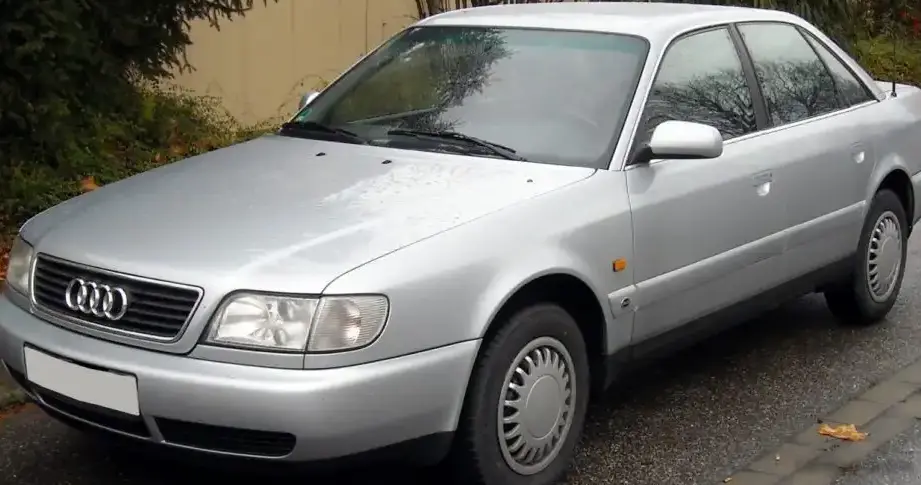
Technical Specifications
| Brand | Audi |
| Model | A6 |
| Generation | A6 Avant (4F,C6 facelift 2008) |
| Type (Engine) | 2.7 TDI V6 (190 Hp) |
| Start of production | September, 2008 |
| End of production | August, 2011 |
| Powertrain Architecture | Internal Combustion engine |
| Body type | Station wagon (estate) |
| Seats | 5 |
| Doors | 5 |
| Fuel consumption (economy) – urban | 8.3 l/100 km (28.3 US mpg, 34 UK mpg, 12 km/l) |
| Fuel consumption (economy) – extra urban | 5 l/100 km (47 US mpg, 56.5 UK mpg, 20 km/l) |
| Fuel consumption (economy) – combined | 6.2 l/100 km (37.9 US mpg, 45.6 UK mpg, 16.1 km/l) |
| CO2 emissions | 164 g/km |
| Fuel Type | Diesel |
| Acceleration 0 – 100 km/h | 8.2 sec |
| Acceleration 0 – 62 mph | 8.2 sec |
| Acceleration 0 – 60 mph | 7.8 sec |
| Maximum speed | 228 km/h (141.67 mph) |
| Emission standard | Euro 5 |
| Weight-to-power ratio | 9.1 kg/Hp, 110.5 Hp/tonne |
| Weight-to-torque ratio | 4.5 kg/Nm, 220.9 Nm/tonne |
| Power | 190 Hp @ 3500-4400 rpm |
| Power per litre | 70.4 Hp/l |
| Torque | 380 Nm @ 1400-3500 rpm (280.27 lb.-ft. @ 1400-3500 rpm) |
| Engine layout | Front, Longitudinal |
| Engine Model/Code | CANA, CANC |
| Engine displacement | 2698 cm3 (164.64 cu. in.) |
| Number of cylinders | 6 |
| Engine configuration | V-engine |
| Cylinder Bore | 83 mm (3.27 in.) |
| Piston Stroke | 83.1 mm (3.27 in.) |
| Compression ratio | 16.8:1 |
| Number of valves per cylinder | 4 |
| Fuel injection system | Diesel Commonrail |
| Engine aspiration | Turbocharger, Intercooler |
| Valvetrain | DOHC |
| Engine oil capacity | 8.2 l (8.66 US qt | 7.21 UK qt) |
| Kerb Weight | 1720 kg (3791.95 lbs.) |
| Max. weight | 2350 kg (5180.86 lbs.) |
| Max load | 630 kg (1388.91 lbs.) |
| Trunk (boot) space – minimum | 565 l (19.95 cu. ft.) |
| Trunk (boot) space – maximum | 1660 l (58.62 cu. ft.) |
| Fuel tank capacity | 70 l (18.49 US gal | 15.4 UK gal) |
| Max. roof load | 100 kg (220.46 lbs.) |
| Permitted trailer load with brakes (8%) | 1800 kg (3968.32 lbs.) |
| Permitted trailer load with brakes (12%) | 1600 kg (3527.4 lbs.) |
| Permitted trailer load without brakes | 750 kg (1653.47 lbs.) |
| Permitted towbar download | 85 kg (187.39 lbs.) |
| Length | 4927 mm (193.98 in.) |
| Width | 1855 mm (73.03 in.) |
| Height | 1463 mm (57.6 in.) |
| Wheelbase | 2843 mm (111.93 in.) |
| Front track | 1612 mm (63.46 in.) |
| Rear (Back) track | 1618 mm (63.7 in.) |
| Drag coefficient (Cd) | 0.32 |
| Minimum turning circle (turning diameter) | 11.9 m (39.04 ft.) |
| Drivetrain Architecture | The Internal combustion engine (ICE) drives the front wheels of the vehicle. |
| Drive wheel | Front wheel drive |
| Number of gears and type of gearbox | 6 gears, manual transmission |
| Front suspension | Independent multi-link suspension |
| Rear suspension | Independent on trapezoidal lever |
| Front brakes | Ventilated discs |
| Rear brakes | Disc |
| Assisting systems | ABS (Anti-lock braking system) |
| Steering type | Steering rack and pinion |
| Tires size | 225/55 R16 |
| Wheel rims size | 7.5J x 16 |
The Audi A6 Avant (4F, C6 facelift) 2.7 TDI V6, launched in 2008, was a key component of Audi’s strategy to offer a comprehensive range of A6 models catering to diverse customer needs. The C6 generation A6, produced from 2004 to 2011, received a significant facelift in 2008, bringing with it revised styling, updated interior features, and improvements to the engine lineup. The 2.7 TDI V6 variant, equipped with either a manual or automatic transmission, was positioned as a compelling alternative to the more common 2.0 TDI, offering increased performance and refinement without the higher price tag of the 3.0 TDI. It aimed to appeal to buyers seeking a practical, comfortable, and relatively efficient wagon for long-distance travel and everyday use.
Powertrain & Engine Architecture
At the heart of the A6 Avant 2.7 TDI lies the CANA or CANC engine code, a 2.7-liter V6 diesel engine. This engine utilizes a common rail direct injection system, delivering fuel at extremely high pressure for optimized combustion. The engine features a single turbocharger with an intercooler, boosting power and torque. The valvetrain employs a double overhead camshaft (DOHC) design with four valves per cylinder, contributing to efficient gas exchange. The 2.7 TDI produces 190 horsepower at 3500-4400 rpm and a substantial 380 Nm (280 lb-ft) of torque between 1400 and 3500 rpm. This broad torque curve provides strong acceleration and effortless cruising. The engine is longitudinally mounted in the front of the vehicle. While a six-speed manual transmission was available, the automatic transmission option was a popular choice, typically a six-speed Tiptronic unit offering both automatic shifting and manual control via steering wheel-mounted paddles or the gear selector.
Driving Characteristics
The 2.7 TDI V6 automatic combination in the A6 Avant delivered a refined and capable driving experience. The ample torque allowed for brisk acceleration, with 0-60 mph times around 7.8 seconds. The automatic transmission, while not as sporty as some dual-clutch alternatives, provided smooth and predictable gear changes. The gear ratios were tuned for a balance of performance and fuel efficiency, with a relatively tall final drive contributing to relaxed highway cruising. Compared to the 2.0 TDI, the 2.7 TDI offered noticeably more power and a more relaxed feel, particularly when fully loaded or tackling inclines. However, it didn’t possess the outright performance of the 3.0 TDI, which offered significantly more horsepower and torque. The A6 Avant’s front-wheel-drive configuration provided good traction in most conditions, although it could exhibit some torque steer under hard acceleration.
Equipment & Trim Levels
The A6 Avant 2.7 TDI V6 typically came well-equipped, reflecting Audi’s reputation for luxury and technology. Standard features often included automatic climate control, a multi-function steering wheel, power-adjustable front seats, and an Audi Concert audio system. Upholstery was typically a high-quality cloth, with leather options available as an upgrade. Optional extras included a navigation system, sunroof, parking sensors, and advanced driver-assistance systems. Trim levels varied by market, but generally offered progressively more luxurious appointments and features. The SE trim, common in the UK, focused on comfort and convenience, while the S-line trim added sporty styling cues and firmer suspension.
Chassis & Braking
The A6 Avant’s chassis featured an independent multi-link suspension at the front and an independent trapezoidal link suspension at the rear, providing a comfortable and controlled ride. Stabilizer bars were fitted front and rear to reduce body roll during cornering. Braking duties were handled by ventilated discs at the front and solid discs at the rear, equipped with ABS (Anti-lock Braking System). The suspension tuning was geared towards comfort, prioritizing ride quality over outright sportiness. The steering utilized a rack and pinion system, offering precise and responsive control.
Market Reception & Comparison
The Audi A6 Avant 2.7 TDI V6 was generally well-received by automotive critics. It was praised for its refined engine, comfortable ride, and spacious interior. Fuel economy was considered good for a vehicle of its size and performance, averaging around 38 mpg in combined driving. Compared to the 2.0 TDI, the 2.7 TDI offered a significant improvement in performance and refinement, justifying the higher price. However, some critics noted that the automatic transmission could feel slightly sluggish at times, and the front-wheel-drive configuration limited its dynamic capabilities compared to quattro all-wheel-drive models. Reliability was generally good, although diesel particulate filter (DPF) issues could occur with infrequent long-distance driving.
Legacy
The Audi A6 Avant 2.7 TDI V6 remains a popular choice in the used car market, particularly for buyers seeking a practical and comfortable wagon with strong performance and good fuel economy. The 2.7 TDI engine, while not without its potential issues (such as DPF clogging and timing chain wear), is generally considered robust and reliable when properly maintained. Parts availability is good, and the A6 Avant’s build quality ensures that many examples are still in excellent condition today. Its blend of luxury, practicality, and diesel efficiency continues to appeal to a wide range of buyers, solidifying its place as a well-regarded executive wagon.