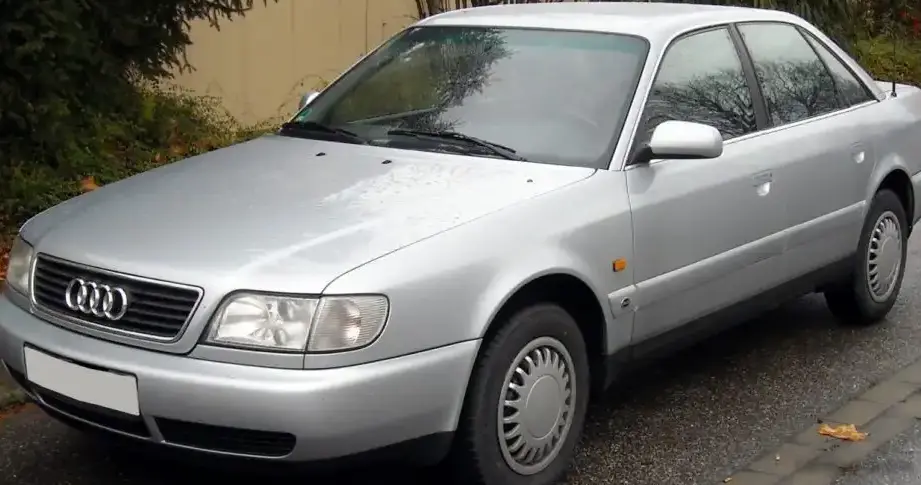
The Audi A6 Avant (4F, C6 facelift) 3.0 TFSI quattro Tiptronic, produced from September 2008 to 2011, represents a compelling blend of performance, practicality, and luxury within the Audi A6 range. This variant, positioned as a premium offering, combined Audi’s renowned quattro all-wheel drive system with a potent supercharged 3.0-liter V6 engine and a six-speed Tiptronic automatic transmission. It served as a flagship estate car, appealing to buyers seeking a spacious, capable vehicle with strong acceleration and a refined driving experience. The C6 facelift brought updated styling, improved technology, and enhanced efficiency compared to the pre-facelift models.
Technical Specifications
| Brand | Audi |
| Model | A6 |
| Generation | A6 Avant (4F,C6 facelift 2008) |
| Type (Engine) | 3.0 TFSI V6 (290 Hp) quattro Tiptronic |
| Start of production | September, 2008 |
| End of production | 2011 |
| Powertrain Architecture | Internal Combustion engine |
| Body type | Station wagon (estate) |
| Seats | 5 |
| Doors | 5 |
| Fuel consumption (economy) – urban | 13.3 l/100 km (17.7 US mpg, 21.2 UK mpg, 7.5 km/l) |
| Fuel consumption (economy) – extra urban | 7.2 l/100 km (32.7 US mpg, 39.2 UK mpg, 13.9 km/l) |
| Fuel consumption (economy) – combined | 9.5 l/100 km (24.8 US mpg, 29.7 UK mpg, 10.5 km/l) |
| CO2 emissions | 223 g/km |
| Fuel Type | Petrol (Gasoline) |
| Acceleration 0 – 100 km/h | 6.1 sec |
| Acceleration 0 – 62 mph | 6.1 sec |
| Acceleration 0 – 60 mph | 5.8 sec |
| Maximum speed | 250 km/h (155.34 mph) |
| Emission standard | Euro 5 |
| Weight-to-power ratio | 6.2 kg/Hp, 162 Hp/tonne |
| Weight-to-torque ratio | 4.3 kg/Nm, 234.6 Nm/tonne |
| Power | 290 Hp @ 4850-6800 rpm |
| Power per litre | 96.8 Hp/l |
| Torque | 420 Nm @ 2500-4850 rpm (309.78 lb.-ft. @ 2500-4850 rpm) |
| Engine layout | Front, Longitudinal |
| Engine Model/Code | CAJA |
| Engine displacement | 2995 cm3 (182.77 cu. in.) |
| Number of cylinders | 6 |
| Engine configuration | V-engine |
| Cylinder Bore | 84.5 mm (3.33 in.) |
| Piston Stroke | 89 mm (3.5 in.) |
| Compression ratio | 10.3:1 |
| Number of valves per cylinder | 4 |
| Fuel injection system | Direct injection |
| Engine aspiration | Supercharger, Intercooler |
| Valvetrain | DOHC |
| Engine oil capacity | 6.5 l (6.87 US qt | 5.72 UK qt) |
| Coolant | 9.6 l (10.14 US qt | 8.45 UK qt) |
| Kerb Weight | 1790 kg (3946.27 lbs.) |
| Max. weight | 2420 kg (5335.19 lbs.) |
| Max load | 630 kg (1388.91 lbs.) |
| Trunk (boot) space – minimum | 565 l (19.95 cu. ft.) |
| Trunk (boot) space – maximum | 1660 l (58.62 cu. ft.) |
| Fuel tank capacity | 70 l (18.49 US gal | 15.4 UK gal) |
| Max. roof load | 100 kg (220.46 lbs.) |
| Permitted trailer load with brakes (8%) | 2100 kg (4629.71 lbs.) |
| Permitted trailer load with brakes (12%) | 1900 kg (4188.78 lbs.) |
| Permitted trailer load without brakes | 750 kg (1653.47 lbs.) |
| Permitted towbar download | 85 kg (187.39 lbs.) |
| Length | 4927 mm (193.98 in.) |
| Width | 1855 mm (73.03 in.) |
| Height | 1463 mm (57.6 in.) |
| Wheelbase | 2843 mm (111.93 in.) |
| Front track | 1612 mm (63.46 in.) |
| Rear (Back) track | 1618 mm (63.7 in.) |
| Drag coefficient (Cd) | 0.32 |
| Minimum turning circle (turning diameter) | 11.9 m (39.04 ft.) |
| Drive wheel | All wheel drive (4×4) |
| Number of gears and type of gearbox | 6 gears, automatic transmission Tiptronic |
| Front suspension | Independent multi-link suspension |
| Rear suspension | Independent on trapezoidal lever |
| Front brakes | Ventilated discs |
| Rear brakes | Disc |
| Assisting systems | ABS (Anti-lock braking system) |
| Steering type | Steering rack and pinion |
| Tires size | 225/55 R16 |
| Wheel rims size | 7.5 J x 16 |
Powertrain & Engine Architecture
The heart of the A6 Avant 3.0 TFSI quattro was the CAJA engine code, a 2,995 cc (182.77 cu. in.) V6 engine. This engine utilized a mechanically driven supercharger, providing instant boost and eliminating turbo lag, coupled with direct fuel injection (FSI) for precise fuel delivery and improved efficiency. The supercharger was engaged at lower engine speeds, providing strong low-end torque, while the engine could also utilize the benefits of naturally aspirated power at higher RPMs. The engine featured a dual overhead camshaft (DOHC) valvetrain with four valves per cylinder. The six-speed Tiptronic automatic transmission offered both fully automatic operation and manual gear selection via steering wheel-mounted paddles or the gear selector. This transmission was known for its smooth shifts and responsiveness, contributing to the overall driving experience.
Driving Characteristics
The 3.0 TFSI engine delivered a potent 290 horsepower and 309.78 lb.-ft. of torque, enabling brisk acceleration. The 0-60 mph sprint was achieved in approximately 5.8 seconds, and the car had a governed top speed of 155 mph. The quattro all-wheel drive system provided excellent traction in all weather conditions, enhancing stability and control. Compared to the base 2.0 TFSI models, the 3.0 TFSI offered significantly more power and a more refined driving experience. While not as overtly sporty as the S4 or RS4 variants, the 3.0 TFSI provided a comfortable and capable grand touring experience. The Tiptronic transmission, while smooth, didn’t offer the same level of engagement as a manual gearbox, but it suited the car’s overall character.
Equipment & Trim Levels
The A6 Avant 3.0 TFSI quattro Tiptronic typically came well-equipped as standard. Features included leather upholstery, tri-zone automatic climate control, a premium audio system, power-adjustable front seats with memory function, and parking sensors. Optional extras included a navigation system, adaptive cruise control, a panoramic sunroof, and upgraded interior trim options. The A6 Avant offered a luxurious and comfortable interior, with high-quality materials and a well-designed dashboard layout.
Chassis & Braking
The A6 Avant featured an independent multi-link suspension at the front and an independent trapezoidal lever suspension at the rear, providing a comfortable ride and good handling characteristics. The quattro all-wheel drive system distributed power between the front and rear axles as needed, optimizing traction and stability. Braking duties were handled by ventilated discs at the front and solid discs at the rear, providing ample stopping power. The anti-lock braking system (ABS) and electronic stability control (ESC) further enhanced safety.
Market Reception & Comparison
The A6 Avant 3.0 TFSI quattro Tiptronic was generally well-received by automotive critics. It was praised for its powerful engine, comfortable ride, spacious interior, and all-weather capability. Fuel economy, while respectable for a vehicle of its size and performance, was not its strongest suit. Compared to the 2.0 TFSI models, the 3.0 TFSI offered a significant performance upgrade, but at a higher price point. The diesel-powered TDI variants offered even better fuel economy, but the TFSI engine provided a more refined and responsive driving experience.
Legacy
The CAJA engine, while generally reliable, can be susceptible to carbon buildup on the intake valves over time, particularly with infrequent oil changes or predominantly short-trip driving. Regular maintenance, including oil changes and occasional intake valve cleaning, is crucial for long-term reliability. The Tiptronic transmission is also known to be durable, but proper fluid changes are essential. Today, the A6 Avant 3.0 TFSI quattro Tiptronic remains a desirable used car, offering a compelling combination of performance, practicality, and luxury. Well-maintained examples command a premium price, reflecting their enduring appeal.