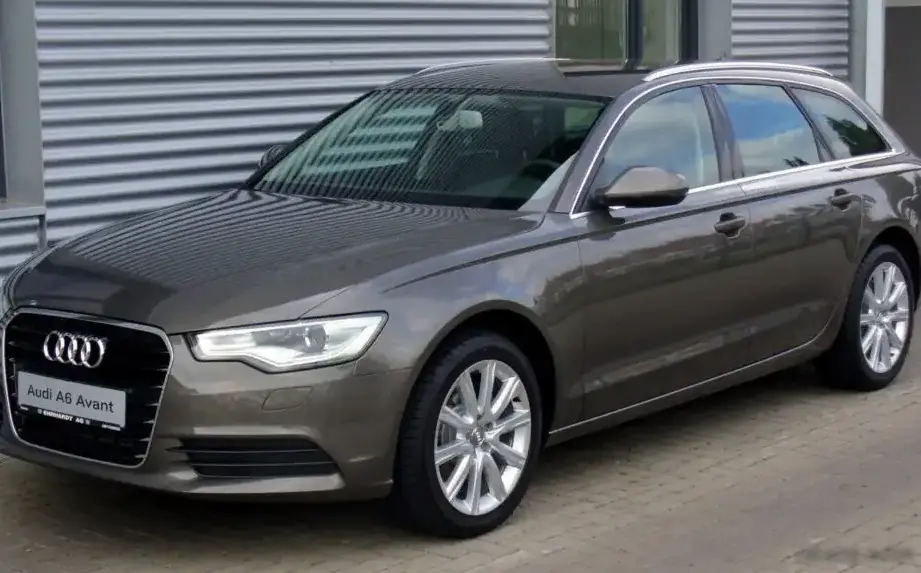
The Audi A6 Avant (4G, C7) 2.0 TDI 136 hp Multitronic, produced between 2011 and 2014, represents a compelling blend of practicality, efficiency, and Audi’s signature refinement within the mid-size executive wagon segment. Positioned as a core offering within the C7 A6 Avant range, this variant catered to buyers prioritizing fuel economy and comfortable long-distance cruising over outright performance. It occupied the middle ground of the lineup, offering a more accessible entry point than the higher-powered TDI variants or the petrol-fueled models. The 4G chassis, shared with the A3 and other Volkswagen Group vehicles, provided a solid foundation for the A6 Avant’s spacious interior and composed driving dynamics.
Technical Specifications
| Brand | Audi |
| Model | A6 |
| Generation | A6 Avant (4G, C7) |
| Type (Engine) | 2.0 TDI (136 Hp) Multitronic |
| Start of production | 2011 |
| End of production | 2014 |
| Powertrain Architecture | Internal Combustion engine |
| Body type | Station wagon (estate) |
| Seats | 5 |
| Doors | 5 |
| Fuel consumption (urban) | 6.1 l/100 km (38.6 US mpg, 46.3 UK mpg, 16.4 km/l) |
| Fuel consumption (extra urban) | 4.5 l/100 km (52.3 US mpg, 62.8 UK mpg, 22.2 km/l) |
| Fuel consumption (combined) | 5.1 l/100 km (46.1 US mpg, 55.4 UK mpg, 19.6 km/l) |
| CO2 emissions | 135 g/km |
| Fuel Type | Diesel |
| Acceleration 0 – 100 km/h | 10.4 sec |
| Acceleration 0 – 62 mph | 10.4 sec |
| Acceleration 0 – 60 mph | 9.9 sec |
| Maximum speed | 200 km/h (124.27 mph) |
| Emission standard | Euro 5 |
| Weight-to-power ratio | 12.7 kg/Hp, 78.8 Hp/tonne |
| Weight-to-torque ratio | 4.9 kg/Nm, 202.9 Nm/tonne |
| Power | 136 Hp @ 4200 rpm |
| Power per litre | 69.1 Hp/l |
| Torque | 350 Nm @ 1750-2500 rpm (258.15 lb.-ft. @ 1750-2500 rpm) |
| Engine layout | Front, Longitudinal |
| Engine Model/Code | CSUE, CGLE |
| Engine displacement | 1968 cm3 (120.09 cu. in.) |
| Number of cylinders | 4 |
| Engine configuration | Inline |
| Cylinder Bore | 81 mm (3.19 in.) |
| Piston Stroke | 95.5 mm (3.76 in.) |
| Compression ratio | 19.5:1 |
| Number of valves per cylinder | 4 |
| Fuel injection system | Diesel Commonrail |
| Engine aspiration | Turbocharger, Intercooler |
| Engine oil capacity | 5 l (5.28 US qt | 4.4 UK qt) |
| Kerb Weight | 1725 kg (3802.97 lbs.) |
| Max. weight | 2165 kg (4773.01 lbs.) |
| Max load | 440 kg (970.03 lbs.) |
| Trunk (boot) space – minimum | 565 l (19.95 cu. ft.) |
| Trunk (boot) space – maximum | 1680 l (59.33 cu. ft.) |
| Fuel tank capacity | 65 l (17.17 US gal | 14.3 UK gal) |
| Max. roof load | 100 kg (220.46 lbs.) |
| Permitted trailer load without brakes | 750 kg (1653.47 lbs.) |
| Permitted towbar download | 85 kg (187.39 lbs.) |
| Length | 4926 mm (193.94 in.) |
| Width | 1874 mm (73.78 in.) |
| Width including mirrors | 2086 mm (82.13 in.) |
| Height | 1468 mm (57.8 in.) |
| Wheelbase | 2912 mm (114.65 in.) |
| Front track | 1874 mm (73.78 in.) |
| Rear (Back) track | 1618 mm (63.7 in.) |
| Front overhang | 912 mm (35.91 in.) |
| Rear overhang | 1102 mm (43.39 in.) |
| Ride height (ground clearance) | 117 mm (4.61 in.) |
| Drag coefficient (Cd) | 0.26 |
| Minimum turning circle (turning diameter) | 11.9 m (39.04 ft.) |
| Drivetrain Architecture | The Internal combustion engine (ICE) drives the front wheels of the vehicle. |
| Drive wheel | Front wheel drive |
| Number of gears and type of gearbox | automatic transmission Multitronic |
| Front suspension | Independent multi-link suspension |
| Rear suspension | Independent on trapezoidal lever |
| Front brakes | Ventilated discs |
| Rear brakes | Disc |
| Assisting systems | ABS (Anti-lock braking system) |
| Steering type | Steering rack and pinion |
| Power steering | Electric Steering |
| Tires size | 225/55 R17 |
| Wheel rims size | 17 |
Powertrain & Engine Architecture
At the heart of the A6 Avant 2.0 TDI Multitronic lies the Volkswagen Group’s EA888 series of engines, specifically the 2.0-liter four-cylinder diesel. Engine codes CSUE and CGLE were commonly found in this variant. This engine utilizes a common rail direct injection system, delivering fuel at extremely high pressures for optimized combustion. A turbocharger with an intercooler is employed to boost power and torque, providing 136 horsepower at 4200 rpm and a substantial 350 Nm (258 lb-ft) of torque between 1750 and 2500 rpm. The engine features four valves per cylinder and a sophisticated variable geometry turbocharger (VGT) to enhance responsiveness across the rev range. The Multitronic transmission, a continuously variable transmission (CVT), was a key component. Unlike traditional automatic transmissions with fixed gear ratios, the Multitronic uses a chain-driven system to provide a virtually infinite number of ratios, optimizing engine efficiency and smoothness.
Driving Characteristics
The 2.0 TDI Multitronic A6 Avant delivers a comfortable and refined driving experience. While not particularly sporty, the engine provides adequate power for everyday driving and highway cruising. The Multitronic transmission contributes to smooth acceleration and seamless gear changes. Compared to the more powerful 3.0 TDI variants, the 2.0 TDI feels less urgent, with a 0-60 mph time of around 9.9 seconds. However, the readily available torque makes overtaking at highway speeds relatively effortless. The CVT transmission, while smooth, can sometimes feel disconnected from the engine, lacking the direct feel of a traditional automatic. Fuel economy is a major strength, with combined figures around 46 mpg, making it an economical choice for long-distance travel.
Equipment & Trim Levels
The A6 Avant 2.0 TDI Multitronic typically came well-equipped, even in base trim. Standard features included automatic climate control, a multi-function steering wheel, power windows and mirrors, and an audio system with CD player and auxiliary input. Higher trim levels added features such as leather upholstery, heated front seats, a sunroof, and a navigation system. Optional extras included advanced driver-assistance systems like adaptive cruise control and lane departure warning. Interior upholstery was typically cloth in base models, with leather options available. The dashboard layout was typical of Audi at the time, characterized by a clean, minimalist design and high-quality materials.
Chassis & Braking
The A6 Avant’s chassis features independent suspension all around, with a multi-link setup at the front and a trapezoidal link arrangement at the rear. This configuration provides a comfortable ride and good handling characteristics. Front brakes are ventilated discs, while rear brakes are solid discs. Anti-lock braking system (ABS) is standard. The suspension is tuned for comfort, prioritizing ride quality over sporty handling. Stabilizer bars are fitted front and rear to reduce body roll during cornering.
Market Reception & Comparison
The A6 Avant 2.0 TDI Multitronic was generally well-received by automotive critics. It was praised for its fuel efficiency, comfortable ride, and spacious interior. However, some critics found the Multitronic transmission to be less engaging than traditional automatics. Compared to the 3.0 TDI variants, the 2.0 TDI offered a more affordable entry point into the A6 Avant range, but at the expense of performance. The 2.0 TDI also offered better fuel economy than the petrol-powered A6 Avant models. Reliability was generally good, although the Multitronic transmission required regular maintenance to ensure longevity.
Legacy
The Audi A6 Avant 2.0 TDI Multitronic remains a popular choice in the used car market. Its combination of practicality, efficiency, and refinement continues to appeal to buyers. The EA888 engine is known for its durability, although the Multitronic transmission can be a potential source of expensive repairs if not properly maintained. Regular oil changes and adherence to the manufacturer’s recommended service intervals are crucial for ensuring the long-term reliability of this powertrain. Today, these vehicles represent a good value proposition for those seeking a comfortable and economical executive wagon.