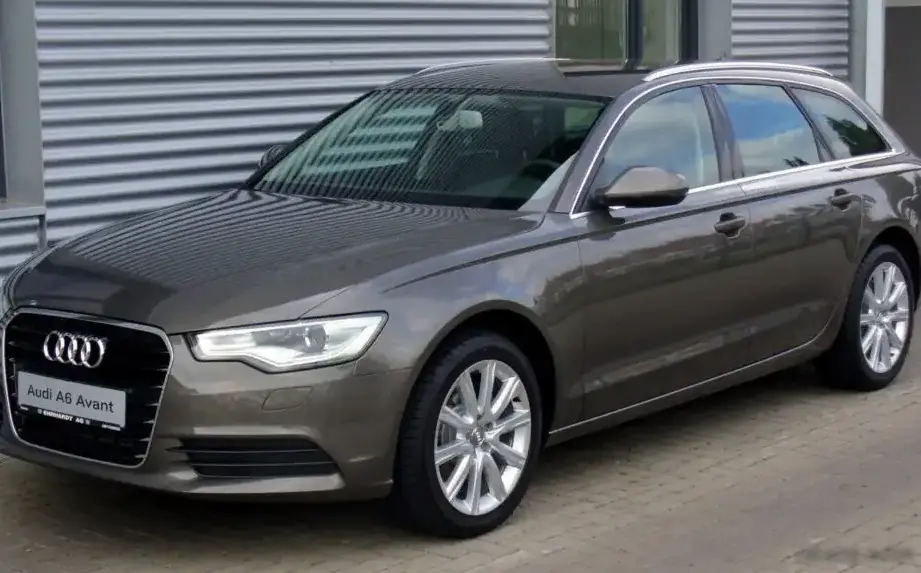
The Audi A6 Avant (4G, C7) 2.0 TDI 177 hp variant, produced between 2011 and 2014, represents a compelling blend of practicality, efficiency, and Audi’s signature refinement within the mid-size executive wagon segment. Positioned as a core offering within the C7 A6 Avant range, this model aimed to deliver a balance between performance and fuel economy, appealing to buyers prioritizing both driving pleasure and running costs. It was a key component of Audi’s strategy to offer a diverse A6 lineup catering to a wide spectrum of customer needs, built on the Volkswagen Group’s MLB platform (1HX0). This generation A6 Avant saw significant advancements in technology and design compared to its predecessor, solidifying Audi’s position as a premium automotive brand.
Technical Specifications
| Brand | Audi |
| Model | A6 |
| Generation | A6 Avant (4G, C7) |
| Type (Engine) | 2.0 TDI (177 Hp) |
| Start of production | 2011 |
| End of production | 2014 |
| Powertrain Architecture | Internal Combustion engine |
| Body type | Station wagon (estate) |
| Seats | 5 |
| Doors | 5 |
| Fuel consumption (urban) | 6.1 l/100 km (38.6 US mpg, 46.3 UK mpg, 16.4 km/l) |
| Fuel consumption (extra urban) | 4.5 l/100 km (52.3 US mpg, 62.8 UK mpg, 22.2 km/l) |
| Fuel consumption (combined) | 5 l/100 km (47 US mpg, 56.5 UK mpg, 20 km/l) |
| CO2 emissions | 132 g/km |
| Fuel Type | Diesel |
| Acceleration 0 – 100 km/h | 9 sec |
| Acceleration 0 – 62 mph | 9 sec |
| Acceleration 0 – 60 mph | 8.6 sec |
| Maximum speed | 222 km/h (137.94 mph) |
| Emission standard | Euro 5 |
| Weight-to-power ratio | 9.3 kg/Hp, 107.9 Hp/tonne |
| Weight-to-torque ratio | 4.7 kg/Nm, 213.4 Nm/tonne |
| Power | 177 Hp @ 4200 rpm |
| Power per litre | 89.9 Hp/l |
| Torque | 350 Nm @ 1750-2500 rpm (258.15 lb.-ft. @ 1750-2500 rpm) |
| Engine layout | Front, Longitudinal |
| Engine Model/Code | CMGB, CGLC |
| Engine displacement | 1968 cm3 (120.09 cu. in.) |
| Number of cylinders | 4 |
| Engine configuration | Inline |
| Cylinder Bore | 81 mm (3.19 in.) |
| Piston Stroke | 95.5 mm (3.76 in.) |
| Compression ratio | 16:1 |
| Number of valves per cylinder | 4 |
| Fuel injection system | Diesel Commonrail |
| Engine aspiration | Turbocharger, Intercooler |
| Engine oil capacity | 5 l (5.28 US qt | 4.4 UK qt) |
| Kerb Weight | 1640 kg (3615.58 lbs.) |
| Max. weight | 2350 kg (5180.86 lbs.) |
| Max load | 710 kg (1565.28 lbs.) |
| Trunk (boot) space – minimum | 565 l (19.95 cu. ft.) |
| Trunk (boot) space – maximum | 1680 l (59.33 cu. ft.) |
| Fuel tank capacity | 65 l (17.17 US gal | 14.3 UK gal) |
| Max. roof load | 100 kg (220.46 lbs.) |
| Permitted trailer load with brakes (8%) | 1800 kg (3968.32 lbs.) |
| Permitted trailer load with brakes (12%) | 1600 kg (3527.4 lbs.) |
| Permitted trailer load without brakes | 750 kg (1653.47 lbs.) |
| Permitted towbar download | 85 kg (187.39 lbs.) |
| Length | 4926 mm (193.94 in.) |
| Width | 1874 mm (73.78 in.) |
| Width including mirrors | 2086 mm (82.13 in.) |
| Height | 1468 mm (57.8 in.) |
| Wheelbase | 2912 mm (114.65 in.) |
| Front track | 1874 mm (73.78 in.) |
| Rear (Back) track | 1618 mm (63.7 in.) |
| Front overhang | 912 mm (35.91 in.) |
| Rear overhang | 1102 mm (43.39 in.) |
| Ride height (ground clearance) | 117 mm (4.61 in.) |
| Drag coefficient (Cd) | 0.26 |
| Minimum turning circle (turning diameter) | 11.9 m (39.04 ft.) |
| Drivetrain Architecture | The Internal combustion engine (ICE) drives the front wheels of the vehicle. |
| Drive wheel | Front wheel drive |
| Number of gears and type of gearbox | 6 gears, manual transmission |
| Front suspension | Independent multi-link suspension |
| Rear suspension | Independent on trapezoidal lever |
| Front brakes | Ventilated discs |
| Rear brakes | Disc |
| Assisting systems | ABS (Anti-lock braking system) |
| Steering type | Steering rack and pinion |
| Power steering | Electric Steering |
| Tires size | 225/60 R16 |
| Wheel rims size | 7.5J x 16 |
Powertrain & Engine Architecture
At the heart of the A6 Avant 2.0 TDI 177 hp lies the Volkswagen Group’s common rail diesel engine, specifically the CMGB or CGLC engine code depending on the exact production year and market. This 1968cc inline-four cylinder engine utilizes a turbocharger with an intercooler to boost power and efficiency. The engine employs a sophisticated common rail direct injection system, delivering fuel directly into the combustion chamber at extremely high pressure for optimized combustion. The valvetrain features four valves per cylinder (DOHC), contributing to improved breathing and power output. The engine’s design prioritizes torque delivery, with a peak of 350 Nm (258 lb-ft) available from 1750 to 2500 rpm. This broad torque curve provides strong acceleration and effortless cruising. The 6-speed manual transmission was standard, offering precise gear changes and a direct connection to the engine.
Driving Characteristics
The 2.0 TDI 177 hp A6 Avant delivers a composed and refined driving experience. While not overtly sporty, the engine provides ample power for everyday driving and long-distance journeys. Acceleration from 0-60 mph takes around 8.6 seconds, and the car feels responsive in most situations. The manual transmission, while engaging, has relatively long throws. Compared to the more powerful 3.0 TDI variants, the 2.0 TDI feels less urgent, but it offers a more economical and accessible entry point into the A6 Avant range. The gear ratios are tuned for fuel efficiency, meaning the engine doesn’t rev as freely as some competitors. However, the strong low-end torque compensates for this, making overtaking maneuvers relatively effortless.
Equipment & Trim Levels
The 2.0 TDI 177 hp A6 Avant typically came equipped with a generous level of standard features. These included automatic climate control, a multi-function steering wheel, power windows, and an audio system with CD player. Higher trim levels, such as SE or Sport, added features like leather upholstery, parking sensors, alloy wheels, and upgraded infotainment systems. Optional extras included a sunroof, navigation system, and advanced driver assistance systems like adaptive cruise control. Interior upholstery was typically cloth on base models, with leather available as an upgrade. The dashboard layout was clean and functional, with a focus on ergonomics and ease of use.
Chassis & Braking
The A6 Avant’s chassis is designed to provide a comfortable and controlled ride. The front suspension utilizes an independent multi-link setup, while the rear features an independent trapezoidal link arrangement. This configuration minimizes body roll and provides good handling characteristics. Braking duties are handled by ventilated discs at the front and solid discs at the rear, coupled with ABS (Anti-lock Braking System). The steering is a rack-and-pinion system with electric power assistance, offering precise and responsive control. The suspension tuning is biased towards comfort, but the car still feels stable and secure when pushed.
Market Reception & Comparison
The Audi A6 Avant 2.0 TDI 177 hp was generally well-received by automotive critics. It was praised for its fuel efficiency, comfortable ride, and spacious interior. However, some reviewers noted that the engine lacked the outright performance of its larger displacement counterparts. Compared to rivals like the BMW 5 Series Touring and Mercedes-Benz E-Class Estate, the A6 Avant offered a compelling combination of practicality, refinement, and value. Its fuel economy was particularly competitive, making it an attractive option for drivers covering long distances. Reliability was generally good, although some owners reported issues with the diesel particulate filter (DPF) system.
Legacy
The 2.0 TDI engine, in various iterations, proved to be a durable and reliable powerplant. The CMGB/CGLC engine found in the C7 A6 Avant is known for its longevity when properly maintained. Today, used examples of this model are readily available and represent a relatively affordable entry point into the premium wagon segment. While the DPF system can require attention, the engine itself is generally robust. The A6 Avant 2.0 TDI 177 hp remains a popular choice for buyers seeking a practical, comfortable, and fuel-efficient estate car with the prestige of the Audi brand.