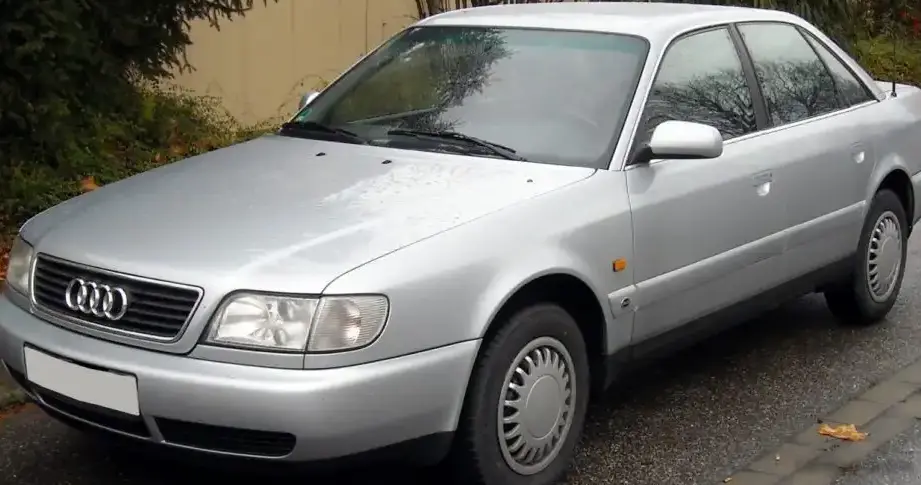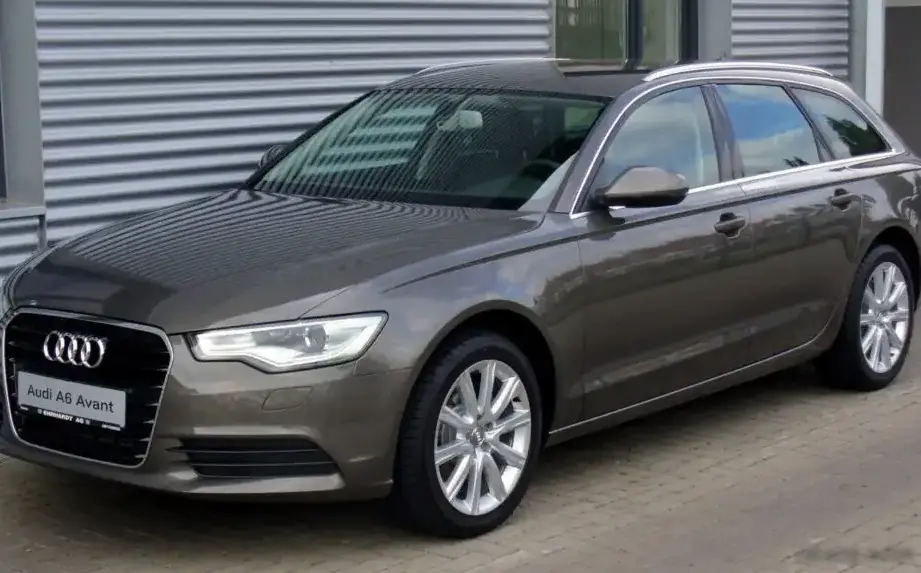
The Audi A6 Avant (4G, C7) 3.0 BiTDI V6 quattro Tiptronic, produced from December 2011 to 2014, represents a high-performance variant within the fourth generation (C7) of Audi’s popular A6 Avant line. This model combined a potent 3.0-liter turbocharged diesel V6 engine with Audi’s renowned quattro all-wheel-drive system and an eight-speed Tiptronic automatic transmission. Positioned as a premium offering, it catered to buyers seeking a blend of practicality, luxury, and spirited performance in a wagon body style. The C7 generation A6 Avant aimed to elevate the executive wagon segment, offering a more dynamic driving experience and sophisticated technology compared to its predecessors.
Technical Specifications
| Brand | Audi |
| Model | A6 |
| Generation | A6 Avant (4G, C7) |
| Type (Engine) | 3.0 BiTDI V6 (313 Hp) quattro Tiptronic |
| Start of production | December, 2011 |
| End of production | 2014 |
| Powertrain Architecture | Internal Combustion engine |
| Body type | Station wagon (estate) |
| Seats | 5 |
| Doors | 5 |
| Fuel consumption (urban) | 7.9 l/100 km (29.8 US mpg, 35.8 UK mpg, 12.7 km/l) |
| Fuel consumption (extra urban) | 5.5 l/100 km (42.8 US mpg, 51.4 UK mpg, 18.2 km/l) |
| Fuel consumption (combined) | 6.3 l/100 km (37.3 US mpg, 44.8 UK mpg, 15.9 km/l) |
| CO2 emissions | 166 g/km |
| Fuel Type | Diesel |
| Acceleration 0 – 100 km/h | 5.3 sec |
| Acceleration 0 – 62 mph | 5.3 sec |
| Acceleration 0 – 60 mph | 5 sec (Calculated) |
| Maximum speed | 250 km/h (155.34 mph) |
| Emission standard | Euro 5 |
| Weight-to-power ratio | 5.9 kg/Hp, 168.7 Hp/tonne |
| Weight-to-torque ratio | 2.9 kg/Nm, 350.4 Nm/tonne |
| Power | 313 Hp @ 3900-4500 rpm |
| Power per litre | 105.5 Hp/l |
| Torque | 650 Nm @ 1450-2800 rpm (479.42 lb.-ft. @ 1450-2800 rpm) |
| Engine layout | Front, Longitudinal |
| Engine Model/Code | CGQB |
| Engine displacement | 2967 cm3 (181.06 cu. in.) |
| Number of cylinders | 6 |
| Engine configuration | V-engine |
| Cylinder Bore | 83 mm (3.27 in.) |
| Piston Stroke | 91.4 mm (3.6 in.) |
| Compression ratio | 16.8:1 |
| Number of valves per cylinder | 4 |
| Fuel injection system | Diesel Commonrail |
| Engine aspiration | BiTurbo, Intercooler |
| Valvetrain | DOHC |
| Engine oil capacity | 6.4 l (6.76 US qt | 5.63 UK qt) |
| Kerb Weight | 1855 kg (4089.57 lbs.) |
| Max. weight | 2485 kg (5478.49 lbs.) |
| Max load | 630 kg (1388.91 lbs.) |
| Trunk (boot) space – minimum | 565 l (19.95 cu. ft.) |
| Trunk (boot) space – maximum | 1680 l (59.33 cu. ft.) |
| Fuel tank capacity | 65 l (17.17 US gal | 14.3 UK gal) |
| Max. roof load | 100 kg (220.46 lbs.) |
| Permitted trailer load with brakes (8%) | 2100 kg (4629.71 lbs.) |
| Permitted trailer load with brakes (12%) | 2100 kg (4629.71 lbs.) |
| Permitted trailer load without brakes | 750 kg (1653.47 lbs.) |
| Permitted towbar download | 85 kg (187.39 lbs.) |
| Length | 4926 mm (193.94 in.) |
| Width | 1874 mm (73.78 in.) |
| Width including mirrors | 2086 mm (82.13 in.) |
| Height | 1468 mm (57.8 in.) |
| Wheelbase | 2912 mm (114.65 in.) |
| Front track | 1874 mm (73.78 in.) |
| Rear (Back) track | 1618 mm (63.7 in.) |
| Front overhang | 912 mm (35.91 in.) |
| Rear overhang | 1102 mm (43.39 in.) |
| Ride height (ground clearance) | 117 mm (4.61 in.) |
| Drag coefficient (Cd) | 0.26 |
| Minimum turning circle | 11.9 m (39.04 ft.) |
| Drive wheel | All wheel drive (4×4) |
| Number of gears and type of gearbox | 8 gears, automatic transmission Tiptronic |
| Front suspension | Independent multi-link suspension |
| Rear suspension | Independent on trapezoidal lever |
| Front brakes | Ventilated discs |
| Rear brakes | Disc |
| Assisting systems | ABS (Anti-lock braking system) |
| Steering type | Steering rack and pinion |
| Power steering | Electric Steering |
| Tires size | 245/45 R18 |
| Wheel rims size | 8J x 18 |
Powertrain & Engine Architecture
The heart of the A6 Avant 3.0 BiTDI was the CGQB engine code, a 3.0-liter V6 diesel engine employing a sequential bi-turbocharger system. This configuration utilized two turbochargers of different sizes; a smaller turbocharger for quick response at low engine speeds and a larger turbocharger to deliver high power at higher RPMs. This setup minimized turbo lag and provided a broad, flat torque curve. The engine featured a common rail direct injection system, injecting fuel at extremely high pressures for optimized combustion. The valvetrain employed double overhead camshafts (DOHC) with four valves per cylinder. The eight-speed Tiptronic automatic transmission offered smooth and rapid gear changes, and allowed for manual gear selection when desired. This transmission was specifically tuned to handle the high torque output of the engine.
Driving Characteristics
The 3.0 BiTDI Avant delivered a compelling driving experience. The 650 Nm (479 lb-ft) of torque, available from a low 1450 rpm, provided effortless acceleration and strong in-gear performance. The quattro all-wheel-drive system ensured excellent traction in all weather conditions. While not as overtly sporty as some of its rivals, the A6 Avant offered a comfortable and composed ride, making it well-suited for long-distance journeys. The Tiptronic transmission, while generally smooth, could occasionally exhibit some hesitation during downshifts. Compared to the base 2.0-liter TDI models, the 3.0 BiTDI offered significantly more power and a more refined driving experience. It also outperformed the gasoline-powered variants in terms of fuel economy and torque.
Equipment & Trim Levels
The 3.0 BiTDI Avant typically came well-equipped, reflecting its premium positioning. Standard features often included leather upholstery, tri-zone automatic climate control, a multi-function steering wheel, and a high-resolution infotainment system with navigation. Optional extras included adaptive cruise control, a Bang & Olufsen sound system, and advanced driver assistance systems such as blind spot monitoring and lane keeping assist. Interior trim options ranged from wood veneers to brushed aluminum accents. The A6 Avant offered a high level of customization, allowing buyers to tailor the vehicle to their preferences.
Chassis & Braking
The A6 Avant featured an independent suspension system on all four wheels, providing a comfortable and controlled ride. The front suspension utilized a multi-link setup, while the rear employed a trapezoidal link design. The braking system consisted of ventilated discs on all four wheels, providing ample stopping power. Anti-lock braking system (ABS) and electronic stability control (ESC) were standard features. The chassis was designed to balance comfort and handling, offering a stable and predictable driving experience.
Market Reception & Comparison
The Audi A6 Avant 3.0 BiTDI quattro Tiptronic was generally well-received by automotive critics. It was praised for its powerful engine, refined ride, and luxurious interior. Fuel economy was also considered to be excellent for a vehicle of its size and performance. Compared to rivals such as the BMW 5 Series Touring and Mercedes-Benz E-Class Estate, the A6 Avant offered a compelling combination of performance, practicality, and technology. Some critics noted that the infotainment system could be complex to use, and the ride could be slightly firm on certain road surfaces.
Legacy
The CGQB engine, while robust, is known to require diligent maintenance, particularly regarding the diesel particulate filter (DPF) and turbochargers. Regular oil changes and the use of high-quality fuel are crucial for long-term reliability. Today, well-maintained examples of the A6 Avant 3.0 BiTDI are sought after by enthusiasts who appreciate their blend of performance, practicality, and luxury. The car represents a high point in Audi’s wagon development, offering a sophisticated and capable vehicle that continues to provide a rewarding driving experience.