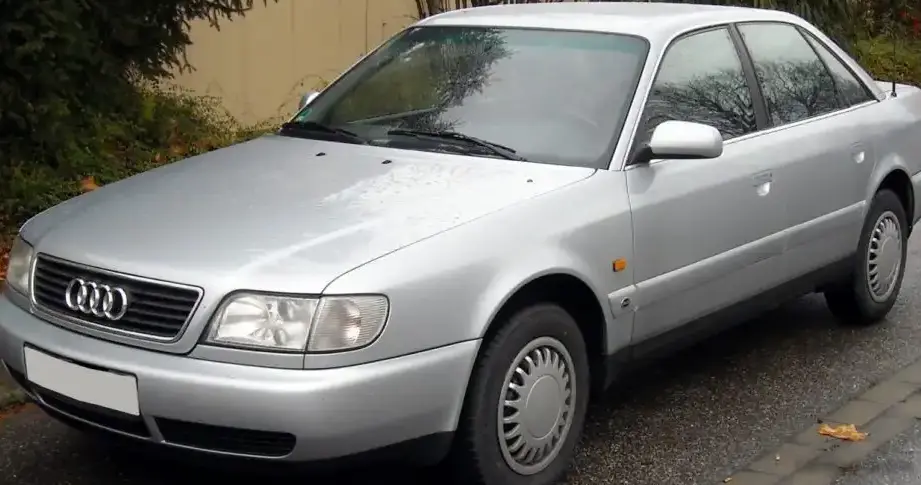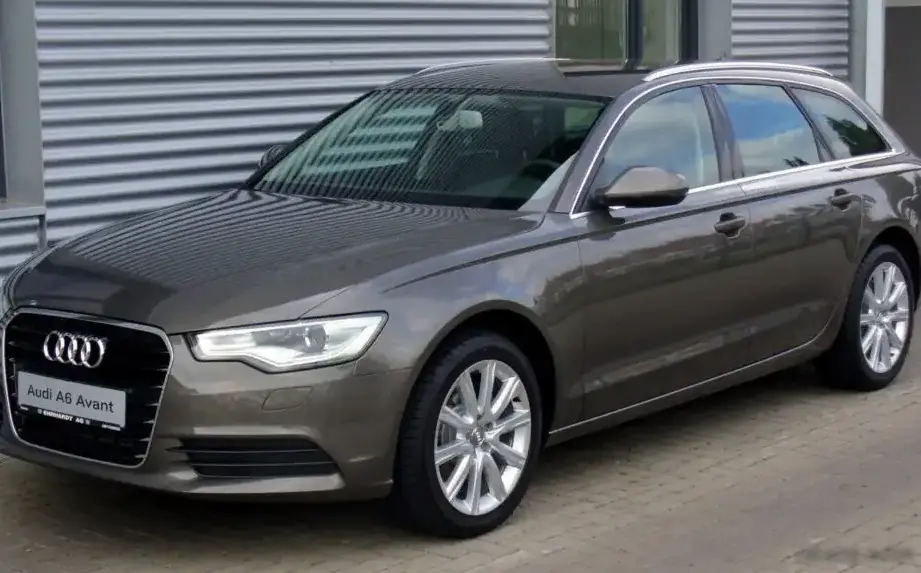
The Audi A6 Avant (4G, C7) 3.0 TDI V6, produced from 2011 to 2014, represents a compelling blend of performance, practicality, and luxury within the mid-size executive wagon segment. Positioned as a higher-end trim within the C7 A6 Avant range, this variant offered a significant step up in power and refinement compared to the entry-level 2.0 TDI models. It served as a popular choice for buyers seeking a capable and comfortable long-distance cruiser with ample cargo space. The 4G chassis, shared with the A3 and other Volkswagen Group vehicles, provided a solid foundation for the A6 Avant’s sophisticated engineering.
Technical Specifications
| Brand | Audi |
| Model | A6 |
| Generation | A6 Avant (4G, C7) |
| Type (Engine) | 3.0 TDI V6 (204 Hp) |
| Start of production | 2011 |
| End of production | 2014 |
| Powertrain Architecture | Internal Combustion engine |
| Body type | Station wagon (estate) |
| Seats | 5 |
| Doors | 5 |
| Fuel consumption (urban) | 6.5 l/100 km (36.2 US mpg, 43.5 UK mpg, 15.4 km/l) |
| Fuel consumption (extra urban) | 4.4 l/100 km (53.5 US mpg, 64.2 UK mpg, 22.7 km/l) |
| Fuel consumption (combined) | 5.3 l/100 km (44.4 US mpg, 53.3 UK mpg, 18.9 km/l) |
| CO2 emissions | 139 g/km |
| Fuel Type | Diesel |
| Acceleration 0 – 100 km/h | 7.9 sec |
| Acceleration 0 – 62 mph | 7.9 sec |
| Acceleration 0 – 60 mph | 7.5 sec |
| Maximum speed | 232 km/h (144.16 mph) |
| Emission standard | Euro 5 |
| Weight-to-power ratio | 8.3 kg/Hp, 120.7 Hp/tonne |
| Weight-to-torque ratio | 3.8 kg/Nm, 266.3 Nm/tonne |
| Power | 204 Hp @ 3750-4500 rpm |
| Power per litre | 68.8 Hp/l |
| Torque | 450 Nm @ 1250-3500 rpm (331.9 lb.-ft. @ 1250-3500 rpm) |
| Engine layout | Front, Longitudinal |
| Engine Model/Code | CLAA, CLAB |
| Engine displacement | 2967 cm3 (181.06 cu. in.) |
| Number of cylinders | 6 |
| Engine configuration | V-engine |
| Cylinder Bore | 83 mm (3.27 in.) |
| Piston Stroke | 91.4 mm (3.6 in.) |
| Compression ratio | 17:1 |
| Number of valves per cylinder | 4 |
| Fuel injection system | Diesel Commonrail |
| Engine aspiration | Turbocharger, Intercooler |
| Valvetrain | DOHC |
| Engine oil capacity | 6.4 l (6.76 US qt | 5.63 UK qt) |
| Coolant | 11.5 l (12.15 US qt | 10.12 UK qt) |
| Kerb Weight | 1690 kg (3725.81 lbs.) |
| Max. weight | 2320 kg (5114.72 lbs.) |
| Max load | 630 kg (1388.91 lbs.) |
| Trunk (boot) space – minimum | 565 l (19.95 cu. ft.) |
| Trunk (boot) space – maximum | 1680 l (59.33 cu. ft.) |
| Fuel tank capacity | 65 l (17.17 US gal | 14.3 UK gal) |
| Max. roof load | 100 kg (220.46 lbs.) |
| Permitted trailer load with brakes (8%) | 1900 kg (4188.78 lbs.) |
| Permitted trailer load with brakes (12%) | 1800 kg (3968.32 lbs.) |
| Permitted trailer load without brakes | 750 kg (1653.47 lbs.) |
| Permitted towbar download | 85 kg (187.39 lbs.) |
| Length | 4926 mm (193.94 in.) |
| Width | 1874 mm (73.78 in.) |
| Width including mirrors | 2086 mm (82.13 in.) |
| Height | 1468 mm (57.8 in.) |
| Wheelbase | 2912 mm (114.65 in.) |
| Front track | 1874 mm (73.78 in.) |
| Rear (Back) track | 1618 mm (63.7 in.) |
| Front overhang | 912 mm (35.91 in.) |
| Rear overhang | 1102 mm (43.39 in.) |
| Ride height (ground clearance) | 117 mm (4.61 in.) |
| Drag coefficient (Cd) | 0.26 |
| Minimum turning circle (turning diameter) | 11.9 m (39.04 ft.) |
| Drivetrain Architecture | The Internal combustion engine (ICE) drives the front wheels of the vehicle. |
| Drive wheel | Front wheel drive |
| Number of gears and type of gearbox | 6 gears, manual transmission |
| Front suspension | Independent multi-link suspension |
| Rear suspension | Independent on trapezoidal lever |
| Front brakes | Ventilated discs |
| Rear brakes | Disc |
| Assisting systems | ABS (Anti-lock braking system) |
| Steering type | Steering rack and pinion |
| Power steering | Electric Steering |
| Tires size | 225/60 R16 |
| Wheel rims size | 7.5J x 16 |
INTRODUCTION
The Audi A6 Avant (4G, C7) 3.0 TDI V6, launched in 2011 and continuing through 2014, was a key variant in Audi’s popular A6 range. Built on the Volkswagen Group’s MLB platform (specifically the 4G iteration), the Avant – Audi’s designation for a station wagon – offered a practical and stylish alternative to traditional sedans. This 3.0 TDI model occupied a sweet spot in the lineup, providing a substantial power upgrade over the more common 2.0-liter TDI engines while remaining more accessible than the performance-oriented S6 or RS6 models. It was primarily marketed towards European buyers seeking a premium, versatile vehicle for both family duties and long-distance travel.
Powertrain & Engine Architecture
At the heart of the A6 Avant 3.0 TDI lies the CLAA or CLAB engine code 3.0-liter V6 turbodiesel. This engine is a longitudinally mounted, all-aluminum construction featuring a common-rail direct injection system operating at extremely high pressures (typically around 2,000 bar). The engine utilizes a variable geometry turbocharger (VGT) and an intercooler to optimize boost pressure and improve efficiency. The valvetrain employs double overhead camshafts (DOHC) with four valves per cylinder. The 6-speed manual transmission was standard, offering precise shifts and a good balance between performance and fuel economy. The engine’s design prioritized low-end torque, making it exceptionally drivable in everyday situations. The diesel particulate filter (DPF) was a standard feature, complying with Euro 5 emissions standards.
Driving Characteristics
The 204 horsepower and 450 Nm (331.9 lb-ft) of torque delivered by the 3.0 TDI engine provided a noticeably more spirited driving experience compared to the lower-powered 2.0 TDI variants. Acceleration from 0-60 mph took approximately 7.5 seconds, and the car felt confident and composed at highway speeds. The manual transmission’s gear ratios were well-matched to the engine’s torque curve, providing strong acceleration in each gear. While not a sports car, the A6 Avant 3.0 TDI offered a refined and capable driving experience, with ample power for overtaking and comfortable cruising. The front-wheel-drive configuration, while providing good traction in most conditions, could exhibit some torque steer under hard acceleration.
Equipment & Trim Levels
The A6 Avant 3.0 TDI typically came well-equipped, reflecting its position as a higher-end trim level. Standard features often included leather upholstery, automatic climate control, a multi-function steering wheel, and an Audi Concert audio system. Optional extras were plentiful, including Audi’s MMI navigation system, advanced parking sensors, heated seats, and a panoramic sunroof. Interior trim options ranged from wood veneers to brushed aluminum, allowing buyers to personalize the cabin to their taste. The Avant’s spacious interior and large cargo area (565-1680 liters) made it a practical choice for families and those needing to transport bulky items.
Chassis & Braking
The A6 Avant’s chassis featured an independent multi-link suspension at the front and an independent trapezoidal link suspension at the rear, providing a comfortable and controlled ride. The suspension was tuned to prioritize comfort, but still offered good handling characteristics. Ventilated disc brakes were fitted to the front wheels, while solid discs were used at the rear. Anti-lock braking system (ABS) was standard, enhancing safety and stability. The steering was a rack-and-pinion system with electric power assistance, providing precise and responsive steering feel.
Market Reception & Comparison
The Audi A6 Avant 3.0 TDI was generally well-received by automotive critics. It was praised for its refined engine, comfortable ride, spacious interior, and practical wagon body style. Compared to the 2.0 TDI models, the 3.0 TDI offered a significant performance boost, but at a higher price point. Fuel economy remained respectable, averaging around 44.4 US mpg in combined driving. Compared to competitors like the BMW 5 Series Touring and Mercedes-Benz E-Class Estate, the A6 Avant was often seen as offering a more modern and technologically advanced package.
Legacy
The 3.0 TDI engine, in various iterations, proved to be a robust and reliable powerplant. While diesel engines, in general, have faced increased scrutiny in recent years, the CLAA and CLAB engines are known for their durability when properly maintained. Today, used examples of the A6 Avant 3.0 TDI remain a popular choice for buyers seeking a comfortable, practical, and relatively fuel-efficient executive wagon. Regular maintenance, including timely DPF regeneration and oil changes, is crucial to ensure long-term reliability. The A6 Avant 3.0 TDI represents a high point in Audi’s wagon offerings, combining performance, luxury, and practicality in a compelling package.