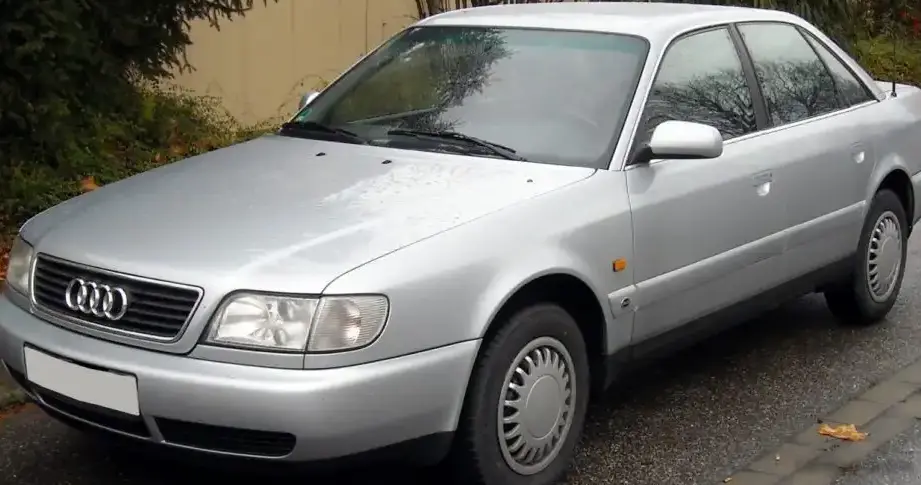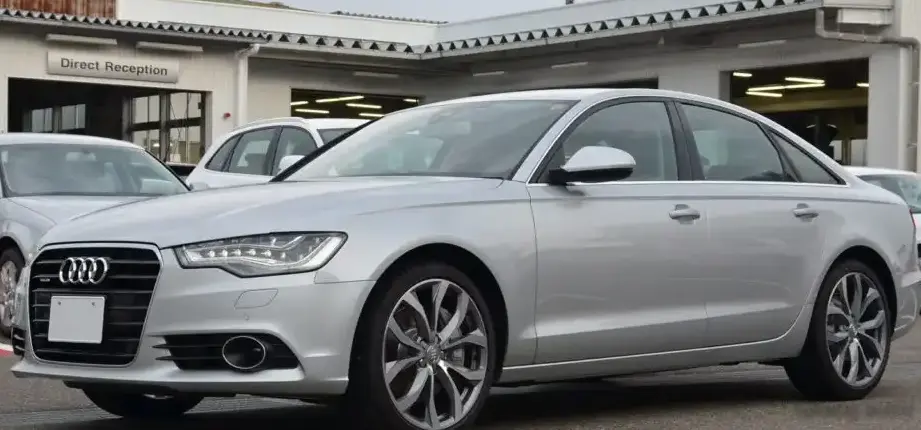
The Audi A6 Sedan (4G, C7) 2.0 TFSI 180 hp variant, produced from May 2011 to 2014, represented a key entry point into the C7 generation A6 lineup. Positioned as a balance between performance and fuel efficiency, this model aimed to deliver a premium experience without the higher price tag of the more powerful engine options. It was a significant offering in the mid-size executive car segment, particularly in European and Asian markets, where fuel economy and refinement were highly valued. This variant utilized a turbocharged four-cylinder engine paired with a continuously variable transmission (CVT), offering a smooth and efficient driving experience.
Technical Specifications
| Brand | Audi |
| Model | A6 |
| Generation | A6 Sedan (4G, C7) |
| Type (Engine) | 2.0 TFSI (180 Hp) |
| Start of production | May, 2011 |
| End of production | 2014 |
| Powertrain Architecture | Internal Combustion engine |
| Body type | Sedan |
| Seats | 5 |
| Doors | 4 |
| Fuel consumption (urban) | 8.3 l/100 km (28.3 US mpg, 34 UK mpg, 12 km/l) |
| Fuel consumption (extra urban) | 5.4 l/100 km (43.6 US mpg, 52.3 UK mpg, 18.5 km/l) |
| Fuel consumption (combined) | 6.5 l/100 km (36.2 US mpg, 43.5 UK mpg, 15.4 km/l) |
| CO2 emissions | 151 g/km |
| Fuel Type | Petrol (Gasoline) |
| Acceleration 0 – 100 km/h | 8.1 sec |
| Acceleration 0 – 62 mph | 8.1 sec |
| Acceleration 0 – 60 mph | 7.7 sec |
| Maximum speed | 232 km/h (144.16 mph) |
| Emission standard | Euro 5 |
| Weight-to-power ratio | 8.6 kg/Hp, 116.9 Hp/tonne |
| Weight-to-torque ratio | 4.8 kg/Nm, 207.8 Nm/tonne |
| Power | 180 Hp @ 4000-6000 rpm |
| Power per litre | 90.7 Hp/l |
| Torque | 320 Nm @ 1500-3900 rpm (236.02 lb.-ft. @ 1500-3900 rpm) |
| Engine layout | Front, Longitudinal |
| Engine Model/Code | CDNB |
| Engine displacement | 1984 cm3 (121.07 cu. in.) |
| Number of cylinders | 4 |
| Engine configuration | Inline |
| Cylinder Bore | 82.5 mm (3.25 in.) |
| Piston Stroke | 92.8 mm (3.65 in.) |
| Compression ratio | 9.6:1 |
| Number of valves per cylinder | 4 |
| Fuel injection system | Direct injection |
| Engine aspiration | Turbocharger, Intercooler |
| Valvetrain | DOHC |
| Engine oil capacity | 4.6 l (4.86 US qt | 4.05 UK qt) |
| Kerb Weight | 1540 kg (3395.12 lbs.) |
| Max. weight | 2120 kg (4673.8 lbs.) |
| Max load | 580 kg (1278.68 lbs.) |
| Trunk (boot) space – minimum | 530 l (18.72 cu. ft.) |
| Trunk (boot) space – maximum | 995 l (35.14 cu. ft.) |
| Fuel tank capacity | 65 l (17.17 US gal | 14.3 UK gal) |
| Max. roof load | 100 kg (220.46 lbs.) |
| Permitted trailer load with brakes (8%) | 1600 kg (3527.4 lbs.) |
| Permitted trailer load without brakes | 750 kg (1653.47 lbs.) |
| Permitted towbar download | 85 kg (187.39 lbs.) |
| Length | 4915 mm (193.5 in.) |
| Width | 1874 mm (73.78 in.) |
| Width including mirrors | 2086 mm (82.13 in.) |
| Height | 1468 mm (57.8 in.) |
| Wheelbase | 2912 mm (114.65 in.) |
| Front track | 1627 mm (64.06 in.) |
| Rear (Back) track | 1618 mm (63.7 in.) |
| Front overhang | 912 mm (35.91 in.) |
| Rear overhang | 1091 mm (42.95 in.) |
| Drag coefficient (Cd) | 0.28 |
| Minimum turning circle (turning diameter) | 11.9 m (39.04 ft.) |
| Drivetrain Architecture | The Internal combustion engine (ICE) drives the front wheels of the vehicle. |
| Drive wheel | Front wheel drive |
| Number of gears and type of gearbox | 6 gears, manual transmission |
| Front suspension | Independent multi-link suspension |
| Rear suspension | Independent on trapezoidal lever |
| Front brakes | Ventilated discs |
| Rear brakes | Disc |
| Assisting systems | ABS (Anti-lock braking system) |
| Steering type | Steering rack and pinion |
| Power steering | Electric Steering |
| Tires size | 225/60 R16 |
| Wheel rims size | 7.5J x 16 |
Powertrain & Engine Architecture
At the heart of the A6 2.0 TFSI 180 hp lies the CDNB engine code, a 1.984-liter inline-four cylinder gasoline engine. This engine utilizes direct fuel injection (FSI) and a single turbocharger with an intercooler to boost power and efficiency. The direct injection system precisely meters fuel into the combustion chamber, improving combustion efficiency and reducing emissions. The turbocharger provides increased air intake, resulting in a higher power output from the relatively small displacement engine. The engine features a double overhead camshaft (DOHC) valvetrain with four valves per cylinder, optimizing airflow for improved performance. The engine’s control unit (ECU) manages the fuel injection, ignition timing, and turbocharger boost pressure to deliver optimal performance and efficiency. The transmission paired with this engine was typically a CVT, known for its smooth and seamless gear changes, contributing to a comfortable driving experience.
Driving Characteristics
The 180 hp 2.0 TFSI with the CVT offered a comfortable and refined driving experience. Acceleration from 0-60 mph took approximately 7.7 seconds, which was adequate for everyday driving but noticeably slower than the more powerful 2.8 FSI or 3.0 TDI variants. The CVT transmission prioritized fuel efficiency and smooth power delivery over outright performance. While it lacked the immediate response of a traditional automatic or manual transmission, it provided a linear and predictable power curve. The engine delivered its peak torque of 320 Nm (236 lb-ft) between 1500 and 3900 rpm, providing good low-end and mid-range grunt for effortless cruising and overtaking. The front-wheel-drive configuration offered good traction in most conditions, but could exhibit some torque steer under hard acceleration.
Equipment & Trim Levels
The A6 2.0 TFSI 180 hp typically came standard with a respectable level of equipment. This included features like automatic climate control, a multi-function steering wheel, power windows and mirrors, and an audio system with CD player and auxiliary input. Higher trim levels offered options such as leather upholstery, heated front seats, a sunroof, and a navigation system. The interior design was typically understated and elegant, reflecting Audi’s commitment to quality and refinement. Standard safety features included ABS, electronic stability control, and multiple airbags.
Chassis & Braking
The C7 A6 featured an independent multi-link suspension at the front and an independent trapezoidal lever suspension at the rear, providing a comfortable and controlled ride. The suspension was tuned to prioritize comfort over sporty handling, but still offered good body control and stability. The braking system consisted of ventilated discs at the front and solid discs at the rear, providing adequate stopping power for the vehicle’s weight and performance. ABS (Anti-lock Braking System) was standard, enhancing braking performance and stability in emergency situations.
Market Reception & Comparison
The Audi A6 2.0 TFSI 180 hp was generally well-received by critics as a sensible and efficient option within the A6 range. It offered a good balance of performance, fuel economy, and comfort. Compared to the more powerful engine options, it was more affordable and fuel-efficient, making it an attractive choice for buyers who prioritized these factors. However, some critics noted that the CVT transmission could feel somewhat sluggish compared to traditional automatic or manual transmissions. The 1.8 TFSI engine, while efficient, didn’t offer the same level of performance as the 2.8 FSI or 3.0 TDI variants.
Legacy
The 2.0 TFSI engine, in various iterations, has proven to be a reliable and durable powertrain. While some early versions of the engine were prone to carbon buildup on the intake valves, this issue was largely addressed in later revisions. The CVT transmission, when properly maintained, is also generally reliable. Today, the A6 2.0 TFSI 180 hp represents a good value proposition in the used car market, offering a comfortable and refined driving experience at an affordable price. Regular maintenance, including oil changes and timing belt replacements, is crucial to ensure the long-term reliability of this powertrain.