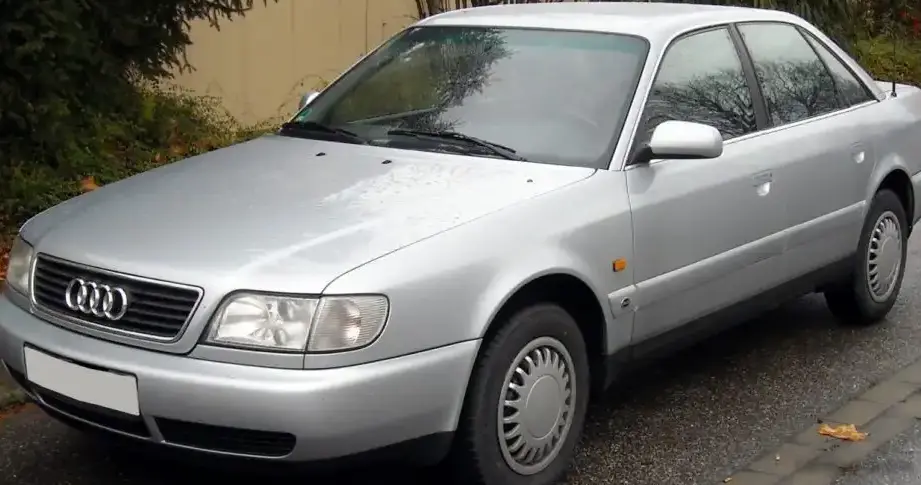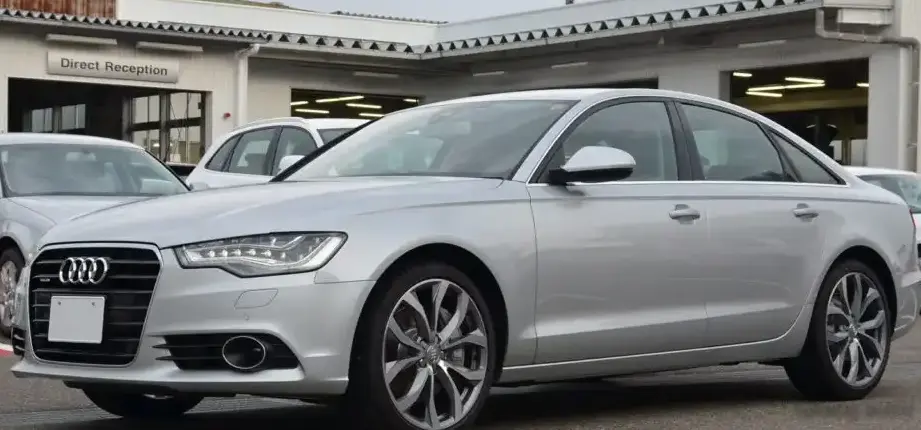
The Audi A6 Sedan (4G, C7) 2.0 TFSI with the Multitronic transmission represents a significant iteration of Audi’s mid-size executive car, produced from May 2011 to 2014. This variant occupied a crucial position in the A6 lineup, offering a balance between performance, fuel efficiency, and technological sophistication. It was positioned as a mainstream offering, appealing to buyers seeking a comfortable and refined driving experience without the higher price tag of the more powerful engine options. The C7 generation A6, built on the Volkswagen Group’s MLB platform (shared with models like the Porsche Panamera and Bentley Continental GT), aimed to deliver a more modern and technologically advanced package than its predecessor.
Technical Specifications
| Brand | Audi |
| Model | A6 |
| Generation | A6 Sedan (4G, C7) |
| Type (Engine) | 2.0 TFSI (180 Hp) Multitronic |
| Start of production | May, 2011 |
| End of production | 2014 |
| Powertrain Architecture | Internal Combustion engine |
| Body type | Sedan |
| Seats | 5 |
| Doors | 4 |
| Fuel consumption (urban) | 8.1 l/100 km (29 US mpg, 34.9 UK mpg, 12.3 km/l) |
| Fuel consumption (extra urban) | 5.4 l/100 km (43.6 US mpg, 52.3 UK mpg, 18.5 km/l) |
| Fuel consumption (combined) | 6.4 l/100 km (36.8 US mpg, 44.1 UK mpg, 15.6 km/l) |
| CO2 emissions | 149 g/km |
| Fuel Type | Petrol (Gasoline) |
| Acceleration 0 – 100 km/h | 8.3 sec |
| Acceleration 0 – 62 mph | 8.3 sec |
| Acceleration 0 – 60 mph | 7.9 sec |
| Maximum speed | 226 km/h (140.43 mph) |
| Emission standard | Euro 5 |
| Weight-to-power ratio | 8.7 kg/Hp, 115 Hp/tonne |
| Weight-to-torque ratio | 4.9 kg/Nm, 204.5 Nm/tonne |
| Power | 180 Hp @ 4000-6000 rpm |
| Power per litre | 90.7 Hp/l |
| Torque | 320 Nm @ 1500-3900 rpm (236.02 lb.-ft. @ 1500-3900 rpm) |
| Engine layout | Front, Longitudinal |
| Engine Model/Code | CDNB |
| Engine displacement | 1984 cm3 (121.07 cu. in.) |
| Number of cylinders | 4 |
| Engine configuration | Inline |
| Cylinder Bore | 82.5 mm (3.25 in.) |
| Piston Stroke | 92.8 mm (3.65 in.) |
| Compression ratio | 9.6:1 |
| Number of valves per cylinder | 4 |
| Fuel injection system | Direct injection |
| Engine aspiration | Turbocharger, Intercooler |
| Valvetrain | DOHC |
| Engine oil capacity | 4.6 l (4.86 US qt | 4.05 UK qt) |
| Coolant | 12 l (12.68 US qt | 10.56 UK qt) |
| Kerb Weight | 1565 kg (3450.23 lbs.) |
| Max. weight | 2145 kg (4728.92 lbs.) |
| Max load | 580 kg (1278.68 lbs.) |
| Trunk (boot) space – minimum | 530 l (18.72 cu. ft.) |
| Trunk (boot) space – maximum | 995 l (35.14 cu. ft.) |
| Fuel tank capacity | 65 l (17.17 US gal | 14.3 UK gal) |
| Max. roof load | 100 kg (220.46 lbs.) |
| Permitted trailer load with brakes (8%) | 1700 kg (3747.86 lbs.) |
| Permitted trailer load without brakes | 750 kg (1653.47 lbs.) |
| Permitted towbar download | 85 kg (187.39 lbs.) |
| Length | 4915 mm (193.5 in.) |
| Width | 1874 mm (73.78 in.) |
| Width including mirrors | 2086 mm (82.13 in.) |
| Height | 1468 mm (57.8 in.) |
| Wheelbase | 2912 mm (114.65 in.) |
| Front track | 1627 mm (64.06 in.) |
| Rear (Back) track | 1618 mm (63.7 in.) |
| Front overhang | 912 mm (35.91 in.) |
| Rear overhang | 1091 mm (42.95 in.) |
| Drag coefficient (Cd) | 0.28 |
| Minimum turning circle (turning diameter) | 11.9 m (39.04 ft.) |
| Drivetrain Architecture | The Internal combustion engine (ICE) drives the front wheels of the vehicle. |
| Drive wheel | Front wheel drive |
| Number of gears and type of gearbox | automatic transmission Multitronic |
| Front suspension | Independent multi-link suspension |
| Rear suspension | Independent on trapezoidal lever |
| Front brakes | Ventilated discs |
| Rear brakes | Disc |
| Assisting systems | ABS (Anti-lock braking system) |
| Steering type | Steering rack and pinion |
| Power steering | Electric Steering |
| Tires size | 225/60 R16 |
| Wheel rims size | 7.5J x 16 |
Powertrain & Engine Architecture
The heart of this A6 variant is the 2.0 TFSI engine, specifically the CDNB engine code. This is a turbocharged, direct-injection four-cylinder engine displacing 1984cc. Direct injection allows for precise fuel delivery, improving efficiency and reducing emissions. The engine utilizes a single turbocharger with an intercooler to increase air density and boost power output. The DOHC (Double Overhead Camshaft) valvetrain, with four valves per cylinder, optimizes gas flow for improved performance. The Multitronic transmission is a continuously variable transmission (CVT) offering smooth, stepless gear changes. Unlike traditional automatic transmissions with fixed gear ratios, the Multitronic uses a chain-driven system to provide an infinite number of ratios within its range, optimizing engine efficiency and responsiveness.
Driving Characteristics
The 180 horsepower and 236 lb-ft of torque delivered by the 2.0 TFSI engine, coupled with the Multitronic transmission, provided a comfortable and refined driving experience. Acceleration from 0-60 mph took approximately 7.9 seconds, making it adequately quick for everyday driving. However, compared to the more powerful 3.0 TFSI V6 or the diesel variants, this engine felt less responsive, particularly during overtaking maneuvers. The Multitronic transmission, while smooth, lacked the immediate engagement of a dual-clutch transmission. The gear ratios were optimized for fuel economy, resulting in a slightly less engaging driving experience than the six-speed manual transmission available on other A6 models.
Equipment & Trim Levels
The 2.0 TFSI Multitronic A6 typically came standard with features like leather upholstery, tri-zone automatic climate control, a multi-function steering wheel, and Audi’s MMI infotainment system. Optional extras included features like navigation, a premium sound system (Bang & Olufsen), parking sensors, and adaptive cruise control. Trim levels varied by market, but generally, this engine was offered in the base or mid-range trims, with higher trims reserved for the more powerful engines. Interior finishes were typically well-appointed, with a focus on quality materials and a minimalist design aesthetic.
Chassis & Braking
The A6 C7 featured an independent multi-link suspension at the front and an independent trapezoidal lever suspension at the rear, providing a comfortable ride and good handling characteristics. The front brakes were ventilated discs, while the rear brakes were solid discs. ABS (Anti-lock Braking System) was standard. The suspension tuning was geared towards comfort, prioritizing ride quality over outright sportiness. Stabilizer bars were fitted to both the front and rear axles to reduce body roll during cornering.
Market Reception & Comparison
The 2.0 TFSI Multitronic A6 was generally well-received by critics as a sensible and practical choice for buyers seeking a comfortable and fuel-efficient executive sedan. It offered a good balance of performance and economy, making it a popular choice in Europe and other markets where fuel costs are high. Compared to the 3.0 TFSI V6, it offered significantly better fuel economy but lacked the V6’s power and refinement. The diesel variants (particularly the 2.0 TDI) were often favored by those prioritizing fuel efficiency above all else. Reliability was generally good, although the Multitronic transmission required regular servicing to ensure optimal performance.
Legacy
The 2.0 TFSI engine with the Multitronic transmission proved to be a reliable powertrain when properly maintained. The Multitronic transmission, however, is known to require fluid changes at specific intervals to prevent premature failure. In the used car market, these A6 variants represent a good value proposition, offering a comfortable and well-equipped executive sedan at a relatively affordable price. The C7 generation A6 is remembered for its sophisticated technology, comfortable ride, and refined interior, solidifying Audi’s position as a premium automotive brand.