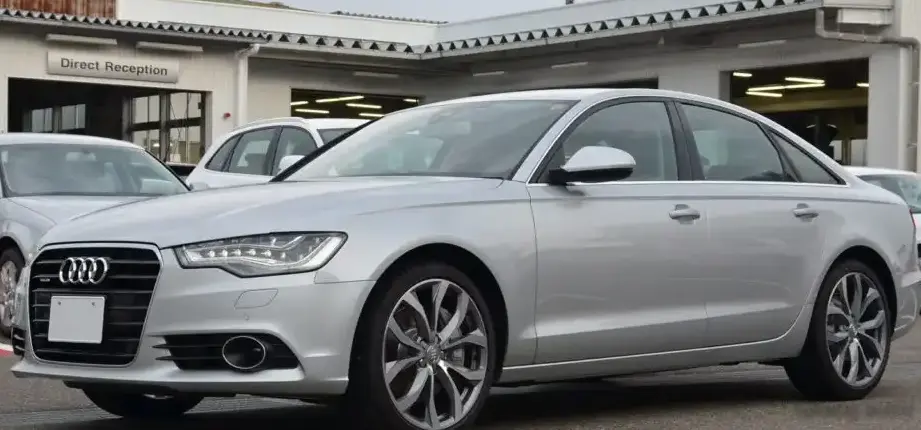
The Audi A6 Sedan (4G, C7) 2.0 TFSI with the Multitronic transmission represents a significant iteration of Audi’s mid-size executive car, produced from March 2011 through 2013. This variant occupied a key position within the C7 A6 range, offering a balance between performance, fuel efficiency, and technological sophistication. It was positioned as a step up from the base engine options, appealing to buyers seeking a more refined driving experience without the higher cost of the flagship models like the 3.0 TFSI. The C7 generation A6, built on the Volkswagen Group’s MLB platform, aimed to deliver a more modern and technologically advanced package compared to its predecessor.
Technical Specifications
| Brand | Audi |
| Model | A6 |
| Generation | A6 Sedan (4G, C7) |
| Type (Engine) | 2.0 TFSI (211 Hp) Multitronic |
| Start of production | March, 2011 |
| End of production | 2013 |
| Powertrain Architecture | Internal Combustion engine |
| Body type | Sedan |
| Seats | 5 |
| Doors | 4 |
| Fuel consumption (urban) | 9.4 l/100 km (25 US mpg, 30.1 UK mpg, 10.6 km/l) |
| Fuel consumption (extra urban) | 7.1 l/100 km (33.1 US mpg, 39.8 UK mpg, 14.1 km/l) |
| Fuel consumption (combined) | 8.4 l/100 km (28 US mpg, 33.6 UK mpg, 11.9 km/l) |
| Fuel Type | Petrol (Gasoline) |
| Acceleration 0 – 100 km/h | 8 sec |
| Acceleration 0 – 62 mph | 8 sec |
| Acceleration 0 – 60 mph | 7.6 sec |
| Maximum speed | 209 km/h (129.87 mph) |
| Weight-to-power ratio | 7.9 kg/Hp, 126.3 Hp/tonne |
| Weight-to-torque ratio | 4.8 kg/Nm, 209.6 Nm/tonne |
| Power | 211 Hp @ 4300-6000 rpm |
| Power per litre | 106.4 Hp/l |
| Torque | 350 Nm @ 3250 rpm (258.15 lb.-ft. @ 3250 rpm) |
| Engine layout | Front, Longitudinal |
| Engine Model/Code | CAEB, CDNC |
| Engine displacement | 1984 cm3 (121.07 cu. in.) |
| Number of cylinders | 4 |
| Engine configuration | Inline |
| Cylinder Bore | 82.5 mm (3.25 in.) |
| Piston Stroke | 92.8 mm (3.65 in.) |
| Compression ratio | 9.6:1 |
| Number of valves per cylinder | 4 |
| Fuel injection system | Direct injection |
| Engine aspiration | Turbocharger, Intercooler |
| Engine oil capacity | 4.6 l (4.86 US qt | 4.05 UK qt) |
| Kerb Weight | 1670 kg (3681.72 lbs.) |
| Max. weight | 2120 kg (4673.8 lbs.) |
| Max load | 450 kg (992.08 lbs.) |
| Trunk (boot) space – minimum | 530 l (18.72 cu. ft.) |
| Trunk (boot) space – maximum | 995 l (35.14 cu. ft.) |
| Fuel tank capacity | 65 l (17.17 US gal | 14.3 UK gal) |
| Max. roof load | 100 kg (220.46 lbs.) |
| Permitted trailer load without brakes | 750 kg (1653.47 lbs.) |
| Permitted towbar download | 85 kg (187.39 lbs.) |
| Length | 4915 mm (193.5 in.) |
| Width | 1874 mm (73.78 in.) |
| Width including mirrors | 2086 mm (82.13 in.) |
| Height | 1468 mm (57.8 in.) |
| Wheelbase | 2912 mm (114.65 in.) |
| Front track | 1627 mm (64.06 in.) |
| Rear (Back) track | 1618 mm (63.7 in.) |
| Front overhang | 912 mm (35.91 in.) |
| Rear overhang | 1091 mm (42.95 in.) |
| Ride height (ground clearance) | 117 mm (4.61 in.) |
| Drag coefficient (Cd) | 0.26 |
| Minimum turning circle (turning diameter) | 11.9 m (39.04 ft.) |
| Drivetrain Architecture | The Internal combustion engine (ICE) drives the front wheels of the vehicle. |
| Drive wheel | Front wheel drive |
| Number of gears and type of gearbox | automatic transmission Multitronic |
| Front suspension | Independent multi-link suspension |
| Rear suspension | Independent on trapezoidal lever |
| Front brakes | Ventilated discs |
| Rear brakes | Ventilated discs |
| Assisting systems | ABS (Anti-lock braking system) |
| Steering type | Steering rack and pinion |
| Power steering | Electric Steering |
| Tires size | 225/60 R16 |
| Wheel rims size | 7.5J x 16 |
Powertrain & Engine Architecture
At the heart of the A6 2.0 TFSI Multitronic lies the EA888 1.8/2.0-liter turbocharged four-cylinder engine. Specifically, the CAEB and CDNC engine codes were commonly found in this variant. This engine utilizes direct fuel injection (FSI) and a single turbocharger with an intercooler to deliver a balance of power and efficiency. The engine’s architecture features an aluminum alloy cylinder block and head, contributing to weight reduction. The valvetrain employs four valves per cylinder, optimized for both low-end torque and high-rpm power. The Multitronic transmission is a continuously variable transmission (CVT) offering smooth, stepless gear changes. It utilizes a chain-driven system, providing a different driving feel compared to traditional automatic transmissions. The Multitronic was known for its efficiency and ability to keep the engine in its optimal power band.
Driving Characteristics
The 211 hp and 350 Nm (258 lb-ft) of torque provided by the 2.0 TFSI engine, coupled with the Multitronic transmission, resulted in a comfortable and capable driving experience. Acceleration from 0-60 mph took approximately 7.6 seconds, and the car reached a top speed of 129.87 mph. While not as overtly sporty as the higher-powered variants, the 2.0 TFSI offered sufficient power for everyday driving and highway cruising. The Multitronic transmission, while smooth, sometimes lacked the direct feel of a traditional automatic or manual gearbox. Gear ratios were continuously adjusted to maintain optimal engine speed, prioritizing fuel efficiency over outright performance. Compared to the manual transmission versions, the Multitronic offered greater convenience, especially in urban traffic. However, enthusiasts often preferred the more engaging experience of the manual.
Equipment & Trim Levels
The A6 2.0 TFSI Multitronic typically came standard with a generous array of features, including leather upholstery, tri-zone automatic climate control, a multi-function steering wheel, and an Audi Concert audio system. Optional extras included the Audi Navigation system, advanced parking systems, and a premium sound system from Bang & Olufsen. Interior trim levels varied, with options for wood or aluminum inlays. The dashboard layout was clean and modern, emphasizing Audi’s commitment to interior quality and ergonomics. Exterior features included alloy wheels, chrome accents, and xenon headlights.
Chassis & Braking
The C7 A6 featured an independent suspension system on all four wheels, providing a comfortable ride and good handling characteristics. The front suspension utilized a multi-link setup, while the rear employed a trapezoidal link design. Ventilated disc brakes were standard on all four wheels, providing ample stopping power. Anti-lock braking system (ABS) and electronic stability control (ESC) were also standard safety features. The suspension tuning was geared towards comfort, but the A6 still offered a reasonably engaging driving experience. Stabilizer bars were used to reduce body roll during cornering.
Market Reception & Comparison
The Audi A6 2.0 TFSI Multitronic was generally well-received by automotive critics. It was praised for its refined interior, comfortable ride, and fuel efficiency. However, some reviewers noted that the Multitronic transmission could feel somewhat detached and lacked the responsiveness of a traditional automatic. Compared to the 3.0 TFSI V6 models, the 2.0 TFSI offered a more affordable entry point into the A6 range, albeit with less power. The 2.0 TDI diesel variants provided even better fuel economy but lacked the smooth power delivery of the gasoline engine. The 2.0 TFSI struck a balance between performance and economy, making it a popular choice for buyers seeking a well-rounded executive sedan.
Legacy
The 2.0 TFSI engine and Multitronic transmission combination proved to be relatively reliable, although the Multitronic transmission did require regular maintenance, including fluid changes, to ensure longevity. Today, the C7 A6 2.0 TFSI Multitronic can be found on the used car market at attractive prices. It remains a compelling option for buyers seeking a comfortable, well-equipped, and relatively efficient executive sedan. The engine’s robust design and the availability of spare parts contribute to its continued appeal. However, potential buyers should be aware of the Multitronic transmission’s maintenance requirements and ensure that it has been properly serviced.