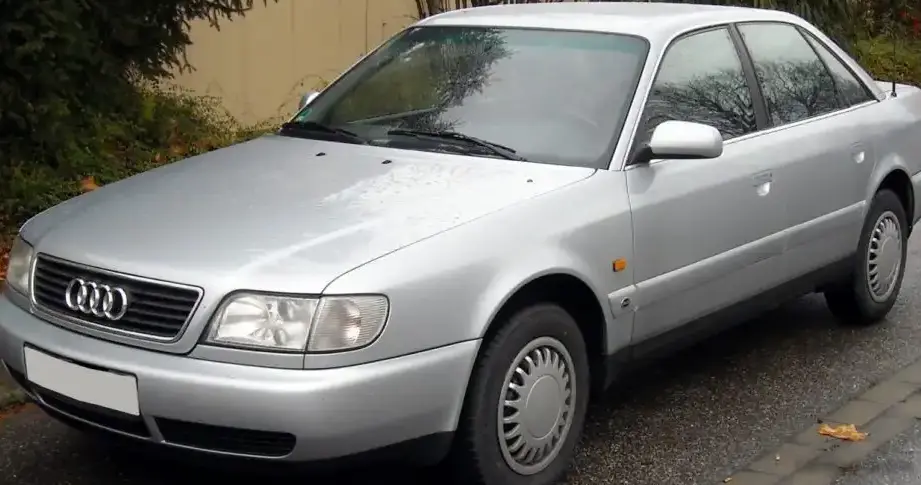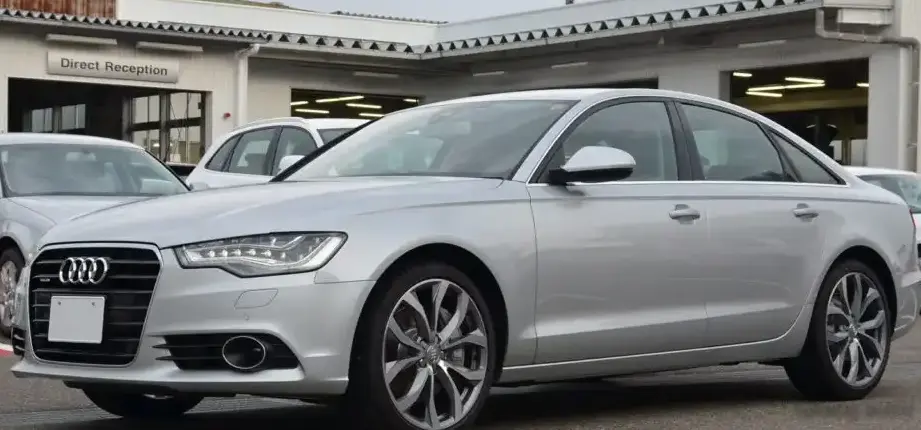
The Audi A6 Sedan (4G, C7) 3.0 TDI V6, producing 204 horsepower, represents a significant iteration of Audi’s mid-size executive car. Introduced in February 2011 and continuing through 2014, this variant occupied a key position within the C7 generation A6 lineup, offering a balance between performance, fuel efficiency, and refinement. It was designed to appeal to buyers seeking a comfortable and capable long-distance cruiser with the added benefits of diesel power. This model was primarily marketed in Europe and other regions where diesel engines were favored, offering a compelling alternative to gasoline-powered competitors.
Technical Specifications
| Brand | Audi |
| Model | A6 |
| Generation | A6 Sedan (4G, C7) |
| Type (Engine) | 3.0 TDI V6 (204 Hp) |
| Start of production | February, 2011 |
| End of production | 2014 |
| Powertrain Architecture | Internal Combustion engine |
| Body type | Sedan |
| Seats | 5 |
| Doors | 4 |
| Fuel consumption (economy) – urban | 6.5 l/100 km (36.2 US mpg, 43.5 UK mpg, 15.4 km/l) |
| Fuel consumption (economy) – extra urban | 4.4 l/100 km (53.5 US mpg, 64.2 UK mpg, 22.7 km/l) |
| Fuel consumption (economy) – combined | 5.3 l/100 km (44.4 US mpg, 53.3 UK mpg, 18.9 km/l) |
| CO2 emissions | 139 g/km |
| Fuel Type | Diesel |
| Acceleration 0 – 100 km/h | 7.6 sec |
| Acceleration 0 – 62 mph | 7.6 sec |
| Acceleration 0 – 60 mph | 7.2 sec |
| Maximum speed | 242 km/h (150.37 mph) |
| Emission standard | Euro 5 |
| Weight-to-power ratio | 8 kg/Hp, 125.5 Hp/tonne |
| Weight-to-torque ratio | 3.6 kg/Nm, 276.9 Nm/tonne |
| Power | 204 Hp @ 3250-4500 rpm |
| Power per litre | 68.8 Hp/l |
| Torque | 450 Nm @ 1250-3500 rpm (331.9 lb.-ft. @ 1250-3500 rpm) |
| Engine layout | Front, Longitudinal |
| Engine Model/Code | CLAA, CLAB |
| Engine displacement | 2967 cm3 (181.06 cu. in.) |
| Number of cylinders | 6 |
| Engine configuration | V-engine |
| Cylinder Bore | 83 mm (3.27 in.) |
| Piston Stroke | 91.4 mm (3.6 in.) |
| Compression ratio | 16.8:1 |
| Number of valves per cylinder | 4 |
| Fuel injection system | Diesel Commonrail |
| Engine aspiration | Turbocharger, Intercooler |
| Valvetrain | DOHC |
| Engine oil capacity | 6.4 l (6.76 US qt | 5.63 UK qt) |
| Coolant | 11.5 l (12.15 US qt | 10.12 UK qt) |
| Kerb Weight | 1625 kg (3582.51 lbs.) |
| Max. weight | 2205 kg (4861.19 lbs.) |
| Max load | 580 kg (1278.68 lbs.) |
| Trunk (boot) space – minimum | 530 l (18.72 cu. ft.) |
| Trunk (boot) space – maximum | 995 l (35.14 cu. ft.) |
| Fuel tank capacity | 65 l (17.17 US gal | 14.3 UK gal) |
| Max. roof load | 100 kg (220.46 lbs.) |
| Permitted trailer load with brakes (8%) | 1900 kg (4188.78 lbs.) |
| Permitted trailer load with brakes (12%) | 1800 kg (3968.32 lbs.) |
| Permitted trailer load without brakes | 750 kg (1653.47 lbs.) |
| Permitted towbar download | 85 kg (187.39 lbs.) |
| Length | 4915 mm (193.5 in.) |
| Width | 1874 mm (73.78 in.) |
| Width including mirrors | 2086 mm (82.13 in.) |
| Height | 1468 mm (57.8 in.) |
| Wheelbase | 2912 mm (114.65 in.) |
| Front track | 1627 mm (64.06 in.) |
| Rear (Back) track | 1618 mm (63.7 in.) |
| Front overhang | 912 mm (35.91 in.) |
| Rear overhang | 1091 mm (42.95 in.) |
| Drag coefficient (Cd) | 0.28 |
| Minimum turning circle (turning diameter) | 11.9 m (39.04 ft.) |
| Drivetrain Architecture | The Internal combustion engine (ICE) drives the front wheels of the vehicle. |
| Drive wheel | Front wheel drive |
| Number of gears and type of gearbox | 6 gears, manual transmission |
| Front suspension | Independent multi-link suspension |
| Rear suspension | Independent on trapezoidal lever |
| Front brakes | Ventilated discs |
| Rear brakes | Disc |
| Assisting systems | ABS (Anti-lock braking system) |
| Steering type | Steering rack and pinion |
| Power steering | Electric Steering |
| Tires size | 225/60 R16 |
| Wheel rims size | 7.5J x 16 |
INTRODUCTION
The Audi A6 Sedan (4G, C7) 3.0 TDI V6 204 Hp, produced between 2011 and 2014, was a cornerstone of Audi’s A6 range in Europe and other diesel-friendly markets. Built on the 4G platform (also known as the C7 generation), this variant aimed to deliver a premium driving experience with enhanced fuel economy. Positioned as a mid-range offering, it sat below the more powerful 3.0 TDI variants (often exceeding 230 hp) and above the entry-level 2.0 TDI models. The C7 A6 represented a significant leap forward in terms of technology, design, and overall refinement compared to its predecessor.
Powertrain & Engine Architecture
At the heart of this A6 variant lies the 3.0-liter V6 diesel engine, specifically utilizing the CLAA or CLAB engine codes. This engine is a longitudinally mounted, turbocharged common rail diesel. The engine benefits from a single turbocharger with an intercooler, boosting efficiency and power output. The common rail direct injection system, operating at very high pressures, ensures precise fuel delivery and optimized combustion. The engine features a Double Overhead Camshaft (DOHC) valvetrain with four valves per cylinder, contributing to its responsive nature. The 204 hp version typically employed a slightly less aggressive turbo tune and different engine management calibration compared to higher-output versions. The engine is paired with a six-speed manual transmission, delivering power to the front wheels. While an automatic transmission was available on other A6 models, the 204 hp version was primarily offered with the manual gearbox.
Driving Characteristics
The 3.0 TDI V6 204 hp A6 offered a refined and comfortable driving experience. While not as overtly sporty as some of its competitors or higher-powered A6 siblings, it provided ample torque – 450 Nm (331.9 lb-ft) – readily available from as low as 1250 rpm. This made it exceptionally capable for effortless highway cruising and overtaking maneuvers. The six-speed manual transmission, while engaging, had relatively long gearing, prioritizing fuel economy over outright acceleration. Acceleration from 0-100 km/h (0-62 mph) took approximately 7.6 seconds. Compared to the more powerful 3.0 TDI variants, this version felt less urgent in its acceleration, but the difference was often subtle in everyday driving. The front-wheel-drive configuration provided good traction in most conditions, although it could exhibit some torque steer under hard acceleration.
Equipment & Trim Levels
The A6 3.0 TDI V6 204 hp typically came well-equipped, reflecting Audi’s commitment to luxury and technology. Standard features often included automatic climate control, a multi-function steering wheel, power-adjustable front seats, and an Audi Concert audio system. Interior upholstery was typically cloth or a combination of cloth and leatherette. Optional extras included leather upholstery, a navigation system, parking sensors, and a sunroof. Trim levels varied slightly depending on the market, but generally, this variant represented a solid mid-range offering, providing a good balance of features and price. The dashboard layout was clean and modern, with a focus on ergonomics and ease of use.
Chassis & Braking
The C7 A6 featured a sophisticated chassis design. The front suspension utilized an independent multi-link setup, while the rear employed an independent trapezoidal link suspension. This configuration provided a comfortable ride and good handling characteristics. The braking system consisted of ventilated discs at the front and solid discs at the rear, providing adequate stopping power. Anti-lock Braking System (ABS) was standard. The suspension tuning was geared towards comfort, prioritizing a smooth ride over aggressive handling. Stabilizer bars were fitted front and rear to reduce body roll during cornering.
Market Reception & Comparison
The Audi A6 3.0 TDI V6 204 hp was generally well-received by automotive critics. It was praised for its refined engine, comfortable ride, and spacious interior. Fuel economy was a significant selling point, with combined fuel consumption figures around 5.3 l/100 km (44.4 US mpg). Compared to the higher-output 3.0 TDI variants, this version offered a more affordable entry point into the A6 range, albeit with slightly less performance. Against competitors like the BMW 5 Series and Mercedes-Benz E-Class, the A6 3.0 TDI was often seen as a strong contender, offering a compelling blend of luxury, technology, and efficiency. The manual transmission, while appreciated by some, was a drawback for buyers accustomed to automatic gearboxes.
Legacy
The 3.0 TDI V6 engine, in its various iterations, proved to be a reliable and durable powertrain. The CLAA and CLAB engine codes are generally considered robust, although regular maintenance is crucial. Common issues can include diesel particulate filter (DPF) clogging and occasional turbocharger wear. In the used car market, the A6 3.0 TDI V6 204 hp remains a popular choice, offering a good value proposition for buyers seeking a comfortable and efficient executive car. Its relatively simple mechanicals (compared to later, more complex diesel engines) make it a potentially more affordable option to maintain. However, prospective buyers should carefully inspect the vehicle’s service history and be aware of potential diesel-related maintenance costs.