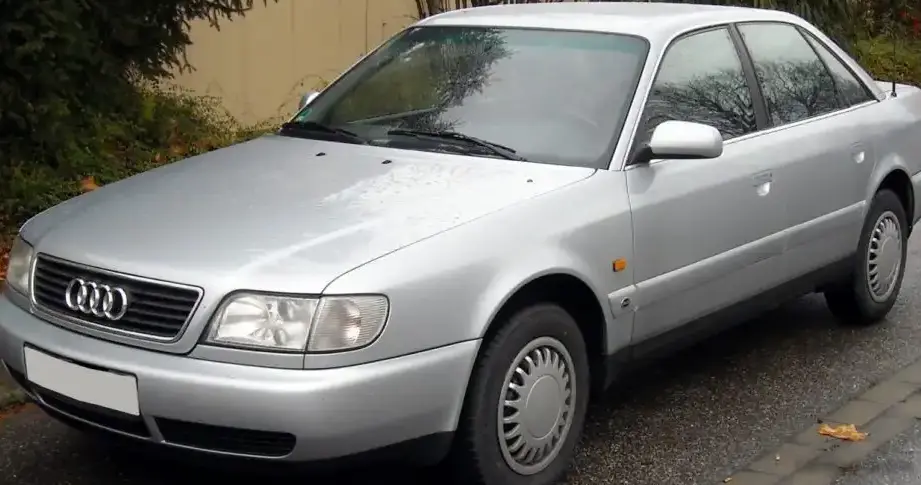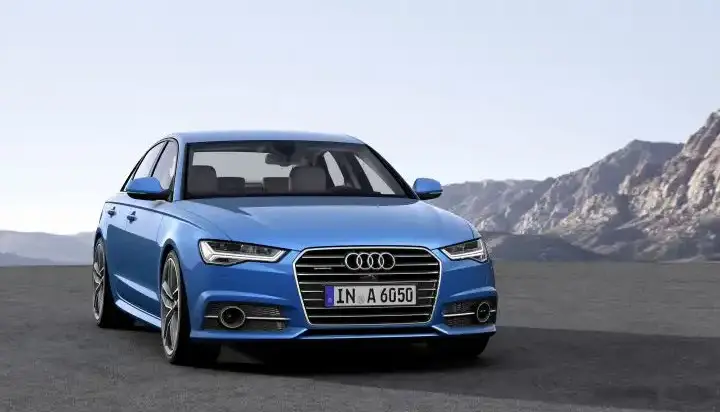
The Audi A6 Sedan (4G, C7 facelift) 2.0 TDI ultra, produced from 2014 to 2016, represented a significant iteration within the C7 generation of Audi’s mid-size executive car. This variant, equipped with a 2.0-liter turbocharged diesel engine producing 190 horsepower and paired with Audi’s 7-speed S tronic dual-clutch transmission, was positioned as a fuel-efficient and technologically advanced option within the A6 lineup. It aimed to balance performance with economy, appealing to buyers seeking a refined driving experience without sacrificing practicality. The “ultra” designation signified Audi’s efforts to reduce weight and improve efficiency across the model range.
Technical Specifications
| Brand | Audi |
| Model | A6 |
| Generation | A6 Sedan (4G, C7 facelift 2014) |
| Type (Engine) | 2.0 TDI ultra (190 Hp) S tronic |
| Start of production | 2014 |
| End of production | 2016 |
| Powertrain Architecture | Internal Combustion engine |
| Body type | Sedan |
| Seats | 5 |
| Doors | 4 |
| Fuel consumption (urban) | 5.2 l/100 km (45.2 US mpg, 54.3 UK mpg, 19.2 km/l) |
| Fuel consumption (extra urban) | 3.9 l/100 km (60.3 US mpg, 72.4 UK mpg, 25.6 km/l) |
| Fuel consumption (combined) | 4.4 l/100 km (53.5 US mpg, 64.2 UK mpg, 22.7 km/l) |
| CO2 emissions | 113 g/km |
| Fuel Type | Diesel |
| Acceleration 0 – 100 km/h | 8.2 sec |
| Acceleration 0 – 62 mph | 8.2 sec |
| Acceleration 0 – 60 mph | 7.8 sec |
| Maximum speed | 232 km/h (144.16 mph) |
| Emission standard | Euro 6 |
| Weight-to-power ratio | 8.7 kg/Hp, 114.5 Hp/tonne |
| Weight-to-torque ratio | 4.2 kg/Nm, 241 Nm/tonne |
| Power | 190 Hp @ 3800-4200 rpm |
| Power per litre | 96.5 Hp/l |
| Torque | 400 Nm @ 1750-3000 rpm (295.02 lb.-ft. @ 1750-3000 rpm) |
| Engine layout | Front, Longitudinal |
| Engine Model/Code | CNHA, CZJA, DDDA |
| Engine displacement | 1968 cm3 (120.09 cu. in.) |
| Number of cylinders | 4 |
| Engine configuration | Inline |
| Cylinder Bore | 81 mm (3.19 in.) |
| Piston Stroke | 95.5 mm (3.76 in.) |
| Compression ratio | 15.5:1 |
| Number of valves per cylinder | 4 |
| Fuel injection system | Diesel Commonrail |
| Engine aspiration | Turbocharger, Intercooler |
| Valvetrain | DOHC |
| Engine oil capacity | 4.7 l (4.97 US qt | 4.14 UK qt) |
| Coolant | 12 l (12.68 US qt | 10.56 UK qt) |
| Kerb Weight | 1660 kg (3659.67 lbs.) |
| Max. weight | 2240 kg (4938.35 lbs.) |
| Max load | 580 kg (1278.68 lbs.) |
| Trunk (boot) space – minimum | 530 l (18.72 cu. ft.) |
| Trunk (boot) space – maximum | 995 l (35.14 cu. ft.) |
| Fuel tank capacity | 73 l (19.28 US gal | 16.06 UK gal) |
| Max. roof load | 100 kg (220.46 lbs.) |
| Permitted trailer load with brakes (8%) | 2000 kg (4409.25 lbs.) |
| Permitted trailer load with brakes (12%) | 1800 kg (3968.32 lbs.) |
| Permitted trailer load without brakes | 750 kg (1653.47 lbs.) |
| Permitted towbar download | 85 kg (187.39 lbs.) |
| Length | 4933 mm (194.21 in.) |
| Width | 1874 mm (73.78 in.) |
| Width including mirrors | 2086 mm (82.13 in.) |
| Height | 1455-1468 mm (57.28 – 57.8 in.) |
| Wheelbase | 2912 mm (114.65 in.) |
| Front track | 1627 mm (64.06 in.) |
| Rear (Back) track | 1618 mm (63.7 in.) |
| Front overhang | 930 mm (36.61 in.) |
| Rear overhang | 1091 mm (42.95 in.) |
| Drag coefficient (Cd) | 0.26 |
| Minimum turning circle (turning diameter) | 11.9 m (39.04 ft.) |
| Drivetrain Architecture | The Internal combustion engine (ICE) drives the front wheels of the vehicle. |
| Drive wheel | Front wheel drive |
| Number of gears and type of gearbox | 7 gears, automatic transmission S tronic |
| Front suspension | Independent multi-link suspension |
| Rear suspension | Independent on trapezoidal lever |
| Front brakes | Ventilated discs |
| Rear brakes | Disc |
| Assisting systems | ABS (Anti-lock braking system) |
| Steering type | Steering rack and pinion |
| Power steering | Electric Steering |
| Tires size | 225/55 R17 |
| Wheel rims size | 8J x 17 |
INTRODUCTION
The Audi A6 Sedan (4G, C7 facelift) 2.0 TDI ultra, launched in 2014, was a key component of Audi’s strategy to offer a broader range of efficient and appealing options within the executive sedan segment. The C7 facelift brought updated styling, improved technology, and refined engine options. This particular variant, with its 2.0-liter TDI engine and S tronic transmission, aimed to deliver a balance of performance, fuel economy, and comfort. It sat in the mid-range of the A6 lineup, offering a more accessible entry point than the higher-powered engines like the 3.0 TDI or the petrol-powered variants.
Powertrain & Engine Architecture
At the heart of the A6 2.0 TDI ultra lies the Volkswagen Group’s EA288 series of diesel engines. Specifically, this model utilized engine codes CNHA, CZJA, or DDDA, depending on the specific market and production date. The 1968cc inline-four cylinder engine featured common-rail direct injection, delivering fuel at pressures up to 2000 bar for optimized combustion. A single turbocharger with an intercooler provided forced induction, boosting power and torque. The engine employed a double overhead camshaft (DOHC) valvetrain with four valves per cylinder. The S tronic 7-speed dual-clutch transmission (DCT) was a crucial element, offering rapid and smooth gear changes. This transmission featured two separate clutches, one for odd gears and one for even gears, allowing for pre-selection of the next gear and minimizing interruption in power delivery. The gear ratios were tuned to prioritize both fuel efficiency and responsive acceleration.
Driving Characteristics
The 190 horsepower and 400 Nm (295 lb-ft) of torque provided by the 2.0 TDI ultra engine delivered respectable performance for everyday driving. Acceleration from 0 to 100 km/h (0-62 mph) took approximately 8.2 seconds. While not as quick as the more powerful A6 variants, the 2.0 TDI ultra offered sufficient power for overtaking and highway cruising. The S tronic transmission contributed to a smooth and refined driving experience, with quick shifts and minimal torque interruption. Compared to the manual transmission options, the S tronic provided greater convenience and ease of use, particularly in urban traffic. The engine’s torque curve was relatively flat, providing good pulling power across a wide range of engine speeds. However, it lacked the outright punch and responsiveness of the larger displacement engines.
Equipment & Trim Levels
The A6 2.0 TDI ultra typically came well-equipped as standard. Features included Audi’s Multi Media Interface (MMI) infotainment system with a central display screen, automatic climate control, leather upholstery, and a suite of safety features such as ABS, electronic stability control, and multiple airbags. Optional extras included features like a navigation system, premium sound system, adaptive cruise control, and parking assistance systems. Trim levels varied by market, but generally offered options for upgraded interior materials, exterior styling enhancements, and additional convenience features. The “ultra” designation itself didn’t necessarily denote a specific trim level, but rather a powertrain and efficiency-focused specification.
Chassis & Braking
The A6 2.0 TDI ultra utilized a sophisticated chassis design featuring independent suspension all around. The front suspension employed a multi-link setup, while the rear suspension utilized a trapezoidal link configuration. This provided a comfortable ride quality and good handling characteristics. Braking duties were handled by ventilated front discs and solid rear discs. Anti-lock braking system (ABS) and electronic stability control (ESC) were standard features, enhancing safety and control. The suspension tuning was generally geared towards comfort, but still provided a reasonably engaging driving experience. Stabilizer bars were fitted front and rear to reduce body roll during cornering.
Market Reception & Comparison
The Audi A6 2.0 TDI ultra was generally well-received by automotive critics. It was praised for its fuel efficiency, comfortable ride, and refined interior. However, some reviewers noted that the engine lacked the outright performance of its larger displacement counterparts. Compared to the 3.0 TDI, the 2.0 TDI ultra offered significantly better fuel economy but less power and acceleration. Against competitors like the BMW 520d and Mercedes-Benz E220d, the A6 2.0 TDI ultra held its own in terms of fuel efficiency and interior quality. Its reliability was generally considered good, although diesel particulate filter (DPF) issues could occur with infrequent long-distance driving.
Legacy
The 2.0 TDI ultra powertrain proved to be a popular choice in the A6 lineup, offering a compelling blend of efficiency and practicality. The EA288 engine family has continued to be refined and updated in subsequent Audi models. On the used car market, the A6 2.0 TDI ultra represents a good value proposition, offering a comfortable and well-equipped executive sedan at a relatively affordable price. However, potential buyers should be aware of the potential for DPF issues and ensure that the vehicle has been properly maintained. The S tronic transmission, while generally reliable, may require servicing at specific intervals to ensure optimal performance.