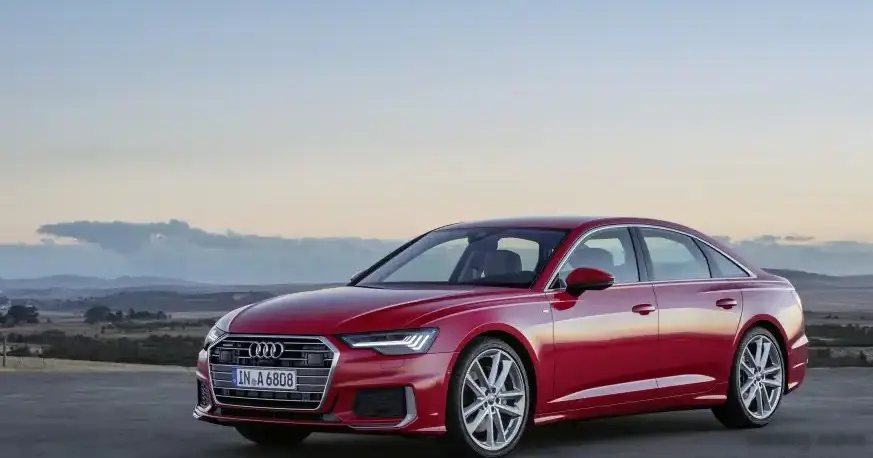
The Audi A6 55 TFSI e, produced from October 2019 to December 2020, represents Audi’s foray into plug-in hybrid technology within the C8 generation A6 sedan. Positioned as a premium offering, this variant combined a 2.0-liter turbocharged four-cylinder engine with an electric motor, delivering a combined system output of 367 horsepower. It aimed to provide a balance of performance, efficiency, and electric-only driving capability, appealing to buyers seeking a more environmentally conscious luxury vehicle. The 55 TFSI e was a key component of Audi’s strategy to electrify its lineup and meet increasingly stringent emissions regulations, primarily targeting the European market, though limited examples were available in North America.
Technical Specifications
| Brand | Audi |
| Model | A6 |
| Generation | A6 Sedan (C8) |
| Type | 55 TFSI e (367 Hp) Plug-in Hybrid quattro ultra S tronic |
| Start of production | October, 2019 |
| End of production | December, 2020 |
| Powertrain Architecture | PHEV (Plug-in Hybrid Electric Vehicle) |
| Body type | Sedan |
| Seats | 5 |
| Doors | 4 |
| Combined fuel consumption (WLTP) | 1.6-2.1 l/100 km (147 – 112 US mpg, 176.6 – 134.5 UK mpg, 62.5 – 47.6 km/l) |
| CO2 emissions (WLTP) | 35-47 g/km |
| Fuel consumption (NEDC) – combined | 1.9-2.1 l/100 km (123.8 – 112 US mpg, 148.7 – 134.5 UK mpg, 52.6 – 47.6 km/l) |
| CO2 emissions (NEDC) | 43-47 g/km |
| Fuel Type | Petrol / electricity |
| Acceleration 0 – 100 km/h | 5.6 sec |
| Acceleration 0 – 62 mph | 5.6 sec |
| Acceleration 0 – 60 mph | 5.3 sec |
| Maximum speed | 250 km/h (155.34 mph) – Electronically limited |
| Emission standard | Euro 6d-TEMP-EVAP-ISC |
| Weight-to-power ratio | 5.5 kg/Hp, 182.6 Hp/tonne |
| Weight-to-torque ratio | 4 kg/Nm, 248.8 Nm/tonne |
| Gross battery capacity | 14.1 kWh |
| Net (usable) battery capacity | 11.3 kWh |
| Battery technology | Lithium-ion (Li-Ion) |
| Battery location | Under the trunk |
| All-electric range (WLTP) | 46-55 km (28.58 – 34.18 mi) |
| Average Energy consumption (NEDC) | 17.4-17.9 kWh/100 km (28 – 28.81 kWh/100 mi, 120 – 117 MPGe, 5.7 – 5.6 km/kWh, 3.6 – 3.5 mi/kWh) |
| Max speed (electric) | 135 km/h (83.89 mph) |
| Electric motor power | 143 Hp |
| Electric motor Torque | 350 Nm (258.15 lb.-ft.) |
| Electric motor location | Between the combustion engine and the transmission |
| System power | 367 Hp |
| System torque | 500 Nm @ 1250 rpm (368.78 lb.-ft. @ 1250 rpm) |
| Power | 252 Hp @ 5000-6000 rpm |
| Torque | 370 Nm @ 1600-4500 rpm (272.9 lb.-ft. @ 1600-4500 rpm) |
| Engine layout | Front, Longitudinal |
| Engine Model/Code | DLZA |
| Engine displacement | 1984 cm3 (121.07 cu. in.) |
| Number of cylinders | 4 |
| Engine configuration | Inline |
| Cylinder Bore | 82.5 mm (3.25 in.) |
| Piston Stroke | 92.8 mm (3.65 in.) |
| Compression ratio | 9.6:1 |
| Number of valves per cylinder | 4 |
| Fuel injection system | Direct injection |
| Engine aspiration | Turbocharger, Intercooler |
| Valvetrain | DOHC |
| Engine oil capacity | 7.6 l (8.03 US qt | 6.69 UK qt) |
| Kerb Weight | 2010 kg (4431.29 lbs.) |
| Max. weight | 2610 kg (5754.07 lbs.) |
| Max load | 600 kg (1322.77 lbs.) |
| Trunk (boot) space – minimum | 360 l (12.71 cu. ft.) |
| Fuel tank capacity | 52 l (13.74 US gal | 11.44 UK gal) |
| Max. roof load | 90 kg (198.42 lbs.) |
| Permitted trailer load with brakes (12%) | 2000 kg (4409.25 lbs.) |
| Permitted trailer load without brakes | 750 kg (1653.47 lbs.) |
| Permitted towbar download | 95 kg (209.44 lbs.) |
| Length | 4939 mm (194.45 in.) |
| Width | 1886 mm (74.25 in.) |
| Width including mirrors | 2110 mm (83.07 in.) |
| Height | 1457 mm (57.36 in.) |
| Wheelbase | 2924 mm (115.12 in.) |
| Front track | 1630 mm (64.17 in.) |
| Rear (Back) track | 1617 mm (63.66 in.) |
| Front overhang | 920 mm (36.22 in.) |
| Rear overhang | 1095 mm (43.11 in.) |
| Minimum turning circle (turning diameter) | 12.1 m (39.7 ft.) |
| Drivetrain Architecture | The Internal combustion engine (ICE) and the electric motor permanently drive the front wheels of the vehicle, capable of running in full electric or mixed mode, and if necessary through the electrically or mechanically controlled clutch, the rear wheels are driven. |
| Drive wheel | All wheel drive (4×4) |
| Number of gears and type of gearbox | 7 gears, automatic transmission S tronic |
| Front suspension | Independent multi-link suspension, Transverse stabilizer |
| Rear suspension | Independent multi-link suspension, Transverse stabilizer |
| Front brakes | Ventilated discs |
| Rear brakes | Ventilated discs |
| Assisting systems | ABS (Anti-lock braking system) |
| Steering type | Steering rack and pinion |
| Power steering | Electric Steering |
| Tires size | 245/45 R19; 255/40 R20 |
| Wheel rims size | 8.5J x 19; 8.5J x 20 |
Powertrain & Engine Architecture
The A6 55 TFSI e’s powertrain centers around Audi’s DLZA 2.0-liter turbocharged inline-four cylinder engine. This engine, a member of the EA888 family, utilizes direct fuel injection and a single twin-scroll turbocharger to produce 252 horsepower. The engine’s design emphasizes efficiency, featuring an optimized combustion chamber and reduced internal friction. Integrated with the engine is a 143 horsepower electric motor, positioned between the engine and the seven-speed S tronic dual-clutch transmission. This placement allows for both electric drive and the blending of power from the engine and motor. The 14.1 kWh lithium-ion battery pack is located under the trunk floor, impacting cargo space. The S tronic transmission is crucial to the hybrid system, enabling smooth transitions between electric, hybrid, and gasoline-only modes. The quattro all-wheel-drive system is integrated, providing enhanced traction and stability.
Driving Characteristics
The 55 TFSI e delivers a noticeably different driving experience compared to A6 variants equipped with solely gasoline engines. In electric-only mode, the car offers near-silent acceleration and a range of 46-55 km (28.6-34.2 miles) depending on driving conditions. The instant torque from the electric motor provides brisk acceleration from a standstill. When the engine and motor work in tandem, the combined 367 horsepower results in a 0-60 mph time of around 5.3 seconds. The S tronic transmission provides quick and precise gear changes, contributing to the car’s responsive feel. Compared to the A6 45 TFSI, the 55 TFSI e offers similar overall performance but with the added benefit of electric driving. Compared to higher-performance A6 models like the S6, the 55 TFSI e prioritizes efficiency over outright speed, but still delivers a respectable level of performance.
Equipment & Trim Levels
The 55 TFSI e typically came well-equipped, reflecting its premium positioning. Standard features included Audi’s virtual cockpit digital instrument cluster, a touchscreen infotainment system with navigation, leather upholstery, three-zone automatic climate control, and a suite of driver-assistance systems such as adaptive cruise control and lane-keeping assist. Exterior features often included distinctive “TFSI e” badging and unique wheel designs. Optional extras included a Bang & Olufsen sound system, massaging front seats, and a head-up display. The interior trim levels were generally aligned with other A6 models, offering a range of wood, aluminum, and carbon fiber accents.
Chassis & Braking
The A6 55 TFSI e utilizes a sophisticated chassis design featuring independent multi-link suspension at both the front and rear axles. This setup provides a comfortable ride quality while maintaining good handling characteristics. The added weight of the battery pack, however, does slightly alter the car’s weight distribution. The braking system consists of ventilated discs on all four wheels, providing ample stopping power. ABS, electronic stability control, and traction control are standard features. The steering is electrically assisted, offering precise and responsive control.
Market Reception & Comparison
The Audi A6 55 TFSI e was generally well-received by automotive critics. Reviewers praised its blend of performance, efficiency, and refinement. The electric-only range was considered competitive, and the seamless integration of the hybrid powertrain was noted as a strength. Compared to other plug-in hybrid sedans in its class, such as the BMW 530e and Mercedes-Benz E350e, the A6 55 TFSI e offered a similar level of performance and features. Fuel economy was a key selling point, with the car achieving significantly higher MPG figures in hybrid mode compared to conventional gasoline-powered A6 models. However, the reduced trunk space due to the battery pack was a common criticism.
Legacy
The A6 55 TFSI e represents an important step in Audi’s transition towards electrification. While production was relatively short-lived, the model demonstrated Audi’s commitment to plug-in hybrid technology. On the used car market, these models hold their value reasonably well, particularly those with low mileage and a well-maintained service history. The powertrain has proven to be generally reliable, although the complexity of the hybrid system does require specialized maintenance. The A6 55 TFSI e paved the way for Audi’s subsequent fully electric models and continues to be a desirable option for buyers seeking a sophisticated and efficient luxury sedan.