
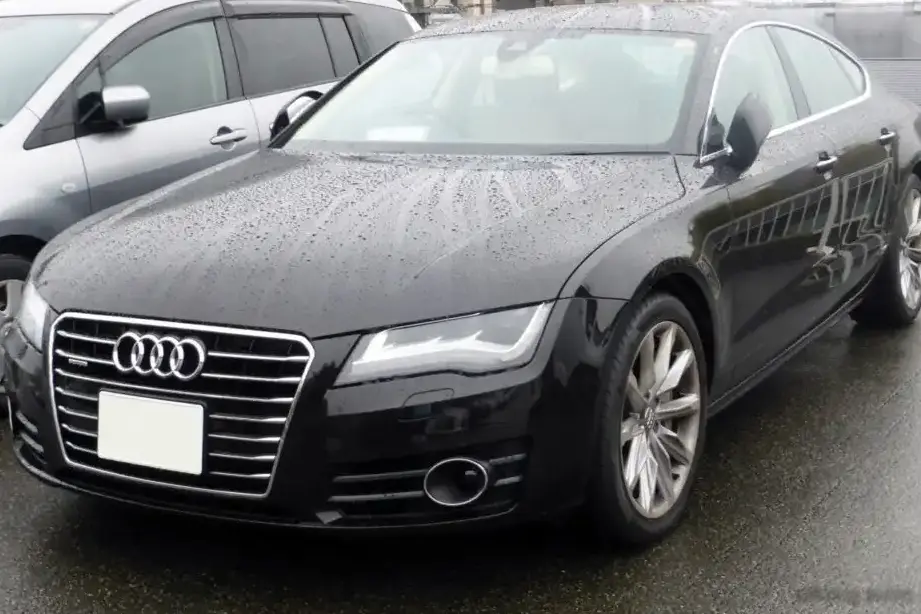
The Audi A7 Sportback (C7) 3.0 TDI V6, producing 245 horsepower, represented a compelling blend of luxury, performance, and efficiency within Audi’s model range. Produced from 2012 to 2014, this variant occupied a significant position in the A7 lineup, appealing to buyers seeking a sophisticated grand tourer with the added capability of quattro all-wheel drive. It was built on the Volkswagen Group’s A6/A7 (4H) platform, also known as the 1HX0 platform, sharing its underpinnings with the Audi A6, and offering a more stylish, coupe-like alternative. This specific configuration, pairing the 3.0 TDI engine with the S tronic dual-clutch transmission, aimed to deliver a refined driving experience with strong acceleration and respectable fuel economy.
Technical Specifications
| Brand | Audi |
| Model | A7 |
| Generation | A7 Sportback (C7) |
| Type (Engine) | 3.0 TDI V6 (245 Hp) quattro S tronic |
| Start of production | 2012 |
| End of production | 2014 |
| Powertrain Architecture | Internal Combustion engine |
| Body type | Liftback |
| Seats | 5 |
| Doors | 5 |
| Fuel consumption (urban) | 7.3 l/100 km (32.2 US mpg, 38.7 UK mpg, 13.7 km/l) |
| Fuel consumption (extra urban) | 5.1 l/100 km (46.1 US mpg, 55.4 UK mpg, 19.6 km/l) |
| Fuel consumption (combined) | 5.9 l/100 km (39.9 US mpg, 47.9 UK mpg, 16.9 km/l) |
| CO2 emissions | 156 g/km |
| Fuel Type | Diesel |
| Acceleration 0 – 100 km/h | 6.5 sec |
| Acceleration 0 – 62 mph | 6.5 sec |
| Acceleration 0 – 60 mph | 6.2 sec |
| Maximum speed | 250 km/h (155.34 mph) |
| Emission standard | Euro 6 |
| Weight-to-power ratio | 7.4 kg/Hp, 134.6 Hp/tonne |
| Weight-to-torque ratio | 3.6 kg/Nm, 274.7 Nm/tonne |
| Power | 245 Hp @ 4000-4500 rpm |
| Power per litre | 82.6 Hp/l |
| Torque | 500 Nm @ 1400-3250 rpm (368.78 lb.-ft. @ 1400-3250 rpm) |
| Engine layout | Front, Longitudinal |
| Engine Model/Code | CDUC, CKVB, CKVC |
| Engine displacement | 2967 cm3 (181.06 cu. in.) |
| Number of cylinders | 6 |
| Engine configuration | V-engine |
| Cylinder Bore | 83 mm (3.27 in.) |
| Piston Stroke | 91.4 mm (3.6 in.) |
| Compression ratio | 16.8:1 |
| Number of valves per cylinder | 4 |
| Fuel injection system | Diesel Commonrail |
| Engine aspiration | Turbocharger, Intercooler |
| Valvetrain | DOHC |
| Engine oil capacity | 6.4 l (6.76 US qt | 5.63 UK qt) |
| Coolant | 11.5 l (12.15 US qt | 10.12 UK qt) |
| Kerb Weight | 1820 kg (4012.41 lbs.) |
| Max. weight | 2430 kg (5357.23 lbs.) |
| Max load | 610 kg (1344.82 lbs.) |
| Trunk (boot) space – minimum | 535 l (18.89 cu. ft.) |
| Trunk (boot) space – maximum | 1390 l (49.09 cu. ft.) |
| Fuel tank capacity | 65 l (17.17 US gal | 14.3 UK gal) |
| Max. roof load | 100 kg (220.46 lbs.) |
| Permitted trailer load with brakes (8%) | 2100 kg (4629.71 lbs.) |
| Permitted trailer load with brakes (12%) | 2000 kg (4409.25 lbs.) |
| Permitted trailer load without brakes | 750 kg (1653.47 lbs.) |
| Permitted towbar download | 85 kg (187.39 lbs.) |
| Length | 4969 mm (195.63 in.) |
| Width | 1911 mm (75.24 in.) |
| Height | 1420 mm (55.91 in.) |
| Wheelbase | 2914 mm (114.72 in.) |
| Front track | 1644 mm (64.72 in.) |
| Rear (Back) track | 1635 mm (64.37 in.) |
| Drag coefficient (Cd) | 0.29 |
| Minimum turning circle (turning diameter) | 11.9 m (39.04 ft.) |
| Drive wheel | All wheel drive (4×4) |
| Number of gears and type of gearbox | 7 gears, automatic transmission S tronic |
| Front suspension | Independent multi-link suspension |
| Rear suspension | Independent on trapezoidal lever |
| Front brakes | Ventilated discs |
| Rear brakes | Ventilated discs |
| Assisting systems | ABS (Anti-lock braking system) |
| Steering type | Steering rack and pinion |
| Tires size | 235/55 R17 |
| Wheel rims size | 8.0J x 17 |
Powertrain & Engine Architecture
At the heart of the A7 3.0 TDI was the 3.0-liter V6 diesel engine, identifiable by engine codes CDUC, CKVB, and CKVC. This engine was a member of Volkswagen Group’s modular engine family, known for its robust construction and advanced technology. It featured a common rail direct injection system, delivering fuel at extremely high pressures for optimized combustion. The engine employed a single turbocharger with an intercooler to boost power and efficiency. The valvetrain utilized a double overhead camshaft (DOHC) design with four valves per cylinder, enhancing breathing and overall performance. The S tronic 7-speed dual-clutch transmission was a key component, offering rapid and smooth gear changes. This transmission allowed for both fully automatic operation and manual gear selection via steering wheel-mounted paddles, providing drivers with a choice between convenience and control.
Driving Characteristics
The 245 horsepower and 368 lb-ft of torque produced by the 3.0 TDI engine, coupled with the S tronic transmission and quattro all-wheel drive, resulted in a refined and capable driving experience. Acceleration from 0 to 60 mph took approximately 6.2 seconds, making it a brisk performer for a large luxury liftback. The S tronic transmission’s quick shifts minimized power interruption, contributing to a seamless surge of acceleration. While not as overtly sporty as the higher-output versions of the A7, this variant offered ample power for everyday driving and comfortable highway cruising. The quattro system provided excellent traction in all weather conditions, enhancing stability and confidence. The gear ratios were tuned for a balance between acceleration and fuel efficiency, with taller gears for relaxed cruising and shorter gears for responsive acceleration.
Equipment & Trim Levels
The A7 3.0 TDI typically came well-equipped, reflecting its positioning as a premium vehicle. Standard features often included leather upholstery, tri-zone automatic climate control, a multi-function steering wheel, and a high-resolution infotainment system with navigation. Optional extras could include features like adaptive cruise control, a Bang & Olufsen sound system, ventilated front seats, and a head-up display. Interior trim options varied, with choices in wood veneers and aluminum accents. The dashboard layout was typically clean and modern, emphasizing Audi’s minimalist design philosophy.
Chassis & Braking
The A7 Sportback featured an independent suspension system on all four wheels, providing a comfortable ride and precise handling. The front suspension utilized a multi-link setup, while the rear employed a trapezoidal link design. Ventilated disc brakes were standard on all four wheels, providing ample stopping power. The A7 3.0 TDI was equipped with ABS (Anti-lock Braking System) and electronic stability control as standard safety features. Stabilizer bars were fitted to both the front and rear axles to reduce body roll during cornering.
Market Reception & Comparison
The Audi A7 3.0 TDI V6 was generally well-received by automotive critics. It was praised for its stylish design, luxurious interior, and refined driving experience. The 3.0 TDI engine was noted for its strong performance and excellent fuel economy. Compared to the more powerful 3.0 TDI variants, this 245 hp version offered a more accessible price point while still delivering a satisfying level of performance. It also provided better fuel economy than the gasoline-powered A7 models. Against competitors like the BMW 5 Series Gran Turismo and Mercedes-Benz CLS, the A7 was often seen as a more visually striking and technologically advanced option.
Legacy
The 3.0 TDI engine in the A7 Sportback (C7) has proven to be a relatively reliable powertrain, although, like any diesel engine, it requires regular maintenance. Common issues can include diesel particulate filter (DPF) clogging and occasional turbocharger problems. However, with proper care, these engines can accumulate high mileage. In the used car market, the A7 3.0 TDI V6 remains a desirable option for buyers seeking a luxurious and capable grand tourer. Its combination of style, performance, and efficiency continues to appeal to a wide range of drivers. The S tronic transmission, while generally reliable, may require servicing at higher mileages to ensure smooth operation.
