
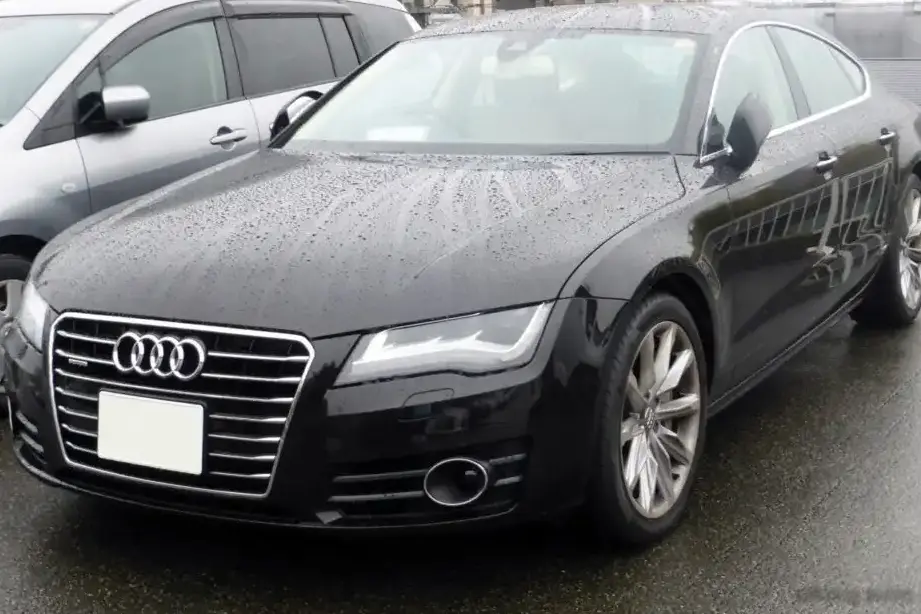
The Audi A7 Sportback (C7) 3.0 TFSI quattro S tronic, produced from July 2010 to May 2012, represents a compelling blend of luxury, performance, and technology within the Audi A7 range. Positioned as a mid-to-high-end variant of the C7 generation (2010-2018), this model combined Audi’s renowned quattro all-wheel drive system with a supercharged 3.0-liter V6 engine and the quick-shifting S tronic dual-clutch transmission. It aimed to deliver a refined driving experience with strong acceleration and respectable fuel economy, appealing to buyers seeking a sophisticated grand tourer. The A7 Sportback, as a whole, was Audi’s answer to the Mercedes-Benz CLS-Class, pioneering the “four-door coupe” segment with its sleek, sloping roofline and practical liftback design.
Technical Specifications
| Brand | Audi |
| Model | A7 |
| Generation | A7 Sportback (C7) |
| Type (Engine) | 3.0 TFSI V6 (300 Hp) quattro S tronic |
| Start of production | July, 2010 |
| End of production | May, 2012 |
| Powertrain Architecture | Internal Combustion engine |
| Body type | Liftback |
| Seats | 5 |
| Doors | 5 |
| Fuel consumption (urban) | 10.8 l/100 km (21.8 US mpg, 26.2 UK mpg, 9.3 km/l) |
| Fuel consumption (extra urban) | 6.6 l/100 km (35.6 US mpg, 42.8 UK mpg, 15.2 km/l) |
| Fuel consumption (combined) | 8.2 l/100 km (28.7 US mpg, 34.4 UK mpg, 12.2 km/l) |
| CO2 emissions | 190 g/km |
| Fuel Type | Petrol (Gasoline) |
| Acceleration 0 – 100 km/h | 5.6 sec |
| Acceleration 0 – 62 mph | 5.6 sec |
| Acceleration 0 – 60 mph | 5.3 sec |
| Maximum speed | 250 km/h (155.34 mph) |
| Emission standard | Euro 5 |
| Weight-to-power ratio | 6 kg/Hp, 168.1 Hp/tonne |
| Weight-to-torque ratio | 4.1 kg/Nm, 246.5 Nm/tonne |
| Power | 300 Hp @ 5250-6500 rpm |
| Power per litre | 100.2 Hp/l |
| Torque | 440 Nm @ 2900-4500 rpm (324.53 lb.-ft. @ 2900-4500 rpm) |
| Engine layout | Front, Longitudinal |
| Engine Model/Code | CGWB, CHMA |
| Engine displacement | 2995 cm3 (182.77 cu. in.) |
| Number of cylinders | 6 |
| Engine configuration | V-engine |
| Cylinder Bore | 84.5 mm (3.33 in.) |
| Piston Stroke | 89 mm (3.5 in.) |
| Compression ratio | 10.3:1 |
| Number of valves per cylinder | 4 |
| Fuel injection system | Direct injection |
| Engine aspiration | Supercharger, Intercooler |
| Valvetrain | DOHC |
| Engine oil capacity | 6.8 l (7.19 US qt | 5.98 UK qt) |
| Coolant | 12 l (12.68 US qt | 10.56 UK qt) |
| Kerb Weight | 1785 kg (3935.25 lbs.) |
| Max. weight | 2335 kg (5147.79 lbs.) |
| Max load | 550 kg (1212.54 lbs.) |
| Trunk (boot) space – minimum | 535 l (18.89 cu. ft.) |
| Trunk (boot) space – maximum | 1390 l (49.09 cu. ft.) |
| Fuel tank capacity | 65 l (17.17 US gal | 14.3 UK gal) |
| Max. roof load | 100 kg (220.46 lbs.) |
| Permitted trailer load with brakes (8%) | 2100 kg (4629.71 lbs.) |
| Permitted trailer load with brakes (12%) | 2100 kg (4629.71 lbs.) |
| Permitted trailer load without brakes | 750 kg (1653.47 lbs.) |
| Permitted towbar download | 85 kg (187.39 lbs.) |
| Length | 4969 mm (195.63 in.) |
| Width | 1911 mm (75.24 in.) |
| Height | 1420 mm (55.91 in.) |
| Wheelbase | 2914 mm (114.72 in.) |
| Front track | 1644 mm (64.72 in.) |
| Rear (Back) track | 1635 mm (64.37 in.) |
| Drag coefficient (Cd) | 0.30 |
| Minimum turning circle (turning diameter) | 11.9 m (39.04 ft.) |
| Drive wheel | All wheel drive (4×4) |
| Number of gears and type of gearbox | 7 gears, automatic transmission S tronic |
| Front suspension | Independent multi-link suspension |
| Rear suspension | Independent on trapezoidal lever |
| Front brakes | Ventilated discs |
| Rear brakes | Ventilated discs |
| Assisting systems | ABS (Anti-lock braking system) |
| Steering type | Steering rack and pinion |
| Tires size | 235/55 R17 |
| Wheel rims size | 8.0J x 17 |
Powertrain & Engine Architecture
At the heart of the A7 3.0 TFSI lies the CGWB or CHMA engine code, a 2,995 cc naturally aspirated V6. This engine is characterized by its direct fuel injection and a mechanically driven supercharger, providing instant boost and eliminating turbo lag. The supercharger, combined with intercooling, delivers a broad torque curve, making the engine responsive at all speeds. The engine utilizes a dual overhead camshaft (DOHC) valvetrain with four valves per cylinder. The S tronic 7-speed dual-clutch transmission is a key component, offering incredibly fast and smooth gear changes. This transmission allows for both fully automatic operation and manual gear selection via steering wheel-mounted paddles. The transmission’s quick shifts contribute significantly to the car’s overall performance and driving enjoyment.
Driving Characteristics
The 300 horsepower and 324.53 lb-ft of torque, coupled with the quattro all-wheel-drive system, provide the A7 3.0 TFSI with brisk acceleration. The 0-60 mph sprint takes approximately 5.3 seconds, and the car feels confident and stable even at higher speeds. The S tronic transmission’s gear ratios are optimized for both acceleration and fuel efficiency. Compared to the more powerful 3.2 FSI V6 or the diesel-powered TDI variants, this 3.0 TFSI offers a balance between performance and economy. While not as outright quick as the higher-output models, it provides ample power for everyday driving and comfortable highway cruising. The automatic transmission, while efficient, doesn’t offer the same level of driver engagement as a manual gearbox.
Equipment & Trim Levels
The A7 3.0 TFSI typically came well-equipped, reflecting its position in the Audi lineup. Standard features included leather upholstery, tri-zone automatic climate control, a premium sound system, and Audi’s Multi Media Interface (MMI) infotainment system with a central display screen. Optional extras included features like adaptive cruise control, a panoramic sunroof, ventilated front seats, and advanced driver-assistance systems. Interior trim options ranged from wood veneers to brushed aluminum, allowing buyers to personalize the cabin. The A7 Sportback prioritized a luxurious and technologically advanced interior experience.
Chassis & Braking
The A7 Sportback features an independent multi-link suspension at the front and an independent trapezoidal lever suspension at the rear, providing a comfortable and controlled ride. The quattro all-wheel-drive system distributes power between the front and rear axles as needed, enhancing traction and stability. Braking duties are handled by ventilated discs on all four wheels, providing ample stopping power. Anti-lock braking system (ABS) is standard. The suspension tuning is geared towards comfort, but the car still handles well in corners, offering a secure and predictable driving experience.
Market Reception & Comparison
The Audi A7 3.0 TFSI was generally well-received by automotive critics. It was praised for its stylish design, luxurious interior, and strong performance. The supercharged V6 engine was noted for its smooth power delivery and responsiveness. Compared to the diesel-powered TDI models, the 3.0 TFSI offered a more refined and sporty driving experience, albeit with slightly lower fuel economy. Against competitors like the BMW 5 Series Gran Turismo and the Mercedes-Benz CLS-Class, the A7 was often seen as a more technologically advanced and visually striking option.
Legacy
The 3.0 TFSI engine, in both CGWB and CHMA forms, has proven to be relatively reliable, although preventative maintenance is crucial. The timing chain, in particular, should be monitored for wear. The S tronic transmission, while generally robust, can require servicing at higher mileages. Today, the A7 Sportback (C7) 3.0 TFSI represents a compelling value on the used car market, offering a blend of luxury, performance, and technology at a more affordable price point. Its distinctive styling and refined driving experience continue to appeal to buyers seeking a sophisticated and practical grand tourer.
