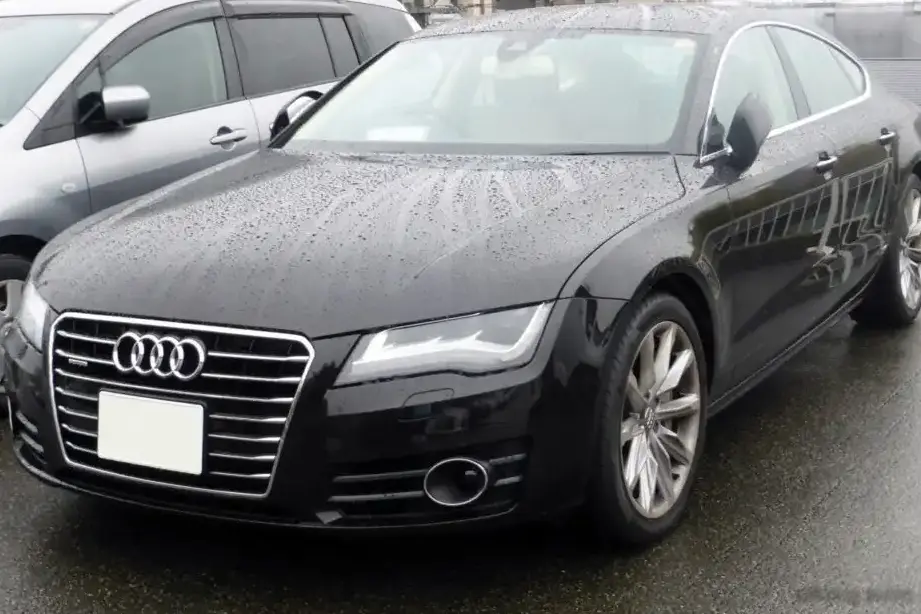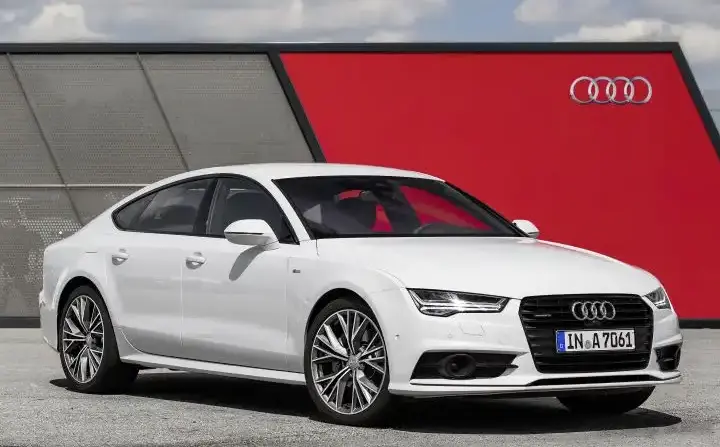
The Audi A7 Sportback (C7) facelift, specifically the 3.0 TDI V6 ultra variant with 218 horsepower and the S tronic dual-clutch transmission, was produced from 2014 to 2017. This model represented a refinement of the C7 generation, introduced in 2010, and positioned itself as a fuel-efficient, performance-oriented option within the A7 lineup. The “ultra” designation signified Audi’s efforts to reduce weight and improve economy without significantly sacrificing driving pleasure. It occupied a middle ground, offering a step up in performance and refinement from the lower-powered 1.8 TFSI and 2.0 TDI models, while remaining more accessible than the higher-performance S7 and RS7 variants.
Technical Specifications
| Brand | Audi |
| Model | A7 |
| Generation | A7 Sportback (C7, facelift 2014) |
| Type (Engine) | 3.0 TDI V6 ultra (218 Hp) S tronic |
| Start of production | 2014 |
| End of production | 2017 |
| Powertrain Architecture | Internal Combustion engine |
| Body type | Liftback |
| Seats | 5 |
| Doors | 5 |
| Fuel consumption (urban) | 5.5 l/100 km (42.8 US mpg, 51.4 UK mpg, 18.2 km/l) |
| Fuel consumption (extra urban) | 4.3 l/100 km (54.7 US mpg, 65.7 UK mpg, 23.3 km/l) |
| Fuel consumption (combined) | 4.7 l/100 km (50 US mpg, 60.1 UK mpg, 21.3 km/l) |
| CO2 emissions | 122 g/km |
| Fuel Type | Diesel |
| Acceleration 0 – 100 km/h | 7.3 sec |
| Acceleration 0 – 62 mph | 7.3 sec |
| Acceleration 0 – 60 mph | 6.9 sec |
| Maximum speed | 239 km/h (148.51 mph) |
| Emission standard | Euro 6 |
| Weight-to-power ratio | 8.1 kg/Hp, 124.2 Hp/tonne |
| Weight-to-torque ratio | 4.4 kg/Nm, 227.9 Nm/tonne |
| Power | 218 Hp @ 4000-4750 rpm |
| Power per litre | 73.5 Hp/l |
| Torque | 400 Nm @ 1250-3750 rpm (295.02 lb.-ft. @ 1250-3750 rpm) |
| Engine layout | Front, Longitudinal |
| Engine Model/Code | CRTE, CTCC |
| Engine displacement | 2967 cm3 (181.06 cu. in.) |
| Number of cylinders | 6 |
| Engine configuration | V-engine |
| Cylinder Bore | 83 mm (3.27 in.) |
| Piston Stroke | 91.4 mm (3.6 in.) |
| Compression ratio | 16.8:1 |
| Number of valves per cylinder | 4 |
| Fuel injection system | Diesel Commonrail |
| Engine aspiration | Turbocharger, Intercooler |
| Valvetrain | DOHC |
| Engine oil capacity | 6.1 l (6.45 US qt | 5.37 UK qt) |
| Coolant | 11.5 l (12.15 US qt | 10.12 UK qt) |
| Kerb Weight | 1755 kg (3869.11 lbs.) |
| Max. weight | 2365 kg (5213.93 lbs.) |
| Max load | 610 kg (1344.82 lbs.) |
| Trunk (boot) space – minimum | 535 l (18.89 cu. ft.) |
| Trunk (boot) space – maximum | 1390 l (49.09 cu. ft.) |
| Fuel tank capacity | 73 l (19.28 US gal | 16.06 UK gal) |
| Max. roof load | 100 kg (220.46 lbs.) |
| Permitted trailer load with brakes (8%) | 2100 kg (4629.71 lbs.) |
| Permitted trailer load with brakes (12%) | 2000 kg (4409.25 lbs.) |
| Permitted trailer load without brakes | 750 kg (1653.47 lbs.) |
| Permitted towbar download | 85 kg (187.39 lbs.) |
| Length | 4974 mm (195.83 in.) |
| Width | 1911 mm (75.24 in.) |
| Width including mirrors | 2139 mm (84.21 in.) |
| Height | 1420 mm (55.91 in.) |
| Wheelbase | 2914 mm (114.72 in.) |
| Front track | 1644 mm (64.72 in.) |
| Rear (Back) track | 1635 mm (64.37 in.) |
| Front overhang | 937 mm (36.89 in.) |
| Rear overhang | 1123 mm (44.21 in.) |
| Drag coefficient (Cd) | 0.29 |
| Minimum turning circle (turning diameter) | 11.9 m (39.04 ft.) |
| Drive wheel | All wheel drive (4×4) |
| Number of gears and type of gearbox | 7 gears, automatic transmission S-tronic |
| Front suspension | Independent multi-link suspension |
| Rear suspension | Independent on trapezoidal lever |
| Front brakes | Ventilated discs |
| Rear brakes | Ventilated discs |
| Assisting systems | ABS (Anti-lock braking system) |
| Steering type | Steering rack and pinion |
| Power steering | Electric Steering |
| Tires size | 255/45 R18 |
| Wheel rims size | 8.5J x 18 |
INTRODUCTION
The Audi A7 Sportback (C7) facelift, launched in 2014, represented a significant update to the original C7 model released in 2010. Built on the Volkswagen Group’s PL46 platform (also known as the A6/A7/A8 platform), the facelift brought revised styling, updated technology, and more efficient engine options. The 3.0 TDI V6 ultra, introduced as part of this update, was designed to appeal to buyers seeking a balance between performance, fuel economy, and refinement. It was a key offering in Audi’s strategy to offer a wider range of powertrain choices within the A7 lineup, catering to diverse customer preferences. The “ultra” badge signified a focus on lightweight construction and optimized aerodynamics.
Powertrain & Engine Architecture
The heart of the A7 3.0 TDI ultra is the 3.0-liter V6 diesel engine, specifically utilizing the CRTE or CTCC engine codes depending on the exact production date and market. This engine is a turbocharged common-rail direct injection diesel, known for its robust construction and relatively smooth operation. The turbocharger, coupled with an intercooler, provides increased air density for improved combustion and power output. The engine features a double overhead camshaft (DOHC) valvetrain with four valves per cylinder, optimizing gas flow for enhanced performance. The common-rail fuel injection system operates at extremely high pressures, ensuring fine atomization of the fuel for efficient combustion.
Paired with this engine is Audi’s 7-speed S tronic dual-clutch transmission. This transmission offers incredibly fast and smooth gear changes, contributing to both performance and fuel efficiency. The S tronic utilizes two separate clutches – one for even-numbered gears and one for odd-numbered gears – allowing for pre-selection of the next gear, resulting in near-seamless shifts. The transmission is electronically controlled, adapting shift points based on driving style and conditions.
Driving Characteristics
The 218 horsepower and 400 Nm (295 lb-ft) of torque delivered by the 3.0 TDI ultra engine provide brisk acceleration, with a 0-60 mph time of around 6.9 seconds. While not as overtly sporty as the S7, the A7 3.0 TDI ultra offers ample power for comfortable and confident highway cruising and overtaking. The S tronic transmission plays a crucial role in maximizing the engine’s output, providing quick and responsive gear changes. Compared to the higher-output 3.0 TDI variants (typically around 272 hp), the ultra version feels slightly less urgent in its acceleration, but the difference is often imperceptible in everyday driving. The automatic transmission is well-programmed, offering both a comfortable “D” mode for everyday driving and a more engaging “S” mode for spirited driving. The quattro all-wheel-drive system provides excellent traction and stability in all weather conditions.
Equipment & Trim Levels
The A7 3.0 TDI ultra typically came well-equipped as standard. Features included leather upholstery, tri-zone automatic climate control, a multi-function steering wheel, and Audi’s MMI infotainment system with a central display screen. Standard safety features included ABS, electronic stability control, and multiple airbags. Optional extras included features like a Bang & Olufsen sound system, adaptive cruise control, a head-up display, and various driver assistance systems. Interior trim options varied, with choices in wood veneers, aluminum accents, and leather colors. The “ultra” trim didn’t necessarily denote a specific interior package, but often included weight-saving measures like lighter seats.
Chassis & Braking
The A7 Sportback features an independent suspension system all around, with a multi-link setup at the front and a trapezoidal link setup at the rear. This configuration provides a comfortable ride quality while maintaining good handling characteristics. The suspension is tuned to balance comfort and control, offering a composed ride even on uneven surfaces. Braking duties are handled by ventilated disc brakes on all four wheels, providing ample stopping power. The electronic stability control system helps to maintain control during emergency braking maneuvers. The A7 3.0 TDI ultra’s weight (approximately 1755 kg or 3869 lbs) is relatively moderate for its size, contributing to its balanced handling.
Market Reception & Comparison
The Audi A7 3.0 TDI ultra was generally well-received by automotive critics. It was praised for its fuel efficiency, comfortable ride, and refined interior. Critics noted that while it wasn’t the sportiest A7 variant, it offered a compelling combination of performance and economy. Compared to the 1.8 TFSI and 2.0 TDI models, the 3.0 TDI ultra provided significantly more power and torque, resulting in a more relaxed and effortless driving experience. Compared to the higher-output 3.0 TDI variants, the ultra version offered comparable performance at a lower price point, making it an attractive option for buyers prioritizing value. Fuel economy was a key selling point, with the A7 3.0 TDI ultra achieving impressive figures for a vehicle of its size and class.
Legacy
The 3.0 TDI engine, in various iterations, has proven to be a reliable and durable powertrain. While diesel engines, in general, have faced increased scrutiny in recent years, the Audi 3.0 TDI remains a popular choice in the used car market. Proper maintenance, including regular oil changes and adherence to recommended service intervals, is crucial for ensuring long-term reliability. The S tronic transmission, while generally reliable, can require more expensive maintenance than a traditional automatic transmission. Today, the A7 3.0 TDI ultra represents a well-rounded and sophisticated grand tourer, offering a blend of performance, comfort, and fuel efficiency that continues to appeal to discerning buyers.